Women's Quota Challenges in India's Lok Sabha
Exploring the stalled implementation of India's women's reservation
Model Diplomat7 min readIndia

Why India's Women's Quota Still Isn't Real — and Won't Be by 2029
India's 33% women's quota was passed unanimously in 2023 but defeated in April 2026 when tied to a Lok Sabha expansion. Here's why it's stuck.
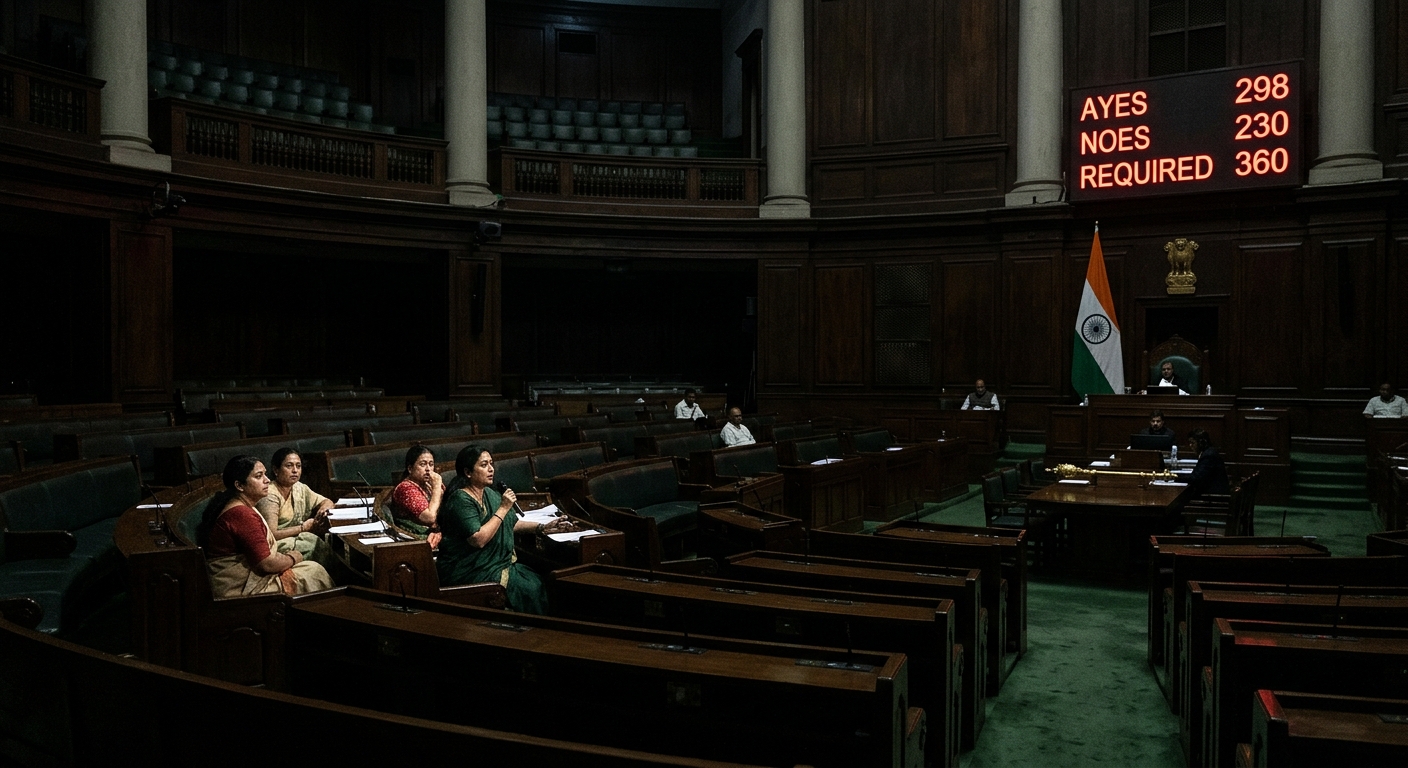
On April 17, 2026, India's Lok Sabha voted 298–230 on the Constitution (131st Amendment) Bill — a legislation the Modi government pitched as the vehicle to finally operationalise the 33% women's reservation from 2029. It fell 62 votes short of the two-thirds threshold, per the ISAS-NUS post-mortem. The vote was not really about women. It was the first constitutional amendment ever defeated on Narendra Modi's watch, and it failed because the government fused a broadly popular gender quota to a deeply contested southern-versus-northern redistribution of parliamentary power — and refused to unbundle them. That is the real reason the Lok Sabha will still be a roughly 14% women's chamber in 2029.
The bill that wasn't a women's bill
The Nari Shakti Vandan Adhiniyam — the 106th Constitutional Amendment Act — was notified on September 28, 2023, inserting Articles 330A, 332A and 334A into the Constitution to reserve one-third of seats in the Lok Sabha, state assemblies and the Delhi assembly for women, for an initial 15 years. The full text of that law, as confirmed by the Press Information Bureau, makes the reservation contingent on "an exercise of delimitation… after the relevant figures for the first census taken after the commencement" of the Act. In plain English: no census, no delimitation, no quota.
That sequencing clause is where the politics lives. The Registrar General has fixed March 1, 2027 as the census reference date, with fieldwork already underway in a two-phase, digital-first exercise, the BBC reported. Data will not be published before 2027–28. A delimitation commission historically takes four to five years. On the government's own arithmetic, the 33% quota therefore cannot bind the 2029 general election unless the trigger is changed.
The 131st Amendment tried to change that trigger — by tying implementation to the 2011 Census instead of the ongoing one, and by expanding the Lok Sabha from 543 to 850 seats. The Carnegie Endowment's analysis put it bluntly: "The quota for women functioned as a vehicle to push through a broader reengineering of India's electoral design." The women's reform, in other words, was the sugar; delimitation was the medicine.
Who blocked it, and why
The opposition read the package the same way. DMK's M K Stalin — with 22 Lok Sabha MPs — burned a copy of the bill in Chennai and raised a black flag, Al Jazeera reported. Rahul Gandhi called it "an attempt to seize power through delimitation and gerrymandering." The complaint had a spine: parliamentary seats have been frozen on 1971 population data for fifty years precisely to protect southern states that ran successful family-planning programmes. Fresh delimitation on 2011 figures would reward Uttar Pradesh and Bihar for higher fertility and penalise Tamil Nadu, Kerala, Karnataka and Telangana — four states that had jointly asked for the freeze to be extended another 25 years.
The government's assurance — that every state's seats would rise by a uniform 50% — was made verbally by Home Minister Amit Shah but, critically, was not written into the bill's text. Arghya Sengupta of Vidhi Centre for Legal Policy told the BBC that the 850-seat cap "does not appear to be proportionate to population growth" and that the absence of a corresponding state-assembly expansion created a structural "mismatch." Frontline's Modi-era policy critique noted that a "faulty assessment of women's quest for representation"
drove the political overreach.
The maths compounded the politics. Modi's NDA held 293 Lok Sabha seats going into the vote; the two-thirds floor was 360. Even the Indian Express calculation — factoring in 20 Trinamool Congress and six Shiv Sena (UBT) MPs who have since crossed over — puts the alliance at 319. Still 41 short. In the Rajya Sabha, the NDA sits at 152 against a threshold of 161. There is no path to a constitutional amendment on the current numbers without either DMK abstention or a Congress deal.
The historical parallel nobody in Delhi wants to name
India has done this before, and the pattern is the story. The first Women's Reservation Bill was introduced by the Deve Gowda government on September 12, 1996. Similar drafts lapsed in 1998, 1999 and 2008. In March 2010, the Rajya Sabha passed the amendment 186–1; the Manmohan Singh government then declined to move it in the Lok Sabha to protect OBC-bloc allies, as Al Jazeera reconstructed the sequence. It lapsed again in 2014.
The 2023 breakthrough — 454–2 in the Lok Sabha, unanimous in the Rajya Sabha — was won by decoupling the gender question from every fight the previous drafts had lost: no OBC sub-quota, no immediate implementation, no seat redistribution. The 2026 defeat inverts that formula. The Modi government re-coupled the quota to the most explosive sub-issue in Indian federalism — the north-south seat balance — and lost the amendment it had once treated as its signature women's-empowerment plank.
The number that exposes the argument
Women hold about 13.6% of the current 543-seat Lok Sabha — 74 MPs — after the 2024 general election. That is India's highest-ever female share, and it is roughly where Bangladesh was in 1990. The Inter-Parliamentary Union's global tracker puts India in the bottom third of parliaments worldwide on female representation, below Nepal (33%), Bangladesh (21%) and Pakistan (20%) — every one of which uses some form of reserved seat. India's local-body quotas, delivered by the 73rd and 74th Amendments in 1992, have pushed women to about 44% of panchayat and municipal seats,
Observer Research Foundation data show.
The gap between 44% at the panchayat level and 13.6% in the Lok Sabha is the entire policy case for reservation. It is also the strongest argument that ticket distribution — not constituency reservation — is the real bottleneck. In the 2024 general election, the BJP fielded women in 16% of its Lok Sabha nominations and the Congress in 13%, per ISAS-NUS. Regional parties did better: Biju Janata Dal 33%, Rashtriya Janata Dal 29%, Trinamool 25%. Neither national party has ever unilaterally applied the quota it says it champions.
What the government does next — and what would change the forecast
Government sources have told the Indian Express a redrafted amendment will be tabled in the Monsoon Session that opens in late July 2026. To pass, the bill will almost certainly need to do one of three things: extend the delimitation freeze (currently tied to "the first census taken after 2026" under Article 82) by another 15 to 25 years to reassure the south; delink the women's quota from delimitation entirely and implement it in the existing 543-seat House; or offer OBC sub-reservation to bring Samajwadi Party and RJD onside.
Each option costs the BJP something. Extending the freeze surrenders the demographic advantage the party has waited five decades to claim. Delinking the quota concedes that the 2026 push was a delimitation exercise dressed as a women's-rights bill. OBC sub-quota re-opens the caste-census fight the government has just conceded in the 2027 enumeration.
Watch three catalysts:
- July–August 2026 Monsoon Session: Whether the government tables a delinked women's quota bill, or reintroduces the 131st Amendment substantively unchanged. The first would signal a policy climb-down; the second, an election pitch aimed at West Bengal and the 2026 state cycle.
- Late 2026: TMC and Shiv Sena (UBT) crossover ruling. The Speaker's decision on the 26 defector MPs determines whether the NDA's effective floor is 293 or 319 — still short of 360, but the gap to a workable coalition changes.
- First quarter 2027: Census enumeration completes. Once the population count concludes on March 31, 2027, the constitutional trigger in Article 82 activates. Any further freeze on delimitation must then be enacted by fresh constitutional amendment — meaning the two-thirds vote the government just failed to win becomes structurally unavoidable.
Diplomat View
The received wisdom in Delhi is that the women's quota is inevitable — a matter of when, not if. That reading is wrong. What is inevitable is the vote-share ceiling: at 13.6% of the Lok Sabha and 16% of BJP tickets, India's political class has revealed the price it is willing to pay for gender representation, and that price does not include surrendering the seat-redistribution dividend the north expects from delimitation. The 131st Amendment defeat is not a delay — it is a signal that women's reservation will only pass when it is decoupled from federal seat allocation, and no party currently has the incentive to decouple it. Forecast: the 2029 Lok Sabha will still be under 20% women, and the 33% quota will not bind before the 2034 general election. Conditions that would revise this call: a DMK–BJP tactical accommodation before the Monsoon Session, a Supreme Court order compelling implementation on the existing 543-seat House, or a Congress-led constitutional bargain trading OBC sub-quota for delinking. Absent one of those three, the Nari Shakti Vandan Adhiniyam is what it has always been — a law that celebrates a promise it does not deliver.
The bottom line: India's women's quota is stuck not because parliament disagrees about women, but because the ruling coalition tied a 33% gender reform to a north-versus-south seat grab, and the south had the votes to say no. Until India's government decouples the two, the Lok Sabha's 14% ceiling will hold — and the most consequential political reform of the decade will keep being announced without being implemented.
Discover more

India
INDIA Bloc's Delimitation Strategy
The INDIA bloc is using delimitation and women's reservation to challenge the BJP's federalism narrative, setting up a high-stakes fight over representation.
India
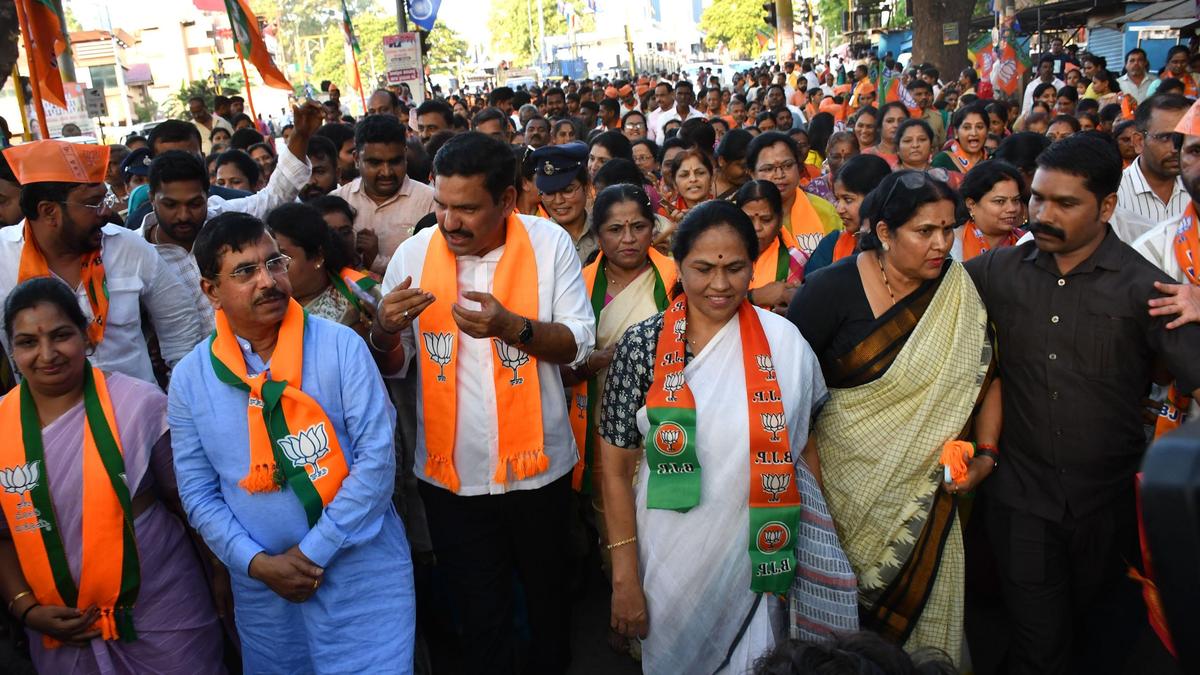
BJP Uses Hubballi Protests for Women's Quota
The BJP is using Hubballi protests to pin blame for delays on women's reservation onto Congress in Karnataka, sharpening its women's quota political offensive.
India
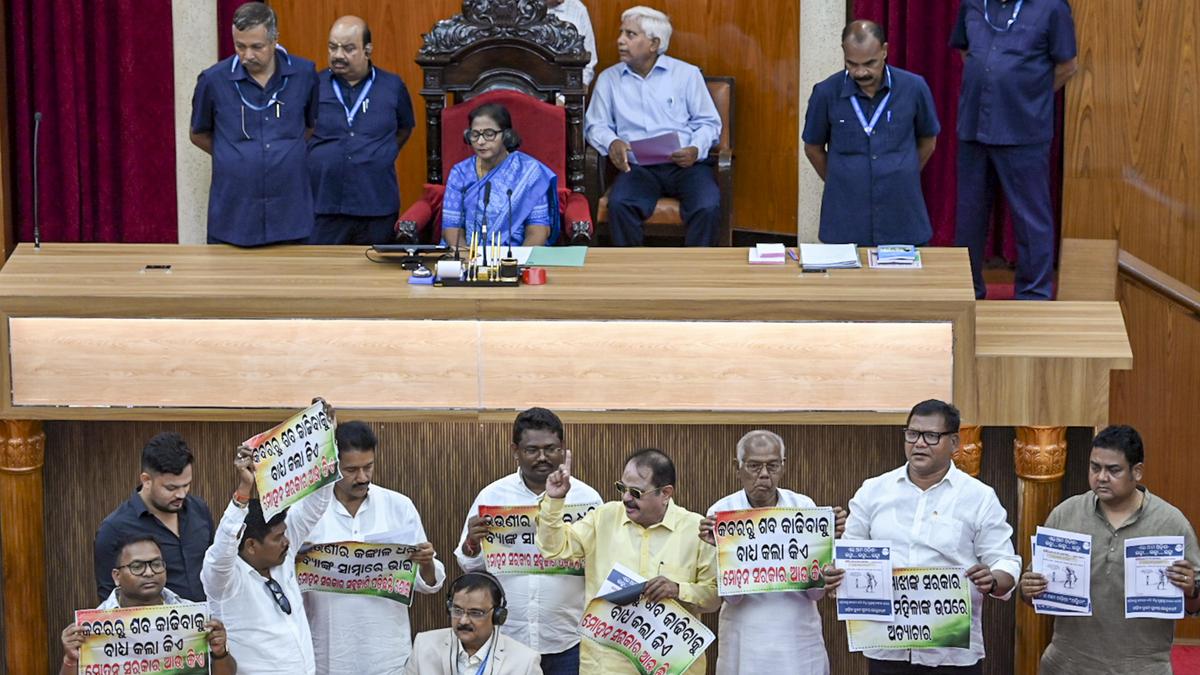
Odisha's Women's Reservation Debate
The fight over women's reservation in Odisha is shaping up as a calculated BJP and BJD strategy aimed squarely at gaining ground before the 2029 elections.
India
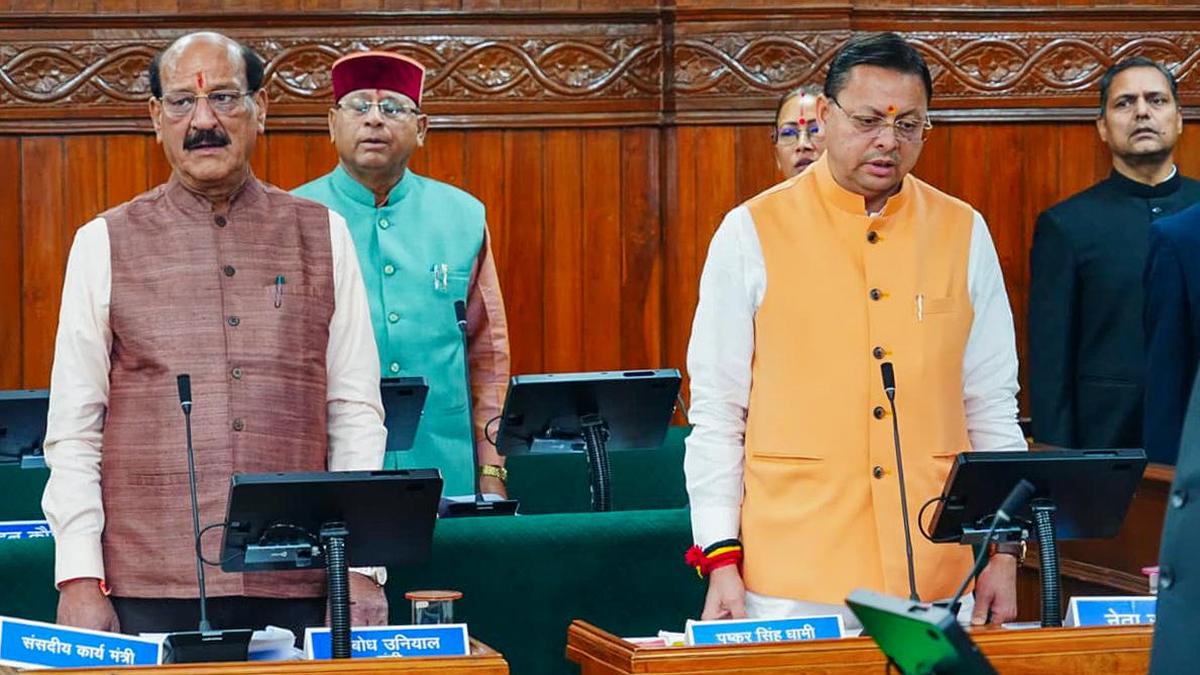
Uttarakhand's Push for Women's Reservation
Uttarakhand CM Dhami's push for women's reservation is a strategic political move that follows national defeat and aims to reclaim momentum for the BJP.