Bangladesh Deportations Halted by India SC
Government to verify citizenship claims after repatriation.
Model Diplomat3 min readAsia
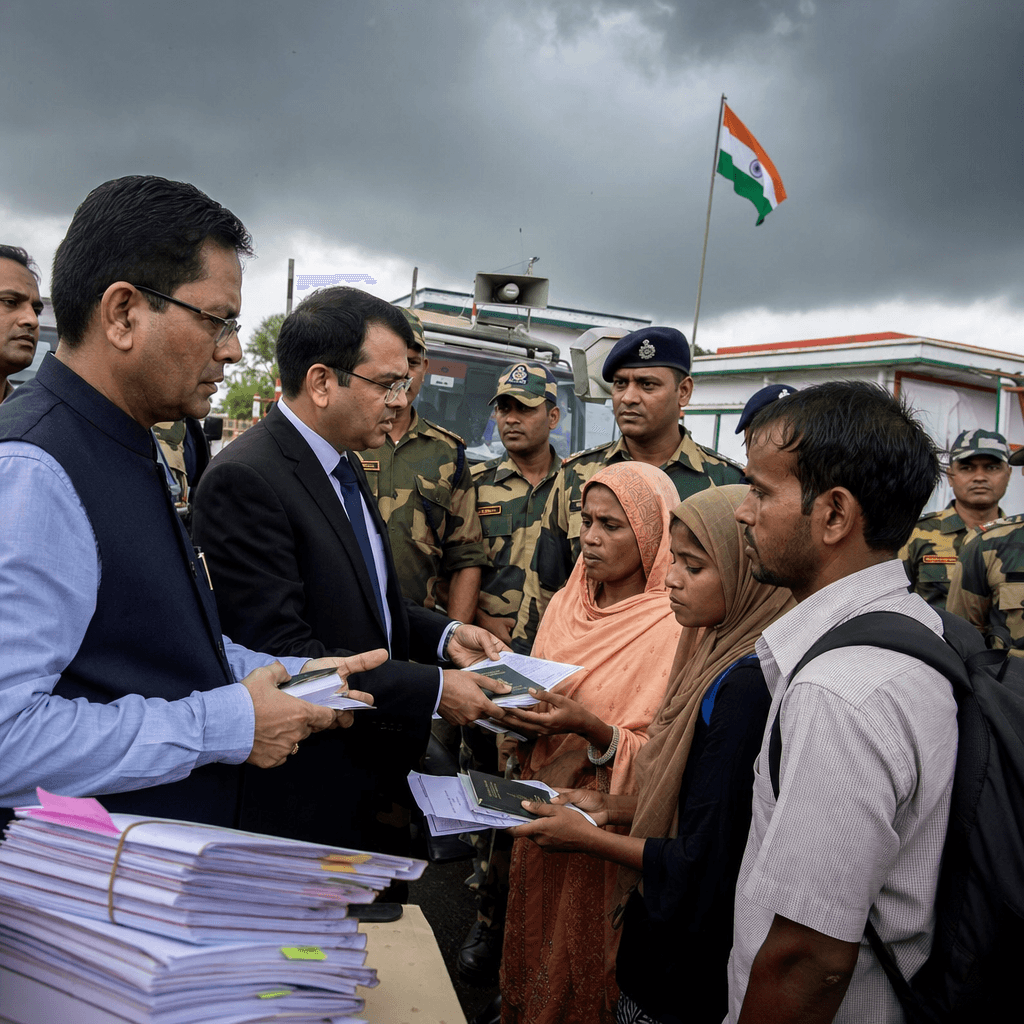
Centre Pulls Back on Bangladesh Deportations After SC Pressure
New Delhi says it will repatriate alleged deportees, then test citizenship claims — a tactical retreat that reduces the risk of a Supreme Court rebuke.
The Centre told the Supreme Court on Friday that it will bring back a few people allegedly “pushed” into Bangladesh and verify their citizenship claims after return, a move that narrows the immediate legal and political risk in a case that has already embarrassed the government once before. Solicitor-General Tushar Mehta said the government would act on the “peculiar facts” of the case and not treat it as a precedent, with the court posting the matter for July (The Hindu;
Devdiscourse).
The Centre is trying to contain the damage
This is not just an administrative correction. It is a concession under judicial pressure. The dispute centers on Sunali Khatun and others from West Bengal’s Birbhum district, whom the family says were detained in Delhi and deported to Bangladesh after an identity verification drive triggered by a Home Ministry notification (The Hindu;
The Hindu). The Centre had argued that the deportees failed to produce documentary proof of Indian citizenship, but the Calcutta High Court later called the deportation “illegal” and ordered the families brought back within a month (
The Hindu;
Frontline).
The government’s new position is designed to avoid turning this into a broader precedent on deportation procedure. That matters because the Calcutta High Court had already flagged the process as rushed and inconsistent with a May 2, 2025 Home Ministry memo that required an inquiry by the relevant state or Union territory before deportation of suspected Bangladesh or Myanmar nationals (Frontline). If the Centre now returns the people first and litigates citizenship later, it preserves its wider enforcement powers while reducing the chance of a Supreme Court ruling that could constrain future deportation drives.
Who gains, who loses
The immediate beneficiaries are the petitioners: Bhodu Sekh, his daughter Sunali Khatun, and the other families who have spent months in legal limbo between India and Bangladesh (The Hindu;
The Hindu). The larger loser is the Centre’s claim that it can keep using fast-track removals without tighter procedural safeguards. The Supreme Court already granted only Khatun and her child entry on “humanitarian grounds” last December, leaving the rest of the deportees outside the country and the legal question unresolved (
The Hindu).
For the Centre, the political upside is limited but real: it can tell the court it has acted flexibly without conceding the underlying citizenship dispute. For West Bengal’s Trinamool Congress, which has made “wrongful deportation” a live issue, the case is further evidence that Bengali-speaking Muslims are vulnerable to over-aggressive verification drives (Frontline).
What to watch next
The next decision point is the July hearing. The key question is whether the Centre’s repatriation offer satisfies the court, or whether the bench presses for a ruling on the legality of the original deportation process itself (The Hindu;
Devdiscourse). If the court demands a stricter standard, this case could become a template for how India handles alleged foreign nationals in
India going forward — not just one family’s return.
Discover more

India
UN Expert Albanese: India Violates Law
UN Rapporteur Francesca Albanese accuses India of breaching international law, spotlighting human rights concerns in Kashmir and prompting diplomatic pushback.
India
CPI(M) Calls to Decouple Quota from Delimita
CPI(M) advocates for a 33% women's quota in Lok Sabha by 2029, removing the need for delimitation and census linkage.

Economics
Fed's Amex AML order puts correspondent banking on notice
Federal Reserve's Amex AML order requires board-level controls and a 90-day plan; OCC fined the bank $350 million over enterprise-wide deficiencies.
Conflict & Security
Guatemala: El Niño 2026–27 becomes regional security test
UNICEF: 25.8M children face El Niño risks in Latin America; Guatemala maps 188 municipalities for drought and food insecurity amid regional security test.