CBSE Exam Row Gives Rahul Gandhi a New Chance
Opposition seizes on CBSE evaluation issues to challenge government credibility.
Model Diplomat3 min readAsia
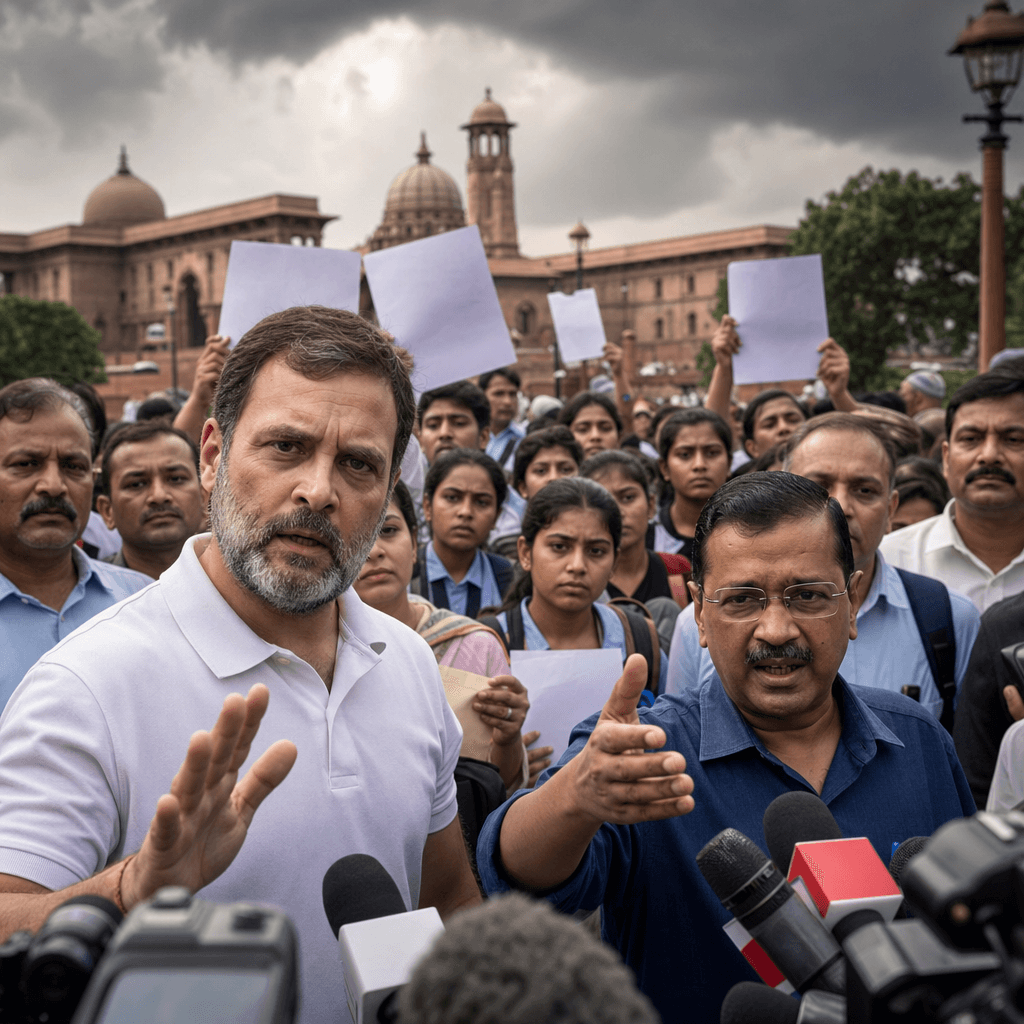
CBSE Exam Row Gives Rahul Gandhi a New Opening
Opposition leaders are turning a marking dispute into a competence charge, linking CBSE’s glitches to the government’s wider credibility problem on exams.
Rahul Gandhi and Arvind Kejriwal are using the CBSE Class 12 evaluation row to do something bigger than defend a few students: they are framing the Modi government as incapable of running high-stakes exams. The Indian Express reports that Gandhi accused the BJP’s online ecosystem of targeting a 17-year-old who complained about wrong evaluation, while Kejriwal demanded Education Minister Dharmendra Pradhan’s resignation and said the government had gone from NEET to CBSE in a single cycle of failure (The Indian Express). This is a politically useful attack because it hits the one issue the Centre cannot dismiss easily: the future of students and the trust of parents.
Why this row travels fast
The scale gives the opposition leverage. The Indian Express says nearly 18.5 lakh students took the CBSE exams, and complaints about OSM discrepancies, incorrect marking and evaluation glitches had been circulating for 12 days after results were declared (The Indian Express). That matters because exam disputes are not a narrow administrative issue in India; they become a test of state capacity, especially when they involve digital systems that are supposed to reduce human error. In
India, education scandals travel quickly because they cut across class lines, and they are easy for opposition parties to weaponize as evidence of broader mismanagement.
The government’s problem is that a technical explanation is not the same as political reassurance. Moneycontrol Hindi reports that CBSE defended its online screen marking system as a way to improve transparency and reduce manual mistakes, but the same report says the board’s Class 12 pass percentage fell to 85.2%, the lowest in seven years (Moneycontrol Hindi). That gives critics an opening: if the system is supposed to be more efficient and fair, why are complaints spreading immediately after results? The answer may be administrative, but the political damage is already real.
What the opposition gains
This is why Gandhi and Kejriwal are converging on the same line. Gandhi is pitching the row as a youth issue — a 17-year-old student trying to get justice and getting abuse instead — while Kejriwal is pitching it as a governance issue that calls for ministerial accountability (The Indian Express). Both gain something concrete. Gandhi gets a cleaner, less ideological attack on the BJP’s competence. Kejriwal gets to re-enter a national conversation built around education, an area where his party wants ownership. The BJP, by contrast, loses on the one issue it usually tries to monopolize: delivery.
What to watch next
The next decision point is whether the Education Ministry or CBSE moves from defense to correction: a formal clarification, a review of disputed answer books, or any targeted re-evaluation process. If they do not move quickly, this row will harden into a broader narrative about exam credibility — and the opposition will keep using it to link CBSE, NEET and the government’s administrative brand. Watch the ministry’s next statement, and whether Pradhan is left to absorb the fallout or forced to answer for it directly over the next few days.
Discover more
India
Congress Accuses Modi of Stalling Women's Law
Congress accuses Modi of stalling women's reservation law by linking it to delimitation, revealing a deeper electoral strategy.
India
Rajnath Singh's Durga Squad for 2026 Polls
Rajnath Singh's Durga Squad promised women's safety in Bengal but has since disappeared from the agenda, revealing BJP's true priorities.
India
Modi's Women’s Convention in Varanasi
Modi's Varanasi rally frames women's reservation as a national mission, targeting the 2027 Uttar Pradesh elections with a strategic narrative.

Conflict & Security
Drone Warfare Killing Aid Workers at Unprec
Over 1,000 humanitarian workers killed in three years as cheap armed drones collapse legal protections. Gaza, Sudan, Ukraine, and DRC see deliberate targeting of aid convoys and hospitals with zero prosecutions.