Cartels as Terrorists: Legal Net Widens
FTO label expands to regional extortion rackets, threatening millions of civilians
Model Diplomat4 min readAmericas
When Cartels Wear the Terrorist Label: Washington's Legal Net Is Now Wider Than Its Targets
The July 16, 2026 FTO designation of Los Viagras and the Juárez Cartel marks a threshold: the terrorism label has expanded from fentanyl kingpins to regional extortion rackets, and the material-support statute now threatens to criminalize the millions of Mexican businesses and migrants who pay cartels because they have no choice.
The U.S. State Department designated two more Mexican criminal groups as Foreign Terrorist Organizations on July 16, 2026: the Juárez Cartel, a century-old border trafficking machine, and Los Viagras, a regional extortion outfit born from the rubble of Michoacán's vigilante uprising. They joined six Mexican organizations already on the list, bringing the total to 27 entities added as FTOs since President Trump returned to office in January 2025, more designations in 18 months than in any full year since the list was created in 1997. Congressional Research Service
The pairing is the story. The Juárez Cartel grew around the border opposite El Paso, making geography profitable through drugs, human smuggling, and armed control. Los Viagras, by contrast, emerged around 2014 from the fractured aftermath of Michoacán's armed self-defense movement, taxing avocado farmers, extorting packing houses, and producing synthetic drugs in the region's hill country. One is an old-line border operation. The other is a localized predatory racket. Washington just put a regional protection network in the same legal category as al-Qaida. That is not an operational nuance. It is a structural shift in U.S. counter-narcotics policy — and the consequences will land not on cartel leadership but on civilians caught in a legal architecture designed for war.
The expansion has been relentless. Eight criminal groups were designated on February 20, 2025, followed by Haitian gangs in May, Ecuador's Chone Killers on July 2, and now these two. Al Jazeera Argentina became the first Latin American country to follow suit in March 2026, listing the Jalisco New Generation Cartel alongside Hamas and Iran's Quds Force.
Al Jazeera With each new designation, the practical stakes shift. The question is no longer whether the label applies to major fentanyl traffickers. It is whether it now applies to every armed group that extracts protection payments from civilians.
What the Designations Actually Unlock
The FTO designation is powerful but widely misunderstood. It does not automatically authorize military action inside Mexico. Legal analysts have stressed this point repeatedly. The statute grants no military permission. International Crisis Group But it does something more destabilizing in the near term: it transforms millions of routine economic interactions into potential federal crimes.
Under 18 U.S.C. § 2339B, providing "material support or resources" to a designated FTO is punishable by up to 15 years in prison — or life if death results. The statutory definition covers currency, lodging, training, weapons, transportation, personnel, financial services, and "expert advice or assistance." Cornell Legal Information Institute The Supreme Court upheld this sweeping definition in Holder v. Humanitarian Law Project (2010), ruling that even speech coordinated with a designated group could be criminalized because support intended for peaceful purposes inevitably frees up resources for violence. The decision essentially foreclosed any firewall defense: there is no legal mechanism to support a designated group's non-violent activities without triggering liability.
Supreme Court
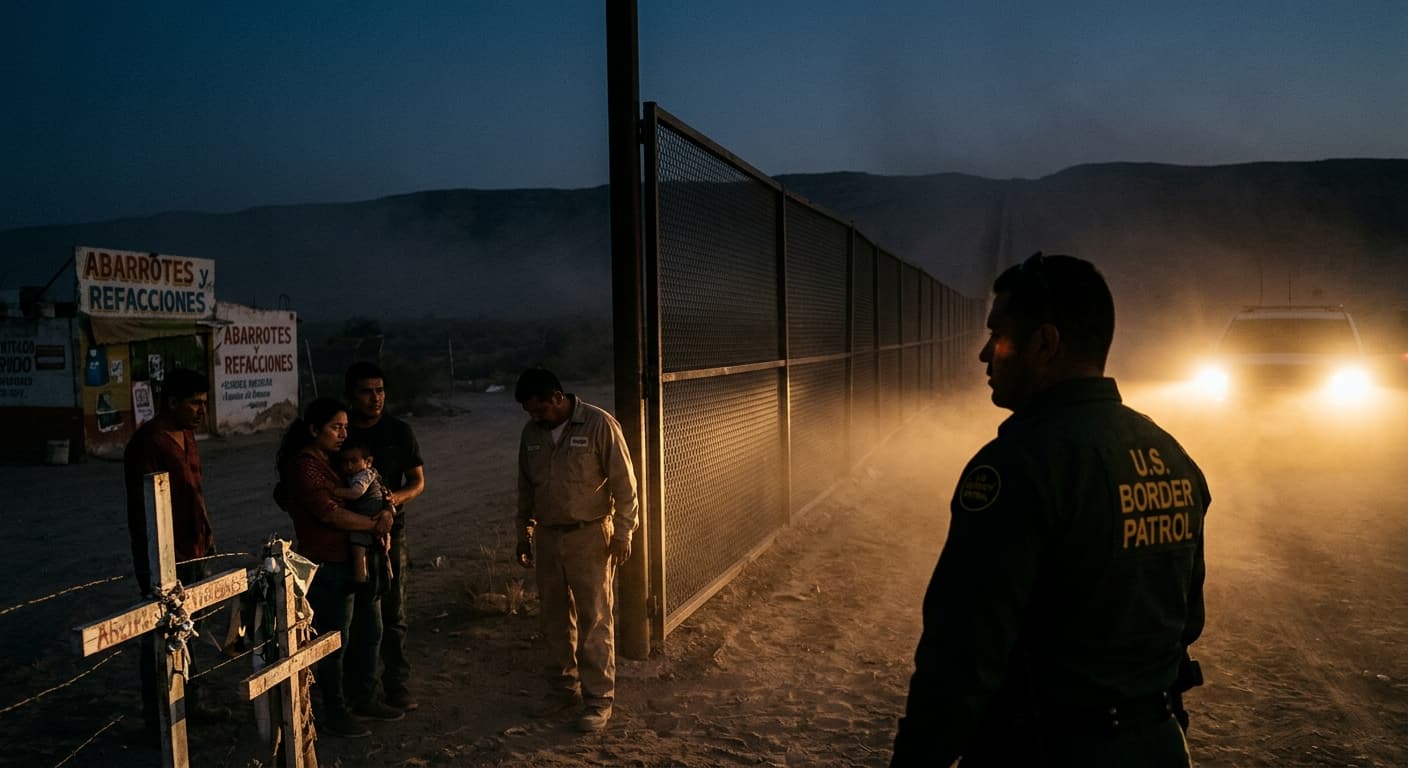
Now apply this framework to the Mexican economic landscape. In a 2024 survey of 218 companies by the American Chamber of Commerce in Mexico, 45 percent reported receiving protection demands from criminal groups. This is not a fringe condition: it is the coercive business environment in broad swaths of the country. LatinAmerican Post Under the FTO statute, every extortion payment to a designated group is potentially a material-support violation. Every trucking company that pays a toll at a cartel checkpoint. Every farmer who pays a quota to harvest his own avocados. Every migrant who pays a smuggler with cartel ties to cross Mexico — and that category, experts warn, could block asylum claims entirely.
The Atlantic Council flagged this tension in early 2025, noting that U.S. companies operating in Mexico face an almost impossible compliance burden: "there's no blacklist or other mechanism against which U.S. companies may screen to evaluate if their funds or services involve cartel members." Atlantic Council The Mexican government has long opposed these designations precisely because of the "volume of entities that could be deemed to have provided material support."
Congressional Research Service
The first terrorism charges under this framework have already been filed. In May 2025, Maria Del Rosario Navarro-Sanchez was charged with providing grenades to CJNG — the first material-support prosecution against a cartel affiliate under the FTO statute. Al Jazeera That case was a clear-cut weapons provision. The harder cases (the extortion payments, the migrant smugglers, the legitimate businesses that pay to stay open) have not yet been tested. The statutory framework is now in place. The only outstanding question is how broadly it will be applied.
Discover more
US Politics
House Ethics Committee Pushes Sexual Miscond.
The House Ethics Committee has shifted responsibility for sexual harassment settlement records to the Office of Congressional Workplace Rights, complicating disclosure efforts.

International Relations
Pakistan's Key Role in US-Israel-Iran Meddle
Pakistan is seeking to mediate the US-Israel-Iran conflict, balancing high-stakes diplomacy against severe economic pressures and steep regional challenges.
US Politics
Congress Targets AI Chatbot Access for Terror
The House passed the Generative AI Terrorism Risk Assessment Act, focusing on AI's role in terrorism and potential surveillance implications.

Conflict & Security
Drone Warfare Killing Aid Workers at Unprec
Over 1,000 humanitarian workers killed in three years as cheap armed drones collapse legal protections. Gaza, Sudan, Ukraine, and DRC see deliberate targeting of aid convoys and hospitals with zero prosecutions.