Canada's First European LNG Deal
Germany's SEFE secures long-term LNG supply from Canada
Model Diplomat7 min readNorth America
Canada's First European LNG Deal: Germany's SEFE Bets on 2030s Gas
Canada's Ksi Lisims LNG will ship 1 million tonnes a year to Germany's SEFE for up to 20 years — a landmark energy-security move announced May 27, 2026, and the first long-term Canadian LNG contract with a European buyer.
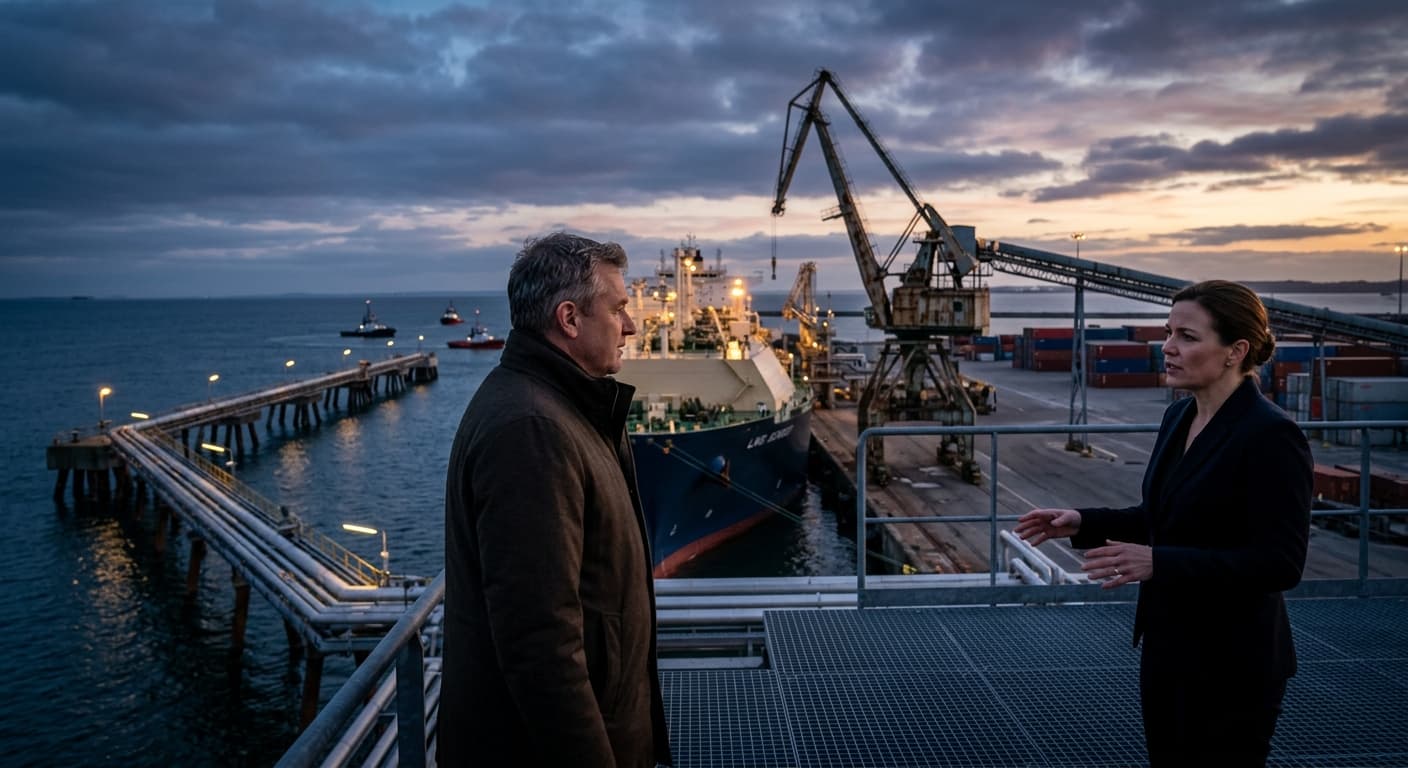
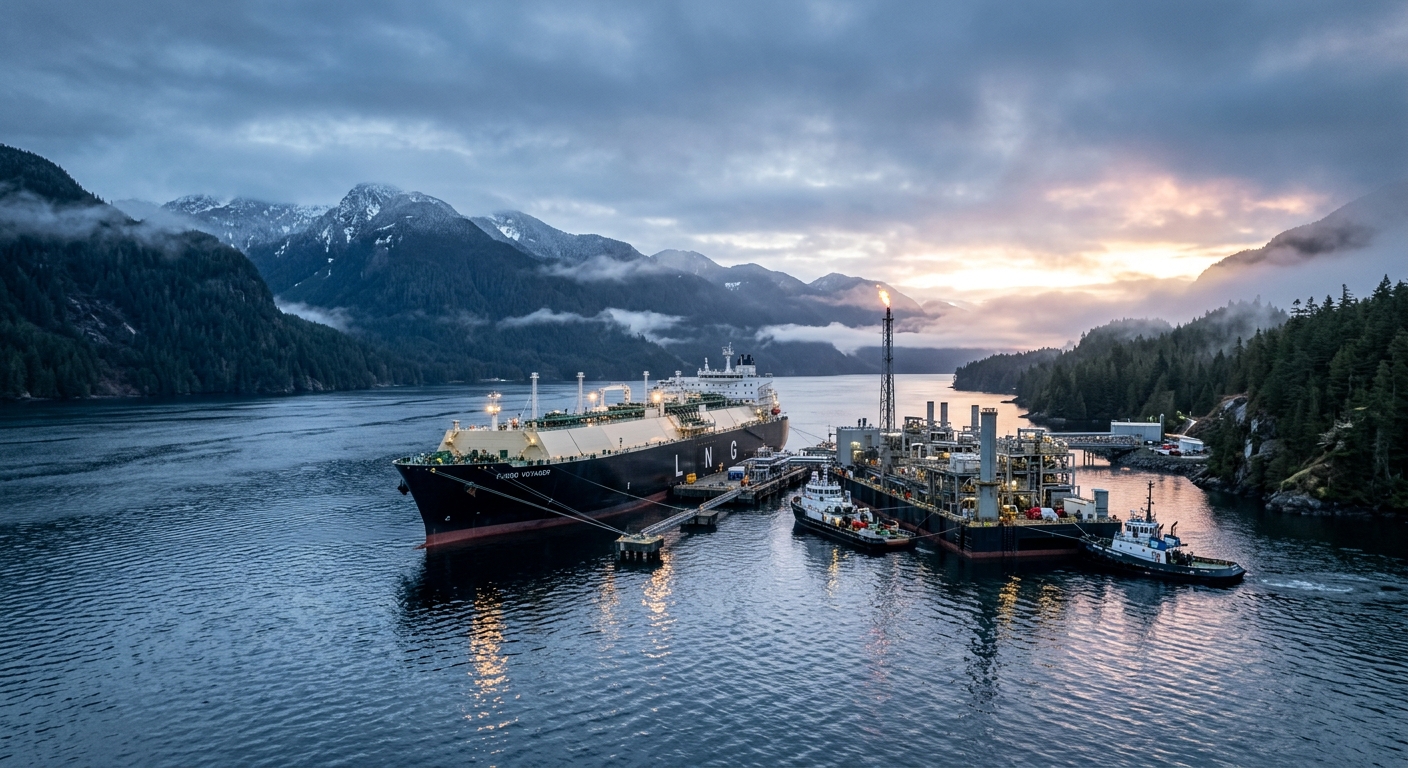
The first long-term contract for Canadian liquefied natural gas to Europe was signed on May 27, 2026, and the buyer is not a private utility but the German state — Berlin's federally owned Securing Energy for Europe (SEFE), the rebuilt shell of what used to be Gazprom Germania. Under the offtake, Natural Resources Canada confirmed, SEFE will lift 1 million tonnes per annum from the pre-final-investment-decision Ksi Lisims project on British Columbia's northern coast for up to 20 years, with first cargoes in the early 2030s. The thesis: this deal is less a Russian-gas replacement than a political hedge — Ottawa is buying itself out of Donald Trump's tariff regime, and Berlin is buying insurance against a Qatar-and-US-dominated LNG market it can no longer trust to be apolitical. The molecules are a rounding error; the geometry is the story.
What was actually signed — and what wasn't
The offtake is small and conditional. One million tonnes per annum equals roughly 1.4 billion cubic metres of gas — about 2% of Germany's 2025 consumption, and around 8% of Ksi Lisims's 12-MTPA nameplate. Deliveries begin, on the government's own timeline, "by the early 2030s." Canada's energy minister Tim Hodgson announced the agreement in Vancouver alongside British Columbia premier David Eby, Nisga'a Lisims government president Eva Clayton, and Germany's deputy consul general. Hodgson called it "an exciting and important milestone" and predicted a final investment decision (FID) "in a matter of months."
That FID is the load-bearing claim. Ksi Lisims is a floating liquefaction unit sponsored by the Nisga'a Nation, Texas-based Western LNG, and Rockies LNG, and — per the federal readout — was referred to Prime Minister Mark Carney's Major Projects Office in November 2025 for a fast-tracked review. The SEFE contract is explicitly "contingent on the finalization of a definitive Sales and Purchase Agreement." No SPA, no cargoes.
The deal traces to a Carney trade mission to Berlin in August 2025, when Ottawa began quietly pivoting the Canada-Germany Hydrogen Alliance, a 2022 Scholz-Trudeau deliverable that has yielded no Atlantic hydrogen trade, into hydrocarbons.
Why Berlin is buying gas it may not need
The awkward fact underneath this deal: Germany's gas demand is falling faster than its contracting.
The International Energy Agency's Gas 2025 report, covered by S&P Global, projects OECD European gas demand will contract 8–10% between 2024 and 2030, with gas-to-power demand alone falling roughly 25% as renewables scale. German LNG terminal utilisation in 2025 was 36.3%, well below the EU average, according to the
Institute for Energy Economics and Financial Analysis. If every current German LNG contract materialises, imports in 2030 would run 26.2 bcm — nearly triple 2025 volumes — into a market IEEFA argues will not absorb them.
So why sign more? Because after the 2022 shock, "security of supply" outranks demand modelling in Berlin. SEFE, once Gazprom's German arm, was nationalised in November 2022 and re-anchored on a $55 billion 10-year contract with Norway's Equinor, according to Brookings. Germany today draws roughly 60% of its gas from Norway, meaning concentration risk has simply migrated from one pipeline monopolist to another. The Canadian million tonnes, alongside 2 MTPA from Qatar starting 2026 and continued US flows, is a diversification premium Berlin is willing to overpay for.
Berlin has a second driver it does not advertise: Trump. The White House's threats to leverage LNG export licences and its aggressive posture on European trade have made US-dominated supply a political liability, and LNG from a fellow G7 middle power, shipped from a Pacific coast immune to Gulf-of-Mexico weather or congressional politics, commands a premium of its own.
Ottawa's real motive: the tariff exit ramp
For Canada, the deal is subordinate to a larger project — decoupling from the United States.
Ninety percent of Canadian oil currently flows south, a dependency Carney warned would cost the economy C$50 billion under Trump's tariff regime. His response has been a coordinated pivot: a submarine contract worth up to C$50 billion awarded to Germany's
TKMS on July 6, 2026; the
Alberta-Ottawa pipeline accord of November 28, 2025, which suspended the oil and gas emissions cap in exchange for Alberta carbon-pricing commitments; a Carney trip to India in February 2026 to reopen the LNG-and-critical-minerals conversation frozen since the Nijjar affair; and now the SEFE offtake. All flow from a doctrine Carney
articulated at Davos — "middle-power" states refusing "subordination" to superpowers.
The LNG deal alone is small. As a marker in Canada's export-diversification strategy — Carney's stated goal is to double non-US exports within a decade — it is the tell.
What still has to be built
Ksi Lisims is a proposed 12-MTPA floating facility on Nisga'a territory near the Nass estuary. It has been in development since 2019 and still lacks an FID. Even after that decision, the project must clear three hurdles simultaneously:
Pipeline. The 750-km Prince Rupert Gas Transmission line, dormant since 2017, must be revived — a route that crosses multiple First Nations territories with mixed consent.
Grid. Ottawa's plan is to electrify the liquefaction plant using B.C.'s hydro grid, cutting carbon intensity below Gulf Coast rivals. That requires the North Coast Transmission Line, also referred to the Major Projects Office in November 2025.
Indigenous consent. The Nisga'a are direct project partners, but neighbouring nations along the pipeline corridor and the Lax Kw'alaams have historically opposed export terminals in the Skeena watershed. Carney's One Canadian Economy Act, meant to fast-track "nation-building" projects, faces a constitutional challenge from nine First Nations.
The historical parallel is uncomfortable. Between 2011 and 2018, Canada's National Energy Board issued 35 LNG export licences totalling more than 55 bcf/d, according to CSIS. Only one project — LNG Canada Phase 1 — reached commercial operations, and that took 14 years from proposal to first cargo in 2025.
The Qatar and US pincer
The SEFE deal also has to survive competition it may lose on price.
Qatar signed a 15-year, 2-MTPA deal with Germany via ConocoPhillips in 2022, Al Jazeera reported, with cargoes starting 2026 — four years ahead of Ksi Lisims. QatarEnergy is scaling North Field capacity to 126 MTPA by 2027. US Gulf Coast projects, freed by Trump's rescission of the Biden LNG export pause, are moving toward final investment decisions on capacity that will double US export volumes by 2030,
per Brookings.
Canadian LNG's structural advantage (a 10-day sail to Yokohama versus 30 days from Sabine Pass through the Panama Canal) is aimed at Asia, not Europe. Shipping molecules 8,000 nautical miles from Prince Rupert around Cape Horn to Wilhelmshaven is, charitably, marginal economics. What SEFE is really buying is optionality: a Pacific supplier it can direct to Asia when European demand slumps, monetising the arbitrage.
The CSIS analysis of EU diversification is blunt: after 2028, Russian volumes are legally out, and Europe's portfolio problem shifts from Russia dependence to US and Qatar concentration. Small volumes from Canada, Mozambique, and Nigeria become political ballast in a supplier mix that the EU cannot allow to become bipolar.
The climate math no one wants to answer
The EU's REPowerEU legal framework, agreed December 3, 2025, requires member states to end Russian pipeline gas by November 1, 2027, and Russian LNG long-term contracts from January 1, 2027. The Canada-Germany deal is calibrated to that window — but only just, and only if construction proceeds without delay.
Germany's own decarbonisation trajectory cuts the other way. Rystad Energy projects Germany will exceed its 80% renewable electricity target by 2030. Household heat pump installations from 2022 to 2025 already saved €1.3 billion in LNG imports, IEEFA reported, with gas peaking in 2021. Long-dated LNG contracts risk becoming stranded — the buyer for cargoes in 2045 may not exist inside Germany. That is why SEFE structures these as portfolio contracts: it can resell.
Diplomat View
The Ksi Lisims-SEFE offtake will not move the needle on European energy security. The volumes are too small, arrive too late, and target a market Germany's own demand curve says it will not need. The deal matters because it is a political instrument dressed as an energy contract: Ottawa signalling to Washington that its resources have alternative buyers, and Berlin signalling to Doha and Houston that it will not accept a duopoly. If Ksi Lisims takes FID by Q1 2027, the deal cements a Canada-EU energy corridor with Cedar LNG and LNG Canada Phase 2 behind it. If FID slips past 2027 — the most likely outcome, given First Nations litigation, pipeline construction risk, and softening European gas prices — SEFE will quietly renegotiate volumes downward or shift them to Asian resale. The forecast revises if Trump lifts steel and auto tariffs on Canada (removing Carney's diversification imperative), or if a German court strikes down state offtake guarantees to SEFE on state-aid grounds. Watch the SPA date, not the announcement.
What to watch
- Q4 2026 – Q1 2027: Ksi Lisims final investment decision. Hodgson has promised "months"; the industry consensus is closer to a year.
- January 1, 2027: EU ban on new long-term Russian LNG contracts takes effect. First real test of REPowerEU legal architecture.
- Mid-2027: Definitive SPA between Ksi Lisims and SEFE. If unsigned by then, the offtake becomes a political artifact rather than a commercial one.
- November 1, 2027: Deadline for EU exit from Russian pipeline gas. The demand vacuum Canadian LNG is nominally sized against.
Discover more

US Politics
SNAP Food Assistance Faces Legal Challenges
In 2026, SNAP faces stricter eligibility rules and mounting legal challenges, threatening food assistance for the millions of Americans who rely on the program.
US Politics
House Ethics Committee Pushes Sexual Miscond.
The House Ethics Committee has shifted responsibility for sexual harassment settlement records to the Office of Congressional Workplace Rights, complicating disclosure efforts.

India
India-South Korea $50B Trade Expansion Plan
India and South Korea target $50 billion in bilateral trade by 2030, focusing on industrial cooperation and strategic alignment amid US pressures.

Conflict & Security
Drone Warfare Killing Aid Workers at Unprec
Over 1,000 humanitarian workers killed in three years as cheap armed drones collapse legal protections. Gaza, Sudan, Ukraine, and DRC see deliberate targeting of aid convoys and hospitals with zero prosecutions.