Can Israel's Naval Tech Prevent a 'Hormuz 2.0
Israel's asymmetric toolkit could counter a Chinese blockade, but One China policy blocks direct ties.
Model Diplomat10 min readAsia-Pacific
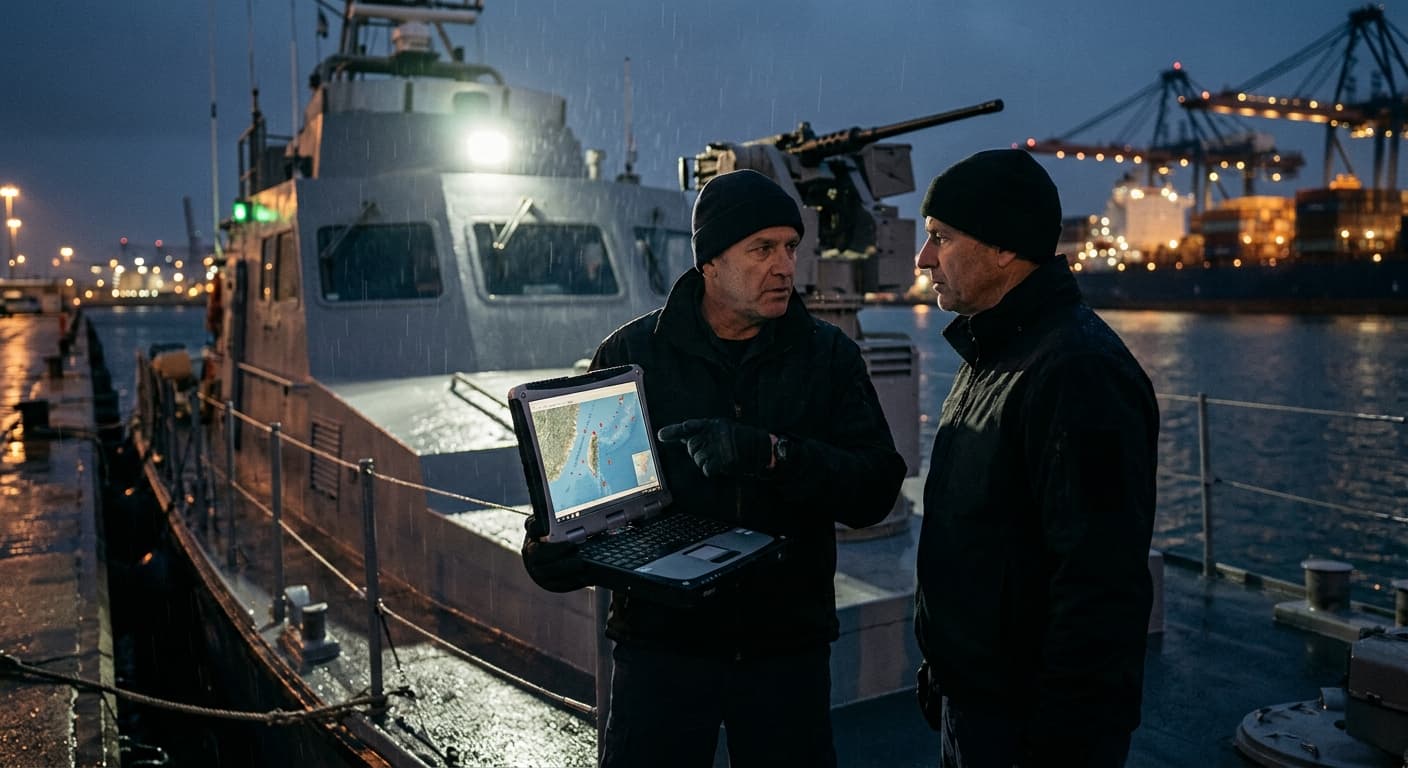
Can Israel's Naval Tech Prevent a 'Hormuz 2.0' in the Taiwan Strait?
Israel's battle-tested missile defense, unmanned naval vessels, and distributed logistics know-how offer Taiwan a covert toolkit against a Chinese blockade — but transfer will flow through commercial fronts and an India bridge, not overt military ties, because Israel's "One China" policy forbids it.
On July 4, 2026, two China Coast Guard vessels arrived east of Taiwan to relieve ships that had been patrolling continuously since June 1, then switched off their transponders after 24 hours, establishing what the American Enterprise Institute called a permanent CCG presence in waters Taiwan claims as its exclusive economic zone — a slow-motion blockade rehearsal that Beijing's state media has branded "near-shore governance" (AEI). The ships hailed passing cargo vessels to assert Chinese jurisdiction, rehearsing a quarantine scenario in which commercial traffic tacitly complies with Beijing's "law enforcement" without a single shot being fired. This is the "Hormuz model" — Iran's decades-long strategy of converting endurance into leverage at a maritime chokepoint — transplanted 8,000 kilometers east, with far higher stakes. Israel, a small state that has spent decades defending its own maritime approaches against missile barrages, drone swarms, and proxy naval warfare, possesses a tested toolkit of asymmetric capabilities that could make a Chinese quarantine of Taiwan harder, slower, and more expensive — but the transfer will happen through commercial front companies, third-country intermediaries, and an Israel-India-Taiwan intelligence channel, not through overt military cooperation, because Israel's "One China" policy makes direct defense ties with Taipei illegal.
The Hormuz Precedent — and Why Taiwan Is Worse
The analogy is exact and the stakes are asymmetric. Iran turned the Strait of Hormuz into a weapon by deploying naval mines, fast-attack craft, anti-ship missiles, and proxy harassment to make the waterway unsafe for commercial traffic, dropping tanker transits from 135 ships per day to a trickle and forcing insurers to revoke war-risk coverage. China is now applying the same template to the Taiwan Strait with the China Coast Guard rather than the PLA Navy in the lead role, casting blockade rehearsals as domestic "law enforcement" to complicate any international response. CSIS analysis documents that the CCG conducted its first joint operations with the PLA east of Taiwan during exercises in 2024, confirming its role in a potential joint quarantine or blockade (CSIS). The Foreign Affairs playbook is explicit: Beijing's most likely pathway is a "customs quarantine" in which coast guard cutters start conducting "routine inspections" of merchant ships, and "nearly all airlines and shipping companies decide to comply" because insurance will not cover resistance (
Foreign Affairs).
But a Taiwan blockade would be orders of magnitude more damaging than a Hormuz disruption. Where Hormuz chokes oil, Taiwan chokes the global digital nervous system. Taiwan's TSMC fabricates over 90% of the world's advanced logic chips — 10-nanometer and below — and approximately 60% of global foundry capacity, making the island the single most concentrated node in the most concentrated supply chain on Earth (WTO Global Value Chain Development Report 2023). Bloomberg Economics estimates a Chinese blockade would trigger a 5% contraction in global GDP — roughly $10 trillion — matching the 2008 financial crisis, with full-scale U.S.-China war approaching 10% (
Chatham House). The Rhodium Group's conservative estimate starts at $2 trillion in immediate losses, before counting second-order effects (
German Marshall Fund). Unlike oil, semiconductors cannot be stockpiled from alternative sources; redesigning chips around a different foundry's process node takes 12 to 18 months and millions in engineering costs. The RAND Corporation's tabletop exercise with U.S. government and industry representatives found that "there are generally no good short-term options for responding" to a disruption of Taiwan's semiconductor output (
RAND).
The economic asymmetry between Hormuz and Taiwan is the core strategic argument: deterrence must focus on making a blockade fail before it starts, because once the supply chain breaks, no policy response is fast enough.
Israel's Asymmetric Toolkit
The Middle East Forum proposal — the article that triggered this analysis — identifies four Israeli capability sets directly relevant to a Taiwan Strait blockade scenario (Middle East Forum). Each maps to a specific phase of the Chinese quarantine playbook.
Anti-ship ballistic missile defense. China's DF-21D and DF-26 "carrier killer" missiles are designed to hold U.S. and allied naval forces at bay during a blockade, creating a stand-off zone that complicates any attempt to break a quarantine by force. Israel's Arrow family of interceptors was developed specifically to address the challenges posed by these classes of ballistic missiles. Arrow 3, in service since 2017, uses a hit-to-kill warhead to engage targets in space with an estimated flyout range of 2,400 kilometers (CSIS Missile Threat). The system proved itself under saturation conditions during Israel's June 2025 Operation Rising Lion, when over 550 ballistic missiles were launched at Israel in a 12-day conflict and the Arrow system, combined with U.S. THAAD and AEGIS assets, successfully intercepted volleys aimed at population centers (
JISS). Germany's Bundestag approved a $3.1 billion expansion of its Arrow 3 contract in December 2025 — the largest defense export deal in Israel's history — placing Israeli technology at the center of a key NATO member's missile shield. The operational maturity demonstrated against real Iranian missiles is now the system's primary selling point, and it is directly relevant to the Taiwan scenario: any allied fleet attempting to keep the strait open would need to survive precisely the kind of saturation ballistic-missile barrages that Arrow was built to defeat.
Unmanned naval vessels and maritime domain awareness. Israel's Seagull-class unmanned surface vessels can operate semi-autonomously for anti-submarine warfare, mine detection, ISR, and electronic warfare — capabilities directly applicable to a Taiwan Strait characterized by minefields, small unmanned surface vessels, and maritime militia swarms. In 2021, Israel Aerospace Industries and the UAE's EDGE Group signed a strategic agreement to jointly design the "170 M" advanced modular unmanned vessel for anti-submarine warfare, mine detection, and ISR (Al Jazeera). This UAE-Israel joint venture model — a commercial partnership under the Abraham Accords umbrella — is exactly the kind of third-country delivery mechanism the MEF article proposes for Taiwan. The Israeli Navy's Sa'ar 6 corvettes, equipped with naval Iron Dome, Barak 8 interceptors, and advanced electronic warfare systems, represent a doctrine of distributed sensing and network-centered warfare in which ships detect threats and automatically share data with land-based defense networks (
BESA Center). That doctrine is the maritime analog of what Taiwan needs: a kill web, not a kill chain.
Seabed sensing and early warning. The MEF article's most operationally creative proposal is seabed acoustic sensing. Israeli companies protect offshore gas fields in the Mediterranean and monitor approaches to the Red Sea; through a Singapore-registered commercial firm in partnership with Taiwanese oceanographic authorities, similar systems could be offered to Taipei as "oceanographic climate sensors." A passive sensor network would provide early warning of minelaying, mini-submarine activity, and unusual military positioning — the gray-zone precursor to a blockade. China could object, but scientific and commercial agreements are harder to brand as military partnerships. The CSIS Futures Lab analysis of Chinese gray-zone maritime activity near Taiwan identified 128 likely state-directed vessels out of 12,000 tracked, using behavioral classification — exactly the kind of anomaly detection that distributed sensor networks enable (CSIS).
Cyber defense and logistics resilience. Israel's cyber experience would offer insights into defending ports, energy storage, communications, and industrial infrastructure — especially semiconductor fabrication plants and assembly facilities. Taiwan's defense research institute, INDSR, explicitly names Israel as one of the key defense technology source countries with which Taiwan should strengthen cooperation, alongside the U.S., Japan, and Germany (INDSR). On the logistics side, the MEF article proposes that through a UAE-based firm with connections to the emerging Abrahamic security network, Israeli specialists could help Taiwan develop contingency shipping routes, virtual inventories, and emergency plans for photoresists, specialty gases, and other materials critical to semiconductor manufacturing. The objective: extend the operational life of essential facilities during a crisis so Beijing cannot achieve an overnight economic victory. Taiwan maintains natural gas stockpiles of less than two weeks' demand; even brief energy disruptions would take fabs offline for extended periods (
HCSS).
The 'One China' Straitjacket
Every one of these transfers faces the same structural obstacle. Israel officially recognizes Beijing's "One China" policy, which prohibits military and security ties between Israel and Taiwan. The Institute for National Security Studies in Tel Aviv assesses that when Taiwan sought to learn from Israel's operational experience at the start of the October 2023 war, "Israel was unable to cooperate due to the constraints of the 'One China' policy" (INSS). Taiwan's Ministry of Defense appointed its own team to independently study the conflict instead. The INSS recommends that Israel "continue adhering to the 'One China' policy" while maintaining "full diplomatic relations with China and productive cooperation with Taiwan" — a formula that allows economic, trade, cultural, and academic ties but blocks anything with military or security implications.
This is where the U.S. Congress enters the picture. House Resolution 7146, introduced in the 119th Congress, would amend the Arms Export Control Act to include Taiwan among recipient countries with shorter certification and reporting periods — placing Taiwan alongside Israel and New Zealand in the fast-track category (Congress.gov). Section 3 of the bill requires the Secretary of State to conduct, within 90 days of enactment, "an assessment of the feasibility of establishing an expedited decision-making process for third-party transfers of defense articles and services from NATO member countries, Japan, Australia, the Republic of Korea, New Zealand, or Israel to Taiwan." The bill explicitly names Israel as a potential third-party transfer source. If enacted, it would create the legal architecture for U.S.-origin components in Israeli systems to be re-exported to Taiwan under an accelerated licensing process — 15 days for government-to-government agreements, 30 days for all other licensing requests. This is the mechanism that would unlock Arrow interceptors or Seagull-class vessels for Taiwan without requiring Israel to abandon its "One China" posture: the transfer is framed as a U.S.-licensed third-party re-export, not a direct Israel-Taiwan defense agreement.
The historical parallel is the 2000 Phalcon and 2005 Harpy crises, when the U.S. blocked Israeli defense exports to China because American technologies were embedded in the systems. Those crises led to the creation of Israel's Defense Export Control Agency and the complete cessation of military and dual-use exports to China (INSS). The same legal infrastructure that blocks Israel from selling to China could, under HR 7146, be turned to enable licensed re-export to Taiwan. The constraint cuts both ways: 50% of Arrow components are manufactured in the United States, meaning any export to Taiwan requires ITAR licensing regardless of Israeli willingness.
The India Bridge
The MEF article's final proposal — "a discreet Israeli-Indian-Taiwanese line of communication" — is the most politically plausible of all its recommendations. India would bring diplomatic protection, increasingly capable naval forces, and its own strategic interest in curbing Chinese dominance in the Indo-Pacific. Prime Minister Narendra Modi's February 2026 visit to Israel represented what the BESA Center calls "a strategic reset" from a procurement-based relationship to one of systems integration, with semiconductors and supply-chain resilience explicitly identified as core security domains (BESA Center). India's Council of Scientific and Industrial Research and Israel's Directorate of Defense Research and Development signed an MoU in May 2023 for research collaboration in high technology, including semiconductors (
ORF). India's first commercial semiconductor fab is a joint venture between Taiwan's PSMC and Tata Electronics, approved in February 2024 for INR 91,000 crore (
ORF). Israel, India, and Taiwan are also co-signatories or endorsers of Pax Silica, the U.S.-led semiconductor supply chain coalition — Israel as a signatory, Taiwan as a non-signatory participant (
Carnegie Endowment).
The trilateral logic is straightforward: Israel provides the technology and operational doctrine, India provides diplomatic cover and a manufacturing base, and Taiwan provides the fabrication expertise and the shared threat. None of the three countries wants to publicly bind Jerusalem to Taipei, but a discreet channel for sharing knowledge on missile defense, maritime surveillance, dispersed logistics, and hybrid coercion — hosted under the Pax Silica or I2U2 umbrella — would be politically deniable while operationally consequential.
What to Watch
- HR 7146 markup schedule. The bill has been introduced but not yet reported out of committee. A markup session in the House Foreign Affairs Committee would signal whether the expedited licensing framework for Israeli (and other allied) transfers to Taiwan has legislative momentum. Watch for a committee vote before the August 2026 recess.
- CCG patrol rotation east of Taiwan. The July 4 relief establishes a pattern. The next rotation — likely in late July or early August — will confirm whether Beijing has institutionalized a permanent coast guard presence in waters east of Taiwan, the prerequisite for a snap quarantine. Ship-tracking data from Starboard Maritime Intelligence is the open-source indicator.
- Taiwan's December 2026 arms sales notification cycle. The U.S. notified Congress of $11.1 billion in Foreign Military Sales to Taiwan on December 17, 2025 — the largest package to date (
Congressional Research Service). The next notification window in late 2026 will reveal whether Taipei is prioritizing asymmetric capabilities — anti-ship missiles, naval mines, unmanned systems — or continuing to invest in conventional platforms like fighter jets and frigates that Brookings argues are "exhausting Taiwan's military assets" in gray-zone encounters (
Brookings).
Diplomat View
Israel cannot prevent a Hormuz 2.0 in the Taiwan Strait on its own, but it can transfer the asymmetric toolkit — Arrow-derived missile defense doctrine, unmanned naval vessel experience, seabed sensor networks, and distributed logistics — that would make a Chinese quarantine slower, more expensive, and more likely to fail. The binding constraint is not technological but political: Israel's "One China" policy and the 50% U.S. origin of Arrow components mean that any transfer requires American legal architecture. HR 7146 is the legislative key. If it passes, Israel becomes a named third-party transfer source for Taiwan under expedited U.S. licensing, and the commercial-front mechanisms the MEF article describes — Singapore-registered sensor firms, UAE-based logistics ventures, India-hosted intelligence channels — become operationally viable. If it stalls, Israel's contribution stays limited to the civilian and commercial sphere: cyber contracts, semiconductor supply-chain partnerships, and civil-defense knowledge exchanges. The forecast turns on three conditions: HR 7146 reaching a floor vote, the CCG's permanent east-of-Taiwan patrol provoking a U.S. or allied freedom-of-navigation response, and Taiwan's own defense procurement shifting decisively toward asymmetric systems. Revise this assessment upward if any two of those three conditions are met by Q4 2026. Revise it downward if Israel-Taiwan commercial ties retreat under Chinese diplomatic pressure — a signal that the "One China" straitjacket is tightening, not loosening.
Discover more

US Politics
US Launches $166B Tariff Refund Portal
The US is launching a $166 billion tariff refund portal to aid importers hit by Trump-era tariffs, with major implications for trade and supply costs.
Global Politics
Xi Jinping Calls China-Russia Ties 'Precious'
Xi Jinping's description of China-Russia ties as 'precious' reflects a strategic imbalance, with Beijing dictating terms in the partnership.
India
700 Activists Accuse PM Modi of MCC Breach
Over 700 activists allege PM Modi breached election code with a televised address attacking opposition parties just before state elections.

Economics
Fed's Amex AML order puts correspondent banking on notice
Federal Reserve's Amex AML order requires board-level controls and a 90-day plan; OCC fined the bank $350 million over enterprise-wide deficiencies.