Byreddy Shabari's MPLADS Water Initiative
TDP MP invests in RO plants amid state water crisis
Model Diplomat3 min readAndhra Pradesh
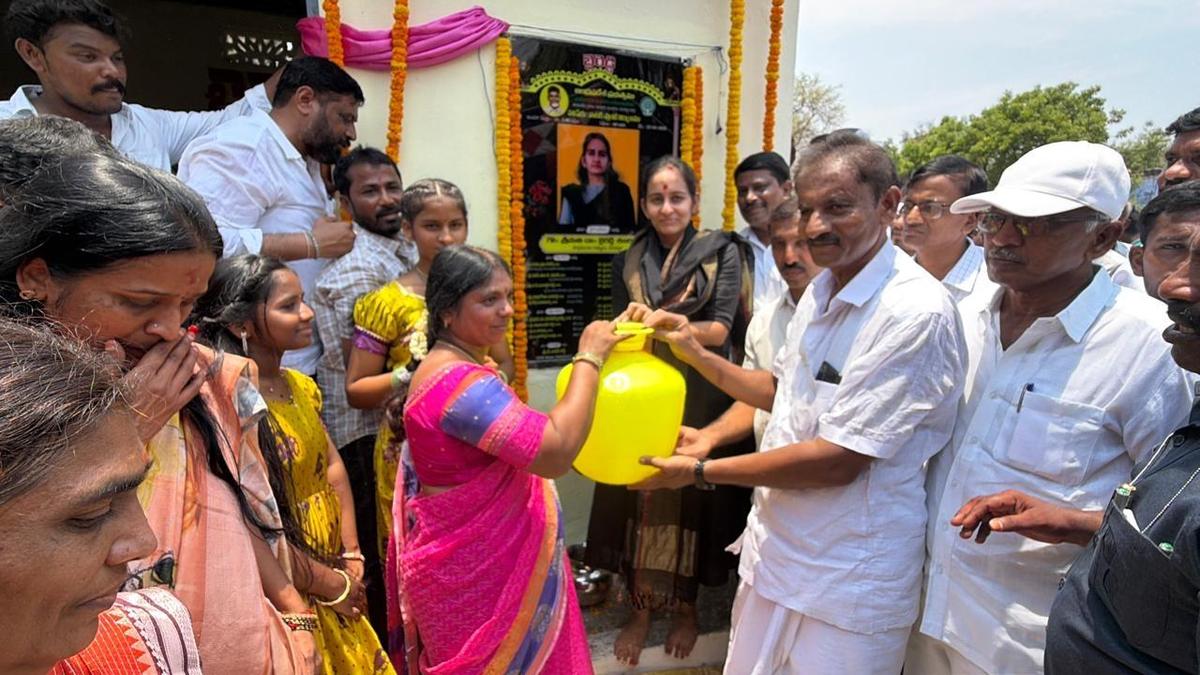
Nandyal MP Byreddy Shabari Bets MPLADS Funds on School Water
In water-stressed Andhra Pradesh, a TDP MP's push for RO plants in schools and slums tests whether constituency funds can fix what state schemes have not.
Nandyal MP Byreddy Shabari of the Telugu Desam Party is directing a portion of her ₹5 crore annual MPLADS allocation toward safe drinking water infrastructure — RO purification plants in government schools and underserved habitations across her constituency. The move lands at a moment when Andhra Pradesh's own bureaucracy is under fire for neglecting the problem: collectors in adjacent Anantapur district recently had to explicitly order officials to simply restore existing RO plants to working condition — a telling sign of where baseline maintenance stands.
Why the Water Gap Persists
Andhra Pradesh has ambitious targets on paper. The state government has pledged ₹14,000 crore to achieve universal household water coverage by 2030 and recently approved a real-time digital monitoring SOP for urban water quality across all Urban Local Bodies, tied to BIS IS 10500:2012 standards. The gap between policy and delivery at the school level, however, remains stark. In Prakasam district — directly bordering Nandyal — private donors had to contribute ₹12 lakh just to install water plants in eight schools, a function the state infrastructure should already cover.
That context matters for reading Shabari's initiative. MPLADS funds — ₹5 crore per MP per year for durable local assets — are not a substitute for state capital expenditure, but they are discretionary and fast-moving. In constituencies where fluoride contamination and groundwater salinity are chronic (southern Andhra's Rayalaseema belt, which includes Nandyal, sits in one of India's most water-stressed zones), RO plants are not a luxury — they are a public health necessity. Nationally, the 18th Lok Sabha has seen ₹5,486 crore allocated under MPLADS with only ₹1,453 crore spent so far, suggesting many MPs are sitting on undeployed funds. Shabari is spending hers.
The Political Geometry
The initiative also has a clear political logic. Shabari's TDP returned to power in Andhra Pradesh under Chief Minister N. Chandrababu Naidu following the June 2024 state elections, ending five years of YSRCP rule. The new government has made infrastructure delivery — roads, water, power — the core of its legitimacy pitch. An MP visibly channelling central constituency funds into grassroots welfare reinforces that narrative at the local level, particularly in Nandyal, a district that has historically swung between parties. Shabari was also nominated to the India-Germany Parliamentary Friendship Group, signalling she is building a profile beyond the constituency — domestic welfare work keeps the base warm while she does so.
What to Watch
Three things will determine whether this moves beyond optics. First, maintenance contracts — RO plants installed without servicing budgets have a consistent failure rate across AP, as the Anantapur case illustrates. Second, coverage numbers: how many schools and habitations actually receive installations before the MPLADS cycle closes. Third, state follow-through — whether AP's 2030 water plan begins funding recurring maintenance so MP-level seed investments don't become stranded assets.
For the broader trajectory of India's rural governance, this is a useful case study in how subnational political actors navigate the gap between ambitious state targets and on-the-ground delivery.
Discover more
India
CPI MP Accuses PM Modi of MCC Violations
CPI MP P Sandosh Kumar alleges PM Modi breached the Model Code of Conduct in Tamil Nadu, raising election integrity concerns before the 2026 Assembly polls.
India
Rajnath Singh's Durga Squad for 2026 Polls
Rajnath Singh's Durga Squad promised women's safety in Bengal but has since disappeared from the agenda, revealing BJP's true priorities.

India
Delhi CM Rekha Gupta Blasts Opposition's Delm
Delhi CM Rekha Gupta's remarks on women's quota defeat reveal BJP's strategy for the 2029 Lok Sabha elections, focusing on delimitation.

Conflict & Security
Drone Warfare Killing Aid Workers at Unprec
Over 1,000 humanitarian workers killed in three years as cheap armed drones collapse legal protections. Gaza, Sudan, Ukraine, and DRC see deliberate targeting of aid convoys and hospitals with zero prosecutions.