Brent at $78: Gulf States Rewrite Oil Play
Gulf states adapt to a new energy order post-Iran strikes
Model Diplomat9 min readMiddle East
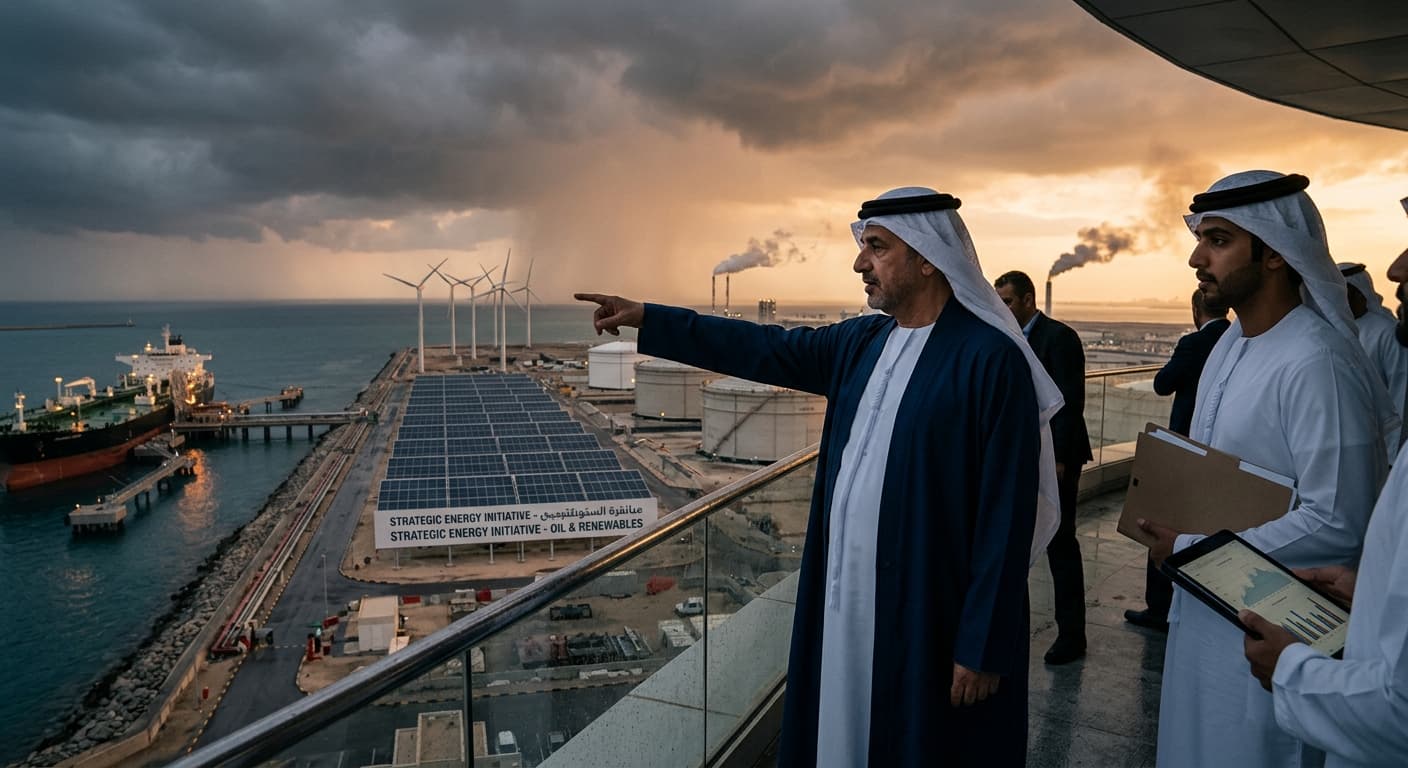
Brent at $78: Gulf States Rewrite Their Oil Playbook
Fresh US strikes on Iran push Brent toward $80 and shatter the June ceasefire — but the real story is how Gulf states are locking in a post-American energy order.
Brent crude traded at $78.08 a barrel by 07:10 GMT on July 9, 2026, a day after US Central Command hit more than 80 Iranian targets and President Donald Trump told reporters in Ankara that the June 17 memorandum of understanding with Tehran was "over." The price jump — some 4% across two sessions — is the least interesting number in the story. The interesting number is zero: that is roughly the additional barrels Gulf producers can push through the Strait of Hormuz today that they could not push through last month, because a war they did not start has trapped their spare capacity behind a chokepoint they no longer control. The July escalation will not end that trap. It is, however, accelerating a Gulf pivot — toward bypass pipelines, non-American security partners, and a pricing strategy aimed squarely at Asian buyers — that Washington cannot reverse and Tehran cannot exploit.
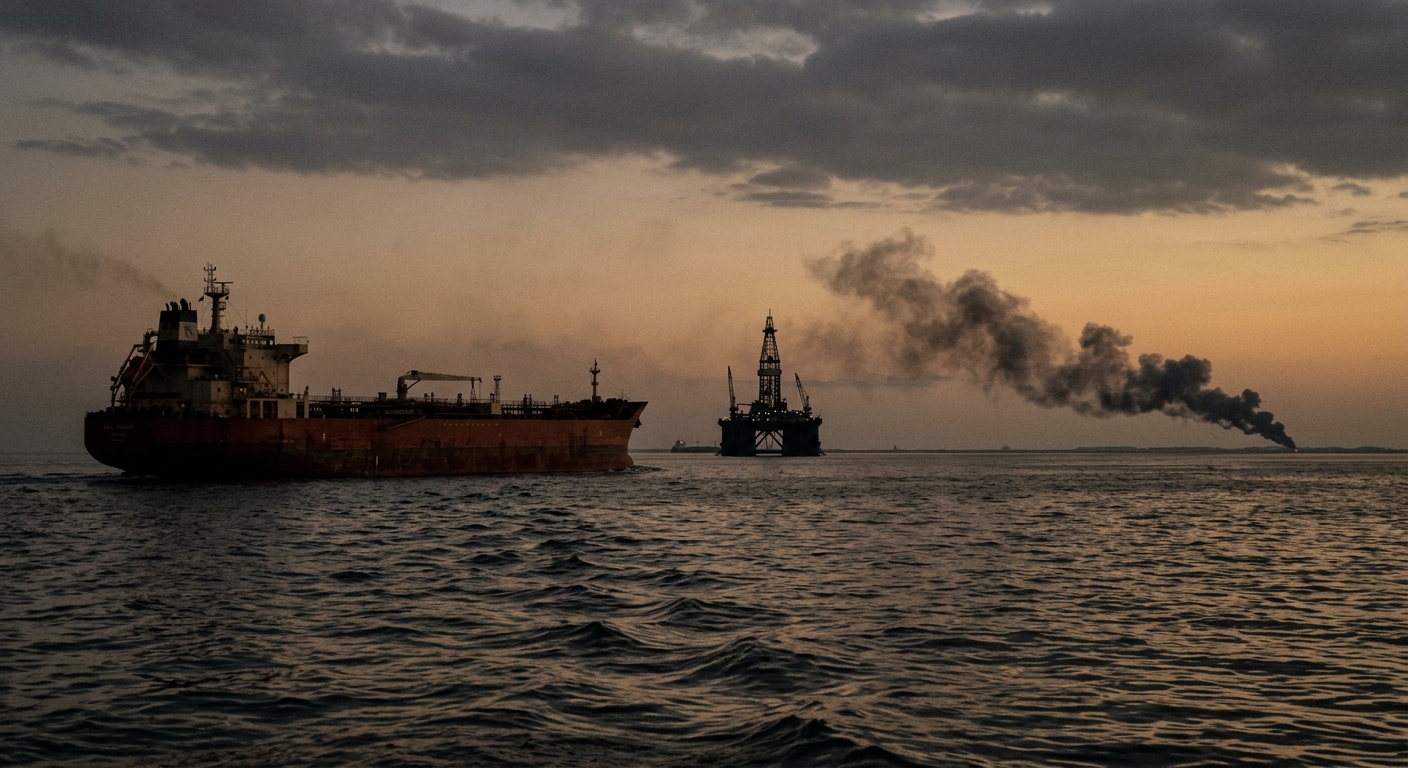
That is the analytical frame for what markets are pricing. Renewed hostilities on July 8 followed strikes on three commercial vessels — including Saudi Arabia's Wadyan and Qatar's Al-Rekayyat — in the Strait, BBC News reported. Iran's Islamic Revolutionary Guard Corps then said it targeted 85 US military sites in Bahrain and Kuwait. The Gulf Cooperation Council issued a rare condemnation of Iran through Secretary-General Jasem AlBudaiwi, calling the strikes a "flagrant violation" of sovereignty,
per Al Jazeera. But the diplomatic sequel to that condemnation is not a call for American escalation. It is a call for a return to the negotiating table on Gulf terms.
What the market is actually pricing
The $78 print looks modest against the $126-per-barrel peak in late April, when Iran's de facto closure of Hormuz produced what Al Jazeera called "the largest oil supply shock in the history of the modern market." That is the point. Traders are pricing a regime in which sporadic escalation is the baseline, not a shock. The
Congressional Research Service, in report R45281, estimates roughly 27% of global seaborne oil trade and 22% of global liquefied natural gas normally transits the Strait — a total the CRS puts at around 20 million barrels per day of oil and products in 2024. The current disruption still leaves passage below 50% of pre-war levels, according to Saul Kavonic, head of energy research at MST Financial. That gap, not the daily headline, is the war premium.
Insurance markets confirm the pricing. Hormuz war-risk premiums that ran at roughly 0.25% of hull value before February 28 spiked to as high as 8% during the closure and have settled at 2.5%–5%, according to underwriters cited by Al Jazeera. Washington's own International Development Finance Corporation is offering up to $40 billion in reinsurance capacity — the US government now functioning as an insurer of last resort for a waterway it has spent 40 years pledging to keep open. When traders ask why Brent will not fall back to the $58 the EIA had penciled in for 2026, that number is a large part of the answer.
The Council on Foreign Relations, in a July 9 assessment by senior fellow Clara Gillispie, described the unwind as "a shut-in equivalent to more than 10 million barrels per day of oil supply and roughly 300 million cubic meters per day of LNG for over 100 days" with "no precedent" for unwinding at scale. Roughly 80 mines remain in the strait's main navigation channels. Damage to QatarEnergy's Ras Laffan LNG facility is expected to take up to five years to repair. This is not a market that snaps back on a peace deal, even a real one.
The Gulf pivot: pipelines, pricing, and Pakistan
Riyadh's response to the July 8 strikes tells the story more clearly than Washington's. Saudi Aramco has cut its official selling price to Asian buyers for four consecutive months, according to the Gulf International Forum, pushing March-loading Arab Light to parity with the Oman/Dubai benchmark — the lowest relative price in more than five years. The August-loading OSP, released on July 5, extended the pattern. That is not the pricing of a producer confident in either sanctions on Iran or American power projection. It is the pricing of a producer competing head-on for Chinese and Indian refiners against Russian barrels — and doing so before Iranian volumes return in earnest.
The infrastructure numbers tell the same story. Saudi Arabia's East-West Pipeline can carry roughly 5 million barrels per day, of which only about 2.4 million bpd is truly spare, according to CSIS analysis — meaning less than half of the kingdom's typical 6 mbpd Gulf terminal volume can bypass Hormuz today. The UAE's Abu Dhabi Crude Oil Pipeline (ADCOP) can move roughly 1.5 mbpd to Fujairah, leaving about 1 million bpd stranded in a full closure. Kuwait, Bahrain and Qatar have effectively no bypass at all. That is why the Gulf International Forum reports
ADNOC now planning a third Fujairah pipeline, Iraq weighing a new Aqaba line via Jordan, and Saudi Arabia expanding Red Sea capacity. The war has done in one summer what 20 years of Iranian threats did not: it has given Gulf capex a firm reason to route around the strait.
Security follows the same logic. The UAE's abrupt exit from OPEC, a founding-era membership, signals that Abu Dhabi intends to target 5 mbpd in production once bypass capacity is in place — a de facto declaration that quota discipline is a lower priority than resilience. Saudi Arabia signed a defence pact with Pakistan before the war and is now anchoring a "Saudi–Turkiye–Egypt–Pakistan" quad group,
Al Jazeera reported, citing Anna Jacobs Khalaf of the Arab Gulf States Institute. Vice President JD Vance told UnHerd that even the UAE — historically the most Israel-aligned GCC state — is now conducting direct talks with the IRGC on economic normalisation. That is the shape of the pivot: hedge Washington with Islamabad, hedge Israel with Tehran, and hedge OPEC with Fujairah.
The primary document: what Treasury actually did
The paper trail is unusually clean. The US Treasury's Office of Foreign Assets Control published Iran General License X on June 17, authorising Iranian oil sales, banking, transport and insurance services for 60 days as part of the MoU. On July 7, OFAC revoked it: transactions must wind down by 12:01 a.m. EDT on July 17, according to the department's own notice. That is the operative primary document driving the price move. Iranian Deputy Foreign Minister Kazem Gharibabadi called the revocation a "blatant violation" of the MoU, telling state media Tehran would take "decisive actions."
The revocation matters more for Chinese and Indian buyers than for Iran. Between February and April, Iranian crude exports rose to about 1.8 million bpd, according to Kpler data cited by the Atlantic Council; June's projected volume was just over 720,000 bpd, and India — one of the largest global oil importers — was reconfiguring its portfolio toward Russia, Venezuela and unknown suppliers even before GL X lapsed. Beijing has already shown it will route Iranian purchases through alternative channels, including yuan payments via ICICI Bank's Shanghai branch. The revoked license does not close the pipeline. It closes the dollar-denominated pipeline. That is a different, and lasting, defeat for American financial primacy.
The GCC calculus
Reporting from Doha, Al Jazeera's Malik Traina described the Gulf posture as "measured" — a "diplomatic push from across the Gulf to bring Iran and the US back to the negotiating table." That is diplomatically accurate and analytically incomplete. The measured posture rests on a specific grievance: Gulf states were not consulted before the February 28 US-Israeli strikes that killed Ayatollah Ali Khamenei, and they absorbed the retaliation. The UAE alone was hit by roughly 2,800 missiles and drones, per figures Secretary of State Marco Rubio cited during his June Gulf tour, Al Jazeera reported. Kuwait's airport, ports and desalination plants were damaged. Qatar's Ras Laffan gas facility took "significant" damage.
The Stimson Center's analysis captures the resulting shift: "GCC leaders' frustration with Washington for following Netanyahu's counsel, and ignoring Gulf warnings, have [raised questions] about U.S. reliability as a security guarantor." The Carnegie Endowment,
in an April assessment, went further: it flagged a Saudi-led axis favouring diplomacy with Iran versus an Emirati team wanting Washington and Israel to "finish off" the Islamic Republic — a fissure that will widen if the July escalation drags on.
That is why the July 8 GCC statement condemned Iran but did not endorse US strikes. Bahrain sponsored an April UN Security Council resolution asking for authorisation to defend Hormuz shipping — vetoed by Russia and China, per Al Jazeera. UAE Ambassador Mohamed Abushahab told the Council: "The Strait of Hormuz cannot become a bargaining chip for Iran, nor a lever in wider global politics." Both halves of that sentence matter. The Gulf does not want Iranian tolls in the strait. It also does not want the strait to become a proxy for Great Power competition. On present trends, it may get both.
Who wins from a longer standoff
Three beneficiaries stand out. US shale producers, whose lifting costs sit comfortably below $78 Brent and who — as Treasury Secretary Scott Bessent argued on July 8 — should "potentially trade at a premium." ConocoPhillips rose 1.8%, Chevron 1.5%, and ExxonMobil 1.4% on the day of the strikes. Qatar and the United States as LNG swing suppliers, as University of Lancashire lecturer Mounir Elheddad told Al Jazeera, once Ras Laffan is repaired. And Beijing, which absorbed the largest share of pain — 40% of Chinese crude imports transited Hormuz pre-war — and is now positioned as the buyer of last resort for both discounted Iranian barrels and Russian ESPO grades, while pricing sanctioned Iranian oil in yuan.
The clearest loser is not Tehran, which has adapted to sanctions for a decade. It is the American guarantee itself. Every additional week of Hormuz insurance premiums above pre-war levels validates the Gulf's bypass capex. Every OPEC+ hike that spare capacity cannot deliver validates the UAE's OPEC exit. Every yuan-settled Indian barrel of Iranian crude validates the alternative payment architecture the Atlantic Council warns is "reshaping the global crude trade." Trump's threat to "take over Kharg Island" is a threat of maximal escalation. The Gulf response is quieter: build the pipelines, sign the pacts, cut the Asian OSP.
What to watch
- July 17, 2026 — Treasury's GL X revocation takes effect. Chinese and Indian refiners must complete or reroute Iranian barrel purchases. Payment-channel data from the Shanghai Petroleum Exchange will indicate how much is settling outside the dollar.
- August OSP release (early August) — Aramco's next official selling prices to Asia. A fifth consecutive Arab Light cut would confirm Riyadh is prioritising Asian market share over war-premium capture.
- OPEC+ Joint Ministerial Monitoring Committee — the group's next quota adjustment, scheduled for early August, will show whether Saudi Arabia and the UAE reconcile spare-capacity messaging or diverge further post-UAE exit.
- Oman-Iran Hormuz talks — the MoU commits Iran and Oman to define "future administration and maritime services" in the strait with GCC partners. Whether those talks survive Trump's declaration that the MoU is "over" is the near-term diplomatic tell.
Diplomat View
The July 8 strikes were sold in Washington as reasserted deterrence. They will be read in Riyadh, Abu Dhabi and Doha as confirmation of a thesis Gulf capitals adopted after February 28: that the American security guarantee is now conditional, episodic and prone to being hijacked by Israeli policy Gulf states cannot influence. Expect the following over the next 90 days — this is the falsifiable call. Saudi Aramco will keep Asian OSPs at or below regional benchmarks through Q4. The UAE will formalise commercial dialogue with Iran on grid interconnection or investment, using the very IRGC channels Vance flagged. ADNOC will announce financing for a third Fujairah pipeline, and Iraq will accelerate the Aqaba route. What would revise this call: a rapid US-Iran de-escalation producing full Hormuz reopening and a credible security architecture that includes GCC signatories — not just a bilateral MoU. That is not what the July 8 escalation, or the OFAC revocation, or the tanker attacks suggest is coming. The bottom line: oil is not just repricing risk in the Gulf — it is repricing the American guarantee itself, and the Gulf is quietly buying insurance elsewhere. For Global Politics readers watching this beat, the story to track is not the next strike. It is the next pipeline.
Discover more
Global
Turkey Secures 12-Month Oil Pipeline Deal
Turkey and Iraq near a 12-month extension for the Kirkuk-Ceyhan pipeline, enhancing Ankara's energy leverage while Hormuz remains closed.
Climate & Energy
Saudi Arabia's Syria Pivot Rewires IMEC
Saudi Arabia is considering a Syria route for the IMEC, potentially sidelining Israel and redirecting trade and energy flows.
Climate & Energy
Repsol's Horcón Deal Tests Trump's Oil Order
Repsol's June 2026 deal with PDVSA marks Spain's entry into US-controlled Venezuelan oil, sidelining Chinese interests.
Climate & Energy
Pentagon's $300M Lithium Stockpile Move
The Pentagon plans to buy $300M worth of lithium carbonate, marking its first addition to the strategic stockpile, amid rising concerns over China's export controls.