Brazil’s New Jersey Base Camp Doubles as a Final Dress Rehearsal
Brazil has chosen a New Jersey training complex for the 2026 World Cup, gaining elite facilities and a practice pitch that mirrors MetLife Stadium’s final surface.
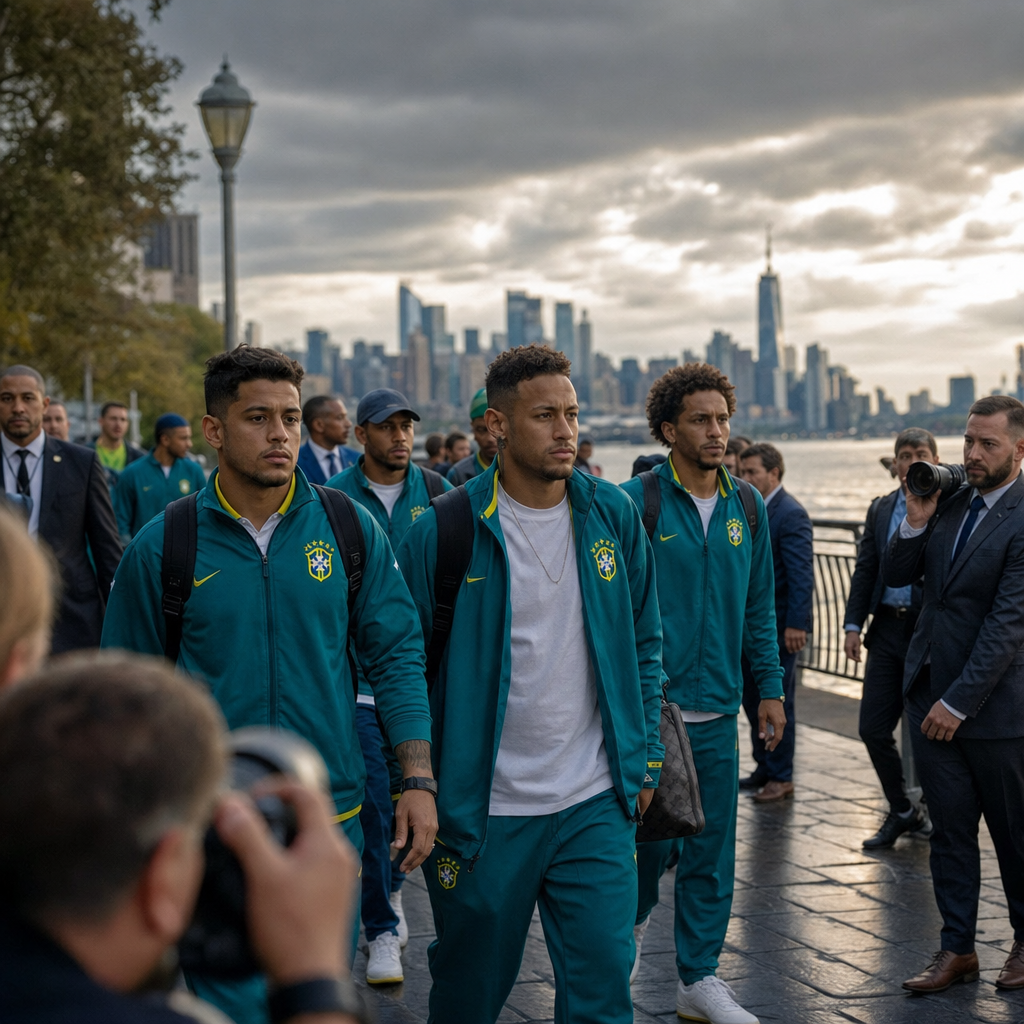
Brazil has picked the Columbia Park Training Facility in Morris Township, New Jersey, as its World Cup base camp, giving the team a controlled, high-spec site for the tournament just across the Hudson from the final venue, BBC reports ( BBC). The facility, home to Major League Soccer’s New York Red Bulls, includes eight pitches, a pool, a sauna and a lounge; one of the fields uses the same surface that will be installed at MetLife Stadium in East Rutherford for the World Cup final (BBC;
  New York Red Bulls).
Brazil is buying preparation, not just convenience
The leverage here sits with Brazil’s coaching staff: by choosing a base camp that duplicates match conditions, it can shave uncertainty out of preparation and recovery. That matters in a 48-team tournament where marginal gains are the point. FIFA’s World Cup scheduling turns base camps into strategic assets, not just hotels, and Brazil has effectively selected a training environment designed to reduce adaptation costs on the biggest stage (BBC).
That is also why the location matters politically, not just athletically. New Jersey is becoming a service hub for tournament power: the state will host the final at MetLife Stadium and, according to The Athletic, four teams — Brazil, Senegal, Haiti and Morocco — have chosen base camps in the state ( The Athletic). For the local host committee, that concentration of teams is a branding win and a logistics test. For Brazil, it is a way to sit inside the tournament’s most important infrastructure without being distracted by it.
Why New Jersey benefits from hosting the camp
The surrounding ecosystem is doing the work here. The New York Red Bulls’ training center already has the facilities, and MetLife is now in the final phase of pitch preparation, with grass installation under way ahead of the tournament, the Associated Press reported ( AP via The Washington Post). That makes the New Jersey corridor more than a backdrop: it is part of FIFA’s operating system for the event.
That also tells you who loses relative ground. Cities and states that cannot offer elite training sites, transport access and a pitch matching the stadium surface are shut out of the most valuable part of the tournament economy. The result is that a handful of well-positioned venues — here, New Jersey — get to convert sporting logistics into long-term political and commercial visibility. For readers tracking the intersection of sport and statecraft on  Global Politics, this is the real story: control over preparation is leverage.
What to watch next
The next decision point is whether other major teams follow Brazil’s model and cluster around MetLife, further concentrating attention and spending in northern New Jersey. Watch the final turf installation at MetLife, the release of official team training schedules, and whether FIFA or local organizers use the base-camp map to shape the tournament’s public narrative before kickoff in June (AP via The Washington Post; BBC).