BJP-TMC Rivalry in Bengal
BJP aims to maintain a fractured TMC in West Bengal.
Model Diplomat10 min readSouth Asia

BJP's Bengal Play: Keep Mamata Alive, Just Weak Enough
The BJP won West Bengal on May 4, 2026, but is now working to keep a fractured Trinamool Congress on life support. The July 24 Rajya Sabha bypoll will show whether the strategy holds.
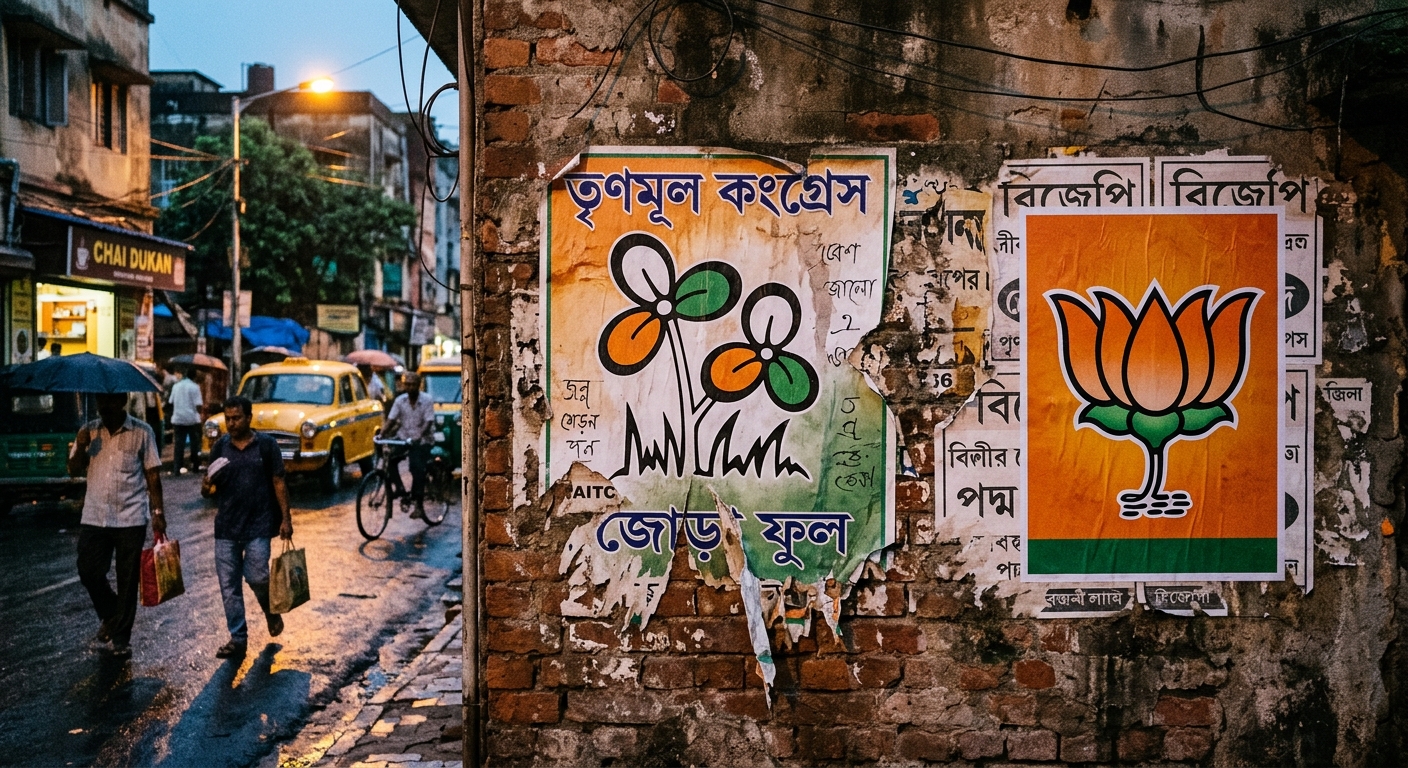
The Election Commission of India will hold biennial bypolls for three West Bengal Rajya Sabha seats on July 24, 2026 — and the BJP is on course to sweep all three, Outlook India reported. That is the surface story. The deeper one is this: the ruling party in Bengal holds 208 of 294 assembly seats, faces a shattered opposition, and has the numbers to absorb the Trinamool Congress whole — and it is choosing not to. The BJP-TMC rivalry that defined a decade of Indian politics has quietly inverted. Suvendu Adhikari's government now needs Mamata Banerjee's party to survive as a fractured husk, because the alternative — a full TMC collapse — hands the CPI(M)-Congress opposition the ruins to rebuild on. That is the calculation running Bengal in July 2026.
The rout, then the rebellion
The BJP's May 4 breakthrough was historic on its own terms. Modi's party won 207 of 294 seats — 44% of the vote against the TMC's roughly 40% — ending Banerjee's 15-year rule and, as the BBC noted, completing the party's long march into eastern India. The
Election Commission's polling schedule had set counting for May 4, 2026 across two phases held on April 23 and April 29; by that evening
NPR reported the BJP had crossed a majority in a state where it had never governed. Adhikari, once Banerjee's closest lieutenant, defeated her in her Bhabanipur stronghold while retaining Nandigram, and was sworn in as chief minister on May 9 in a ceremony attended by Prime Minister Narendra Modi,
the BBC reported. For the Modi project, the significance runs beyond one state: after the 2024 general election forced the BJP into dependence on regional allies,
as NPR observed, Bengal is the standalone conquest that resets the balance ahead of 2029.
Then came the second collapse — inside the TMC. Within weeks of the vote, roughly three-quarters of the party's legislators revolted against Banerjee and her nephew, Abhishek Banerjee. The BBC described the rebels as having "seized control of the party's legislative wing, installed their own opposition leader and accused the leadership of forging signatures on legislative documents." On June 4, 2026, 58 of the TMC's 80 MLAs backed Rajya Sabha MP Ritabrata Banerjee — a former CPI(M) member expelled and re-inducted by Mamata herself — as Leader of the Opposition, overriding her nominee. The Speaker accepted the claim. The dissident camp now says it commands around 65 legislators,
Outlook India reported.
The revolt has spread to Delhi. Roughly 20 of the TMC's 28 Lok Sabha MPs have written to the Speaker seeking to break from the parliamentary group and align with the BJP-led NDA, the BBC reported. Three Rajya Sabha members — Sukhendu Sekhar Roy, Sushmita Dev and Prakash Chik Baraik — resigned from both the Upper House and the party in June, forcing the July 24 bypolls; their combined unexpired terms ran to 2029 and 2030. Mamata's response, on July 4, was to dissolve every TMC committee, take over as state unit chief herself, and dare the rebels to formally cross over. "I dare the treacherous and ungrateful traitors abandoning the party to directly join the BJP and take me on if you have the courage," she said,
according to The Times of India.
Business Standard reported she went further, accusing the rebels of running a "BJP nexus" — a charge that, if she loses the Election Commission adjudication, becomes the founding narrative of a Mamata-led splinter party rather than a mainstream TMC.
Why the BJP will not finish the job
Here is the counterintuitive part. BJP MP Saumitra Khan claimed on record that "roughly 50 TMC MLAs and 20 MPs were ready to switch sides if Delhi gave the green light," Zee News reported. The green light has not come. State BJP president Samik Bhattacharya has explicitly warned party workers against the "Trinamoolisation of the BJP" — a rejection of mass absorption of defectors. Neither the rebel MLAs nor the breakaway MPs have been formally inducted. The BJP is running the largest one-party sweep in Bengal's history while refusing the defectors it could easily take.
The reason is on the ground in Domkal and Falta. For the first time since 2016, Zee News noted, the CPI(M) won a West Bengal assembly seat — Domkal — on May 4. In the Falta repoll, the party finished second behind the BJP with more than 40,000 votes, outpolling the TMC outright. CITU and ABTA, the Left's trade union and teachers' fronts, are back on the streets over hawker evictions in spaces the TMC has vacated. Shuttered party offices are being reopened. In 2019 and 2021, the BJP built its Bengal breakthrough by peeling off more than 20% of traditional Left-leaning Hindu voters — a bloc that translated into 18 Lok Sabha seats in 2019 and 77 assembly seats in 2021, per Zee's read of the numbers. Party strategists now fear that a resurgent CPI(M)-Congress alliance could run the same play in reverse — absorbing a homeless TMC voter base and returning as a national challenger.
That fear is what dictates the Rajya Sabha calculus. If the BJP took the defectors formally, the TMC would fold and its 40% vote share — 26 million votes, per the BBC — would scatter. Some would go home. Some would drift to the BJP, but many, especially Bengal's 27% Muslim electorate that swept 84 of 88 Muslim-dominated seats for the TMC in 2021
as Al Jazeera documented, would migrate to a Left-Congress combine that never carried the anti-Muslim baggage of Adhikari's BJP. A slow-bleeding, feuding TMC, by contrast, occupies opposition space without contesting for it seriously. The Left revival stays a local phenomenon in Murshidabad and South 24 Parganas. Bengal becomes a one-and-a-half party system with the BJP as the whole party.
The historical parallel that Delhi is watching is not Bengal's own — it is Shiv Sena in Maharashtra. Political scientist Rahul Verma of the Centre for Policy Research told the BBC that today's rebellions differ from the individual defections of the past because the BJP now provides "an alternative centre of power, resources and political protection," with succession fights inside single-family parties triggering "large-scale rebellion." What Maharashtra shows is the follow-through cost: Uddhav Thackeray's original Sena did not die when Eknath Shinde broke away; it fragmented the anti-BJP opposition for two full election cycles. Bengal's BJP wants that outcome, not annexation.
The anti-defection trap
The rebels' arithmetic is not academic. Under the Tenth Schedule of India's Constitution, a legislator can escape disqualification for defecting only if two-thirds of the parent legislature party votes to merge with — or split into — another formation. The 2003 91st Amendment abolished the old one-third "split" exemption; only the two-thirds merger route survives. As a critical analysis in the SSRN legal literature has argued, this design has largely failed to stop defections — but it has channelled them into precisely the mass-rebellion form now visible in Kolkata. With 58 to 65 of 80 TMC MLAs behind Ritabrata Banerjee, the rebels are hovering at or just above the 54-MLA threshold. That is why the Speaker's acceptance of Ritabrata as Leader of the Opposition — and Mamata's July move to dissolve the party's committees and submit her own reconstituted lists to the Election Commission — matter beyond optics. Both sides are building a paper record for the
Election Commission of India adjudication on which faction owns the twin-flower symbol.
That fight is already before the Commission. Both TMC camps have been asked to submit documentary evidence of organisational support, per Outlook India. It is the same procedure that stripped Uddhav Thackeray of the Shiv Sena name in 2023 and Sharad Pawar of the Nationalist Congress Party name in 2024 — both to breakaway factions that eventually aligned with the BJP-led NDA. The precedent is not encouraging for Mamata. India's
Press Information Bureau release confirms the original April 2026 biennial Rajya Sabha vacancies from West Bengal included Ritabrata Banerjee himself, alongside Saket Gokhale, Bikash Ranjan Bhattacharyya, Mausam Noor and Subrata Bakshi — the very names now variously on opposite sides of a party civil war. Three June resignations turned that ordinary biennial cycle into the first hard test of the split; if Ritabrata is re-elected on July 24 as a nominee of the rebel faction, the Election Commission's symbol ruling becomes almost formulaic.
Adhikari's balancing act
Suvendu Adhikari's problem is not opposition strength — it is post-victory violence and the optics of a state where at least four people were killed in clashes within 48 hours of results, according to Al Jazeera. His own personal assistant, Chandranath Rath, was shot dead in Purba Medinipur on May 6,
the BBC reported. Adhikari has since faced two competing pressures: govern a state where TMC-era district administrations remain in place, and manage a national party that would prefer him not to entrench a personal Bengal fiefdom. Amit Shah, who ran the campaign and whom
the BBC identified as the biggest personal beneficiary of the Bengal breakthrough — potentially placing him ahead of Yogi Adityanath in the party's next-generation power hierarchy — has an interest in keeping Adhikari dependent on Delhi rather than autonomous.
Refusing the rebel TMC defectors serves that too. Absorbing 50 MLAs and 20 MPs would give Adhikari a swollen state party with independent power brokers, factions and legacies — many of them, as the BBC has noted, the same "franchisee model" local strongmen who ran Bengal's districts under Mamata. Leaving them stranded outside — nominally TMC, effectively neutralised — keeps the BJP legislative party disciplined and Delhi-run. Bhattacharya's "no Trinamoolisation" line is, in effect, a rule against creating a Bengali Shiv Sena inside the BJP. It is also a rule against handing Adhikari the personal base he would need to challenge Delhi in 2029.
Adhikari's early moves as chief minister reflect the constraint. His government's push to remove eggs from mid-day meals in favour of "good and pure food" — documented by the BBC — has drawn a "vegetarianism" charge from the TMC and Left, and reinserted the Hindu-nationalist frame in a state where Muslims make up 27% of the population. That is on-brand for a national BJP that governs from Delhi. It is not necessarily on-brand for a chief minister who wants to consolidate a Bengali coalition of his own.
For Mamata, the trap is airtight. She holds a party symbol that the Election Commission may take from her, an electoral base that has no obvious home if the party dissolves, and a rebellion led by a former Communist who owes her his Rajya Sabha career. Her July 4 challenge — "join the BJP and take me on" — was less a threat than a wager: that the rebels cannot formally cross over without Delhi's assent, and Delhi will withhold it. On the arithmetic, she may be right. On the timeline, the July 24 bypoll will show what that wager buys.
Key Takeaways
- The BJP won 207 of 294 assembly seats on May 4, 2026, forming its first government in West Bengal.
- Within weeks, 58 of the TMC's 80 MLAs backed Ritabrata Banerjee against Mamata Banerjee as Leader of the Opposition; roughly 20 of 28 TMC MPs have signalled a split.
- The rebel bloc is just above the Tenth Schedule two-thirds threshold, giving it legal cover for a merger without disqualification.
- The BJP is refusing formal defector inductions to prevent a full TMC collapse that could hand space to a CPI(M)-Congress revival — the Left has already won its first assembly seat since 2016.
- The July 24, 2026 Rajya Sabha bypolls for three Bengal seats will be the first hard electoral test of the split; the BJP is favoured to win all three.
Diplomat View
The bottom line: the BJP's Bengal strategy is not to destroy the TMC but to preserve it as a broken thing — a splintered opposition that cannot govern, cannot merge and cannot yield territory to a Left-Congress revival. Expect the July 24 Rajya Sabha bypoll to deliver all three seats to the BJP; expect the Election Commission to drag the twin-flower symbol dispute past 2026; and expect the rebel MLAs to remain nominally TMC well into 2027. What would revise this forecast: a formal induction of 20-plus TMC MPs into the NDA before the winter session of Parliament, which would signal Delhi has abandoned the containment strategy and is going for the kill. Watch for Amit Shah's tone on Bengali defectors at the BJP national executive; watch whether Mamata attends the next INDIA-bloc meeting in Delhi as party chief or as private citizen. If she is quietly excluded, the containment is already complete.
What to watch
- July 24, 2026 — Rajya Sabha bypolls for three West Bengal seats; BJP expected to sweep,
per Outlook India.
- Second half of 2026 — Election Commission ruling on rival TMC factions' claims to the party name and twin-flower symbol.
- Winter session of Parliament — whether the ~20 rebel TMC MPs formally file to break from the parliamentary group under the Tenth Schedule.
Read more on India.
Discover more
India
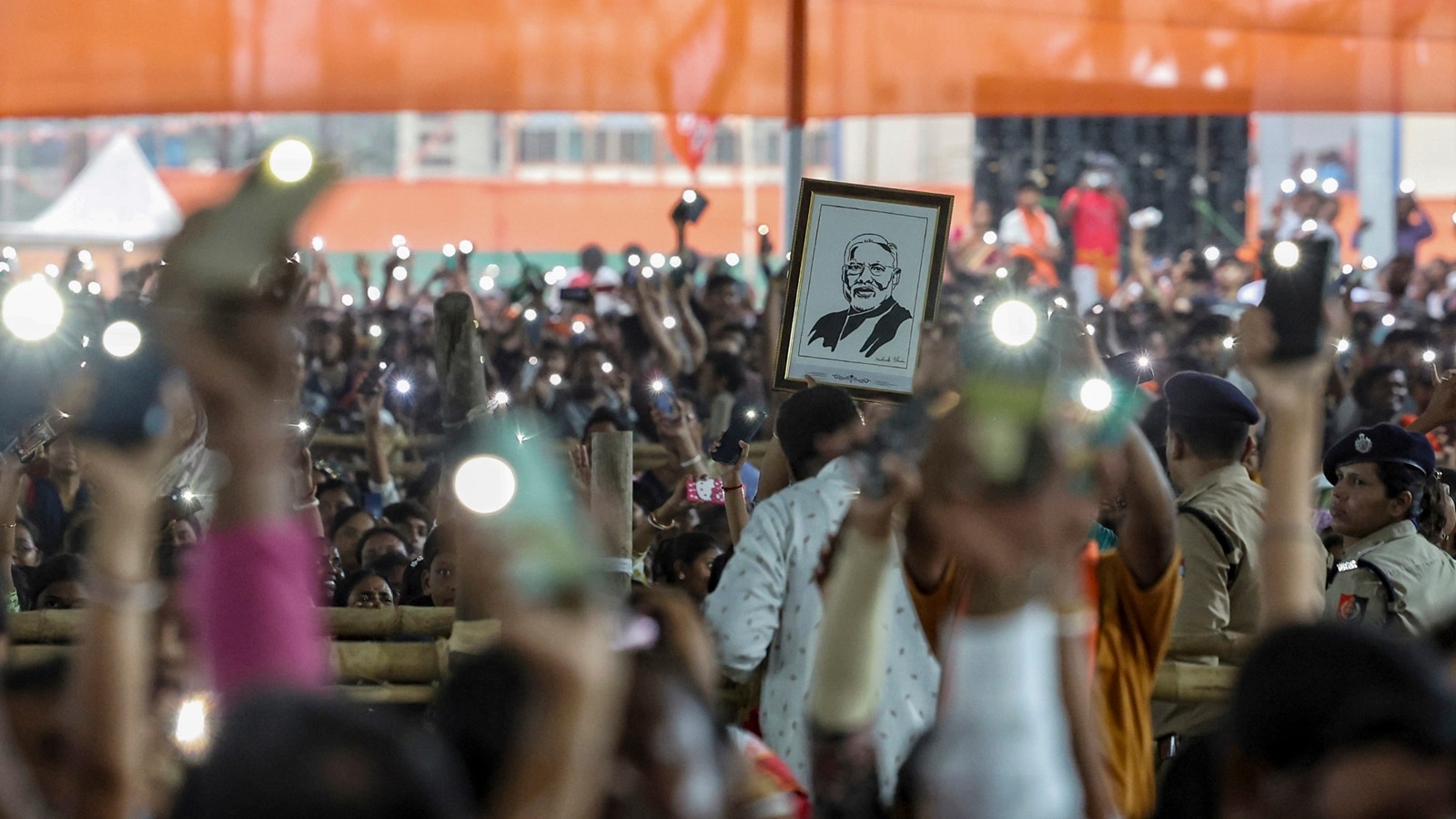
Modi's Women’s Convention in Varanasi
Modi's Varanasi rally frames women's reservation as a national mission, targeting the 2027 Uttar Pradesh elections with a strategic narrative.
India
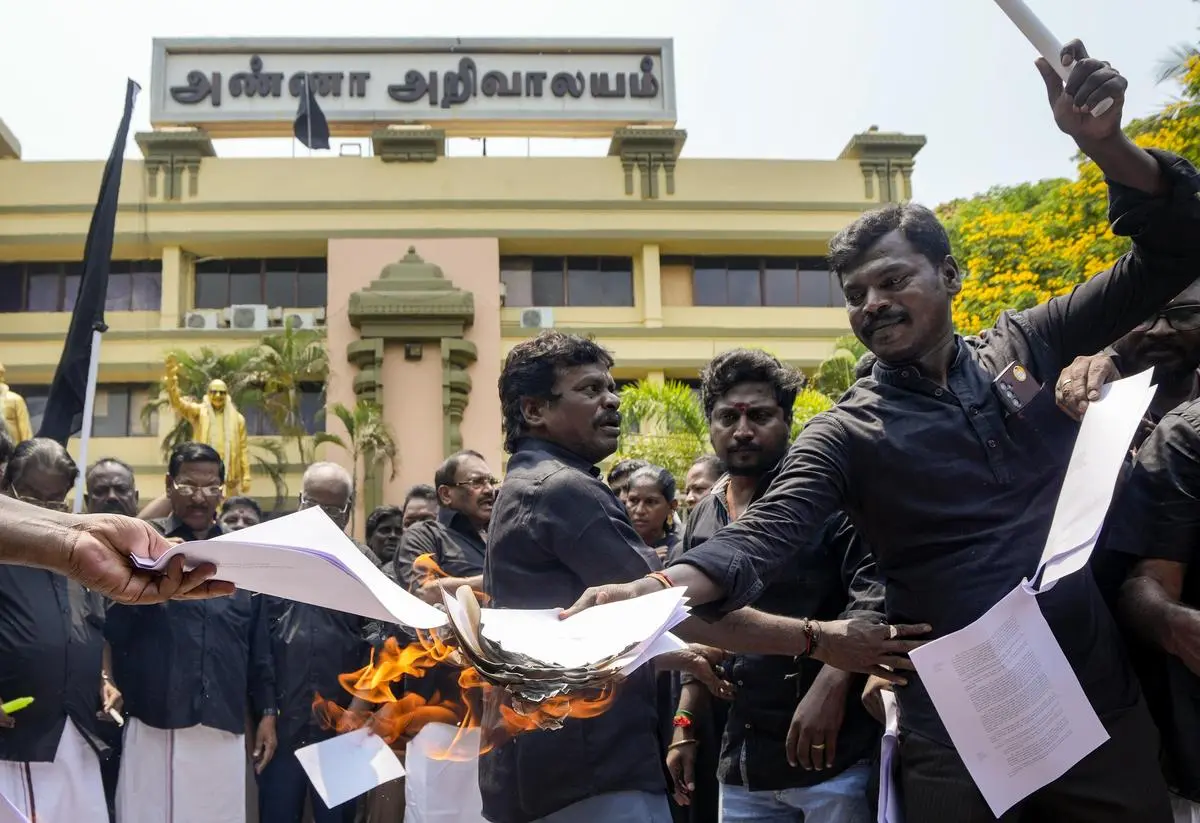
Women’s Reservation Bill 2026
The Constitution (131st Amendment) Bill, 2026 was defeated in Lok Sabha, revealing deeper political conflicts over women's reservation and delimitation.

Conflict & Security
Drone Warfare Killing Aid Workers at Unprec
Over 1,000 humanitarian workers killed in three years as cheap armed drones collapse legal protections. Gaza, Sudan, Ukraine, and DRC see deliberate targeting of aid convoys and hospitals with zero prosecutions.
Global
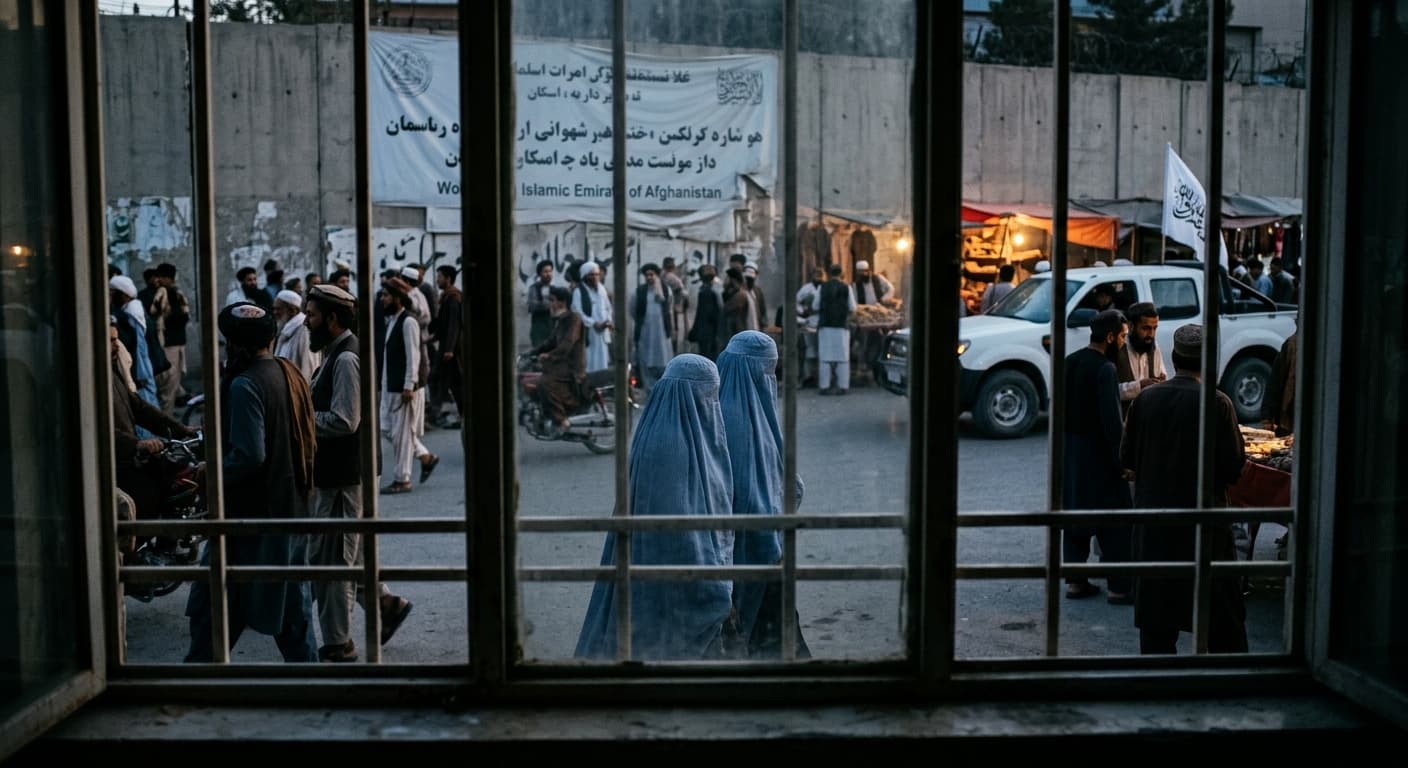
World Normalises Taliban as Afghan Women Eras
UN data shows Afghan women erased from public life as Russia recognises the Taliban, EU hosts officials in Brussels, and ICC warrants for gender persecution go unenforced.