Bihar’s Voter Roll Case Puts EC Power Under Test
The Supreme Court’s Bihar SIR ruling will decide how far the Election Commission can go in cleaning electoral rolls — and who gets left out.
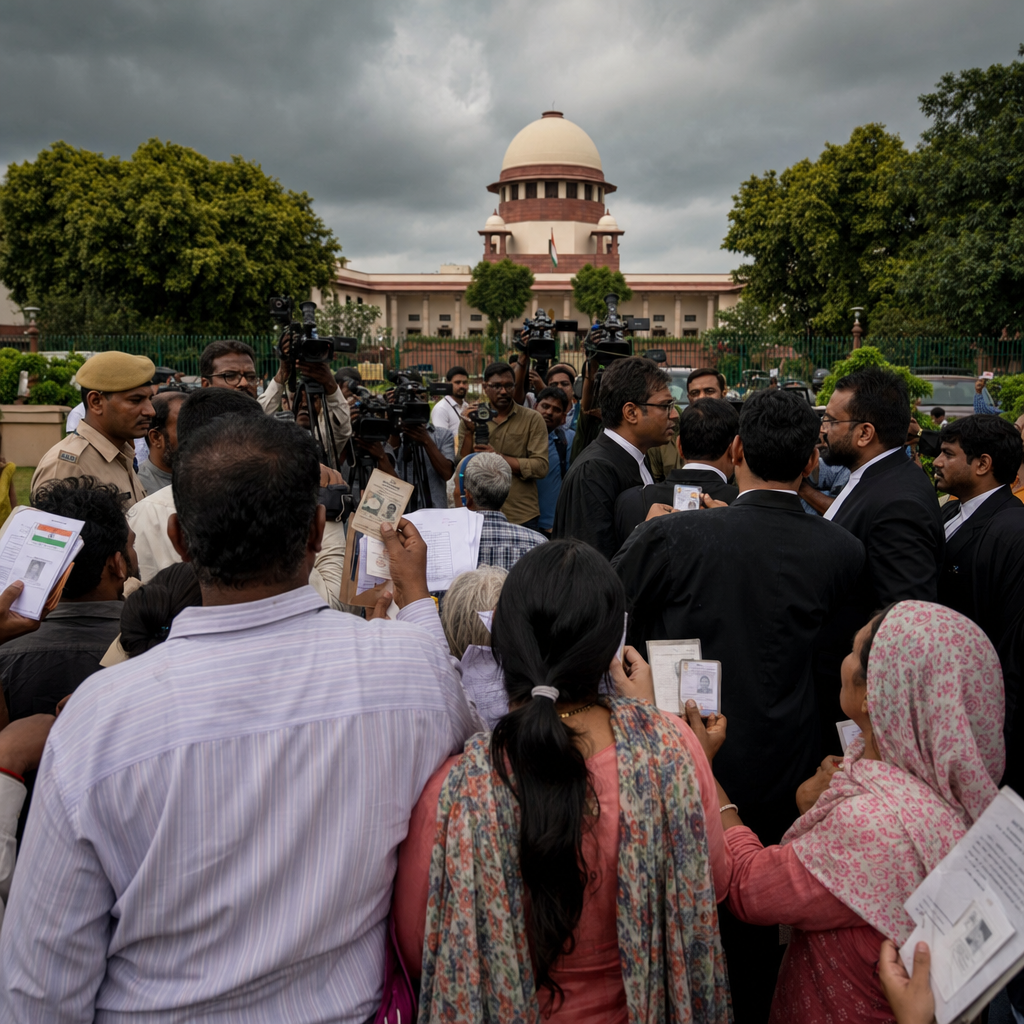
The Supreme Court is set to deliver judgment on petitions challenging the Election Commission’s power to run Bihar’s Special Intensive Revision (SIR) of electoral rolls, after reserving the matter on January 29 ( Livemint;
  ETLegalWorld). The fight is not over paperwork. It is over who controls the gate to the ballot box: the Election Commission, acting under its constitutional remit, or the petitioners who say the SIR has drifted into a citizenship screening exercise that the EC is not authorized to run (ETLegalWorld;
  Supreme Court Observer).
What is really at stake
The petitioners — including the Association for Democratic Reforms — argue that Article 326 and the Representation of the People Act, 1950 do not permit the EC to conduct an overhaul of this scale, especially one that requires voters to submit extensive documentation (Livemint; Supreme Court Observer). The EC’s answer is blunt: it has constitutional authority over electoral rolls, and it cannot run credible elections if duplicate, dead, migrated, or ineligible names remain on the list (ETLegalWorld; Supreme Court Observer).
That legal dispute matters because Bihar is not a routine test case. According to the Mint live update, the EC published a draft roll that removed 65 lakh names, while the EC also defended its position that Aadhaar and voter ID cannot be treated as conclusive proof of citizenship (Livemint). The Supreme Court Observer says the revision was built around 11 documents and framed as a cleanup of the rolls, not a full citizenship inquiry (Supreme Court Observer). That distinction is decisive: if the court accepts the EC’s framing, the commission gains a precedent for far more aggressive revisions elsewhere in  India. If it does not, the EC’s discretion over voter-roll cleansing narrows sharply.
Winners, losers, and precedent
The immediate beneficiary of an expansive ruling would be the EC, and by extension parties that want the voter list aggressively policed for “bogus” names (ETLegalWorld). The immediate losers would be voters most vulnerable to deletion — especially those without clean documentation, or with records that do not match neatly across state databases (Supreme Court Observer). Politically, that is why the case has legs beyond Bihar: a ruling upholding the SIR gives governments and election officials a template for tougher roll revisions; a ruling against it arms opposition parties and civil society with a judicial check on mass deletions.
What to watch next
The key issue now is whether the court draws a line between routine roll revision and a de facto citizenship test. Watch for what the bench says about the EC’s authority under Section 21(3) of the 1950 Act, the evidentiary status of Aadhaar and voter cards, and whether any remedy is directed for those already struck off the draft list (ETLegalWorld; Livemint). The judgment will decide more than a Bihar administrative process. It will define how far the EC can go, and how much judicial tolerance there is for large-scale voter-roll purification before an election.