Caribbean Netherlands: A Unique Status
Exploring the political dynamics of the Caribbean Netherlands
Model Diplomat3 min readamericas
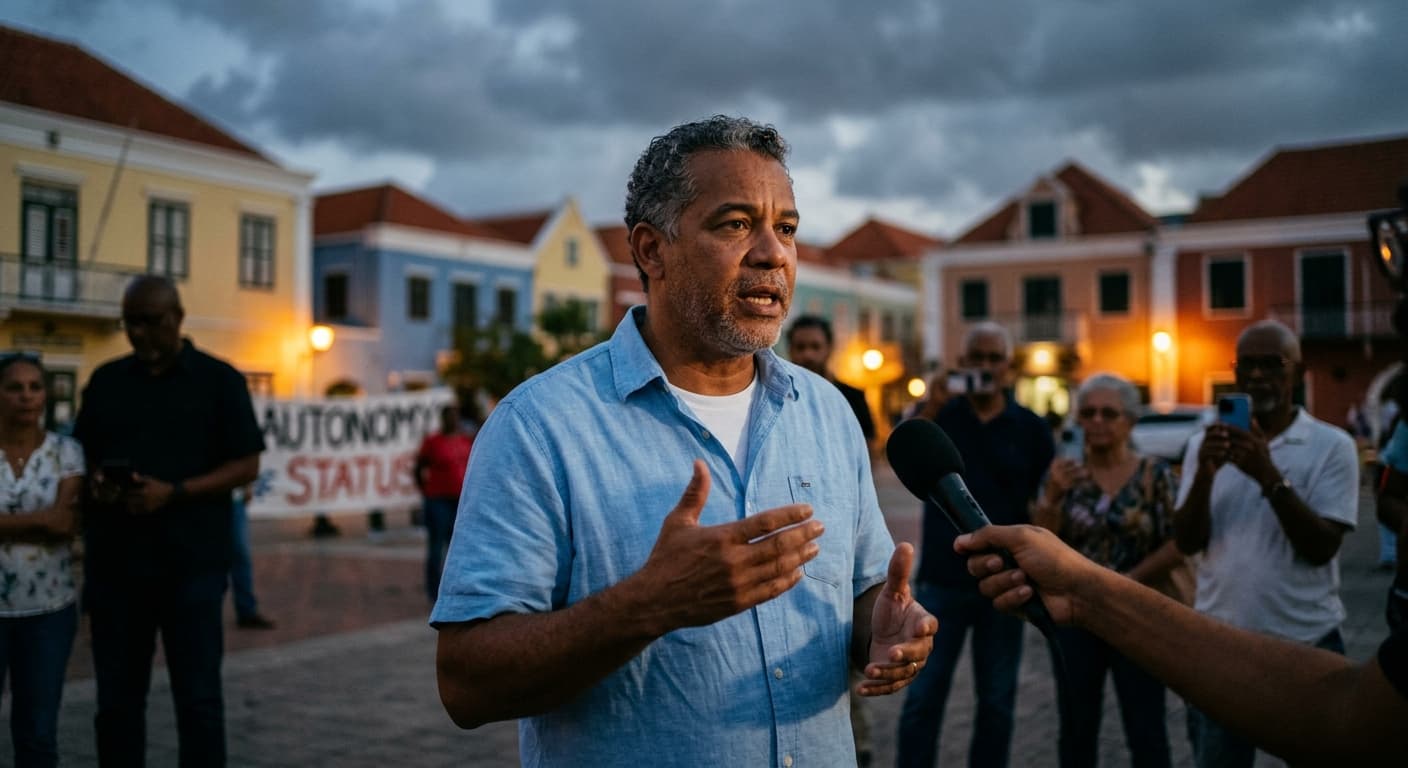
The Caribbean Netherlands Isn't a Country — and That's the Whole Story
Three Dutch Caribbean islands with 32,000 people, no foreign policy of their own, and an increasingly assertive bargaining position with The Hague.
The Caribbean Netherlands — Bonaire, Sint Eustatius, and Saba — cannot sign a treaty, deploy a diplomat, or vote at the UN. The three islands are special municipalities of the Netherlands, and have been since the dissolution of the Netherlands Antilles on 10 October 2010, when the Kingdom's Caribbean holdings were carved into two autonomous countries (Curaçao and Sint Maarten, joining Aruba) and three public bodies administered directly from The Hague
BBC News. Their foreign policy profile exists only as a function of Dutch sovereignty.
But treating them as a policy footnote would be a mistake. What the BES islands lack in diplomatic machinery, they make up for in leverage — and they are using it.
The power dynamic runs through money
The three islands receive roughly €300 million annually through the Caribbean Netherlands Fund, covering infrastructure, education, and healthcare. The Dutch government also provides block grants, and The Hague has increasingly tied disbursements to conditions — most notably requiring Sint Eustatius to improve financial management before releasing payments Grokipedia. This is the core of the bargaining relationship: the islands depend on Dutch fiscal transfers, and the Netherlands uses that dependence to extract governance reforms.
But dependence cuts both ways. The islands provide the Kingdom with strategic depth in the Caribbean — observer status at CARICOM, participation in the Association of Caribbean States, naval basing for counter-narcotics and migration interdiction, and biodiversity reserves that anchor the Dutch Caribbean Nature Alliance. Bonaire's reefs and Saba's cloud forests are not just ecological assets; they are instruments of Dutch presence in a region where European influence is otherwise thinning.
Climate liability is the new fault line
The most significant recent escalation came from Bonaire. In May 2023, seven residents joined Greenpeace Netherlands in sending a pre-litigation letter to Prime Minister Mark Rutte, demanding the government accelerate its net-zero target to 2040 and fund adaptation costs on the island. The plaintiffs are Dutch citizens arguing that The Hague is breaching their human rights by failing to protect them from climate consequences disproportionately borne by Caribbean territories Al Jazeera.
The Dutch government responded with a funding boost and eased access to energy-transition subsidies, but did not concede on the emissions timeline. The legal argument — whether climate and human-rights treaties apply to overseas territories — remains unresolved. Margaretha Wewerinke-Singh of the University of Amsterdam pointed out that the Netherlands has studied climate risks extensively for its European territory while doing almost nothing for its Caribbean municipalities. That asymmetry is the liability.
The currency tells its own story
One of the stranger artifacts of the 2010 settlement: the BES islands use the US dollar, adopted in January 2011 after the dissolution of the Netherlands Antilles guilder. Meanwhile, the islands remain subject to Dutch monetary policy frameworks, with the Dutch National Bank serving as financial supervisor — though banking is conducted primarily through Curaçao-based institutions IMF. The result is a jurisdiction that transacts in dollars, is supervised by the DNB, yet falls under EU OCT (Overseas Countries and Territories) status, meaning EU law does not automatically apply.
The 2015 statutory review of the WolBES governance framework concluded the existing arrangements were not working well — but offered no recommendation on whether switching from OCT to outermost-region (OMR) status would help. That question has been left hanging for over a decade.
What to watch
Three pressure points are converging. First, the Bonaire climate litigation has not been resolved; any court ruling that extends Dutch human-rights obligations to the Caribbean municipalities would fundamentally recast the fiscal relationship. Second, the conditional-funding model is testing the limits of local consent — Sint Eustatius has already chafed under financial-management requirements, and further conditions will likely provoke open political disputes. Third, the status question — OCT versus OMR — remains unresolved and will become harder to ignore as climate adaptation costs mount and the islands argue they deserve the same protections as European Dutch citizens.
The Caribbean Netherlands may not have a foreign ministry. But its 32,000 residents are increasingly behaving like a constituency that understands its leverage — and intends to use it.
Discover more
Global Politics
Xi Jinping Calls China-Russia Ties 'Precious'
Xi Jinping's description of China-Russia ties as 'precious' reflects a strategic imbalance, with Beijing dictating terms in the partnership.

US Politics
White House Pressures Congress for Crypto Leg
The Trump administration's push for the CLARITY Act aims to reshape crypto regulation, impacting trillions in market value and the Trump family's wealth.

US Politics
SNAP Food Assistance Faces Legal Challenges
In 2026, SNAP faces stricter eligibility rules and mounting legal challenges, threatening food assistance for the millions of Americans who rely on the program.

Economics
Fed's Amex AML order puts correspondent banking on notice
Federal Reserve's Amex AML order requires board-level controls and a 90-day plan; OCC fined the bank $350 million over enterprise-wide deficiencies.