Bank of England Holds Rates at 3.75%
The Bank of England maintains rates amid shifting economic pressures.
Model Diplomat8 min readEurope

Bank of England holds rates at 3.75% — but the doves have vanished
The Bank of England held Bank Rate at 3.75% on 17 June 2026. The 7–2 vote — with both dissents pushing for a hike — quietly ends the UK's cutting cycle.
The Bank of England's fourth consecutive hold at 3.75% on 17 June 2026 looks like inertia. It is not. Six months ago the Monetary Policy Committee split 5–4 with four members voting to cut further; on 17 June it split 7–2 with both dissenters — chief economist Huw Pill and external member Megan Greene — voting to hike to 4%. The Iran war has not just paused Threadneedle Street's easing cycle; it has flipped the direction of the debate, without a single policy move to show for it. That silent pivot is what markets, mortgage borrowers and the Treasury now have to price.
What the MPC actually said
The vote was 7–2 to hold, with the two dissents preferring a 25-basis-point rise to 4%, according to the Monetary Policy Summary published by the Bank of England. The Committee's language was pointed. "The risk of material second-round effects in price and wage-setting, against which policy needs to lean, is greater the longer higher energy prices persist," the minutes state, before adding that the labour market "continues to loosen" and that "signs of a weakening economy could contain inflationary pressures."
That is a two-handed sentence for a two-handed committee. The primary document also notes that Brent crude averaged $100 a barrel and UK wholesale gas 116 pence per therm between April and June — versus $66 and 87p before the war — and that both had fallen to around $79 and 100p in the days leading up to the meeting after a US-brokered ceasefire and the reopening of the Strait of Hormuz.
CPI inflation stood at 2.8% in the year to May, unchanged from April, as the Office for National Statistics reported. But petrol and diesel prices rose 24.6% year-on-year — the highest since September 2022 — and the ONS's Input Producer Prices index climbed 8.7%, its steepest rate since early 2023. That is the pipeline the MPC is watching.
The vote is the story
Read the vote in isolation and it is a hold. Read it against February's 5–4 split — where four members wanted a further cut — and it is a 6-vote swing in the hawkish direction inside four meetings. The February 2026 minutes confirm the earlier balance: Swati Dhingra, Alan Taylor, Dave Ramsden and Sarah Breeden all backed a 25bp cut to 3.5%. None has dissented dovishly since.
The March meeting produced the first unanimous hold in four-and-a-half years, in the immediate aftermath of the US–Israel strikes on Iran. In April, Pill broke ranks for a hike. In June, Greene joined him. The doves have not returned. Andrew Bailey, the governor, told reporters that "holding is the right position to be in at the moment" but acknowledged that "the higher energy prices of the past four months mean there's already some inflationary pressure in the pipeline", per the BBC's live coverage.
That pipeline has a specific July date attached. Ofgem's price cap for a typical dual-fuel household rises by £221 to £1,862 on 1 July — a 13% jump — because of the war-driven surge in wholesale gas, the regulator confirmed. Gas bills alone are up 24%. Roughly 60% of households on variable tariffs will feel it immediately.
What is different from the 2022 shock
The instinct is to reach for the Ukraine-war playbook: energy shock, wage-price spiral, aggressive tightening. The MPC is deliberately resisting that reach — and the data give it cover.
Wage growth has been decelerating for a year. Private-sector regular pay slowed to a five-year low in late 2025, ONS data via the BBC show, and the labour market has continued to loosen through 2026. Bailey has repeatedly noted that most 2026 pay settlements were struck before the Iran war, meaning the standard second-round channel — workers demanding compensation for lost real income — is partly closed off for this cycle.
The International Monetary Fund's Article IV analysis last year already argued for continued gradual easing, projecting inflation would return to target in H2 2026 with "muted second-round effects (given the labor market weakening)" and one cut per quarter until the neutral rate of about 3%, according to the IMF's UK staff report. The Iran shock has upended that path, but the underlying structural argument — a fragile labour market absorbing an energy pass-through — has strengthened, not weakened, the case for a hold rather than a hike.
That is why the MPC has revised its year-end inflation peak down, from 3.6% in April to around 3.25% now — below even the most benign scenario the Bank published two months earlier. The Bank's April scenarios set out three paths: a benign case with inflation peaking at 3.6%, a middle case at 3.7% for longer, and an adverse case with oil above $120 forcing six hikes to a 5.5% terminal rate. The June revision effectively retires the adverse case for now.
The winners and losers of the hold
The clearest loser is the mortgage market. The Bank's Financial Stability Report, published on 7 July, revised up the number of homeowners facing higher payments through 2028 by roughly a million, to more than five million, the BBC reported. A typical borrower rolling off a fix in the next two years faces about £45 a month more; 750,000 households on sub-3% deals rolling off this year face £170 a month more. The average two-year fixed rate spiked from 4.83% in early March to a peak of 5.90% on 12 April, according to Moneyfacts data cited by the BBC, before easing to 5.49%.
Cash savers, particularly older households, are the quiet winners. A 3.75% base rate — the lowest since February 2023 — combined with above-target inflation still favours lenders over borrowers, but the sustained holding pattern gives banks time to defend deposit margins. About 70% of savings providers cut deposit rates in early 2026 anyway, per Moneyfacts via the BBC.
The most consequential loser is the Chancellor. Rachel Reeves entered 2026 with £23.6bn of headroom against her fiscal rule after the March Spring Statement, up from £21.7bn in November, according to the Office for Budget Responsibility's forecast summarised by the BBC. Every basis point of gilt-yield persistence at longer maturities erodes that buffer. UK two-year overnight index swap rates are around 70bp above pre-war levels, the MPC minutes note — meaning the Treasury is paying more to borrow even without the Bank moving. The
Financial Times reported on 2 July that internal Treasury modelling now suggests the war's damage to the public finances has been less severe than initially feared after the Hormuz reopening — but the gilt curve has not yet fully reversed.
Reeves has publicly called the US decision to enter the war a "mistake" and told CNBC that "the best economic policy now, not just for the UK, but globally, is to de-escalate", according to the BBC. The politics is telling: the Chancellor needs the Bank to cut, not hold, if the autumn Budget is to avoid a fresh round of tax rises or spending cuts. The MPC has quietly told her she will not get it this side of September.
The G3 divergence
Look across the Atlantic and the Channel and the picture sharpens. The Federal Reserve, at Kevin Warsh's first meeting in the chair, held the federal funds range at 3.50–3.75% on 17 June, the BBC reported, with the FOMC statement citing "elevated uncertainty that owes, in part, to the conflict in the Middle East." US CPI stood at 3.8% in April — a full percentage point above the UK's.
The European Central Bank went the other way. On 5 June, having cut to 2% only a year earlier, it raised its deposit rate to 2.25% — its first hike in almost three years — noting explicitly that the conflict was "generating inflation pressures." That is a hawkish outlier among developed-market central banks and a warning to the MPC about how quickly the tone can shift when energy shocks meet a labour market with less slack than the UK's.
What to watch — the 30 July meeting
The next MPC decision falls on Thursday 30 July, alongside the quarterly Monetary Policy Report, according to the Bank's published schedule. Three variables will decide whether the 7–2 hold becomes an 8–1 hold, a hike, or — the tail case now no one is pricing — a resumed cut.
- June and July CPI (16 July, 20 August). The Bank's staff forecast has inflation drifting up towards 3.25% by year-end from 2.8% today. A print above 3% before the July meeting would tilt more members towards Pill and Greene's camp. A print at or below 2.8% would strand them as isolated hawks.
- Ofgem cap and wholesale-gas pass-through. The 13% cap increase on 1 July is largely mechanical, but its knock-on to core inflation via services and food prices is what will drive the MPC's second-round-effects language. Food inflation could rise to 4.6% by September on the Bank's own forecasts, per
the BBC.
- Strait of Hormuz and Brent. The reopening deal is holding but oil is still at $79 — above the roughly $66 pre-war anchor. Any renewed disruption in the Gulf reintroduces the Bank's adverse scenario and puts a hike, not a cut, on the July agenda.
Diplomat View
The MPC has done something unusual in June: it has held rates while explicitly telling markets that the next move is more likely up than down, and it has done so with a vote configuration that looked unthinkable in December. That is the specific call to make. Expect a hold on 30 July with a 7–2 or 8–1 hawkish vote, with the Monetary Policy Report presenting a modestly higher inflation profile than April but a lower one than the June statement implied. The forecast revises only if two things happen in tandem before then: June CPI prints at 3% or above and Brent breaks back above $95 on renewed Gulf disruption — in which case a 25bp hike to 4.00% moves from tail risk to base case. Conversely, if July CPI surprises below 2.7% and Hormuz traffic normalises fully, the two hawks are stranded and the market will start pricing a November cut. For Rachel Reeves, the message from Threadneedle Street is uncomfortable and clear: no monetary bailout is coming ahead of the autumn Budget. She will have to find the money herself.
The Bottom Line
The Bank of England's 3.75% hold is not a pause in an easing cycle — it is a de facto tightening bias dressed up as continuity, because both dissenting votes now point up, not down. The story of June 2026 is that the UK's dovish faction has vanished without a policy move, leaving the Chancellor with a mortgage market, a gilt curve and a fiscal buffer that are all being repriced upwards while the Bank Rate itself stays still.
Discover more

India
Women’s Reservation Bill 2026
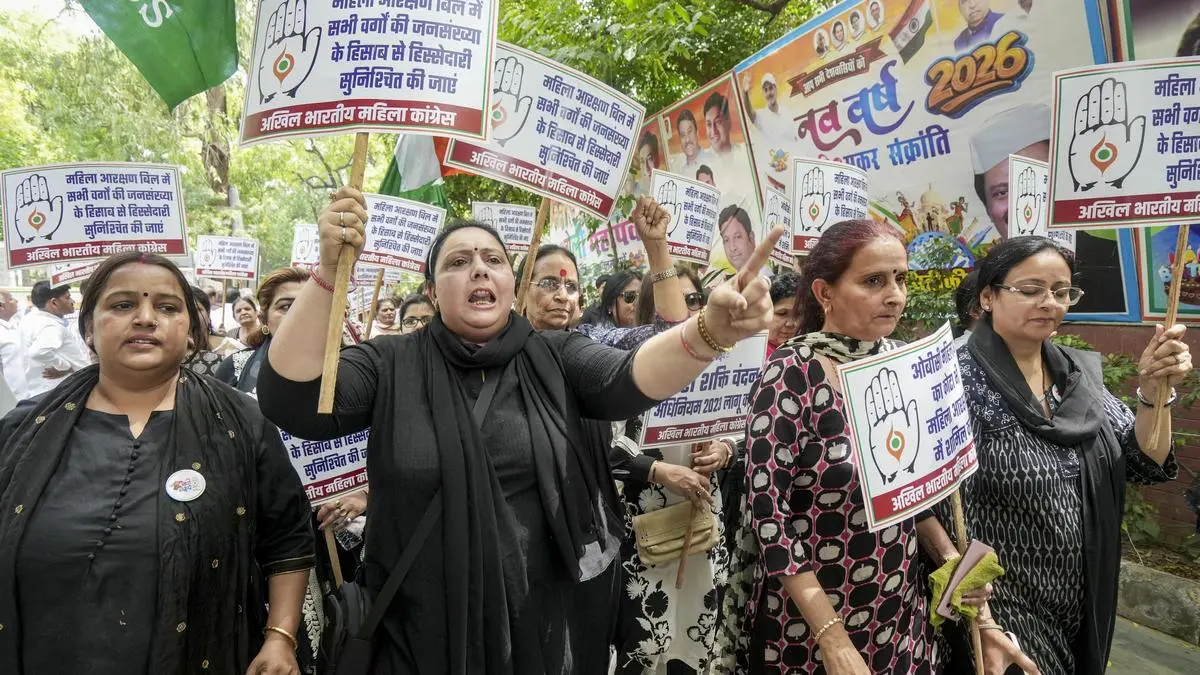
The Constitution (131st Amendment) Bill, 2026 was defeated in Lok Sabha, revealing deeper political conflicts over women's reservation and delimitation.
India
BJP's Misunderstanding of Women's Quota Needs
The BJP's linking of the Women Reservation Bill to delimitation risks delaying women's empowerment in India, misreading the aspirations of female voters.

India
Congress Advocates 33% Women’s Quota
Congress calls for a 33% women's reservation in the existing 543 Lok Sabha seats, countering Modi's plan to expand the house to 850 seats.

Conflict & Security
Drone Warfare Killing Aid Workers at Unprec
Over 1,000 humanitarian workers killed in three years as cheap armed drones collapse legal protections. Gaza, Sudan, Ukraine, and DRC see deliberate targeting of aid convoys and hospitals with zero prosecutions.