Bangladesh's New PM Signals Shift Away from
Rahman prioritizes Malaysia and China over India.
Model Diplomat3 min readSouth Asia
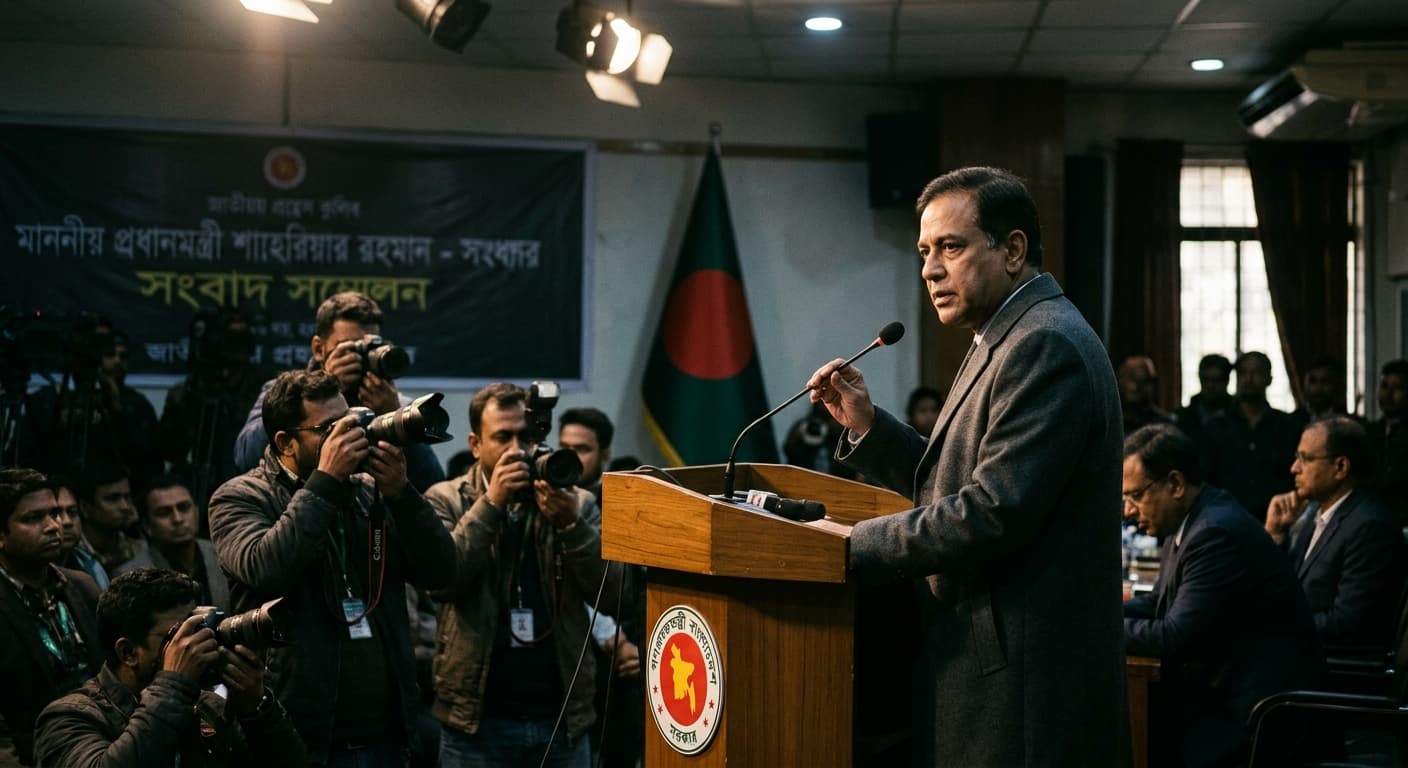
Rahman Signals Bangladesh's Rebalancing—and Delhi's Limits
New PM skips India debut, choosing Malaysia then China. Signals doctrine shift: placate migrants, court Beijing, keep Delhi at arm's length.
The message was unmistakable. On June 21–22, 2026, Bangladesh Prime Minister Tarique Rahman undertook his first foreign visit to Malaysia, not India, followed by a week in China starting June 23. The sequencing matters—not as a snub, but as a reassertion of autonomy. Rahman, who swept elections in February after returning from 17 years in London exile, is executing a doctrine he campaigned on:
"Bangladesh First," independent of New Delhi and equidistant from both India and China.
New Delhi's immediate reaction reveals how much ground India has lost. An Indian diplomat told The Wire the choice of Malaysia "sent a reassuring signal," reframing the snub as reassurance. New Delhi is managing expectations because it cannot dictate timing. This reversal—from treating Bangladesh as a strategic subordinate under Sheikh Hasina to accepting Rahman's terms—marks a structural shift, not a tactical pause.
Why Malaysia First, China Next
The Malaysia leg targets 800,000 Bangladeshi workers who comprise 37 percent of Malaysia's foreign workforce, concentrated in manufacturing, construction, and agriculture. Migration remittances are both economic ballast and political currency—Rahman's government gains credibility at home by protecting workers abroad. This grounds his first trip in tangible welfare, not great-power hedging.
The China leg, beginning June 23 at the World Economic Forum's Summer Davos meeting in Dalian, carries heavier stakes. Dhaka and Beijing are expected to sign 15–17 bilateral instruments, including agreements on the long-stalled Teesta River project—a dredging and irrigation initiative Beijing now eyeballs despite India's historical interest.
Rahman will meet Chinese Premier Li Qiang and President Xi Jinping, securing pledges on technology, renewable energy, and Belt and Road expansion during a critical infrastructure window.
The India Problem
Rahman's government took office in February, four months after Sheikh Hasina fled to India during the August 2024 uprising. That asylum created a wedge: Bangladesh repeatedly demanded Hasina's extradition, India refused, and public opinion in Dhaka hardened against New Delhi. Relations remained strained despite gradual normalization efforts, with border frictions persisting—India continues
pushing undocumented migrants across the frontier.
Rahman's framing short-circuits the trap. By starting outside the India-China axis altogether, he argues he is prioritizing domestic welfare and economic diversification before re-engaging the regional powers. Analysts noted the decision to begin with Malaysia rather than India or China "avoids geopolitical signalling while maintaining diplomatic balance," as one Dhaka academic put it—a face-saving construct for Delhi that permits Rahman to operate from principle, not fear.
What to Watch
The test comes after the China visit concludes, likely June 26–27. Will Rahman visit India within weeks, or will months pass? India's ability to bend Bangladesh to its will depended on Hasina's alignment; that era is over. Rahman has signaled he will cooperate—but on his terms, after consolidating economic partnerships elsewhere. New Delhi's warming invitations mask an uncomfortable fact: Bangladesh now has leverage India lacks—access to Western investment, Chinese capital, and non-aligned credibility. The next move belongs to India: offer concessions on Hasina, border flows, and trade terms, or watch Dhaka drift further east while maintaining formal courtesies.
Discover more

India
India-South Korea $50B Trade Expansion Plan
India and South Korea target $50 billion in bilateral trade by 2030, focusing on industrial cooperation and strategic alignment amid US pressures.
India
CPI(M) Calls to Decouple Quota from Delimita
CPI(M) advocates for a 33% women's quota in Lok Sabha by 2029, removing the need for delimitation and census linkage.
India
Modi's Women’s Convention in Varanasi
Modi's Varanasi rally frames women's reservation as a national mission, targeting the 2027 Uttar Pradesh elections with a strategic narrative.

Conflict & Security
Drone Warfare Killing Aid Workers at Unprec
Over 1,000 humanitarian workers killed in three years as cheap armed drones collapse legal protections. Gaza, Sudan, Ukraine, and DRC see deliberate targeting of aid convoys and hospitals with zero prosecutions.