Balochistan Train Bombing Exposes Pakistan’s Security Gap
Blast near Quetta killed at least 20 people on a military train, underscoring how Baloch separatists can still hit Pakistan where it is most exposed.
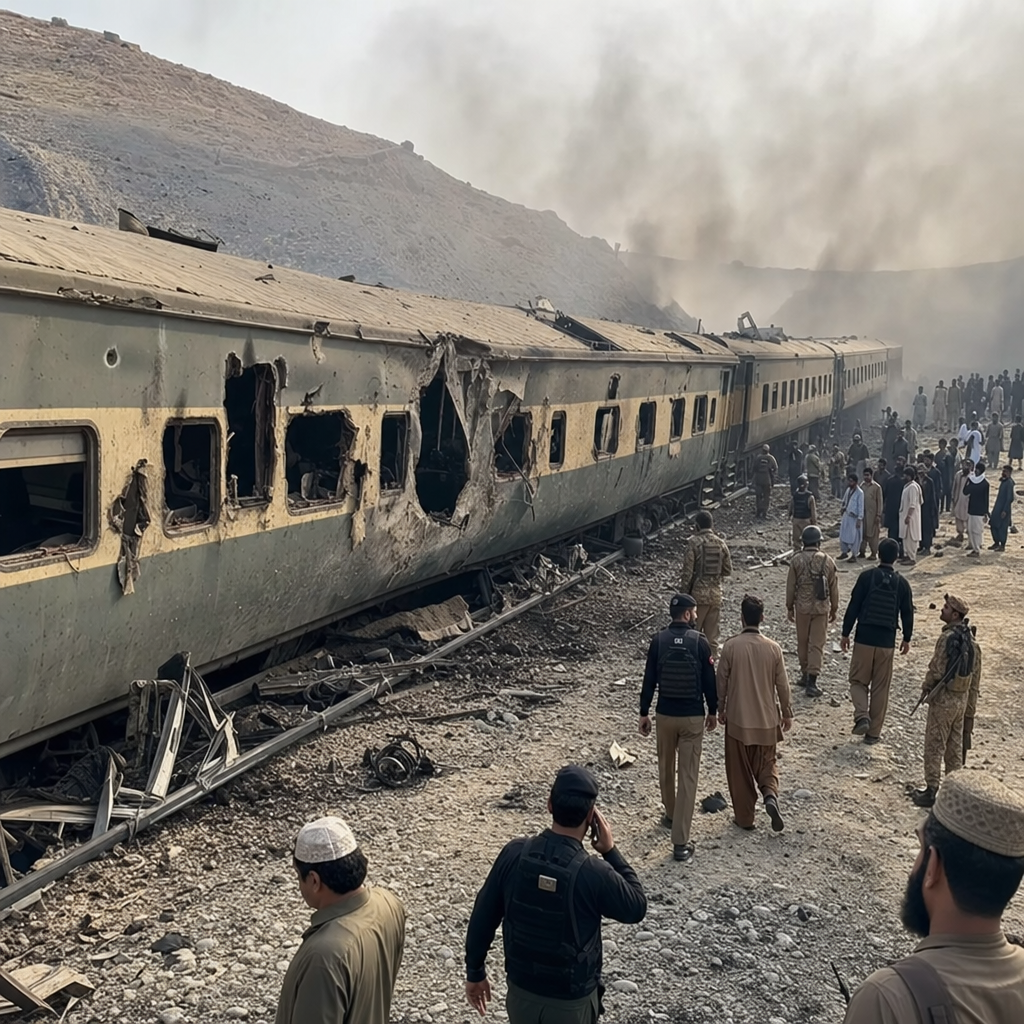
At least 20 people were killed and around 70 wounded when a train carrying military personnel was blown up near Quetta in Pakistan’s Balochistan province, with the separatist Balochistan Liberation Army (BLA) claiming responsibility, according to  BBC News Русская служба. Local officials told
  APP the blast hit near Chaman Phatak as the train crossed the area, derailed several coaches, and injured women and children among other passengers.
  BERNAMA, citing Anadolu and police sources, put the death toll higher, at 23, and said the attack was likely a suicide bombing aimed at troops.
The leverage is in the target
The BLA’s choice of target matters more than the raw casualty count. A train carrying soldiers is a symbolic and operational win for an insurgent group that wants to show it can reach Pakistan’s security forces even in a heavily militarized province. The BLA’s stated aim is an independent Baloch state, and the group has built its brand around attacks that embarrass the central government and force the army into a defensive posture, not just in the mountains but on ordinary infrastructure such as rail lines, roads, and transit hubs, according to BBC News Русская служба and BERNAMA.
That gives the militants a narrow but real form of leverage: every successful strike pressures Islamabad to divert more troops, harden transport routes, and absorb the political cost of repeated security failures. The state, by contrast, is left trying to do two things at once — keep rail traffic moving and prove it still controls a province that has been an insurgency front for years. APP said Railways Minister Hanif Abbasi ordered operations to continue and condemned the attack as terrorism, a standard response that signals resolve but also confirms the government cannot afford a prolonged disruption.
Why Balochistan keeps producing this kind of attack
Balochistan is Pakistan’s most restive province and a strategic one. It borders Iran and Afghanistan, sits on key internal transport corridors, and is central to the China-Pakistan Economic Corridor — which makes rail and road security a national issue, not a local one. BERNAMA noted that the region is a major route for CPEC, while BBC News Русская служба reported that the train was carrying soldiers and their families home for Eid al-Fitr, increasing the civilian toll and the political shock value.
That mix benefits the insurgents in a familiar way: they can claim they are striking the state, but the blast also hits civilians, which deepens insecurity and keeps the province in crisis mode. It also benefits Pakistan’s hardliners, who will use the attack to justify more security spending and a tougher line on militants. What neither side gets is a durable fix. The province’s geography, the long supply lines, and the fragmented militant landscape make a clean security answer unlikely.
What to watch next
The next decision point is attribution and response. If Pakistan’s authorities confirm a suicide attack and name the bomber’s network, they will likely use it to justify a broader crackdown and tighter movement controls around Quetta and rail routes. Watch for the casualty count to rise, for any shift in the government’s line on whether civilians or troops were the main target, and for whether the BLA tries to amplify the attack with follow-on propaganda. The key date now is the next official security briefing from Balochistan and the federal interior ministry — that will tell you whether Islamabad sees this as an isolated strike or the start of a new insurgent campaign.