Balikatan 2026: US-Philippines vs China
Major military drills highlight US-Philippines alliance strength.
Model Diplomat3 min readAsia
Balikatan Turns the Philippines Into a Front-Line Signal
The biggest-ever Balikatan drill signals tighter US-Philippines deterrence — and a higher risk that China treats the islands as a target.
Washington and Manila used Balikatan 2026 to send a blunt message to Beijing: the alliance is getting faster, heavier and more public. Al Jazeera said this year’s exercise brought in more than 17,000 troops from the Philippines and six partner countries, while
The Straits Times reported the first Tomahawk launch from Philippine soil.
South China Morning Post added that Japan fired a missile in the same drill, its first overseas live missile launch in roughly eight decades. That is not routine interoperability. It is a rehearsal for a fight the alliance wants Beijing to believe it cannot win quickly.
Why the drill matters
The power dynamic is simple: the US is turning Philippine geography into deterrence hardware. Al Jazeera’s reporting shows the exercise shifting from internal security toward external defence, with Philippine and US forces now “oiling the machinery” of coalition warfighting. The Straits Times said the Typhon launcher used for the Tomahawk can fire missiles in the 500- to 2,000-km range, putting Chinese territory within reach from Luzon. SCMP reported the drills stretched from the South China Sea to Itbayat, only 155 km from Taiwan. The message to Beijing is clear: any move against Taiwan or the Philippines will have to account for allied missiles already in theater.
That benefits Manila in one narrow sense. President Ferdinand Marcos Jr. gets a stronger US security guarantee and deeper access to allied systems, while Washington gets a more credible forward posture in the western Pacific. But it also locks the Philippines into the top tier of US-China friction. The more the archipelago hosts long-range strike systems, the harder it becomes for Beijing to treat Philippine territory as politically separate from a Taiwan contingency. For a broader view of the regional stakes, see Global Politics.
The domestic cost is part of the strategy
The political price is being paid inside the Philippines. Al Jazeera quoted activists, including Bayan and the Communist Party of the Philippines, arguing that the drills turn the country into a “launchpad” for US operations and make Filipinos more vulnerable to retaliation.
Ideastream Public Media reported that fishing communities in western provinces lost access to waters during the exercise, underscoring that deterrence drills are not abstract for coastal residents. Those complaints matter because the alliance depends on host-nation consent. If public tolerance erodes, the operational advantage Washington wants in the South China Sea becomes harder to sustain.
What China is likely to do next
Beijing is unlikely to answer with force first. SCMP said Chinese analysts called the Tomahawk launch the “worst provocation” in years and urged countermeasures, while Beijing condemned the drill as destabilizing. That points to a familiar Chinese playbook: more coast guard pressure, more naval and air signaling, and more diplomatic punishment of Manila and its partners. China’s leverage is not superior firepower in this moment; it is the ability to raise the costs of alliance cooperation without crossing into war.
What to watch next
The key question is whether Balikatan becomes the new normal. If the US keeps rotating long-range missiles through the Philippines, and if Japan keeps expanding its role, Manila will move from partner to platform. Watch the next deployment decisions for Batanes and Luzon, and watch for China’s response around the South China Sea and Taiwan Strait. That is the next pressure point, and it will tell you whether Balikatan is still a drill — or the architecture of a future fight.
Discover more

Global Politics
US Seizes Iranian Ship, Tensions Surge
The US seizure of the Iranian ship Touska highlights a shift in control over the Strait of Hormuz, favoring Iran's strategic position.
Global Politics
Trump's Conflicting Messages on Iran War
Trump's mixed messages on Iran reflect a strategy of audience management, benefiting Tehran amid a complex geopolitical landscape.
Conflict & Security
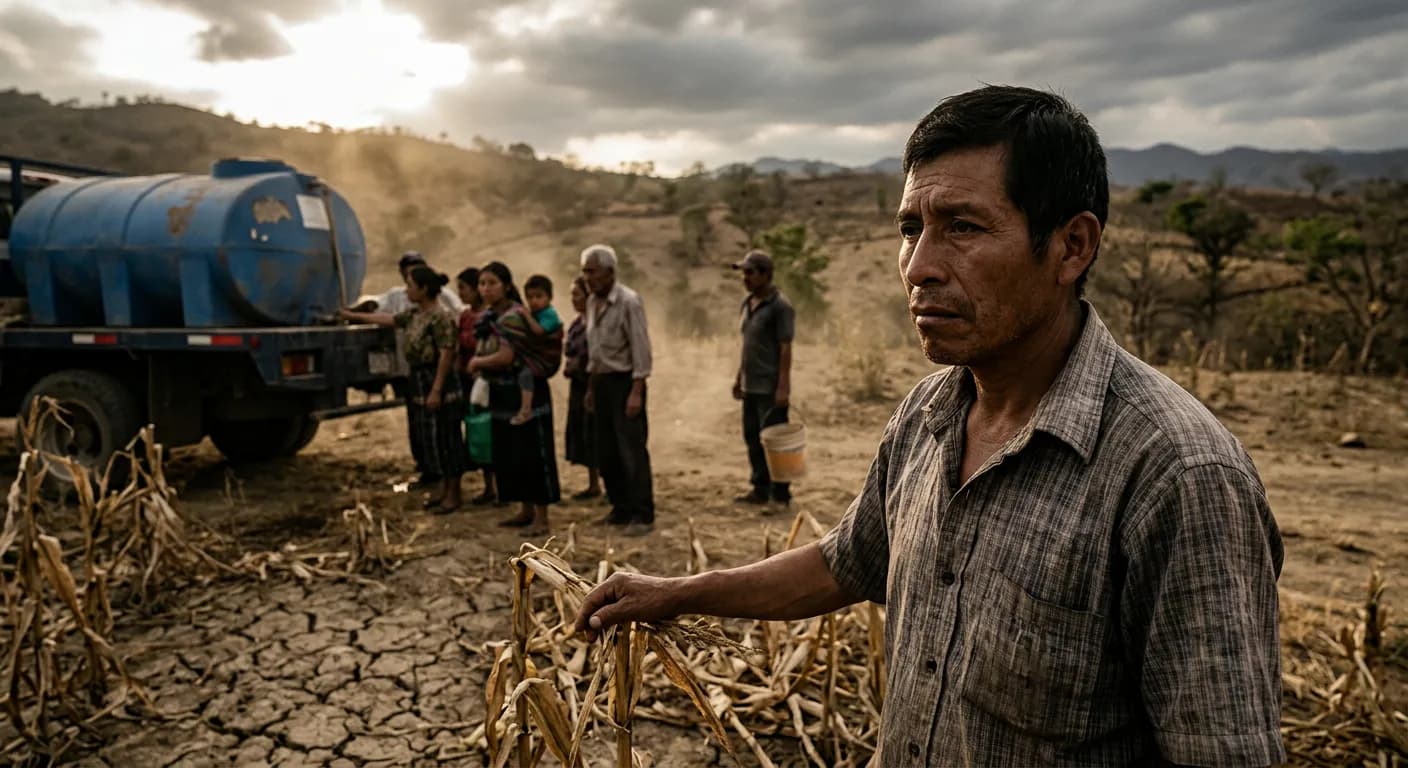
Guatemala: El Niño 2026–27 becomes regional security test
UNICEF: 25.8M children face El Niño risks in Latin America; Guatemala maps 188 municipalities for drought and food insecurity amid regional security test.

Economics
Fed's stress-test overhaul is a capital-smoothing exercise
Federal Reserve finalized stress-test overhaul: two-year averaging for bank capital buffers and public input, expected to halve volatility.