Ankara's $50B NATO Arms Deals Shift
NATO's summit reveals $50 billion in defense contracts.
Model Diplomat8 min readEurope
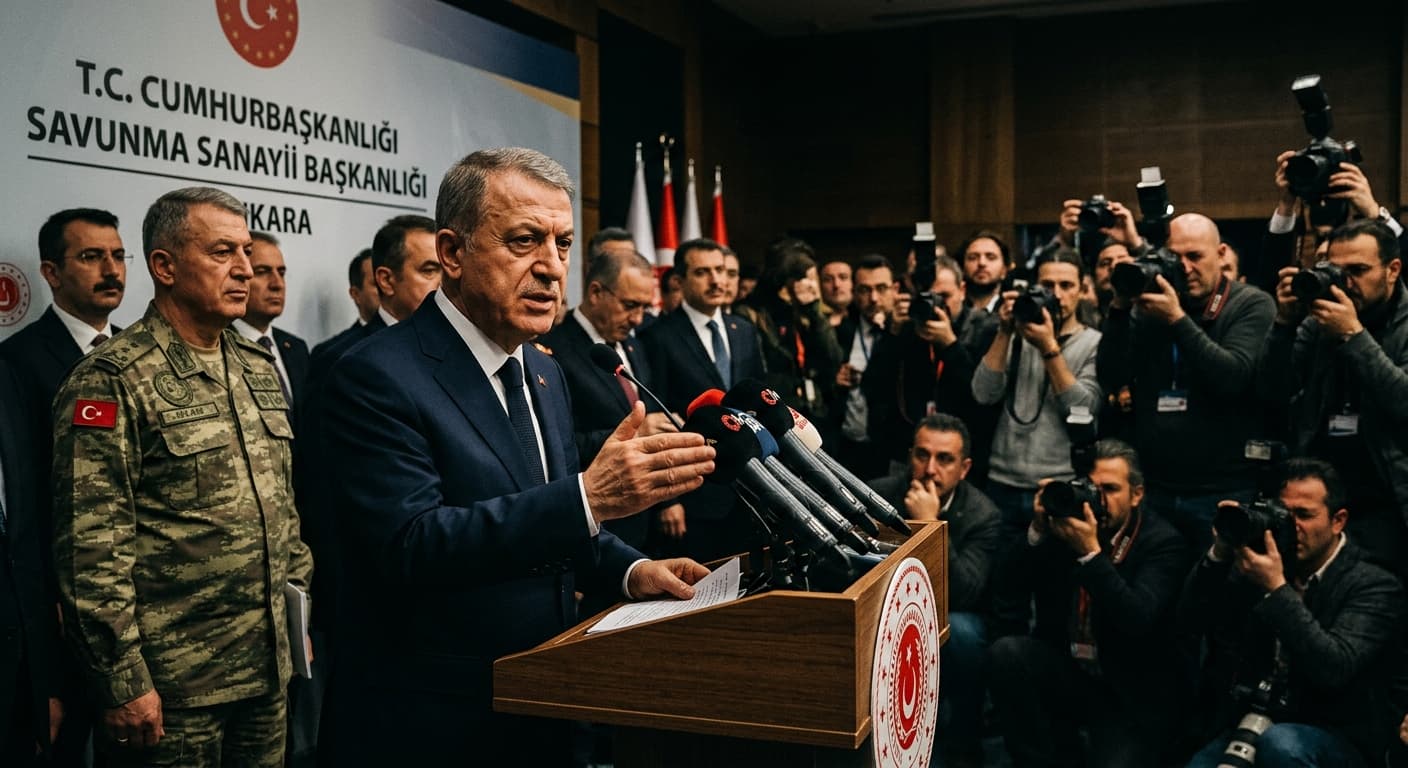
Ankara's $50 Billion Alliance Bet: NATO Arms Deals Hedge Against Trump
NATO's Ankara summit unveiled roughly $50 billion in defence contracts on July 7-8, 2026 — an arms surge designed to placate Trump that is quietly reshaping who supplies Europe.
The scoreboard at NATO's July 7-8 summit in Ankara reads about $50 billion in fresh defence contracts, a Swedish jet replacing Boeing on NATO's own AWACS fleet, and a UK-led, 12-nation missile pact worth another $50 billion over a decade. President Donald Trump called himself "very disappointed with NATO" anyway, and reprised his claim on Greenland from the podium. The load-bearing story here is not the tantrum: it is that European allies are converting the 5%-of-GDP pledge from The Hague into procurement — but they are increasingly buying from each other, not from America. The Ankara deals are as much a hedge against Washington as a tribute to it, and that quiet rebalancing, more than any communiqué, is what will define transatlantic defence for the rest of the decade.
The buying spree, itemised
NATO's Summit Defence Industry Forum, folded into the leaders' programme for the first time, was designed as a "big reveal." Secretary General Mark Rutte, standing before ministers and industry chiefs on July 7, called for a "transatlantic defence industrial revolution" and rolled out a list of contracts calibrated to answer Trump's demand that spending translate into "real firepower," according to Al Jazeera's coverage from Ankara. The forum's stated remit was to show, in Rutte's phrasing, that money is being "put into action to generate increased defence production, cooperation and joint procurement," per the
official NATO summit overview.
The headline numbers, per NATO's own tally and reporting from the BBC and
Caliber.Az: a UK-led "Deep Precision Strike" coalition of 12 states committing £37 billion (≈$50 billion) over ten years to long-range missiles with a range exceeding 2,000 kilometres, per a separate
BBC report; an eight-nation Integrated Air and Missile Defence package worth about $26 billion, according to
BBC Türkçe; a five-year, $40 billion drone plan that Rutte said would quintuple the alliance's drone-operator pool by 2027; letters of intent from Norway, Finland, Germany and Denmark for up to five Northrop Grumman MQ-4C Triton surveillance drones; a Saab GlobeEye contract to succeed NATO's ageing Boeing AWACS fleet; and a new Airbus transport and refuelling package that includes Türkiye. The Netherlands alone announced more than €3 billion ($3.43 billion) in bilateral projects with Belgium, Britain and Germany, Dutch Defence Minister Dilan Yeşilgöz told Reuters as reported by
Al Jazeera.
These are not merely signalling. According to NATO's own 29 June 2026 update, European allies and Canada increased core defence expenditure by roughly $90 billion in 2021 prices (~$139 billion nominal) between 2024 and 2025 — a near-20% real-terms jump — after committing at The Hague to reach 5% of GDP by 2035, per the alliance's defence investment page. NATO's summit overview forecasts that "some Allies will already reach the 5% target in 2026, far ahead of schedule." Rutte, at the June 18 defence ministers'
press conference, volunteered the industrial-absorption problem out loud: "if it is even more in one year, can you absorb all that money?"
Trump's grievance — and why he came anyway
Trump landed in Ankara flanked by a Turkish flypast trailing red, white and blue smoke, personally welcomed at the airport by President Recep Tayyip Erdoğan. He then spent the first evening ripping the assembled leaders. He called Germany's defence budget "ridiculous"; singled out UK Prime Minister Keir Starmer for hesitating on the June US–Israeli strikes on Iran with the line "I don't want that kind of help… I was testing to see that they'd be there for us"; and told reporters he was "very disappointed with NATO," per the BBC. He reiterated that Greenland "should be controlled by the United States, not by Denmark," according to Al Jazeera's
summit live blog.
The Iran episode is the real fault line. Spain's Prime Minister Pedro Sánchez refused US forces the use of Spanish bases or airspace; Italy raised legal objections; the UK hesitated before letting Trump launch strikes from British airfields. Washington's response has moved from rhetoric to force posture. On May 1, 2026, the Pentagon announced the withdrawal of about 5,000 US troops from Germany. On June 18, Defence Secretary Pete Hegseth called the base-access refusals "shameful" and opened a six-month review of US force posture in Europe, per the Council on Foreign Relations' Ankara briefing.
According to CFR, the review may cut F-16 and F-15 jets assigned to NATO by a third, halve strategic bombers, pull an aircraft carrier and a missile-launching submarine from the NATO reinforcement pool, and reduce aerial tankers. Analyst Jack Watling of RUSI told Al Jazeera the infantry drawdown is largely symbolic, but "the withdrawal of US air power has a more tangible impact." That air-power gap is precisely what Ankara's biggest contracts — GlobeEye, Deep Precision Strike, the drone package, the IAMD bundle — are engineered to plug.
Who wins, who loses
Read the deal list carefully and a pattern emerges. The two biggest single procurements — Deep Precision Strike and the air/missile defence bundle — are led by European primes. The Deep Precision Strike programme, anchored in the October 2024 UK–Germany Trinity House Agreement and now expanded to twelve nations, is targeted at fielding stealth and hypersonic weapons that "far exceed today's ranges," per the joint communique published by the UK government. On June 24, the E5 leaders — the UK, France, Germany, Italy and Poland — bound themselves to "accelerate their commitment to European joint development and procurement of deep precision strike capabilities" ahead of the summit, according to the UK's
E5 leaders' statement.
The GlobeEye contract, meanwhile, hands one of NATO's most visible collective assets — its airborne early-warning fleet — from Boeing to Sweden's Saab. Canada already made the same switch in May 2026, choosing GlobalEye over Boeing's E-7 Wedgetail; Prime Minister Mark Carney explicitly framed the decision as a "pivot away from American military capability," according to Al Jazeera. Two AWACS-class defections from Boeing inside three months — first by the closest ally on the continent, then by NATO itself — is the industrial datapoint that best captures the shift.
Northrop Grumman's five-Triton letter of intent is the counter-example — a genuine US industrial win — but at the scale of the summit total it is a rounding error. The Council on Foreign Relations frames the strategic conclusion bluntly: Europeans are unlikely to get the "structured NATO 3.0 transition" Undersecretary Elbridge Colby had signalled, and are pricing in a unilateral US drawdown. The IISS estimates that replacing the most critical US conventional capabilities — long-range strike, ISR, satellite assets, integrated air and missile defence — would cost Europe roughly $1 trillion and take a decade or more. Ankara's headline contracts are close to 5% of that bill, announced in 48 hours.
The clearest single beneficiary at the summit is Türkiye. Hosting the first NATO summit on its soil in 22 years, Ankara converted an October 2025 $8 billion Eurofighter deal with the UK into a three-year BAE Systems training package; announced a $300 million contribution to NATO's Alliance Persistent Surveillance from Space (APSS) programme through two national observation satellites; and inserted ASELSAN's "Steel Dome" radars into the alliance's $1.6 billion layered air-defence architecture, according to
BBC Türkçe. Trump, during his Erdoğan meeting, dangled a re-entry route into the F-35 programme from which Ankara was expelled in 2019 over its S-400 purchase. Brookings' Aaron Stein argues that Türkiye's calculation has already shifted: after the F-35 expulsion, CAATSA sanctions and F-16 delays, "there is little, if any, interest in Ankara to go through the exasperating experience of seeking congressional approval for American arms in the future," per his
Brookings analysis.
Ukraine is a quieter winner in the industrial arithmetic. President Volodymyr Zelensky signed bilateral defence-production agreements with Estonia, the Netherlands and Denmark in Ankara — "new opportunities for joint production, the development of innovative defense technologies… and the export of Ukrainian battlefield-proven solutions," he wrote on Facebook, per Al Jazeera's summit report. Norway pledged 3 billion Norwegian kroner (~$306 million) specifically for anti-ballistic interceptors. Kyiv's push for a US licence to build Patriot missiles inside Ukraine was the concrete ask Zelensky brought to his July 8 bilateral with Trump. Zelensky's own line to the forum — that Europe "needs affordable mass-produced anti-ballistic systems as soon as possible" and "this cannot wait until 2030 or beyond" — is a warning aimed at both suppliers and finance ministries.
The legal cage around Trump
Trump's disruption has hard ceilings. To formally withdraw the United States from NATO, he would need a two-thirds Senate majority or a fresh act of Congress — thresholds "unlikely to come to pass any time soon, with NATO still enjoying broad support among many legislators in both major parties," per Al Jazeera. The current Congress has also placed a statutory floor of 76,000 US troops in Europe on future drawdowns, according to CFR.
That is why the fight has migrated to force posture, procurement decisions and posture reviews — instruments that need no Senate vote. Trump does not need to leave NATO to hollow it out. The Ankara arms deals are the concrete European answer: cash converted into ten-year, twenty-year industrial contracts that lock European suppliers into the 2030s, well beyond a single US administration. As Rutte himself told journalists on June 18, NATO is going through "probably the biggest transformation in its history, to build this NATO 3.0" — and, tellingly, he added that this transformation includes accepting "some rough waters," per the NATO transcript.
The historical parallel worth noting: at NATO's 2019 London summit, then-Secretary General Jens Stoltenberg countered French President Emmanuel Macron's "brain death" diagnosis by unveiling a $1 billion Boeing AWACS upgrade as a symbol of unity, per Al Jazeera. Seven years later, the equivalent political gesture is a Swedish plane replacing that same Boeing fleet. The signalling asset has changed continents.
What to watch next
- The Ankara communiqué, expected late on July 8: whether it endorses a European industrial roadmap in any form CFR would recognise as "NATO 3.0" — or whether, as expected, it hedges.
Global Politics
- The Pentagon's US force-posture review, due in December 2026: the concrete numbers on jets, bombers, tankers, the carrier and the missile submarine assigned to NATO plans.
- The next NATO summit, provisionally slated for Albania in 2027 but already in doubt "amid US reluctance," per Reuters cited by CSIS.
The Bottom Line
Ankara's $50 billion arms blitz is the moment European NATO stopped waiting for a structured American handover and began paying — in ten-year procurement contracts — for a version of the alliance in which the United States is a shrinking supplier and a less reliable enabler. Trump got his headline spending numbers, but the industrial fine print is a slow-motion decoupling: Saab over Boeing, MBDA over Raytheon, ASELSAN inside the perimeter. That is the transatlantic story of the decade, and it started this week in Ankara.
Discover more

US Politics
SNAP Food Assistance Faces Legal Challenges
In 2026, SNAP faces stricter eligibility rules and mounting legal challenges, threatening food assistance for the millions of Americans who rely on the program.
India
700 Activists Accuse PM Modi of MCC Breach
Over 700 activists allege PM Modi breached election code with a televised address attacking opposition parties just before state elections.
India
Congress Accuses Modi of Stalling Women's Law
Congress accuses Modi of stalling women's reservation law by linking it to delimitation, revealing a deeper electoral strategy.

Conflict & Security
Drone Warfare Killing Aid Workers at Unprec
Over 1,000 humanitarian workers killed in three years as cheap armed drones collapse legal protections. Gaza, Sudan, Ukraine, and DRC see deliberate targeting of aid convoys and hospitals with zero prosecutions.