Andhra Pradesh Operationalises Right to Die
State implements Supreme Court's right to die doctrine
Model Diplomat4 min readAsia
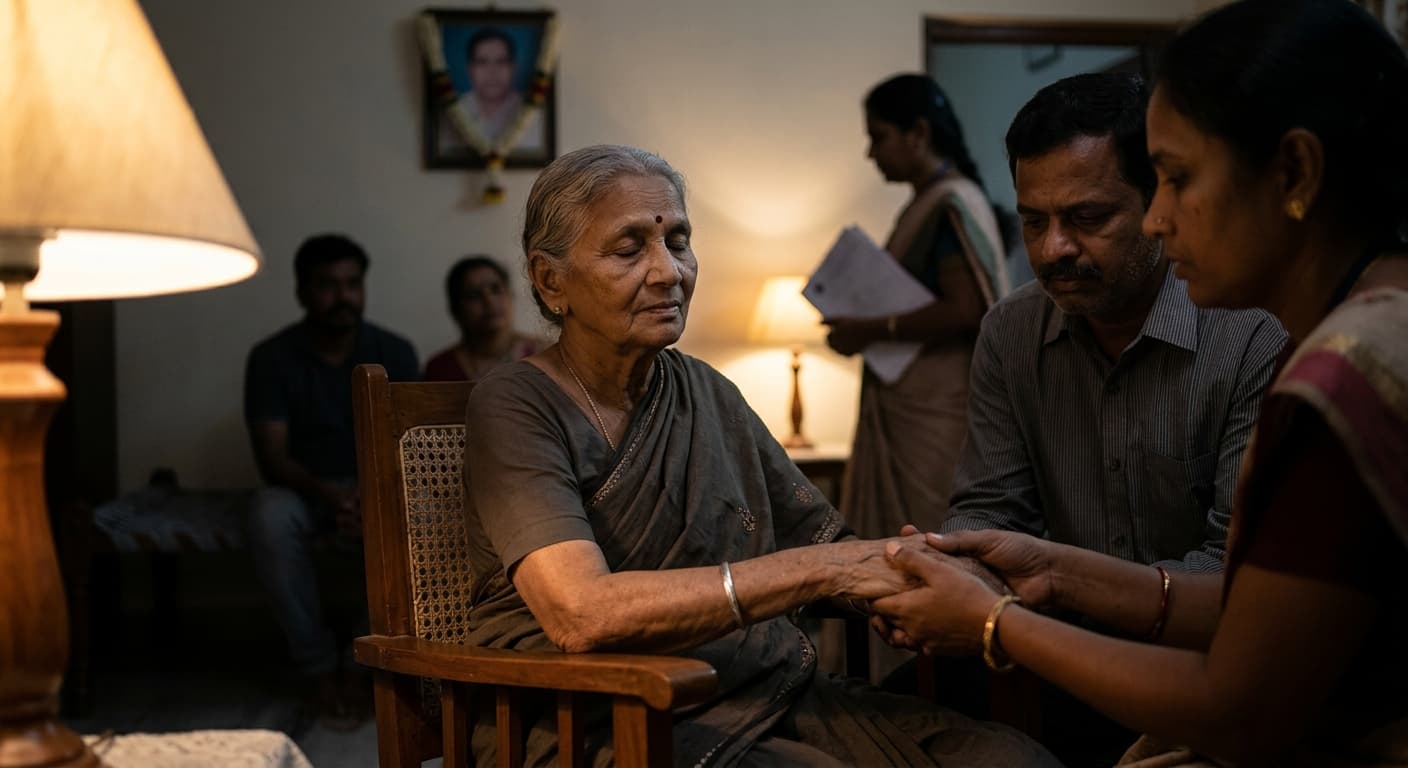
Andhra Pradesh Operationalises India's Right to Die With Dignity
Andhra Pradesh on July 8, 2026 became one of five Indian states to translate the Supreme Court's Article 21 "right to die with dignity" doctrine into working hospital procedure — with implications far beyond India.
On July 8, 2026, Andhra Pradesh Health Minister Satya Kumar Yadav approved detailed operational guidelines for withdrawing life-sustaining treatment from terminally ill patients — the state's answer to a Supreme Court doctrine that most of India has left on paper for eight years. The order puts Andhra Pradesh alongside Kerala, Karnataka, Goa and Maharashtra as one of the few Indian jurisdictions with functioning machinery for passive euthanasia. That matters beyond the state's borders: India's Supreme Court has quietly built one of the most expansive right-to-die frameworks in the common-law world — more permissive than U.S. due-process doctrine, more assertive than the European Court of Human Rights' Article 2 caselaw — and Andhra Pradesh's rulebook is the first serious test of whether that constitutional right can survive contact with a health system in which fewer than 4% of citizens can reach a palliative care unit — a figure documented by the Indian Journal of Palliative Care.
What Andhra Pradesh actually cleared
The guidelines, reported by The News Minute and
The New Indian Express, translate Supreme Court doctrine into administrative steps a district hospital can actually follow. Any adult of sound mind may sign an Advance Directive — a living will — before two witnesses, attested by a notary or gazetted officer, naming a guardian empowered to make end-of-life decisions.
When an attending physician judges a patient terminal, the hospital must constitute a Primary Medical Board — the attending doctor plus two physicians with at least five years' experience — which must issue a preliminary opinion within 48 hours. If it finds continued treatment futile, a Secondary Medical Board (the attending doctor, the District Medical and Health Officer, and two uninvolved doctors) reviews the case. Before disconnection, the hospital must notify a First Class Judicial Magistrate of both boards' opinions and the guardian's written consent. If the Secondary Board refuses withdrawal, the guardian may petition the High Court, which convenes an independent review committee of specialists with at least 20 years' experience, The Hindu reported. Records must be preserved for three years after death. The Director of Medical Education, Director of Secondary Health, and District Medical and Health Officers hold enforcement responsibility.
The framework tracks the Supreme Court's January 2023 modification of its own 2018 procedure — an intervention that, as a commentary in the Indian Journal of Critical Care Medicine put it, replaced an "onerous" scheme with one that is "workable" for ICU decision-making. Where the 2018 order forced multiple layers of court authorisation, the 2023 version and now Andhra Pradesh's implementation allow hospital-level boards to act, with judicial oversight after the fact.
The doctrinal spine: from Rathinam to Common Cause
Andhra Pradesh's order rests on a chain of constitutional rulings that few outside India have tracked. The Supreme Court briefly recognised a right to die in P. Rathinam v. Union of India (1994), which struck down Section 309 of the Indian Penal Code criminalising attempted suicide as violative of Article 21. The Cornell Law School archive notes the ruling was overruled by Gian Kaur v. State of Punjab in 1996. The court restored the distinction between the constitutional right to a dignified death and the right to end one's own life prematurely.
In its March 2018 judgment in Common Cause v. Union of India, a five-judge Constitution Bench held that "the right to die with dignity" is an inextricable facet of Article 21 and recognised living wills for the first time in Indian law. Chief Justice Dipak Misra, joined by Justices A.K. Sikri, A.M. Khanwilkar, D.Y. Chandrachud and Ashok Bhushan, legalised passive euthanasia — the withholding or withdrawal of life-sustaining treatment — while preserving the prohibition on active euthanasia. Speaking to the
BBC after the ruling, Common Cause's lawyer Prashant Bhushan said the judgment would "clear the confusion" that had left doctors and families exposed to potential prosecution for culpable homicide.
The original procedure, however, was widely criticised as unimplementable. A Cambridge University Press analysis by Daisy Cheung of the University of Hong Kong documents how the 2018 guidelines required a hospital medical board of three experts with 20 years' experience each, a second Chief District Medical Officer-led board, and eventual authorisation from a Judicial Magistrate First Class who was to "visit the patient and after examining all aspects" approve implementation. A separate 2023 SSRN analysis,
"Towards a 'Good Death'", found the original scheme "conflated 'passive euthanasia' with the withholding and withdrawing of life sustaining treatment" and disregarded the surrogate-decision framework needed for patients without capacity. The Supreme Court's
January 24, 2023 order in a miscellaneous application filed by the Indian Society of Critical Care Medicine collapsed the timeline, dropped the ex ante magistrate visit, and let hospital-level boards act. Andhra Pradesh's July 8 guidelines are the first state-level rulebook to put that streamlined procedure into administrative practice — and the first real answer to whether a constitutional right can survive a health system built for a different century.
Discover more
US Politics
Congress Targets AI Chatbot Access for Terror
The House passed the Generative AI Terrorism Risk Assessment Act, focusing on AI's role in terrorism and potential surveillance implications.
Global Politics
Trump's Conflicting Messages on Iran War
Trump's mixed messages on Iran reflect a strategy of audience management, benefiting Tehran amid a complex geopolitical landscape.
India
BJP's Misunderstanding of Women's Quota Needs
The BJP's linking of the Women Reservation Bill to delimitation risks delaying women's empowerment in India, misreading the aspirations of female voters.

Economics
Fed's Amex AML order puts correspondent banking on notice
Federal Reserve's Amex AML order requires board-level controls and a 90-day plan; OCC fined the bank $350 million over enterprise-wide deficiencies.