Amit Shah Blames DMK, Congress for Women's Qu
Amit Shah accuses DMK and Congress of betraying women.
Model Diplomat8 min readIndia

Amit Shah Blames DMK, Congress for Women's Quota Defeat
Amit Shah says DMK and Congress "betrayed" women by sinking the 131st Amendment. The real fight is delimitation — and the numbers explain why.
Union Home Minister Amit Shah's charge that the Dravida Munnetra Kazhagam and the Congress "betrayed" India's women by voting down the Women's Reservation amendment on April 17, 2026 is technically accurate, politically potent — and analytically incomplete. The bill the opposition killed was not a stand-alone women's quota. It was a package that yoked the 33% reservation to a redrawing of parliamentary boundaries that would have expanded the Lok Sabha from 543 to 850 seats and, on the government's own projections, shifted the balance of representation toward North India. Shah is now selling the DMK's "no" as anti-women. It was a "no" to that architecture — and the electoral geometry of Modi's third term explains why he needs the first framing to stick.
What the bill actually was — and how it fell
The Modi government convened a three-day special session of Parliament from April 16 to 18, 2026, and tabled three linked pieces of legislation: the Constitution (One Hundred and Thirty-First Amendment) Bill, the Delimitation Bill, and the Union Territories Laws (Amendment) Bill. According to the Carnegie Endowment for International Peace, the constitutional amendment would have raised the maximum strength of the Lok Sabha from 550 to 850 seats, granted Parliament fresh discretion over which census to use for future delimitation, and — through the accompanying delimitation bill — finally operationalised the 33% women's quota passed in 2023 as the Nari Shakti Vandan Adhiniyam.
The vote failed. The Press Information Bureau's official summary of the session records that the 131st Amendment "could not have the required majority as per Article 368(2) of the Constitution of India on its motion for consideration," so "no further action was taken" on the two dependent bills. The division stood at 298 in favour, 230 against — 54 short of the 352 votes needed for a two-thirds majority, according to the
NUS Institute of South Asian Studies. It was the first constitutional amendment blocked in Narendra Modi's near-twelve years as prime minister.
Two days later, in Erode, Shah opened the BJP's Tamil Nadu bypoll campaign for AIADMK–BJP candidate Kirthika Shivkumar with the message he has repeated at every rally since. According to The Hindu, Shah said the Congress and DMK's opposition to the bill "will not be tolerated" and vowed the BJP would "ensure justice" for women denied their quota. On X, quoted by
BBC Hindi, he went further: "Congress, TMC, DMK and the Samajwadi Party did not let the constitutional amendment necessary for the Nari Shakti Vandan Adhiniyam pass. To defeat a bill giving 33% reservation to women and celebrate it is truly condemnable and beyond imagination."
The Southern arithmetic Shah does not put on posters
The Home Minister's own numbers in the Lok Sabha reveal why the DMK voted the way it did. Intervening in the debate on April 17, Shah told the House — as summarised by the Press Information Bureau and reported by
BBC Tamil — that South India would gain, not lose: from 129 MPs today to 195 under the expanded house. Tamil Nadu would rise from 39 to 59 seats, Karnataka from 28 to 42.
Read the ratios instead of the raw numbers, and the story inverts. Tamil Nadu's share of the Lok Sabha would inch from 7.18% to 7.23%; Karnataka's would actually fall from 5.15% to 5.14%. South India's collective share would drop by roughly a percentage point, because Uttar Pradesh, Bihar, Madhya Pradesh and Rajasthan gain proportionally more. Analyst Arghya Sengupta of the Vidhi Centre for Legal Policy told the BBC that "the basis for this number is unclear and does not appear to be proportionate to population growth recorded in the 1971 and 2011 census," and warned of "significant federal implications." The bill's text, Carnegie noted, contained "no such guarantee" that any state's share would be protected — despite Shah's verbal assurance.
Tamil Nadu Chief Minister M.K. Stalin, on the eve of the session, burned a copy of the bill in the state assembly and called it a "massive historic injustice," according to Al Jazeera. Rahul Gandhi framed the opposition's case more narrowly: "The proposal that the government is now bringing has no connection to women's reservation. It is merely an attempt to seize power through delimitation and gerrymandering."
Why the framing matters — and who it targets
Shah is not litigating the vote. He is pre-emptively defining a decade of Southern politics.
The women's reservation act of 2023 already exists on the statute book. As the BBC noted at the time of passage, its implementation was tied by design to a fresh census and delimitation — meaning the quota cannot activate until at least the 2029 general election, and only if a delimitation exercise is completed first. That legal sequencing is the pivot. Once you accept that reservation is impossible without delimitation, then any party opposing delimitation is, by construction, opposing reservation. Shah is running the syllogism in public.
The Takshashila Institution captured the counter-view crisply: the April bills, "coming in the backdrop of several state elections, were seen as an affront to federalism and were defeated." The women's quota was, in Carnegie's phrase, the "vehicle to push through a broader reengineering of India's electoral design."
The audience for Shah's argument is not the DMK or the Congress. It is women voters in West Bengal, Uttar Pradesh, Maharashtra and — the geography that matters most now — the Southern states where the BJP wants to break its ceiling. Senior journalist Sharad Gupta told BBC Hindi that the government "brought this during the elections because they wanted to gain women's votes in large numbers in West Bengal. Now the BJP will repeatedly say in elections that the opposition did not let us work in favour of women." That is analytically the correct read. The introduction days before Tamil Nadu and West Bengal polled was not clumsy timing; it was the timing.
The verdict from the electorate — mixed, but instructive
The Tamil Nadu and West Bengal results on May 4, 2026 delivered a split verdict that both camps have claimed. In West Bengal, the BJP won the state for the first time, and Al Jazeera noted the party's messaging on women's reservation as one of several drivers of a decisive swing among first-time women voters. In Tamil Nadu, actor Vijay's Tamilaga Vettri Kazhagam swept in with 108 seats, according to the
BBC; the DMK collapsed to 73 and the AIADMK–BJP alliance took 53. Shah's line landed in Kolkata. It did not save the AIADMK in Erode. Vijay, notably, remained studiously neutral on the delimitation question during the campaign — a hedge that let him consolidate anti-DMK votes without alienating the state's federalist mood.
That geographic split is what makes the BJP's post-defeat strategy so revealing. The party has kept campaigning on the lost vote, not the passed law, because the political dividend is in the framing, not the statute.
The next fight, and what would change the forecast
The women's quota is not going anywhere: the 106th Amendment is intact, the census is under way — PIB confirms it will include caste enumeration for the first time in decades — and delimitation cannot begin until published figures land. Everything else is politics. Watch three catalysts:
- Monsoon session, July–August 2026. Whether the government reintroduces a decoupled women's reservation bill — quota now, delimitation later — is the tell. It would not need a two-thirds majority in the same form; opposition parties have publicly committed to supporting a clean bill. Refusal to decouple confirms that the linkage was the point.
- Census enumeration completion, late 2027. The trigger for any real delimitation exercise. The
Carnegie Endowment notes reservation "cannot take effect until after the 2027 census is completed and a new delimitation is carried out." Slippage here is the government's biggest political risk.
- Kerala and West Bengal assembly cycles, 2026–27. If Shah's "betrayal" framing shifts women voters in a second Southern state, expect the amendment package back in similar form. If it does not, expect a narrower bill with proportional guarantees written into the text — the concession Shah signalled on the floor but the drafters withheld.
Diplomat View
The evidence points one way: Amit Shah's Erode broadside is not an argument, it is a positioning trade. The BJP knew on April 16 that it lacked the 352 votes for a constitutional amendment — the NDA holds 293 seats in the Lok Sabha, per Al Jazeera — and tabled the bill anyway, bundled with delimitation, on the eve of two state polls. The bet was that a defeat framed as opposition misogyny would outperform a shelved bill. In West Bengal it worked; in Tamil Nadu it was overwhelmed by the Vijay wave. The forecast: the government will not table a decoupled women's quota in the monsoon session, because doing so would surrender the frame Shah is now building for 2029. It will instead push a lightly revised delimitation package with a written pro-rata guarantee for existing state shares — and dare Stalin and Rahul Gandhi to vote no a second time. The forecast changes if the BJP loses Kerala's women's vote in 2026 or if the Supreme Court entertains a petition forcing decoupling under Article 368 — either would collapse the strategy back to the statute.
Forward look:
- Monsoon session opens July 21, 2026 — first test of whether Shah reintroduces the bill or lets the "betrayal" narrative run alone into 2027.
- Kerala assembly election, expected April–May 2026 [sic, 2026 cycle already partly done]; UP local polls late 2026 — the two clearest read-outs on whether the women-voter frame is moving numbers outside Bengal.
- Census first-phase results, expected Q2 2027 — the mechanical prerequisite for any real delimitation, and the point at which the political theatre becomes actual arithmetic.
The Bottom Line
The bottom line: Amit Shah is prosecuting the DMK and Congress for a vote they cast against delimitation, not against women — and he is doing it because the frame, not the bill, is the asset the BJP took out of April 17. The 33% quota was already law before Erode and will still be law after Vijay's swearing-in; what changed is that the government now owns a grievance it can run in every Southern election until 2029. That is the story, and the numbers on the Lok Sabha's own division roll prove it.
Discover more

India
INDIA Bloc's Delimitation Strategy
The INDIA bloc is using delimitation and women's reservation to challenge the BJP's federalism narrative, setting up a high-stakes fight over representation.
India
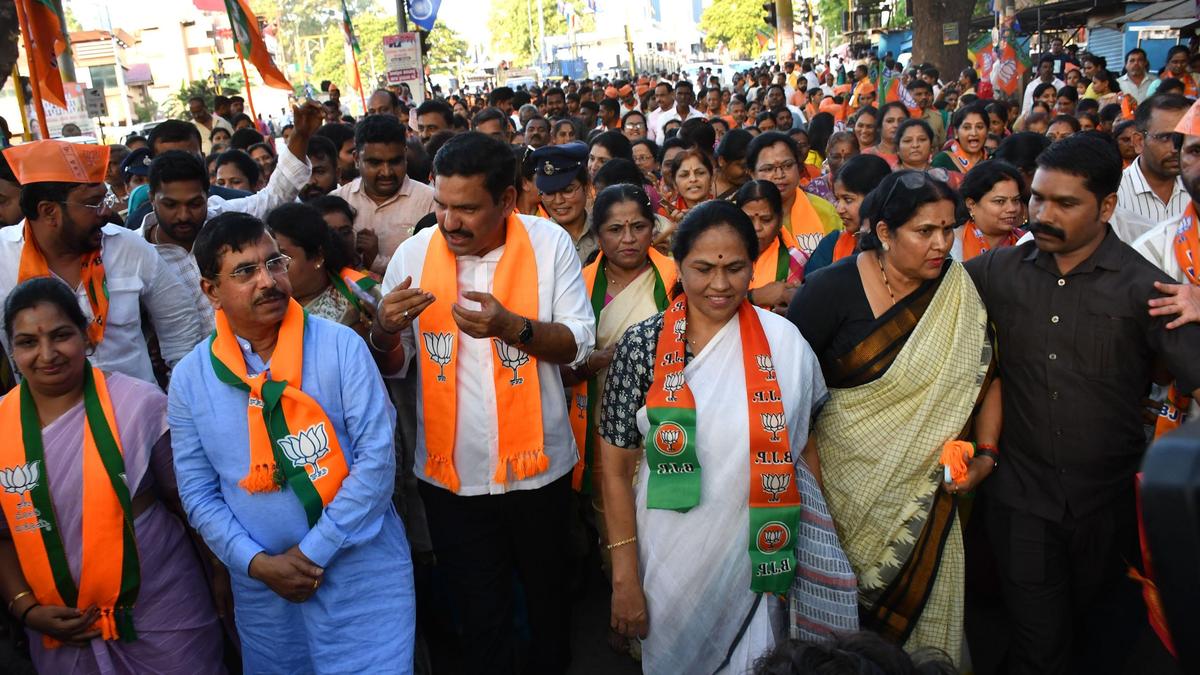
BJP Uses Hubballi Protests for Women's Quota
The BJP is using Hubballi protests to pin blame for delays on women's reservation onto Congress in Karnataka, sharpening its women's quota political offensive.
India
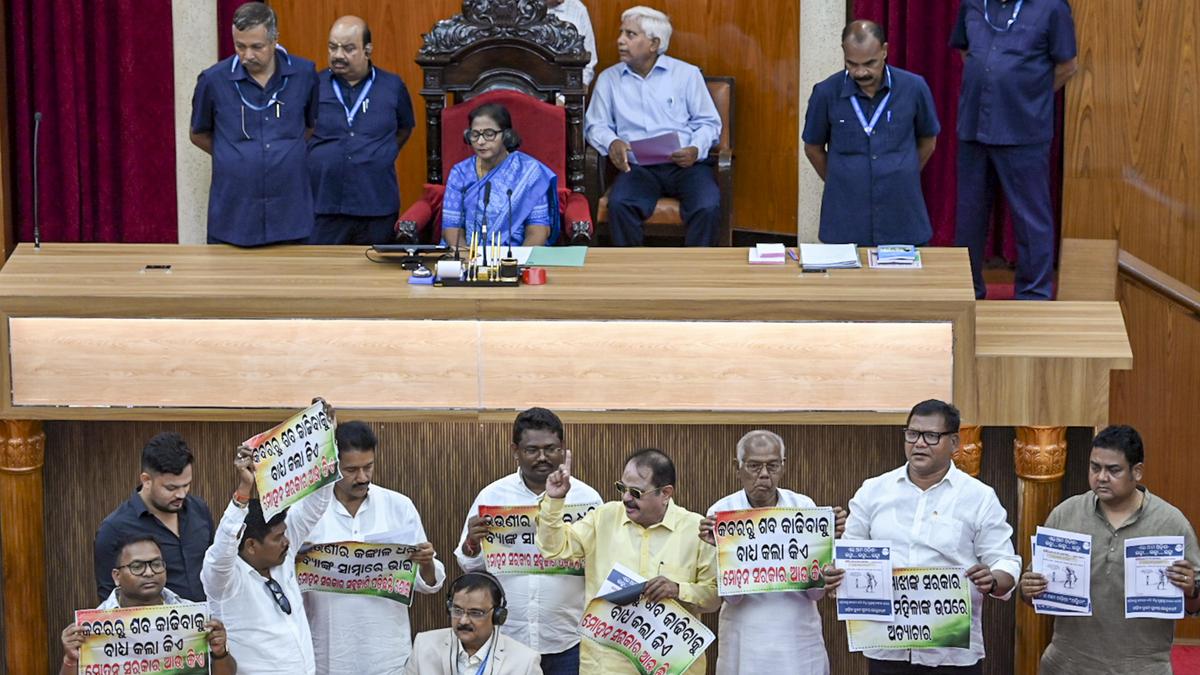
Odisha's Women's Reservation Debate
The fight over women's reservation in Odisha is shaping up as a calculated BJP and BJD strategy aimed squarely at gaining ground before the 2029 elections.
India
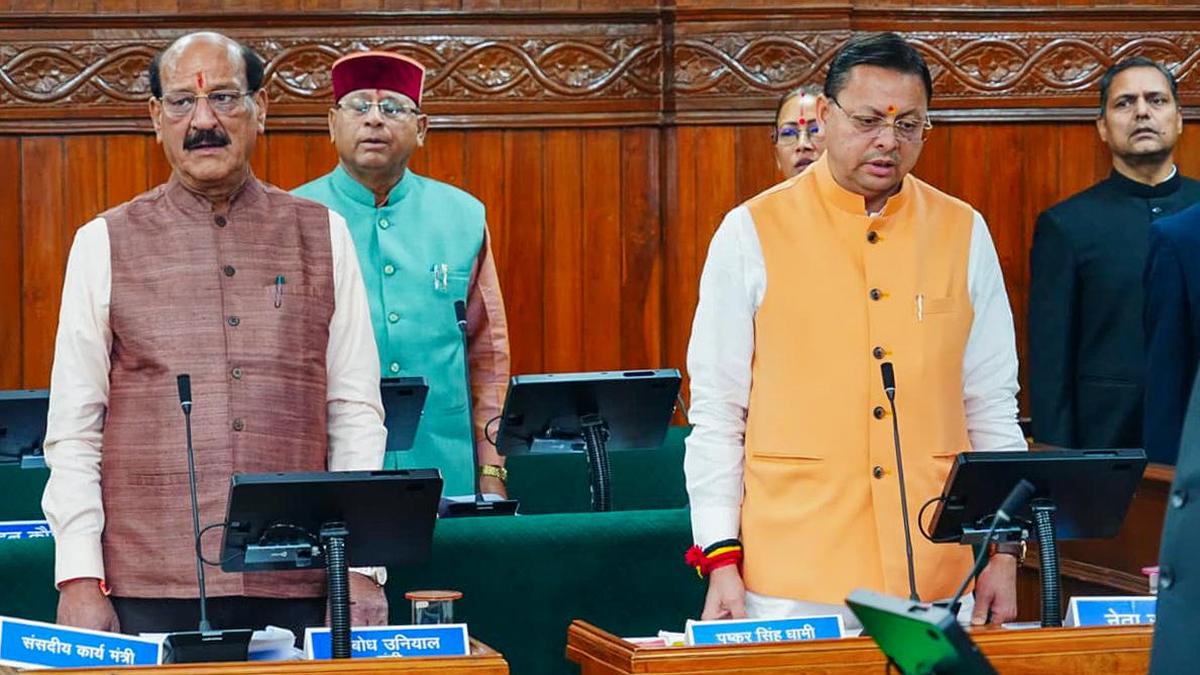
Uttarakhand's Push for Women's Reservation
Uttarakhand CM Dhami's push for women's reservation is a strategic political move that follows national defeat and aims to reclaim momentum for the BJP.