Akhilesh Yadav on Women's Quota Bill Defeat
Yadav pivots women's quota defeat into political leverage.
Model Diplomat8 min readIndia
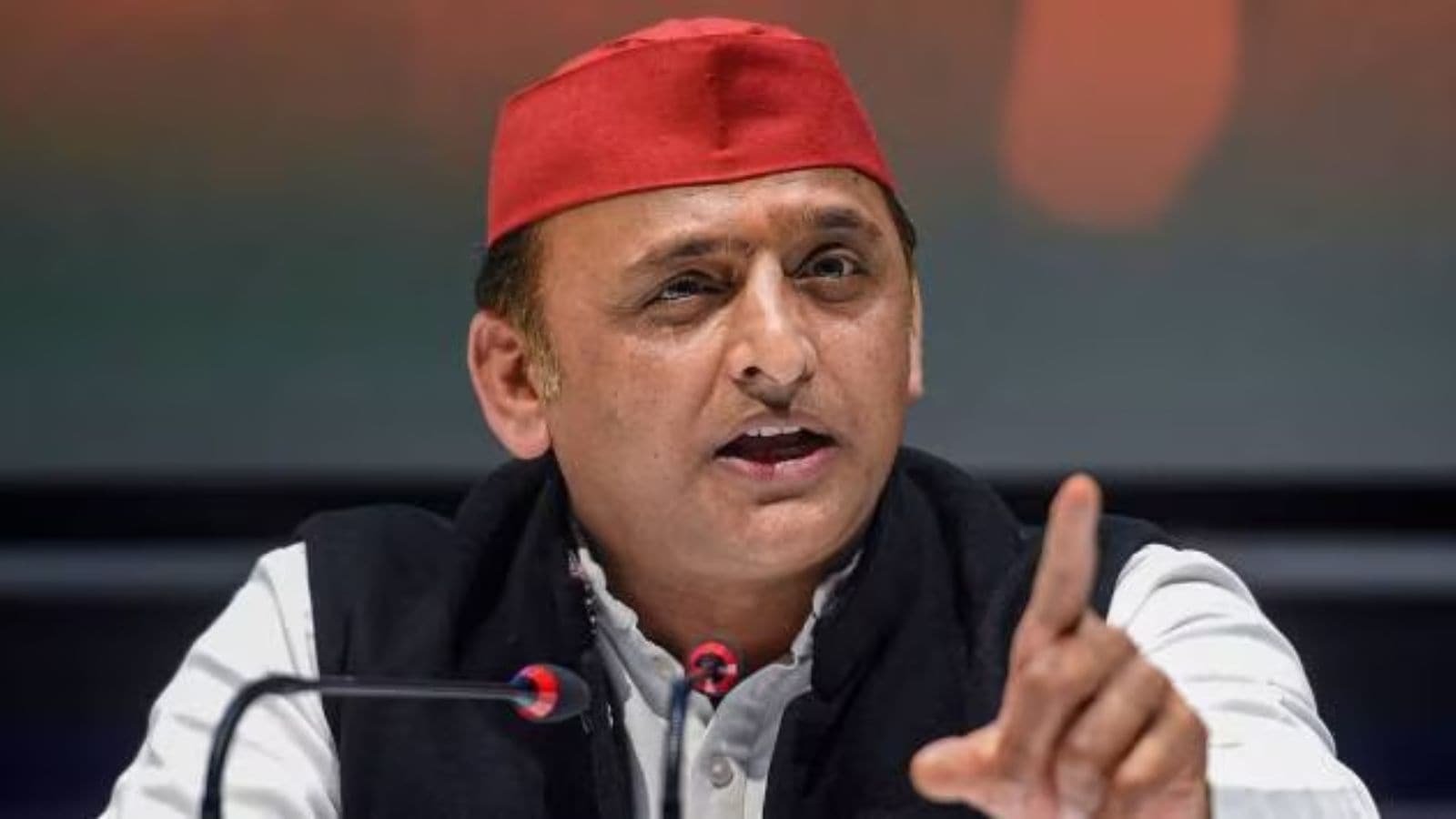
Akhilesh Yadav Turns Women's Quota Defeat Into a PDA Weapon
Samajwadi Party chief calls the 131st Amendment a "black paper" after the Modi government's first parliamentary defeat — and pivots the story from women's reservation to a caste census before delimitation.
Akhilesh Yadav is not celebrating a defeat of women's reservation — he is claiming ownership of the first bill Narendra Modi has ever lost in Parliament, and using it to lock the 2027 Uttar Pradesh election onto his terrain: caste census before delimitation. That is the load-bearing move of his April 19, 2026 press conference in Lucknow, and it is why the 298–230 vote on the Constitution (131st Amendment) Bill matters far beyond the fate of the Nari Shakti Vandan Adhiniyam. The bill's collapse hands the Samajwadi Party leader a rare instrument in Indian opposition politics: a legislative scalp, not a rhetorical one.
The vote that broke the streak
On April 17, 2026, after two days of debate and a reply from Home Minister Amit Shah, the Lok Sabha divided on the Constitution (131st Amendment) Bill, 2026. According to the Press Information Bureau, 130 members took part in the discussion before the vote. The bill received 298 ayes against 230 noes —
BBC Hindi reported the NDA needed at least 352 votes for the two-thirds constitutional-amendment threshold and fell 54 short.
It was the first defeat of a government-backed bill under Modi since 2014. As Al Jazeera noted going into the session, the NDA held 293 Lok Sabha seats against a two-thirds requirement of 360 — the arithmetic was public before Modi convened the special sitting. Senior journalist Sharad Gupta told BBC Hindi the government "knew it did not have the numbers but brought the bill mid-election season" to weaponise the outcome in West Bengal and elsewhere — a signal the vote was priced in as political theatre, not legislation.
Except the theatre malfunctioned. Yadav pounced.
Akhilesh's actual argument, unpacked
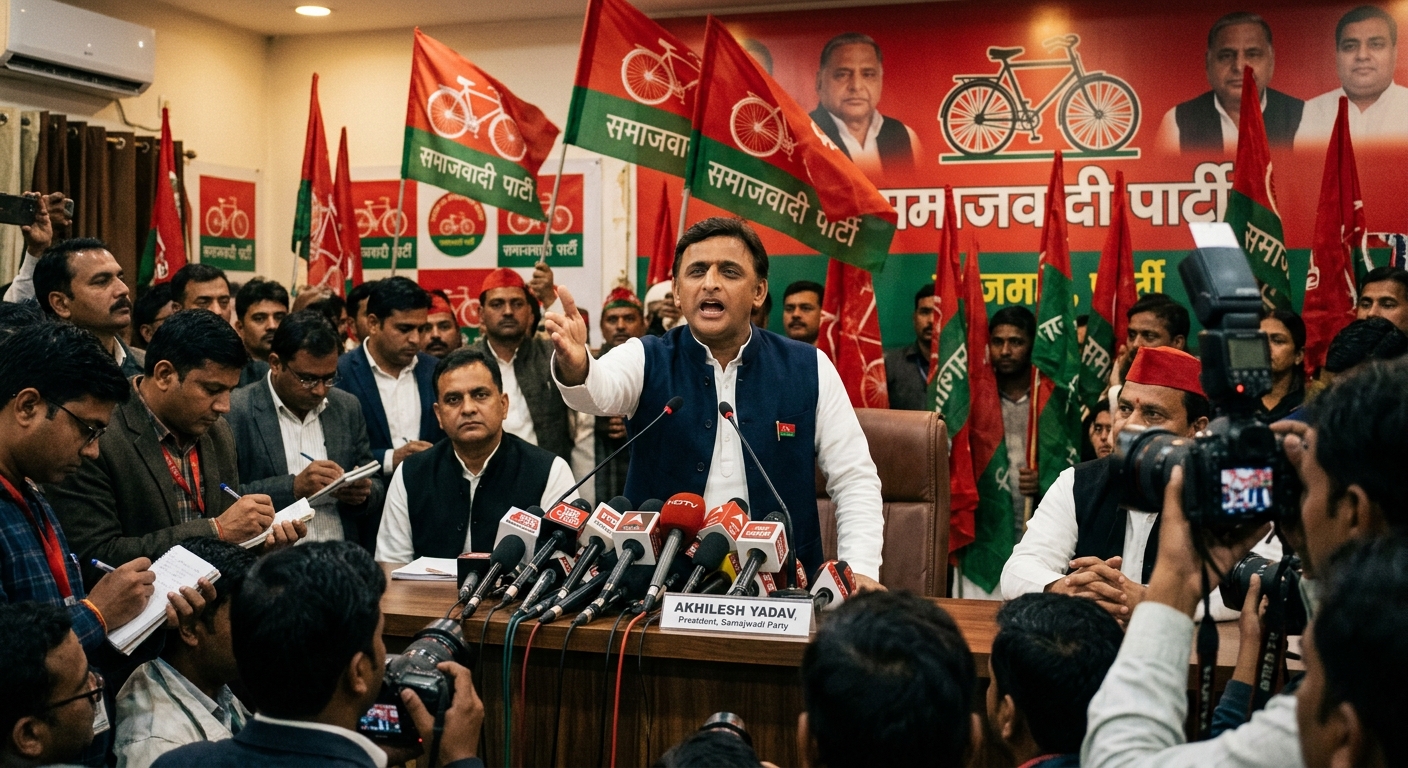
Speaking at SP headquarters in Lucknow on April 19, Akhilesh Yadav framed the defeat as a verdict on legitimacy, not procedure. "A defeat in the House means the government is not representing the will of the people," he told reporters, according to the Indian Express, calling the bill a "black paper" and asserting the Modi government had "no right to remain in power at the Centre."
Daily Excelsior carried the same demand more bluntly.
The tactical brilliance is what he did next. Rather than defend the SP against the "anti-women" charge Modi levelled — the prime minister warned that "those who opposed this bill will pay a long price," per BBC Hindi — Yadav accepted the reservation principle and shifted the battleground to sequence. "We are not opposed to women's reservation, but we are against the delimitation of the constituencies being carried out in haste… Census should be conducted first, and only then such a major decision can be taken," he told the Indian Express. He accused the BJP of trying to reduce "nari" (women) to a "nara" (slogan), and warned the bill would create "saansad patis" — male proxies for elected women, mirroring the "pradhan pati" phenomenon in village panchayats.
The framing is not incidental. It is the SP's PDA formula — Pichde (backward castes), Dalits, Alpsankhyak (minorities) — the coalition that took the party from five Lok Sabha seats in 2019 to 37 in 2024 in Uttar Pradesh, humiliating the BJP in its fortress. Al Jazeera's post-election analysis documented that collapse: the BJP crashed to 33 UP seats and lost even Faizabad, home to the Ram temple in Ayodhya. A caste census — of the kind now underway, as
Al Jazeera reported when enumeration began April 1, 2026 — is the empirical scaffolding on which PDA rests. Delimitation without those numbers strips the coalition of its statistical claim.
The bill Modi actually brought
To understand why Yadav's caste-census demand lands, read what the government tabled. The Constitution (131st Amendment) Bill would have raised the Lok Sabha's maximum strength from 550 to 850 seats — 815 for states and 35 for union territories — and operationalised the 33% women's quota using 2011 census data. A companion Delimitation Bill 2026 established the framework for reallocating seats and rotating women-reserved constituencies each cycle.
The Carnegie Endowment for International Peace's post-mortem captured the design: "the quota for women functioned as a vehicle to push through a broader reengineering of India's electoral design." Arghya Sengupta of the Vidhi Centre for Legal Policy told the
BBC that "the basis for [850] is unclear and does not appear to be proportionate to population growth recorded in the 1971 and 2011 census," and flagged an oddity: no matching expansion for state assemblies, "creating a mismatch: fast-growing states could gain more MPs without a corresponding rise in MLAs."
That mismatch is what the opposition read as gerrymandering. Rahul Gandhi called the package "merely an attempt to seize power through delimitation and gerrymandering." Tamil Nadu Chief Minister M.K. Stalin burned a copy of the bill and hoisted a black flag; southern MPs turned up in Parliament dressed in black, per Al Jazeera. Amit Shah countered on the floor — the PIB record shows him arguing that today "there are 127 constituencies with more than 2 million voters each" and the "one person, one vote, one value" principle is being violated by the 1971 freeze. He promised the south's share would rise from 129 seats to 195, keeping its ~24% proportion of the house. The
Carnegie analysis noted the legal text contained no such guarantee.
The historical parallel that reframes everything
The Women's Reservation Bill has a graveyard behind it. First introduced by the H.D. Deve Gowda government in 1996, reintroduced in 1998, 1999 and 2008, it lapsed every time — usually because leaders like Mulayam Singh Yadav and Lalu Prasad Yadav demanded OBC and Muslim sub-quotas within the 33%. As the BBC documented when Modi finally pushed it through in 2023, "the opposition parties demanded that some of the seats be reserved for women from Other Backward Classes… and Muslims and called on the government to carry out a caste survey in the next census. But their demands were rejected."
Akhilesh Yadav is his father's son on this point. Asked in the Lok Sabha whether Muslims would receive a sub-quota within the women's reservation — an intervention noted by Al Jazeera — he was resurrecting the same demand that killed the bill in 1996, 1998, 1999 and 2008. The difference: this time, the numbers arrived at the same conclusion. The three-decade Yadav objection has, for the first time, produced a defeat rather than a lapse.
The Takshashila Institution's assessment reads the failure through the same lens: the bills, "coming in the backdrop of several state elections, were seen as an affront to federalism and were defeated." The women's quota was the vehicle; federal rebalancing was the payload; and the payload was rejected.
Who wins, who loses
The winner most obviously is the Samajwadi Party's PDA project heading into the 2027 UP assembly election. Yadav has secured a legislative — not merely rhetorical — receipt for his caste-census demand. That receipt lets him argue in every rally that a Modi bill fell because his coalition was strong enough to make it fall. BBC Hindi reports the SP is already targeting BJP's upper-caste vote bank in UP, having installed 81-year-old Brahmin leader Mata Prasad Pandey as leader of opposition in the state assembly — a message the PDA formula has room for savarnas too.
The losers extend beyond the BJP's floor management. India's women MPs — currently just 14% of the Lok Sabha, per Al Jazeera — remain in constitutional limbo. The 2023 Nari Shakti Vandan Adhiniyam is law, but as Carnegie notes, "women's reservation — despite being formally enacted — cannot take effect until after the 2027 census is completed and a new delimitation is carried out." India ranks 141st among 185 countries in the Inter-Parliamentary Union's rankings for women's representation, per the
Institute of South Asian Studies, trailing Nepal, Bangladesh and Pakistan. Global average: 27.4%, per a
Congressional Research Service report dated April 1, 2026. India's 14% will not change before the 2029 general election under any credible timeline.
The subtler loser is Modi's aura of parliamentary invincibility. Senior journalist Hemant Atri told BBC Hindi the defeat "is a blow to the government's credibility" but "the bigger question is the government's motives" — a diagnosis the ruling party will now have to fight through 2029.
What to watch next
- Caste census results: The enumeration phase runs into February 2027, with jati-level data expected later that year. Every delimitation debate is now suspended on that timeline.
- Uttar Pradesh 2027 assembly election: The SP will campaign on "caste census before delimitation." The BJP will campaign on "opposition killed women's quota." Modi has already fired the opening round, warning at
BBC Hindi that "women will not forget this insult."
- Return of the bills: The government can reintroduce the 131st Amendment with sub-quota concessions or a fresh-census basis. Doing so admits Yadav was right; refusing kills women's reservation for another electoral cycle.
- Southern states' next move: Tamil Nadu, Kerala, Karnataka and Telangana had sought a 25-year freeze extension. Any pro-rata formula Amit Shah promised must now be written into text, not spoken from the dispatch box.
Diplomat View
The story to file is not that the women's reservation bill "failed" — the 2023 Act is intact. The story is that Akhilesh Yadav has converted a routine parliamentary defeat into a durable political product: PDA plus caste census as the price of any future constitutional-amendment package on representation. That is a specific, falsifiable claim about who holds leverage. It fails if the BJP wins UP 2027 outright on the "anti-women" charge and reintroduces the bill from a position of restored strength; it holds if Yadav's caste-census demand becomes the new floor for opposition cooperation on delimitation. The evidence — 37 UP seats in 2024, a caste census underway, a 298–230 vote the government did not have to hold — points to the second. The Modi government's next move on the 131st Amendment will tell us which India we are in.
The Bottom Line
The 131st Amendment's defeat is not a story about women's representation stalling — that stall was already written into the 2023 Act's census-and-delimitation trigger. It is the moment Akhilesh Yadav's PDA coalition acquired legislative proof of concept, forcing the Modi government to negotiate on caste-census terms it spent a decade rejecting. If the government reintroduces the bill with sub-quota concessions, Yadav has authored India's next electoral realignment; if it does not, women's reservation waits until 2029 — and Uttar Pradesh 2027 is fought on his map.
Discover more
India
Chhattisgarh Assembly Advocates Women's Quota
Chhattisgarh's Assembly passed a resolution to expedite India's women's legislative quota, adding state-level pressure to a stalled national reform push.
India
Sanjay Raut, Shinde Sena Clash Over Women's Q
Sanjay Raut and Shinde's Sena trade blows over PM Modi's women's quota remarks, exposing deep Maharashtra party divisions just ahead of the state elections.

India
Shashi Tharoor Questions Women's Quota Delim
Shashi Tharoor warns against rushing delimitation for the women's quota, likening it to demonetisation's chaos and urging legal clarity and transparency.

India
India's Parliament Bill Fails Over Women's Qu
India's Parliament expansion bill fails as the women's quota debate complicates reform, with major political implications looming ahead of 2029 elections.