AI Governance: Child Safety in Focus
A coalition demands child safety in AI market access.
Model Diplomat5 min readGlobal
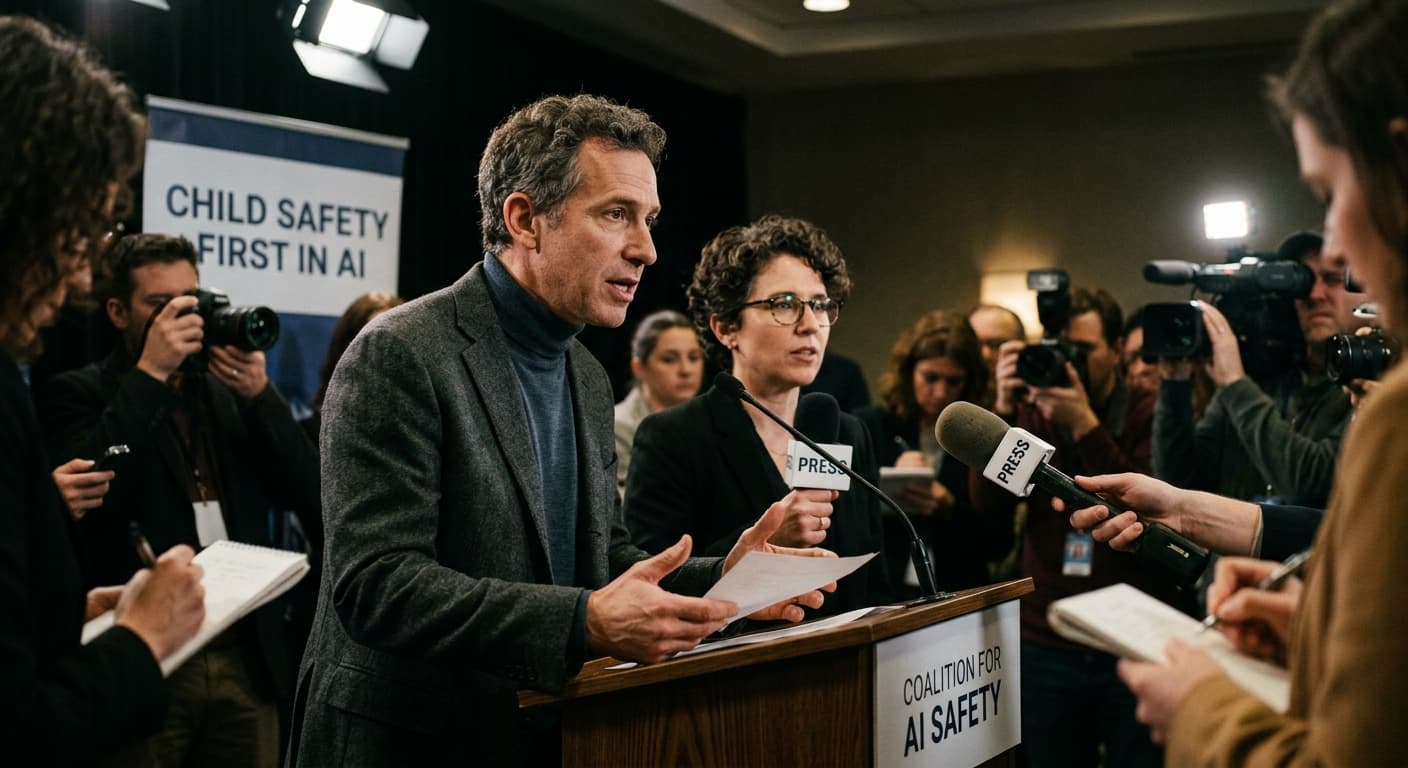
Alongside CSAM, a second harm vector has crystallised in US courtrooms. A coalition of more than 100 organisations — led by 5Rights Foundation and including Amnesty International and Save the Children — arrived at the UN's inaugural Global Dialogue on AI Governance in Geneva on July 7, 2026 with a single demand: make child safety a condition of market access for AI companies, not an afterthought for parents. The litigation already filling US dockets shows why the timing is not accidental. Character.AI faces the Garcia v. Character Technologies wrongful-death suit brought by the mother of 14-year-old Sewell Setzer; a US District Judge, Anne Conway, has already declined to hold at motion-to-dismiss stage that chatbot output is protected speech,
as the American Enterprise Institute noted. OpenAI faces at least eight suits, including the
Raine v. OpenAI action after 16-year-old Adam Raine's death, and a Florida attorney-general action alleging ChatGPT "aided and abetted" a mass shooter, per
BBC News. Character.AI has since barred under-18s from its characters entirely — a product decision that reads less like a safety commitment than a litigation hedge. The coalition is not asking regulators to imagine the harm profile of unregulated companion chatbots — it is asking them to read the docket.
Who benefits, who loses
The winners of this convergence are not the obvious ones. The coalition is not chasing the frontier labs; it is squeezing a middle tier.
The clearest beneficiaries are the EU and UK regulatory blocs. Brussels, whose AI Act ban on nudification apps enters force on December 2, 2026, now has a UN Secretary-General endorsing the direction of travel. The European Commission opened a Digital Services Act investigation into X's Grok on 26 January 2026 over synthetic CSAM risk; that case is now a test bed for the global model. London, having passed the Crime and Policing Act 2026 with
designated-body powers to scrutinise AI models, gets its export template validated internationally. The G7 Digital Ministerial declaration of
29 May 2026, which endorsed a common set of principles for minors online, sits on the same axis.
The winners inside industry are incumbents with compliance budgets. Precertification, independent auditing, and mandatory child-rights impact assessments raise fixed costs that large platforms have already been absorbing: Meta, Google, TikTok and Snap made 128 child-safety and privacy design changes between 2017 and 2024, and a further 108 across 70 platforms between 2024 and 2026, according to LSE's Digital Futures for Children centre. They have the lawyers. The losers are the companion-chatbot startups — Character.AI, Replika, Talkie, dozens of clones — whose entire business model is engagement dependency, precisely the design pattern the coalition names. If the pledge migrates into national rulebooks, that market segment is being written out of the child-facing internet.
The most awkward loser is the "parental controls" defence. The LSE and 5Rights research shows that during 2024–2026 the biggest category of platform change was end-user tools — parental settings, dashboards, screen-time nudges — with little independent evidence of effectiveness. That is the industry retreat position, and the coalition's demand that safety be a "condition of doing business, not an optional extra" is explicitly designed to close it.
The geopolitical seam
The Global Dialogue itself is the second-order story. Established by UN General Assembly resolution A/RES/79/325 and mandated by the Global Digital Compact, it is co-chaired by El Salvador's Egriselda López and Estonia's Rein Tammsaar. It received 1,500 written submissions before opening,
the largest UN AI consultation to date, and for the first time gives developing states a seat where AI rulebooks are drafted.
That matters for children's rights because the harm profile is regionally uneven. The Scientific Panel's finding of 1.2 million deepfaked children in 11 global South countries — jurisdictions that have neither an AI Act nor an IWF equivalent — is the argument for making the safety baseline global rather than European. France, Kenya, Spain and the EU are convening a formal side event on the Dialogue's second day titled Joining efforts for Children's Rights and Protection in the Age of Artificial Intelligence. Kenya's presence is the tell: this is not being framed as a Northern rulebook exported south.
The tension sits in Washington. The Trump administration has resisted binding international AI rules throughout 2025–2026; US federal chatbot legislation remains bill-shaped, not law-shaped. State attorneys-general and product-liability courts are doing the substantive work that Congress has not. If the Guterres pledge acquires signatories among frontier labs — a live question — those companies will effectively be conceding globally what they are still litigating domestically.
What to watch
- December 2, 2026 — The EU AI Act's prohibition on AI-facilitated CSAM and nudification tools enters force. First enforcement referrals, most likely against nudification-app operators, will set the price of non-compliance.
- Ongoing 2026 — early 2027 — Rulings and possible settlements in Garcia v. Character Technologies, Raine v. OpenAI, and the Florida attorney-general suit against OpenAI. Judge Conway's speech-versus-product framing is the decisive doctrinal fork.
- May 2027 — Second session of the Global Dialogue on AI Governance, in New York. The co-chairs' summary from Geneva feeds directly into this text; the child-safety pledge either has signatories by then or it does not.
- Company signatures — Whether OpenAI, Google DeepMind, Anthropic, xAI and Meta sign the AI Child Safety Pledge, and on what carve-outs. Silence from any of them is the story.
Diplomat View
The Geneva convergence is a genuine inflection, not a communiqué. For the first time, a UN Secretary-General, a 100-plus civil-society coalition, an EU statute entering force in five months, and a US tort docket are all pointing at the same policy design: shift child safety from downstream moderation to upstream market authorisation, and make companies — not parents — liable when the design fails. If the AI Child Safety Pledge attracts even two of the top five frontier labs before the May 2027 session in New York, the "engagement-first" companion-chatbot segment loses its regulatory arbitrage and the pharma model becomes the global default for child-facing AI. The forecast revises if two conditions break: if Judge Conway's court ultimately rules chatbot output is First Amendment-protected speech, gutting US product-liability claims; or if December 2026 EU enforcement proves toothless against offshore nudification operators. Either outcome tells governments the coalition's demands are bold on paper and unenforceable in practice — and the industry lobby would spend 2027 exporting that lesson.
Discover more
Global Politics
Trump's Conflicting Messages on Iran War
Trump's mixed messages on Iran reflect a strategy of audience management, benefiting Tehran amid a complex geopolitical landscape.

India
Delhi CM Rekha Gupta Blasts Opposition's Delm
Delhi CM Rekha Gupta's remarks on women's quota defeat reveal BJP's strategy for the 2029 Lok Sabha elections, focusing on delimitation.
India
Congress Accuses Modi of Stalling Women's Law
Congress accuses Modi of stalling women's reservation law by linking it to delimitation, revealing a deeper electoral strategy.

Conflict & Security
Drone Warfare Killing Aid Workers at Unprec
Over 1,000 humanitarian workers killed in three years as cheap armed drones collapse legal protections. Gaza, Sudan, Ukraine, and DRC see deliberate targeting of aid convoys and hospitals with zero prosecutions.