Afghan Asylum in EU: 78% Recognition Rate
Recognition rates hit 78% as EU opens deportation channels with the Taliban
Model Diplomat6 min readEurope
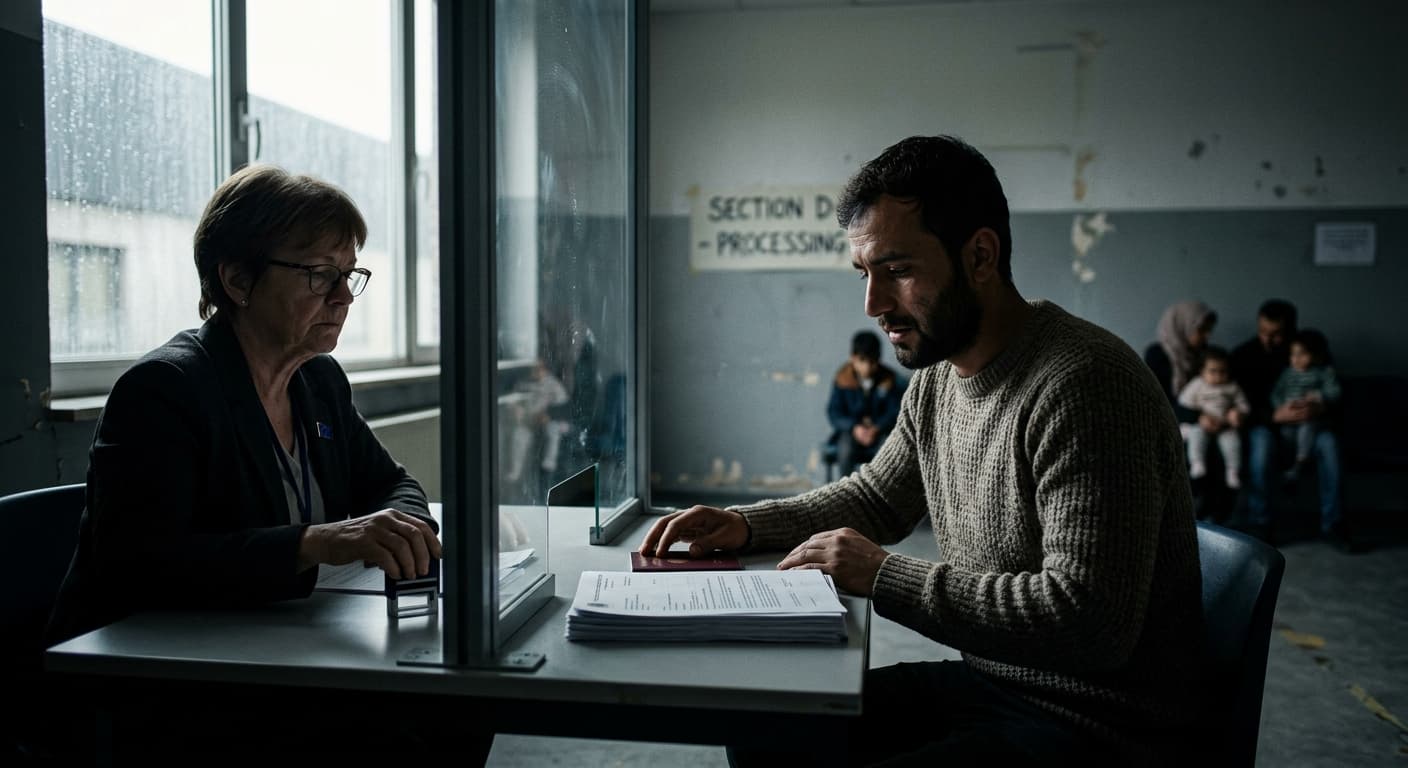
Afghan Asylum in the EU: Recognition Rates Hit 78% as Deportation Politics Collide With Protection Law
As Afghan applications fall to a five-year low, first-instance recognition rates have climbed to 77.8% — the highest of any major nationality — even as Germany and the EU open deportation channels with the Taliban.
Afghan asylum seekers are being granted protection in the European Union at the highest rate of any large nationality group — 77.8% at first instance in the first quarter of 2026, well above the EU-wide average of roughly 30% — even as the number of new Afghan applications has fallen to its lowest level since before the Taliban takeover, according to Eurostat data released through June 2026. This divergence — fewer applications, higher protection rates — is not a statistical accident. It is the product of a system whose adjudication logic has hardened around the Taliban's documented repression of women and dissenters, producing outcomes that no political directive to "speed up returns" can easily reverse. The recognition rate and the deportation drive are now on a collision course.
The numbers: Afghans lead protection grants as applications retreat
Afghans lodged 63,830 first-time asylum applications in the EU in 2025, representing 9.5% of the EU total and ranking second behind Venezuelans, according to Eurostat annual asylum statistics. That marked a 27% decline in overall first-time applications across the EU compared with 2024, with Afghan volumes retreating from a peak reached in September 2025. By March 2026, Afghans were lodging roughly 6,900 applications per month in EU+ countries, according to the
EUAA's latest asylum trends bulletin.
Yet even as the intake fell, Afghans received the largest share of protection statuses of any citizenship in the EU. In 2025, they accounted for 98,175 protection grants — 27.2% of all persons granted protection status across the bloc, ahead of Venezuelans at 16.4%, according to Eurostat's annual decisions data. Of the 325,765 positive first-instance decisions issued in the EU in 2025, Afghans received 94,580 — 29% of the total.
In the first quarter of 2026, the trend intensified. Afghans received 24,960 protection statuses at first instance — 29.4% of all EU grants — and held a recognition rate of 77.8%, the highest among the top-ten decision-volume nationalities, according to Eurostat's quarterly asylum statistics. Venezuelans, by contrast, stood at 93.4% but on a caseload concentrated almost entirely in Spain; Ukrainians were at 64.6%.
Why the rate is rising as applications fall
The divergence between falling application volumes and rising recognition rates points to a compositional shift in the Afghan caseload rather than a softening of asylum standards. The cases now reaching adjudication are disproportionately those involving Afghan women and girls, former government officials, journalists, and minorities — categories for which the Taliban's repression is extensively documented and legally difficult to deny under EU asylum law.
Several EU member states have effectively codified this logic. Sweden, Denmark, Austria, and the Netherlands grant Afghan women refugee status automatically, based on nationality and gender, according to Human Rights Watch. The Taliban have banned girls from secondary and higher education, restricted women's employment and movement, and imposed morality laws that the
UN Assistance Mission in Afghanistan has documented as amounting to gender persecution — a crime against humanity.
Germany, which granted 62.3% of all Afghan first-instance protections in 2025, remains the central adjudicator. France handled the largest share of Afghan appeals, granting 35.7% of Afghan protections on appeal or review, with Germany at 33.8%, according to Eurostat annual data. The recognition rate for Afghans at the appeal stage was 36.3% — lower than first instance but still the second-highest among major nationalities, behind Syrians at 67.3%.
The implication is that the remaining Afghan caseload is increasingly self-selecting for high-probability claims. The surge that followed the August 2021 Taliban takeover — when Afghan applications spiked across the EU — has filtered through the system. Cases weak on merit have largely been decided; the residual pipeline is weighted toward applicants whose profiles align with established protection grounds.
Germany's deportation turn and the Brussels opening
The political response has moved in the opposite direction. In August 2024, Germany carried out its first deportation of Afghan nationals since the Taliban takeover, returning 28 convicted offenders to Kabul on a charter flight from Leipzig, following a knife attack by an Afghan man in Mannheim that killed a police officer, as BBC News reported. Chancellor Olaf Scholz framed the move as a signal that "those who commit crimes cannot count on us not deporting."
That precedent has widened. On June 22–23, 2026, the European Commission hosted a Taliban delegation in Brussels for the first time since August 2021 — a technical-level meeting co-chaired with Sweden and attended by 15 EU member states, focused on "dignified returns" of Afghans whose claims have been rejected, according to Al Jazeera. The Taliban spokesperson called the visit "historic"; the Commission described it as a narrowly scoped follow-up to a January 2026 meeting in Kabul.
The meeting drew immediate condemnation. Malala Yousafzai said she was "deeply shaken" that the EU was in talks with the Taliban, writing on X that "Europe must not legitimise a regime responsible for one of the worst human rights crises in the world." Human Rights Watch warned that "Afghanistan is not a safe country for any forced returns" and that Taliban security forces have detained and tortured people forcibly returned to the country, in a statement dated July 7, 2026. Amnesty International documented that Iran and Pakistan alone unlawfully expelled more than 2.6 million Afghans in 2025, with about 60% of those returned being women and children.
The EU's position is that engagement with Taliban "de facto authorities" is necessary to deport asylum seekers who commit crimes or are deemed dangerous — a framing that isolates the deportation question from the broader protection landscape. But the data suggests the two are not separable. With a 77.8% first-instance recognition rate, the pool of rejected Afghan applicants is small and heavily weighted toward cases involving criminal convictions rather than standard asylum refusals.
The contradiction at the core
The central tension is structural. EU member states are simultaneously: (1) granting protection to Afghans at rates approaching 80% at first instance, (2) negotiating with the Taliban to facilitate returns of the rejected minority, and (3) facing domestic political pressure — particularly in Germany — to demonstrate deportation capacity after high-profile attacks involving Afghan nationals. The recognition rate is a legal determination driven by country-of-origin evidence and binding case law; the deportation push is a political determination driven by electoral pressure and security concerns. They operate on different logics, and neither can easily bend the other.
Germany's interior ministry has increased protection-status withdrawals — 4,005 in 2025, up 25.7% from 2024, according to Eurostat — a mechanism used to revoke status already granted, typically on fraud or security grounds. But withdrawals represent a fraction of the 103,360 protection statuses Germany granted in 2025. The arithmetic is stark: even an aggressive deportation program targeting the rejected minority cannot offset the volume of new grants being produced by the adjudication system.
The European Council on Refugees and Exiles noted in a March 2024 policy note that Afghan recognition rates have been "notably high" and that the Taliban takeover "shaped both the volume of applications and the expectation of asylum eligibility." The note argued that this was driven less by political preference than by "country-of-origin determinants that affect the likelihood of recognition" — a finding consistent with the continued rise in rates through 2025 and 2026 even as applications declined.
What to watch
- Eurostat's next quarterly release, covering April–June 2026 asylum decisions, is due in September 2026. It will show whether the Afghan recognition rate holds above 75% or begins to soften as the caseload composition shifts further.
- A second EU-Taliban technical meeting is expected to follow the Brussels round, with the Taliban pushing for consular access in Europe — a step that would mark a further normalization of engagement. No date has been announced.
- Germany's federal election cycle continues to drive deportation policy. Interior ministry figures on Afghan returns in 2026, expected in late 2026, will indicate whether the August 2024 precedent has become a regular practice or remains a one-off.
The Bottom Line
Afghan asylum recognition rates in the EU have climbed to nearly 78% even as applications have fallen to a five-year low — a divergence driven not by political preference but by the Taliban's documented repression of women and dissenters, which makes the remaining caseload overwhelmingly high-probability. The EU's parallel push to open deportation channels with the Taliban addresses a rejected minority that the recognition data shows is vanishingly small. The recognition rate and the deportation drive are headed in opposite directions, and the data, not the politics, is winning.
Discover more

India
BJP's Misunderstanding of Women's Quota Needs
The BJP's linking of the Women Reservation Bill to delimitation risks delaying women's empowerment in India, misreading the aspirations of female voters.

India
Women’s Reservation Bill 2026
The Constitution (131st Amendment) Bill, 2026 was defeated in Lok Sabha, revealing deeper political conflicts over women's reservation and delimitation.

India
Modi's Women’s Convention in Varanasi
Modi's Varanasi rally frames women's reservation as a national mission, targeting the 2027 Uttar Pradesh elections with a strategic narrative.

Conflict & Security
Drone Warfare Killing Aid Workers at Unprec
Over 1,000 humanitarian workers killed in three years as cheap armed drones collapse legal protections. Gaza, Sudan, Ukraine, and DRC see deliberate targeting of aid convoys and hospitals with zero prosecutions.

