AAP's Leadership Crisis
Raghav Chadha's removal signals AAP's internal turmoil.
Model Diplomat3 min readIndia
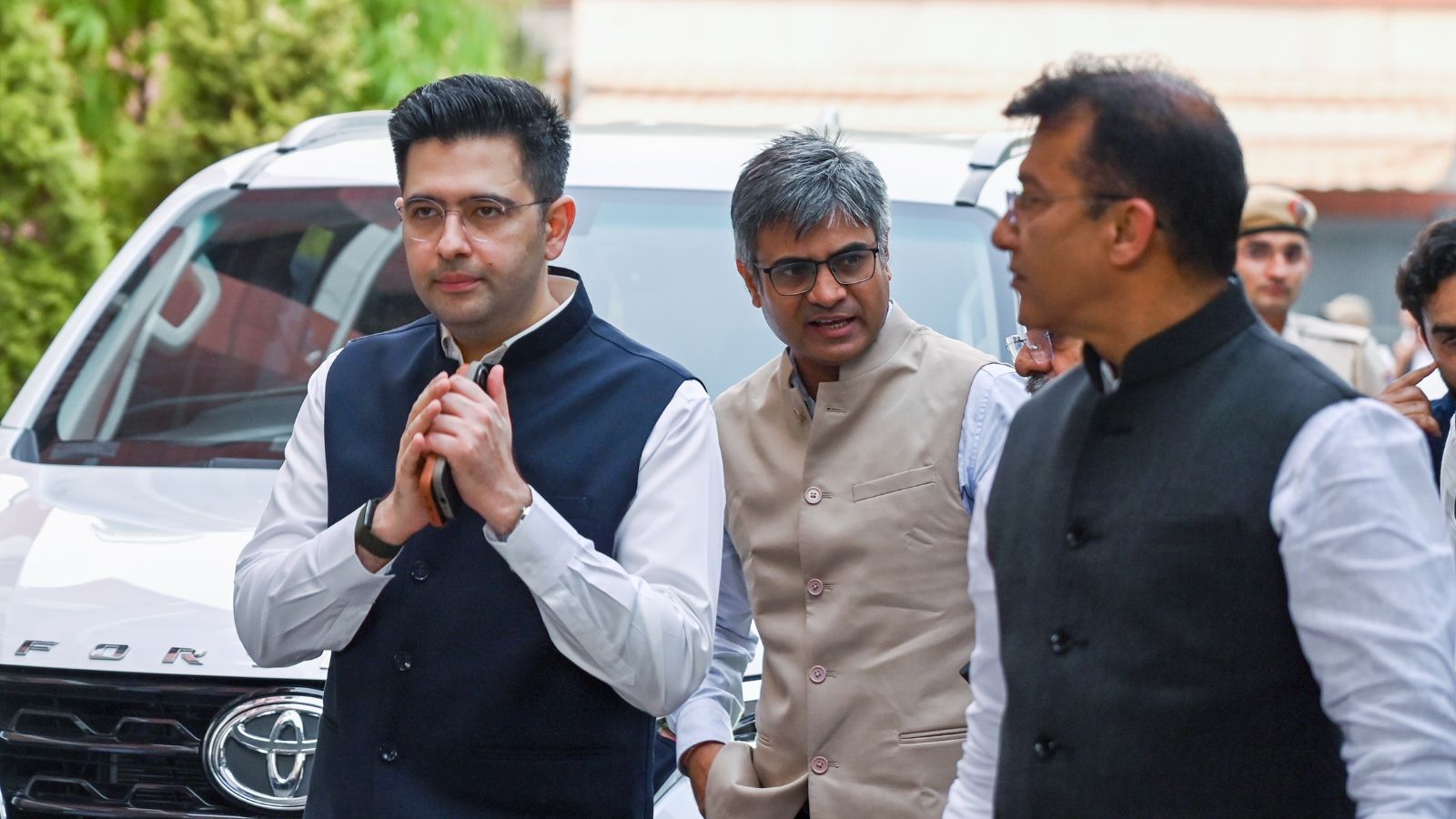
AAP's Inner Circle Fractures: Chadha Out, Kejriwal Isolated
As Raghav Chadha is stripped of his Rajya Sabha deputy role, AAP's collapse from movement to rump party is now impossible to ignore.
Arvind Kejriwal built the Aam Aadmi Party on a single structural bet: total personal loyalty. Every major figure — Raghav Chadha, Sandeep Pathak, Swati Maliwal — owed their political existence to him alone. That model worked spectacularly when AAP was winning. It is now accelerating the party's unraveling.
The proximate trigger is AAP's formal move to remove Chadha as Deputy Leader in the Rajya Sabha, replacing him with Ashok Mittal. For a man who served as AAP's national spokesperson, Punjab campaign strategist, and treasurer — and who was among the youngest MPs in the upper house — this is political demotion by bureaucratic memo. The Frontline report frames it as the culmination of months of mutual recriminations, not a sudden break.
The Structural Problem Kejriwal Built
AAP was never a party in the conventional sense — it was a movement organized around a single charismatic principal. That gave it extraordinary agility in opposition but left it with no institutional ballast once Kejriwal himself became a liability. His arrest in the Delhi liquor policy case in 2024, followed by the BJP's recapture of Delhi in early 2025 after AAP's decade in power, stripped the party of both its governing credibility and its martyr narrative simultaneously.
What followed was predictable to anyone who has watched personality-centric parties in crisis. Lieutenants who had no independent political base — and thus nothing to lose by staying loyal while the party was ascendant — now face a binary: go down with Kejriwal or use residual profile to negotiate an exit. Maliwal broke first and most publicly, leveraging the assault controversy against Kejriwal's aide into a platform of her own. Chadha's trajectory is quieter but structurally identical. Per The Hindu, the party didn't even publicly announce the move — a sign of how badly both sides want to manage the optics.
Sandeep Pathak, as AAP's organisational general secretary, sits in the most ambiguous position. His value to any defection calculus depends entirely on whether he controls the party's ground machinery — or whether that machinery has already atrophied with the voter base.
Who Benefits
BJP is the obvious structural winner. Every AAP defector burnishes the BJP's narrative that Kejriwal's "clean politics" brand was always fraudulent. More concretely, figures like Chadha carry Rajya Sabha seats and national media profiles that can be redirected. Delhi's MCD bypoll results — BJP winning 7 of 12 wards contested in 2025, per The Hindu — confirm the electoral ground has already shifted.
Congress gains marginally, as AAP's collapse removes the party that most directly cannibalized its urban, educated voter base in Delhi and Punjab.
The loser, beyond Kejriwal personally, is the INDIA bloc opposition coalition, which already saw AAP drifting away over seat-sharing disputes through 2025. A fragmented AAP is a weaker negotiating partner — and a weaker vote-aggregator against BJP in north India. Follow India politics coverage for ongoing developments.
What to Watch
Two pressure points matter now. First, whether Chadha's Rajya Sabha seat becomes contested — his term, the manner of his removal, and any floor-crossing will signal how clean or messy the break becomes. Second, Punjab: AAP still governs the state under CM Bhagwant Mann, and any acceleration of defections toward BJP or Congress there would transform this from a Delhi story into a national-level party collapse. Punjab state assembly elections are due by early 2027 — the clock is already running.
Discover more
India
Women’s Reservation Bill 2026
The Constitution (131st Amendment) Bill, 2026 was defeated in Lok Sabha, revealing deeper political conflicts over women's reservation and delimitation.
India
BJP Congress Clash Over MP Bill Defeat
The BJP's defeat of the women's quota amendment sparks a political narrative war with Congress, impacting future elections.
India
Rajnath Singh's Durga Squad for 2026 Polls
Rajnath Singh's Durga Squad promised women's safety in Bengal but has since disappeared from the agenda, revealing BJP's true priorities.

Conflict & Security
Drone Warfare Killing Aid Workers at Unprec
Over 1,000 humanitarian workers killed in three years as cheap armed drones collapse legal protections. Gaza, Sudan, Ukraine, and DRC see deliberate targeting of aid convoys and hospitals with zero prosecutions.