$2.5 Billion Fund Reshapes Migration Policy
UN report reveals new funding for internal displacement solutions.
Model Diplomat8 min readGlobal
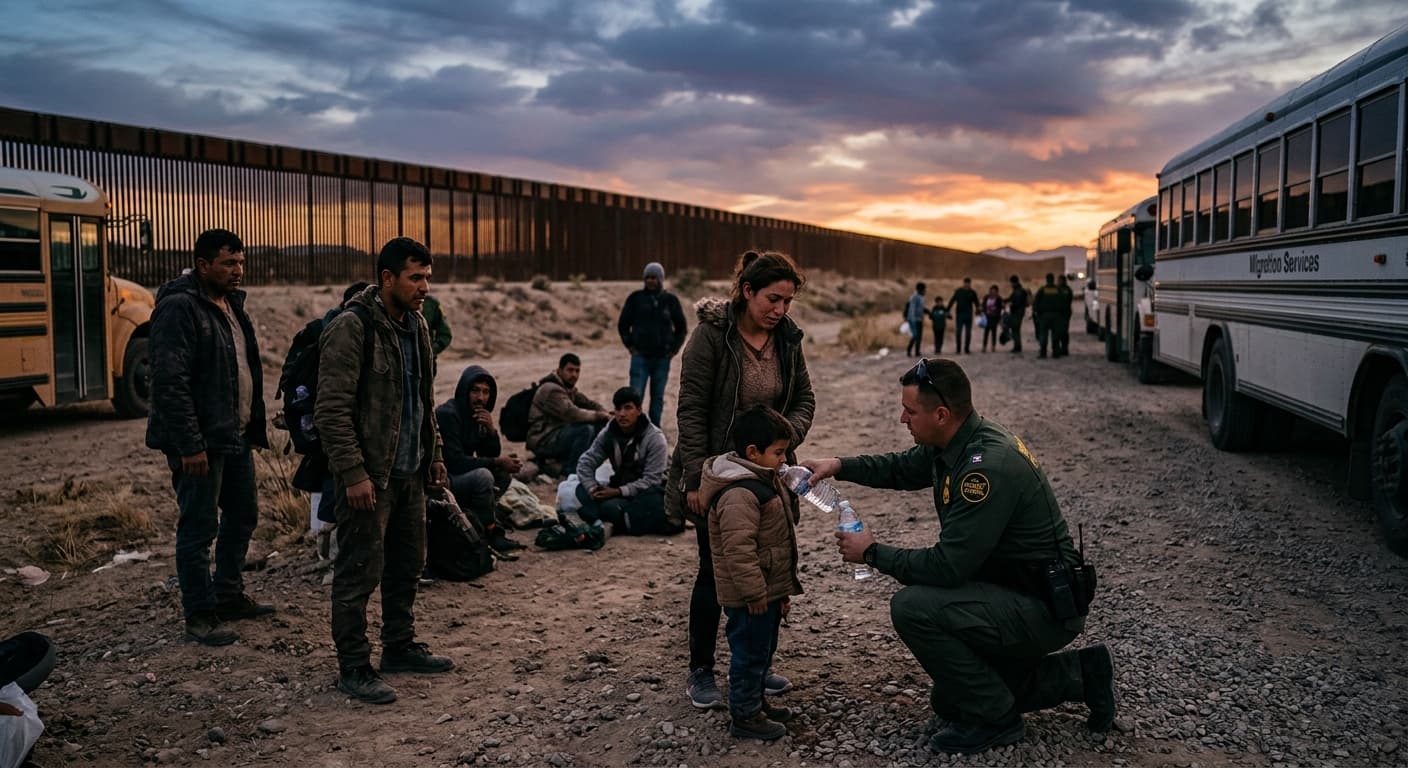
The $2.5 Billion IDP Fund That Quietly Rewires Global Migration Policy
A new UN report says $2.5 billion has been unlocked for internal displacement solutions. The real story is what it signals about who pays — and who no longer does — for the world's 73 million IDPs.
The Internal Displacement Solutions Fund (IDSF) announced on July 6, 2026 that its $25 million in seed capital had catalysed $2.5 billion in national budget allocations and a further $850 million in development finance across ten pilot countries — a claim that reframes internal displacement from a Western-donor problem into a sovereign-borrower one, and quietly locks in the policy consequences of the collapse of US humanitarian aid. The number is real. The framing — that a shoestring UN vehicle "leveraged" $168 for every dollar it disbursed — is a political construction that governments in Bogotá, Abuja and Mogadishu, and creditors at the World Bank and African Development Bank, now have strong incentives to accept.
What the report actually says
The July 6 announcement, issued jointly by IOM, UNDP and UNHCR as fund "champions," reports that IDSF-supported programmes helped allocate nearly 98,000 hectares of land for housing and livelihoods and enabled more than 200,000 IDPs to obtain legal documentation, according to IOM. The fund itself remains small: as of October 2025 it held just over $25 million from five donors — Germany, Norway, Spain, Switzerland and the United Kingdom — per the
World Migration Report 2026. The United States, historically the largest humanitarian donor, is absent from the roster.
The IDSF is the financing arm of the UN Global Solutions Hub, itself the institutional residue of the 2022 Secretary-General's Action Agenda on Internal Displacement, which set 31 UN commitments across prevention, response and durable solutions, per the United Nations. The Hub replaced the time-bound Office of the Special Adviser on Solutions to Internal Displacement (OSA), whose mandate ended December 31, 2024. What the new report describes is the first full operational year of a permanent successor architecture that its designers hope will survive the aid recession.
The leverage math — and why donors will let it stand
The headline "$168 for every $1" is arithmetically defensible but analytically strained. The numerator counts sovereign budget allocations that governments were, in several cases, already committing before the IDSF existed. Colombia had already pledged approximately $1 billion a year of its own budget to displacement solutions before the fund's launch, according to a December 2024 briefing by the Special Adviser. In Nigeria, the governors of Adamawa, Borno and Yobe committed 7%, 15% and 5% respectively of annual state revenues to solutions plans before any IDSF seed money arrived, per the UN policy brief on
financing solutions to internal displacement.
The IDSF's real function is not to move money but to launder political risk — to give ministries of finance in fragile states a UN-endorsed template for embedding IDPs into national development plans, and to give creditor institutions like the World Bank and African Development Bank a scoring rubric that allows them to book IDP lending as development, not humanitarian, exposure. The World Bank has added an IDP indicator to its corporate scorecard, and the African Development Bank set similar targets in its new 10-year strategy, per the OSA concept note on IDP concessional finance. That reclassification is the single most consequential shift in the field — it lets IDP support ride on the balance sheets of institutions that operate through decades, not appeals cycles.
The winner: multilateral development banks. The loser: the humanitarian system
To see who benefits, follow the paper trail on the SOLID project in Nigeria. On August 7, 2025, the World Bank Board approved $300 million in IDA financing for the Solutions for the Internally Displaced and Host Communities Project, targeting 7.4 million people across northern Nigeria of whom 1.3 million are IDPs, according to the World Bank. SOLID is structured as development lending — resilient infrastructure, community livelihoods, institutional strengthening — not emergency relief. Somalia's $2.1 billion, five-year plan is expected to lean heavily on IFI finance and ODA, since donor aid already funds two-thirds of the Somali federal budget, per the
OSA concept note.
Meanwhile, the humanitarian pillar that historically carried IDPs is in freefall. OCHA's 2026 Global Humanitarian Overview asks for $33 billion to reach 135 million of the 239 million people projected to require assistance, according to a February 2026 briefing note by USG Tom Fletcher. The 2025 appeal, hyper-prioritised down to $29 billion mid-year, closed massively underfunded, and the United States announced in late December that it would contribute only $2 billion to UN humanitarian assistance in 2026 — down from roughly $14 billion in 2024, per
Al Jazeera. The Council on Foreign Relations, in a December 2025 review, found that Americans "collectively spent more on their Halloween candy in 2025 than their government did on life-saving humanitarian aid," describing what it called
"The Great Aid Recession".
That is the context in which the IDSF's leverage story must be read. With bilateral aid collapsing, the UN has an existential interest in demonstrating that a small pooled fund can catalyse sovereign and IFI resources at 100-to-1 ratios. The reporting is designed for a specific reader: finance ministries in donor capitals looking to justify continued multilateralism to sceptical legislatures, and treasuries in recipient capitals looking to explain why IDP spending belongs in the development budget rather than the interior ministry.
The people the frame leaves out
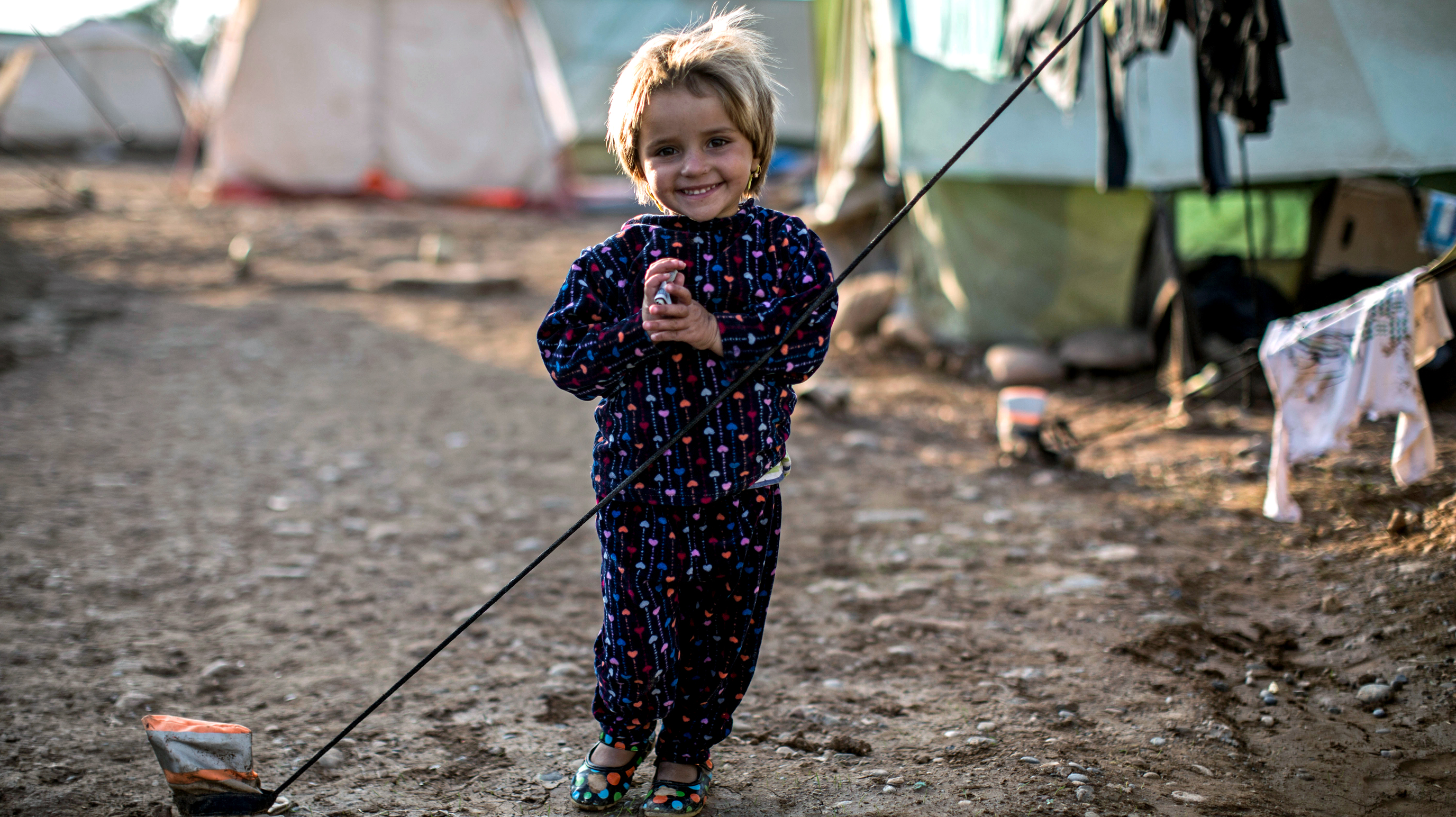
The pivot toward development finance carries a structural blindspot. The World Migration Report 2026 notes that only 28 percent of national development plans and 36 percent of national climate action plans in displacement-affected low- and middle-income countries explicitly mention refugees and IDPs, per IOM's chapter on financing durable solutions. Tens of millions of displaced people therefore sit outside the planning frameworks the IDSF is trying to leverage. The fund's answer — pilot inter-ministerial coordination platforms in countries like Niger and Somalia — is a governance intervention that will take years to convert into disbursed cash.
The population continues to grow faster than the response. UNHCR reported in June 2025 that 73.5 million people were internally displaced by conflict at end-2024, a 10% rise on the previous year, with Sudan (11.6 million), Syria (7.4 million), Colombia (7.2 million) and the DRC (6.9 million) leading the totals, according to Al Jazeera. A further 45.8 million people were displaced within their own countries by disasters in 2024, with 9.8 million still displaced at year-end — an increase of 29% on 2023, per a
Konrad-Adenauer-Stiftung analysis of the UNHCR Global Trends data. Sudan alone accounts for the world's largest single displacement crisis, with a further 3.5 million people uprooted in twelve months.
The historical parallel — and why this time is different
The IDSF model is not new. Colombia's Law 387 of 1997 pioneered the notion that internal displacement should be a domestic legal and budgetary responsibility rather than a humanitarian externality. Between 2002 and 2014 the World Bank supported Colombia through a three-phase project that processed more than 173,000 protection requests and helped shape the 2011 Victims and Land Restitution Law, according to the World Bank. The Colombian experience produced two lessons the IDSF has clearly absorbed: national ownership makes solutions durable, and land restitution is the operational core of any credible plan. It also produced one lesson the IDSF is quietly ignoring: even with a functioning legal framework and sustained World Bank support, Colombia's IDP population is still measured in the millions two decades on.
What is different in 2026 is the fiscal architecture. The Trump administration's proposed FY2026 budget includes a new International Humanitarian Assistance account that cuts US funding by roughly 70 percent, according to the Carnegie Endowment. The transitional programs designed to move populations from relief to self-reliance — precisely the category into which IDP solutions falls — were among the first casualties. In that void, the IDSF is not a pilot but a placeholder: it is the mechanism through which the UN system is trying to migrate the entire IDP file from the humanitarian ledger, where funding is disappearing, to the development ledger, where it is not.
That migration has second-order consequences. Development finance comes with conditionalities — debt sustainability analysis, government counterpart funding, procurement standards — that emergency aid does not. Governments hosting large IDP populations, most of them in low- and lower-middle-income countries where 82 percent of IDPs reside according to the OSA concept note, will now carry IDP-related debt on their books. The Chief Executives Board's
system-wide approach, endorsed in January 2025 by 28 UN agencies, is explicit that "only governments can create clear links to national budget allocations and raise the necessary resources from international financial institutions." That sentence is the whole strategy.
What to watch
- Next replenishment window. The IDSF has raised $25 million against a five-year, $100 million target for up to 40 countries. Whether Spain's late-2025 entry is followed by additional donors — or whether Germany's aid cuts reduce its share — will determine if the fund can continue underwriting new country pilots in 2027.
- World Bank IDA-21 pipeline. SOLID Nigeria is the template. Watch for equivalent IDA operations in Somalia, Ethiopia, DRC and Mozambique. Approval of a Somalia solutions loan in the next twelve months would validate the leverage model; delay would expose it.
- The Biennial State of Solutions report. Committed under the system-wide approach and building on IOM's PROGRESS series produced with Georgetown's Institute for the Study of International Migration, per
Georgetown SFS. Its next edition will be the first independent audit of whether the IDSF's leverage claims survive scrutiny.
- US FY2026 appropriations. Congressional pushback against the 70% humanitarian cut is the swing variable. If enacted, it forces the UN system further onto the IFI track the IDSF is designed for.
The Bottom Line
The $2.5 billion figure is real but the interesting number is $25 million — the size of the fund that produced it, and the measure of how thoroughly the UN has accepted that the era of large bilateral humanitarian donors funding IDP solutions is over. The IDSF is the instrument through which internal displacement is being reclassified as a sovereign development liability, financed by IFI lending and national budgets rather than emergency appeals. That shift will keep money flowing where humanitarian aid is retreating — and quietly transfer the balance-sheet risk of 73 million displaced people from Western capitals to the governments that host them.
Discover more

Global Politics
US Seizes Iranian Ship, Tensions Surge
The US seizure of the Iranian ship Touska highlights a shift in control over the Strait of Hormuz, favoring Iran's strategic position.
US Politics
House Ethics Committee Pushes Sexual Miscond.
The House Ethics Committee has shifted responsibility for sexual harassment settlement records to the Office of Congressional Workplace Rights, complicating disclosure efforts.
US Politics
SNAP Food Assistance Faces Legal Challenges
In 2026, SNAP faces stricter eligibility rules and mounting legal challenges, threatening food assistance for the millions of Americans who rely on the program.

Economics
Fed's Amex AML order puts correspondent banking on notice
Federal Reserve's Amex AML order requires board-level controls and a 90-day plan; OCC fined the bank $350 million over enterprise-wide deficiencies.