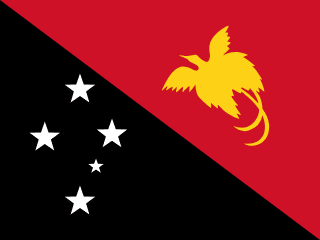
Inside Papua New Guinea’s foreign policy.
Independent State of Papua New Guinea
Oceania · UN voting record, treaty positions, and alliances — every claim primary-sourced.
In short
Papua New Guinea is a parliamentary monarchy that is trying to turn geographic centrality into diplomatic leverage without becoming a military outpost for larger powers.
Capital
Port MoresbyPapua New Guinea's government & politics
Leadership, governance, and democratic trajectory.


Papua New Guinea's UN voting record
How Papua New Guinea votes at the UN General Assembly — ideological trajectory, voting partners, topic patterns, and key recent roll calls.
Ideological trajectory
Top voting partners
Topic-level voting
Source: Erik Voeten, “United Nations General Assembly Voting Data”, Harvard Dataverse (CC0). Aggregated by Model Diplomat. Last refresh tracked in profile freshness.
Papua New Guinea's foreign policy
Bilateral posture, key relationships, and live diplomatic statements.
Foreign Policy
Papua New Guinea’s foreign policy is now more explicit than at any point since independence: the Marape government’s 2025 foreign policy white paper and its 2026 rollout frame PNG as “friend to all, enemy to none,” while tying diplomacy to sovereignty, economic development, and a larger security role in the Pacific PNG Department of Foreign Affairs and International Trade, Islands Business. The decision structure is parliamentary on paper but prime-ministerial in practice on external affairs: Prime Minister James Marape has personally driven the security and economic diplomacy agenda, while the Department of Foreign Affairs and International Trade operationalizes it and parliament has limited capacity to redirect it once the executive has settled on a line Parliament of Papua New Guinea, Lowy Institute. The hierarchy of interests is clear. Survival means preserving territorial integrity and avoiding entanglement in great-power conflict; regime security means maintaining domestic stability in a fragmented party system; economic interest means turning resource wealth, infrastructure finance, and market access into state revenue and jobs; status means being treated as a leading Melanesian and Pacific state rather than as a passive aid recipient PNG Department of Foreign Affairs and International Trade, World Bank.
Australia is PNG’s most consequential bilateral partner because geography, aid, policing, and defence ties are structural, not episodic. Canberra and Port Moresby signed a Bilateral Security Agreement in 2023 covering security cooperation across defence, policing, cyber, and border management, and Australia remains PNG’s largest development partner Australian Department of Foreign Affairs and Trade, Australian Government. The United States has also moved sharply up PNG’s priority list through the 2023 Defence Cooperation Agreement and a parallel shiprider agreement, both tied to US efforts to expand its Pacific security footprint U.S. Department of State, Congress.gov. Japan and New Zealand matter as development and regional partners, while Indonesia is the most sensitive neighbor: Jakarta is indispensable on border management and trade, but PNG must also manage domestic and Melanesian sympathy for West Papuan self-determination without triggering a bilateral rupture New Zealand Ministry of Foreign Affairs and Trade, Government of Japan Ministry of Foreign Affairs, PNG-Indonesia border reporting, Government of PNG. China is the balancing relationship. Beijing is a major economic partner and infrastructure financer, but Port Moresby has not aligned politically with China and continues to deepen security ties with Australia and the US instead International Monetary Fund, U.S. Department of State.
Regionally, PNG uses institutions to multiply its weight. It is a member of the Pacific Islands Forum, the Melanesian Spearhead Group, APEC, the Commonwealth, the UN, and the Alliance of Small Island States, giving it platforms on decolonization, development finance, fisheries, maritime security, and climate negotiations Pacific Islands Forum, Melanesian Spearhead Group, APEC, United Nations. At the UN, PNG generally aligns with the Pacific small-state consensus on climate vulnerability, sustainable development, oceans governance, and decolonization, and it has consistently presented climate change as a national security and development issue in multilateral forums UN General Assembly, AOSIS. That said, its diplomacy is less norm-driven than many Polynesian and Micronesian states. PNG’s voting and statements often reflect a transactional developmentalism: support for broad South-oriented positions on finance and equity, caution on language that could constrain extractive growth, and a preference for preserving room to bargain bilaterally with larger powers UN Digital Library, APEC.
The most useful divergence is that PNG does not behave like a standard “Pacific bloc” state on security alignment. Many Pacific governments try to keep hard-security cooperation low-profile or evenly balanced across partners; PNG is willing to sign substantial defence arrangements with Australia and the United States, but it simultaneously insists it will not host foreign bases, a line Marape reiterated in 2026 as Australian defence cooperation expanded The Manila Times, Australian Government. That is not rhetorical inconsistency. It is the doctrine in practice: maximize external security assistance, avoid formal loss of sovereign control, and keep enough ambiguity to continue dealing with China, Indonesia, and Pacific neighbors that are more skeptical of militarization PNG Department of Foreign Affairs and International Trade, Islands Business.
Domestic politics explains much of this posture. PNG’s fragmented party system, weak party discipline, and recurring governance stress make foreign policy unusually valuable to the prime minister as a tool for attracting financing, projecting competence, and delivering visible external partnerships even when domestic institutions are thin Lowy


Papua New Guinea's treaties & memberships
UN multilateral treaty positions and IGO memberships.
International Organizations
Society & economy
Macro-economic snapshot and demographic context.
GDP (nominal)
$31.8B
#111/250GDP per capita
$3,006.706
#153/250Currency
—
HDI
0.56
#156/250GDP (nominal USD)
GDP per capita (USD)


In the news
Stories surfacing across Papua New Guinea’s authoritative outlets, plus headline events and the diplomatic calendar.
Headlines
PNG’s democracy problem starts with its party law | Lowy Institute
Summary: The article argues that Papua New Guinea’s party law blocks citizen participation and undermines governance reforms supported by foreign partners. It highlights that parties can form around a single individual with minimal requirements and that the current 500-member threshold does not sustain citizen involvement. This hollow participation hinders accountability, party policy development, and stable coalition-building, which in turn affects PNG’s foreign policy direc
NEW FOREIGN POLICY WHITEPAPER SETS STRATEGIC DIRECTION FOR PNG
Summary: Papua New Guinea has launched a new Foreign Policy Whitepaper to guide the country’s international engagement through the coming years. Key officials describe it as providing a clear strategic framework to align PNG’s diplomacy with national development goals. Prime Minister James Marape 강조 that the White Paper will steer PNG’s International Relations, Security, and Economic Engagement, while reaffirming the longstanding doctrine of “friends to all and enemies to no
PNG's Marape says no foreign bases as Australia's defense presence grows | The Manila Times
Papua New Guinea (PNG) maintains that its Lombrum naval base and related facilities are sovereign PNG defense installations, not foreign bases, even as Australia expands its security presence and funds base upgrades. Key points: - PNG Prime Minister James Marape reaffirmed that PNG won’t permit foreign military bases, despite Australia redeveloping Lombrum ($AU500m) and planning long-term Australian “living services” at the site. - The Australian compound at Lombrum is for j
Diplomatic calendar
Upcoming key dates
- Jan 1, 2027Electionin 3mo
next Papua New Guinean general election
- Jan 1, 2027Electionin 3mo
2027 Papua New Guinean general election
Explore Papua New Guinea in depth
Frequently asked questions about Papua New Guinea
Quick answers to the most common questions about Papua New Guinea.
What type of government does Papua New Guinea have?
Papua New Guinea is governed as a unitary parliamentary constitutional monarchy, with its capital at Port Moresby.
Who is the head of state of Papua New Guinea?
Charles III is the head of state of Papua New Guinea, in office since 2022-09-08.
Who leads the government of Papua New Guinea?
James Marape serves as the head of government of Papua New Guinea, since 2019-05-30.
What is the population of Papua New Guinea?
Papua New Guinea has a population of approximately 10.6 million people, making it the 92nd most populous country.
What is the economy of Papua New Guinea like?
Papua New Guinea has a nominal GDP of about $32 billion, or roughly $3,007 per capita.
What languages are spoken in Papua New Guinea?
The official languages of Papua New Guinea are English, Hiri Motu, and Tok Pisin.
When did Papua New Guinea join the United Nations?
Papua New Guinea has been a member of the United Nations since 1975.
Who are Papua New Guinea's closest allies?
Papua New Guinea's key allies include Australia, New Zealand, Japan, and United States.
More about Papua New Guinea
Papua New Guinea is a parliamentary monarchy that is trying to turn geographic centrality into diplomatic leverage without becoming a military outpost for larger powers. It is governed by Prime Minister James Marape, whose PANGU Pati-led coalition remained in office after defeating a 2024 vote of no confidence, while King Charles III remains head of state represented domestically by the governor-general [Parliament of Papua New Guinea](https://www.parliament.gov.pg/), [Britannica](https://www.britannica.com/place/Papua-New-Guinea), [Reuters](https://www.reuters.com/world/asia-pacific/papua-new-guinea-pm-james-marape-survives-no-confidence-vote-2024-09-12/). In current foreign-policy terms, PNG presents itself as “friend to all, enemy to none,” but in practice it is moving closer to Australia, the United States, Japan, and other Indo-Pacific partners while insisting it will not host foreign bases [Department of Prime Minister & NEC, PNG Foreign Policy White Paper 2025–2030](https://www.dpmnec.gov.pg/), [Islands Business](https://islandsbusiness.com/news-break/friend-to-all-enemy-to-none-png-launches-strategic-blueprint-for-next-50-years/), [The Manila Times](https://www.manilatimes.net/2026/05/30/world/asia-oceania/pngs-marape-says-no-foreign-bases-as-australias-defense-presence-grows/). The political system is a unitary parliamentary constitutional monarchy in which the prime minister and cabinet drive policy, but coalition management is the real operating system of government [CIA World Factbook](https://www.cia.gov/the-world-factbook/countries/papua-new-guinea/), [Parliament of Papua New Guinea](https://www.parliament.gov.pg/). Marape’s government is anchored by PANGU Pati rather than a disciplined majority party machine, which matters because PNG’s weakly institutionalized parties make cabinet cohesion and legislative durability constant concerns [PANGU Pati](https://pangu.org.pg/), [Lowy Institute](https://www.lowyinstitute.org/the-interpreter/pngs-democracy-problem-starts-its-party-law). That domestic fragmentation shapes foreign policy: governments in Port Moresby usually prefer external partnerships that deliver visible financing, infrastructure, security assistance, and state capacity quickly, because elite survival and service delivery pressures are immediate [Lowy Institute](https://www.lowyinstitute.org/the-interpreter/pngs-democracy-problem-starts-its-party-law), [Asian Development Bank](https://www.adb.org/countries/papua-new-guinea/economy). PNG’s place in the world is larger than its state capacity. It sits astride sea lines linking the southwest Pacific to Southeast Asia, is the biggest Pacific Island country by population, and belongs to the Pacific Islands Forum, the Melanesian Spearhead Group, APEC, the Commonwealth, AOSIS, and the United Nations, giving it outsized diplomatic utility in Pacific regional politics and climate negotiations [Pacific Islands Forum](https://forumsec.org/), [Melanesian Spearhead Group](https://msgsec.info/), [APEC](https://www.apec.org/member-economies/papua-new-guinea), [United Nations](https://www.un.org/en/about-us/member-states/papua-new-guinea). Its diplomacy now tries to balance three audiences at once: traditional security partners led by Australia, development lenders and investors, and Pacific neighbors wary of great-power militarization [Australian Department of Foreign Affairs and Trade](https://www.dfat.gov.au/geo/papua-new-guinea), [U.S. Department of State](https://www.state.gov/u-s-relations-with-papua-new-guinea/), [Department of Prime Minister & NEC, PNG Foreign Policy White Paper 2025–2030](https://www.dpmnec.gov.pg/). Economically, PNG is resource-rich but structurally fragile. Its nominal GDP was about $31.8 billion in the country context provided, while the World Bank describes growth as heavily dependent on extractives, especially liquefied natural gas, gold, copper, and oil, with weak infrastructure, law-and-order problems, and limited broad-based employment constraining spillovers into the wider economy [World Bank](https://www.worldbank.org/en/country/png/overview), [International Monetary Fund](https://www.imf.org/en/Countries/PNG). That makes the country simultaneously attractive to foreign investors and vulnerable to commodity cycles, governance bottlenecks, and subnational instability around project sites [World Bank](https://www.worldbank.org/en/country/png/overview), [IMF](https://www.imf.org/en/Countries/PNG). Agriculture still matters for livelihoods, but the state’s fiscal hopes and much of its external relevance are tied to energy and mining decisions, including major LNG expansion prospects [Asian Development Bank](https://www.adb.org/countries/papua-new-guinea/economy), [ExxonMobil PNG LNG](https://pnglng.com/). Three issues define PNG’s current trajectory. The first is strategic alignment without formal alignment: Port Moresby wants defense cooperation, maritime security support, and infrastructure from Australia and the United States, but Marape has publicly rejected foreign bases to preserve sovereignty and domestic political space [The Manila Times](https://www.manilatimes.net/2026/05/30/world/asia-oceania/pngs-marape-says-no-foreign-bases-as-australias-defense-presence-grows/), [Australian Department of Defence](https://www.defence.gov.au/). The second is whether resource wealth can be converted into state capacity instead of elite bargaining and localized grievance, a question that sits behind debates over LNG expansion, public finance, and service delivery [World Bank](https://www.worldbank.org/en/country/png/overview), [IMF](https://www.imf.org/en/Countries/PNG). The third is political functionality itself: Lowy’s recent assessment argues PNG’s democracy problem is rooted in party weakness, and that matters internationally because a fragmented domestic system limits the state’s ability to implement long-horizon foreign and economic strategy even when the rhetoric is clear [Lowy Institute](https://www.lowyinstitute.org/the-interpreter/pngs-democracy-problem-starts-its-party-law), [Department of Prime Minister & NEC, PNG Foreign Policy White Paper 2025–2030](https://www.dpmnec.gov.pg/). The result is a country that matters more than its institutional depth would suggest. PNG is not a bloc leader or a military power, but it is becoming