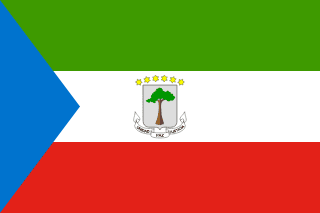
Inside Equatorial Guinea’s foreign policy.
Republic of Equatorial Guinea
Africa · UN voting record, treaty positions, and alliances — every claim primary-sourced.
In short
Equatorial Guinea is a highly centralized presidential state where foreign policy tracks regime security first, oil revenue second, and only then broader national development.
Capital
Ciudad de la PazGovernment
Unitary presidential republicEquatorial Guinea's government & politics
Leadership, governance, and democratic trajectory.

Head of state
Teodoro Obiang
Head of State

Equatorial Guinea's UN voting record
How Equatorial Guinea votes at the UN General Assembly — ideological trajectory, voting partners, topic patterns, and key recent roll calls.
Ideological trajectory
Top voting partners
Topic-level voting
Source: Erik Voeten, “United Nations General Assembly Voting Data”, Harvard Dataverse (CC0). Aggregated by Model Diplomat. Last refresh tracked in profile freshness.
Equatorial Guinea's foreign policy
Bilateral posture, key relationships, and live diplomatic statements.
Foreign Policy
Equatorial Guinea’s foreign policy is regime-preservation diplomacy backed by hydrocarbons. President Teodoro Obiang Nguema Mbasogo has ruled since 1979, and he remains the central decision-maker; Prime Minister Manuel Osa Nsue Nsua was appointed in August 2024, but the presidency still dominates strategic external policy, while Foreign Minister Simeón Oyono Esono Angue handles execution rather than direction Presidency of Equatorial Guinea, UN General Assembly, CIA World Factbook. The state presents its diplomacy as sovereign, non-interference based, and oriented toward development, South-South cooperation, and strategic diversification, themes repeated in government messaging and in its engagement with partners such as China, the African Union, and the UN system Ministry of Foreign Affairs of Equatorial Guinea, Forum on China-Africa Cooperation. In practice, the interests pyramid is clear: survival and regime security come first, especially protection from external pressure over governance and corruption; economic interests come second, centered on oil, gas, infrastructure, and investment; status comes third, visible in its pursuit of influence through OPEC, the AU, and high-profile multilateral participation US Department of State, OPEC, African Union.
Its bilateral map is deliberately hedged. China has become the most consequential external partner because it offers infrastructure finance, political cover on governance questions, and expanding strategic ties; Beijing and Malabo elevated relations to a “comprehensive strategic partnership” in 2026 after years of cooperation on construction, energy, and diplomatic support The Diplomat, Ministry of Foreign Affairs of the People’s Republic of China. The United States remains important because of Gulf of Guinea security, energy history, and maritime concerns, but the relationship is narrower and more conditional, shaped by repeated US criticism of corruption and rights abuses as well as periodic security engagement US Department of State, Congressional Research Service. France and Spain matter economically and historically, while Cameroon and Gabon matter immediately for border management and regional stability; the long-running maritime delimitation dispute with Gabon went to the International Court of Justice, which in 2025 rejected most of Equatorial Guinea’s claims over disputed islands and maritime features, reinforcing Malabo’s preference for legal-institutional management of territorial disputes when coercive options are weak International Court of Justice, Reuters.
Regionally, Equatorial Guinea uses memberships less as identity commitments than as insurance and access platforms. It belongs to the African Union, ECCAS, CEMAC, OPEC, the Community of Portuguese Language Countries, the Organisation internationale de la Francophonie, and the Group of 77, giving it reach across Central African, Lusophone, Francophone, energy, and developing-world forums African Union, ECCAS, CEMAC, OPEC, CPLP, Organisation internationale de la Francophonie, Group of 77. Membership in CEMAC is especially material because it ties Equatorial Guinea into the CFA franc monetary system and regional financial rules, constraining macroeconomic autonomy but supporting stability Bank of Central African States. OPEC membership serves status and revenue management rather than bloc politics; with oil output declining from earlier peaks, Malabo uses energy diplomacy to remain relevant even as its production base has weakened OPEC Annual Statistical Bulletin, World Bank.
At the UN, Equatorial Guinea broadly aligns with African and Global South preferences on sovereignty, anti-intervention, and Palestinian questions, and it is typically resistant to country-specific human-rights scrutiny. Its behavior during its 2018–2019 term on the UN Security Council showed this pattern: it supported stronger emphasis on state consent and non-interference and was cautious on coercive language in African files, while still working within consensus when core regime interests were not touched UN Security Council, Security Council Report. In the General Assembly, it tends to vote with the African group and the G77 on decolonization, development financing, and sanctions skepticism, but its most useful divergence is that it is often more accommodating than some reformist African states toward China, Russia, and other authoritarian partners when votes or statements touch accountability norms, internet controls, or external criticism of domestic governance UN Digital Library, Freedom House.
That divergence matters more than its formal alliances. Many African states defend sovereignty in principle, but Equatorial Guinea’s version is unusually regime-centered: it seeks multilateral legitimacy without meaningful political opening, and it is willing to diversify toward whichever major power least threatens elite security


Equatorial Guinea's treaties & memberships
UN multilateral treaty positions and IGO memberships.
International Organizations
Society & economy
Macro-economic snapshot and demographic context.
GDP (nominal)
$12.8B
#149/250GDP per capita
$6,745.4
#119/250Currency
—
HDI
0.59
#147/250GDP (nominal USD)
GDP per capita (USD)
Top trading partners


In the news
Stories surfacing across Equatorial Guinea’s authoritative outlets, plus headline events and the diplomatic calendar.
Headlines
China and Equatorial Guinea: Why Their New ‘Comprehensive Strategic Partnership’ Matters – The Diplomat
Summary: The Diplomat reports that Equatorial Guinea (Malabo) and China upgraded their relationship to a “comprehensive strategic partnership of cooperation.” This elevates Malabo into a growing group of African nations with deepened ties to China and signals potential for broader military, economic, and diplomatic cooperation. Equatorial Guinea, rich in oil and gas but with development challenges, seeks to diversify its economy and position itself as a Central African logist
US Deportations to Equatorial Guinea Challeng
Legal coalition challenges US deportations to Equatorial Guinea, citing fears of torture among deportees.
Equatorial Guinea: Freedom in the World 2022 Country Report
Equatorial Guinea is ruled by a highly repressive, personalized regime since 1979. Key points relevant to foreign policy, politics, diplomacy, elections, economy, and security: - Politics and elections: Regular elections exist but are neither free nor fair; the president’s family dominates political power and key institutions. The executive controls policy with the legislature lacking meaningful influence. - Rule of law and corruption: No independent anticorruption mechanism
Diplomatic calendar
Upcoming key dates
- Nov 30, 2027Electionin 1y
2027 Equatorial Guinean legislative election
Explore Equatorial Guinea in depth
Frequently asked questions about Equatorial Guinea
Quick answers to the most common questions about Equatorial Guinea.
What type of government does Equatorial Guinea have?
Equatorial Guinea is governed as a unitary presidential republic, with its capital at Ciudad de la Paz.
Who is the head of state of Equatorial Guinea?
Teodoro Obiang is the head of state of Equatorial Guinea, in office since 1979-08-03.
Who leads the government of Equatorial Guinea?
Manuel Osa Nsue Nsua serves as the head of government of Equatorial Guinea, since 2024-08-17.
What is the population of Equatorial Guinea?
Equatorial Guinea has a population of approximately 1.9 million people, making it the 150th most populous country.
What is the economy of Equatorial Guinea like?
Equatorial Guinea has a nominal GDP of about $13 billion, or roughly $6,745 per capita.
What languages are spoken in Equatorial Guinea?
The official languages of Equatorial Guinea are French, Portuguese, and Spanish.
When did Equatorial Guinea join the United Nations?
Equatorial Guinea has been a member of the United Nations since 1968.
Who are Equatorial Guinea's closest allies?
Equatorial Guinea's key allies include China, Cameroon, Gabon, United States, and France.
More about Equatorial Guinea
Equatorial Guinea is a highly centralized presidential state where foreign policy tracks regime security first, oil revenue second, and only then broader national development. President Teodoro Obiang Nguema Mbasogo remains the decisive actor after decades in power, while Prime Minister Manuel Osa Nsue Nsua heads the government under a cabinet reshuffle announced in 2024; the ruling Partido Democrático de Guinea Ecuatorial still dominates the political system and state institutions [Presidency of Equatorial Guinea](https://guineaecuatorialpress.com/noticias/nombramiento_de_manuel_osa_nsue_como_primer_ministro), [Britannica](https://www.britannica.com/place/Equatorial-Guinea), [Freedom House](https://freedomhouse.org/country/equatorial-guinea/freedom-world/2024). In practice, the presidency, the security apparatus, and the ruling family hold the foreign-policy file, which means external partnerships are judged mainly by whether they protect the regime, bring in financing, or reduce diplomatic pressure over governance and corruption [Freedom House](https://freedomhouse.org/country/equatorial-guinea/freedom-world/2024), [U.S. Department of State](https://www.state.gov/reports/2023-country-reports-on-human-rights-practices/equatorial-guinea/). The country’s international position is that of a small but strategically useful petro-state trying to convert hydrocarbons into diplomatic weight. Equatorial Guinea is a member of the African Union, ECCAS, CEMAC, OPEC, the Community of Portuguese Language Countries, La Francophonie, and the UN, giving it more multilateral access than its size would suggest [United Nations](https://www.un.org/en/about-us/member-states/equatorial-guinea), [OPEC](https://www.opec.org/opec_web/en/about_us/25.htm), [African Union](https://au.int/en/member_states). Its diplomacy is transactional and flexible: it has maintained ties with Western energy firms and the United States while deepening links with China, including a new “comprehensive strategic partnership” announced in 2026, a sign that Malabo wants capital, infrastructure, and political backing without locking itself into one camp [The Diplomat](https://thediplomat.com/2026/06/china-and-equatorial-guinea-why-their-new-comprehensive-strategic-partnership-matters/), [U.S. Department of State](https://www.state.gov/u-s-relations-with-equatorial-guinea/). That balancing habit is the country’s core external style. Economically, Equatorial Guinea is still defined by hydrocarbons even after years of declining output. The IMF said real GDP growth turned positive to 5.0 percent in 2024, driven by the start of gas production at the Alba Tail Gas Monetization project, but it also warned that oil-sector decline and weak non-hydrocarbon activity continue to weigh on the medium-term outlook [IMF](https://www.imf.org/en/News/Articles/2025/05/06/pr25146-equatorial-guinea-imf-executive-board-concludes-2025-article-iv-consultation). The World Bank likewise describes the economy as heavily dependent on oil and gas and vulnerable to production decline, governance weaknesses, and limited diversification [World Bank](https://www.worldbank.org/en/country/equatorialguinea/overview). This is the essential contradiction in the country’s profile: per-capita income is high on paper because of energy exports, but fiscal space, employment, and living standards are constrained by a narrow economic base and weak institutions [World Bank](https://www.worldbank.org/en/country/equatorialguinea/overview), [IMF](https://www.imf.org/en/News/Articles/2025/05/06/pr25146-equatorial-guinea-imf-executive-board-concludes-2025-article-iv-consultation). Three issues define its current trajectory. First is succession and regime durability: Obiang’s longevity means domestic and external actors increasingly read policy through the question of how power will be managed inside the ruling elite, especially around Vice President Teodoro Nguema Obiang Mangue’s influence, even when the state presents continuity [Freedom House](https://freedomhouse.org/country/equatorial-guinea/freedom-world/2024), [U.S. Department of State](https://www.state.gov/reports/2023-country-reports-on-human-rights-practices/equatorial-guinea/). Second is post-oil adjustment: the government needs gas monetization, downstream energy projects, and non-oil growth fast enough to offset structural decline in crude production [IMF](https://www.imf.org/en/News/Articles/2025/05/06/pr25146-equatorial-guinea-imf-executive-board-concludes-2025-article-iv-consultation), [World Bank](https://www.worldbank.org/en/country/equatorialguinea/overview). Third is geopolitical hedging: Malabo is expanding space with China while preserving room with the U.S., France, and regional partners, because dependence on any one patron would reduce its bargaining power [The Diplomat](https://thediplomat.com/2026/06/china-and-equatorial-guinea-why-their-new-comprehensive-strategic-partnership-matters/), [U.S. Department of State](https://www.state.gov/u-s-relations-with-equatorial-guinea/). The bottom line is that Equatorial Guinea matters more than its population suggests because it sits at the intersection of Gulf of Guinea energy, Central African politics, and great-power competition for access and influence. But its room to maneuver is narrower than its diplomacy implies: as hydrocarbon rents age, foreign policy will become even more focused on attracting external capital and political protection for the ruling system [IMF](https://www.imf.org/en/News/Articles/2025/05/06/pr25146-equatorial-guinea-imf-executive-board-concludes-2025-article-iv-consultation), [Freedom House](https://freedomhouse.org/country/equatorial-guinea/freedom-world/2024). For MUN delegates, the key read is simple: on most major files, Equatorial Guinea will favor sovereignty, non-interference, elite-controlled stability, and investment-friendly partnerships over liberal governance demands or coercive international scrutiny [U.S. Department of State](https://www.state.gov/reports/2023-country-reports-on-human-rights-practices/equatorial-guinea/), [United Nations](https://www.un.org/en/about-us/member-states/equatorial-guinea