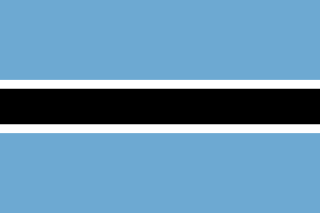
Inside Botswana’s foreign policy.
Republic of Botswana
Africa · UN voting record, treaty positions, and alliances — every claim primary-sourced.
In short
Botswana is a small but diplomatically credible southern African state whose foreign policy is being reset under President Duma Boko after the opposition Umbrella for Democratic Change won the October 2024 general election and ended the Botswana Democratic Party’s long hold on power…
Capital
GaboroneGovernment
Unitary parliamentary republicBotswana's government & politics
Leadership, governance, and democratic trajectory.

Botswana's UN voting record
How Botswana votes at the UN General Assembly — ideological trajectory, voting partners, topic patterns, and key recent roll calls.
Ideological trajectory
Top voting partners
Topic-level voting
Source: Erik Voeten, “United Nations General Assembly Voting Data”, Harvard Dataverse (CC0). Aggregated by Model Diplomat. Last refresh tracked in profile freshness.
Botswana's foreign policy
Bilateral posture, key relationships, and live diplomatic statements.
Foreign Policy
Botswana’s foreign policy is still defined less by a grand doctrine than by a durable operating pattern: protect sovereignty, preserve a rules-based regional order, keep Southern African trade open, and convert diplomatic credibility into economic diversification. The government’s 2026 draft foreign policy frames external relations around “national development,” which signals that economic statecraft now sits alongside the older pillars of democracy, good governance, and non-interference in Botswana’s external messaging Government of Botswana. Leadership changed after the 2024 election: President Duma Boko was sworn in on 1 November 2024 after the Umbrella for Democratic Change won parliamentary power, and foreign policy now runs through the presidency and cabinet rather than through a security establishment with autonomous regional reach Reuters Encyclopaedia Britannica. That matters because Botswana’s hierarchy of interests is unusually clear: survival means keeping a stable neighborhood and secure borders; regime security means preserving constitutional politics and civilian legitimacy; economic interest means protecting SACU revenue, diamond exports, and investor confidence; status means retaining its reputation as one of Africa’s most institutionally reliable states SADC World Bank.
Its bilateral relationships reflect that pyramid. South Africa is the indispensable partner because Botswana is tied to it through geography, customs integration, power trade, transport corridors, and the Southern African Customs Union revenue pool, making Pretoria central to Botswana’s economic resilience even when Gaborone wants diplomatic room to maneuver SACU Government of South Africa DIRCO. Namibia and Zambia matter for corridor access and regional infrastructure, while Zimbabwe matters more as a security and migration variable than as a preferred political model SADC. The United Kingdom and United States remain important second-tier partners for investment, defense cooperation, health programming, and diplomatic access, but Botswana has shown sensitivity about being cast as a platform for outside military competition; in May 2026 it publicly rejected claims about a planned U.S. military base, consistent with its habit of avoiding overt great-power alignment Africa Briefing U.S. Department of State UK Foreign, Commonwealth & Development Office. Botswana also maintains a pragmatic relationship with China centered on trade and infrastructure, but without the rhetorical strategic intimacy seen elsewhere in the region Ministry of Foreign Affairs of the People’s Republic of China.
Regionally and multilaterally, Botswana behaves like a proceduralist state. It is a member of the UN, African Union, SADC, SACU, Commonwealth, and G77, and it usually works through those institutions rather than around them United Nations African Union Commonwealth. In SADC, Botswana supports regional integration but has long been less willing than some neighbors to dilute standards on governance and constitutional order for the sake of solidarity SADC. At the UN, its voting record broadly aligns with the African Group and G77 on decolonization, development finance, and support for Palestinian self-determination, but Botswana’s diplomacy is usually more legalist and less ideological than that coalition’s loudest members UN Digital Library Group of 77. That same pattern shows up in climate and development negotiations: Botswana supports common African bargaining positions while stressing implementation, adaptation finance, and development space for middle-income African economies UNFCCC.
The most useful divergence is that Botswana often breaks from its bloc not on headline anti-colonial issues but on governance, sanctions, and how bluntly to defend liberal constitutional norms inside Africa. Under previous administrations, Botswana at times took sharper positions than many SADC states on Zimbabwe’s political crisis and was more willing to criticize electoral or governance failures in the region, even when that created friction with neighbors that preferred quiet diplomacy ISS Africa Freedom House. That did not make Botswana pro-Western in any simple sense; it still defended sovereignty and resisted external coercion when it viewed it as selective or destabilizing African Union. The analytical point is that Botswana’s bloc behavior is conditional: it joins African caucuses by default, but it is more likely than many peers to deviate when constitutionalism, electoral legitimacy, or reputational risk to its own democratic brand is at stake.
That reputation is both a capability and a constraint. Botswana’s military and diplomatic footprint are modest relative to larger African states, so its leverage comes from credibility, mediation potential, and the trust attached to a long record of competitive politics and comparatively low corruption World Bank Transparency International. But the same reputation narrows its room for opportunistic hedging: a government that markets Botswana as a rules-based, investment-safe democracy pays a higher reputational cost if it is seen excusing unconstitutional power or opaque external security deals Government of Botswana. The likely trajectory is more commercially driven diplomacy under Boko, not a strategic realignment. Botswana will stay anchored in SADC and SACU, keep diversified ties with Western partners and China, and continue to side with African multilateral positions most of the time, but it will preserve one distinctive habit: when regional consensus collides with constitutional principle or its own governance brand, Gaborone is more willing than most


Botswana's treaties & memberships
UN multilateral treaty positions and IGO memberships.
International Organizations
Society & economy
Macro-economic snapshot and demographic context.
GDP (nominal)
$19.4B
#134/250GDP per capita
$7,695.753
#110/250Currency
—
HDI
0.69
#118/250GDP (nominal USD)
GDP per capita (USD)
Top trading partners


In the news
Stories surfacing across Botswana’s authoritative outlets, plus headline events and the diplomatic calendar.
Headlines
BUILDING CONSENSUS ON BOTSWANA’S FOREIGN POLICY FOR NATIONAL DEVELOPMENT | Government of Botswana
Botswana is actively developing a written foreign policy to guide its diplomacy, development and national interests. A recent Foreign Policy Pitso Stakeholder Meeting in Gaborone brought together government, MPs, traditional leaders, civil society, academia, business, youth, development partners and the public to help shape this policy. Key points: - The policy aims to reflect Botswana’s national identity, values (democracy, self-reliance, Botho), and aspirations amid global
Botswana rejects US military base claims - Africa Briefing
Botswana publicly rejects claims of hosting a US military base, reinforcing its sovereignty and non-alignment in security matters. During South African President Ramaphosa’s visit, President Duma Boko stated there has never been and will not be a US base on Botswana soil, calling rumors misleading or malicious. The stance underscores Botswana’s emphasis on sovereignty and careful management of foreign security partnerships, particularly in relation to neighboring South Africa
Politics of Botswana - Wikipedia
Botswana is Africa’s long-standing democracy with a Westminster-influenced political system and a strong emphasis on multilateral diplomacy and non-alignment. Key points relevant to your topics: - Politics and governance - Unicameral National Assembly plus Ntlo ya Dikgosi (tribal chiefs) form the legislature; the president is the leader of the majority party. - Executive dominance over the legislature is reinforced by first-past-the-post elections and a large cabinet-to-
Explore Botswana in depth
Frequently asked questions about Botswana
Quick answers to the most common questions about Botswana.
What type of government does Botswana have?
Botswana is governed as a unitary parliamentary republic, with its capital at Gaborone.
Who is the head of state of Botswana?
Duma Boko is the head of state of Botswana, in office since 2024-11-01.
What is the population of Botswana?
Botswana has a population of approximately 2.5 million people, making it the 144th most populous country.
What is the economy of Botswana like?
Botswana has a nominal GDP of about $19 billion, or roughly $7,696 per capita.
What languages are spoken in Botswana?
The official languages of Botswana are English and Tswana.
When did Botswana join the United Nations?
Botswana has been a member of the United Nations since 1966.
Who are Botswana's closest allies?
Botswana's key allies include South Africa, Namibia, United Kingdom, United States, and Zambia.
More about Botswana
Botswana is a small but diplomatically credible southern African state whose foreign policy is being reset under President Duma Boko after the opposition Umbrella for Democratic Change won the October 2024 general election and ended the Botswana Democratic Party’s long hold on power [Electoral Commission of Botswana](https://www.iec.gov.bw/index.php/elections-results/2024-general-election-results), [Encyclopaedia Britannica](https://www.britannica.com/place/Botswana/Government-and-society). It is a unitary parliamentary republic in which the president is elected by the National Assembly and combines head-of-state and head-of-government powers, so the presidency and cabinet, not parliament alone, drive foreign policy execution [Parliament of Botswana](https://www.parliament.gov.bw/index.php/about-parliament/parliamentary-system), [Government of Botswana](https://www.gov.bw/presidency). Boko’s government has framed foreign policy around “national development” and published a draft foreign policy for consultation in May 2026, signaling a more explicitly economic and interest-based external posture than the older reputation-based diplomacy Botswana relied on for years [Government of Botswana](https://www.gov.bw/news/building-consensus-botswanas-foreign-policy-national-development), [Government of Botswana](https://www.gov.bw/news/botswana-unveils-draft-foreign-policy). The current government is led by President Duma Boko and Vice President and Finance Minister Ndaba Gaolathe, both from the Umbrella for Democratic Change coalition that took office after the 2024 election [Government of Botswana](https://www.gov.bw/presidency), [Government of Botswana](https://www.finance.gov.bw/). That matters because Botswana’s external posture now sits under a leadership team with stronger incentives to deliver growth, jobs, and administrative reform than to preserve the habits of the former ruling party. In regional and multilateral terms, Botswana remains anchored in the African Union, SADC, SACU, the Commonwealth, and the UN, and it still projects itself as a rules-oriented state that prefers legal process, quiet diplomacy, and institutional cooperation over ideological alignment [African Union](https://au.int/en/member_states/countryprofiles2), [SADC](https://www.sadc.int/member-states/botswana), [United Nations](https://www.un.org/en/about-us/member-states/botswana). Its weight comes less from military or demographic scale than from governance credibility, financial stability, and a reputation for comparatively clean administration in a region where those are scarce diplomatic assets [World Bank](https://www.worldbank.org/en/country/botswana/overview), [Transparency International](https://www.transparency.org/en/cpi/2024). Economically, Botswana is still a diamond-dependent upper-middle-income economy trying to diversify fast enough to outrun commodity volatility. Diamonds accounted for about 80 percent of goods export earnings in recent years, leaving growth, fiscal revenue, and foreign exchange exposed to global diamond demand and pricing cycles [World Bank](https://www.worldbank.org/en/country/botswana/overview), [Bank of Botswana](https://www.bankofbotswana.bw/annual-report). The IMF said real GDP contracted by 3.1 percent in 2024 after weakness in the diamond sector, with recovery dependent on improved external demand and domestic reform [IMF](https://www.imf.org/en/Countries/BWA). Botswana’s nominal GDP was about $19.4 billion in the country context provided here, which matches its profile as a small market with outsized per-capita income but narrow export concentration [World Bank Data](https://data.worldbank.org/country/botswana). South Africa remains the essential economic partner because of geography, SACU revenue, trade routes, and import dependence, which gives Pretoria structural influence even when Gaborone seeks a more diversified external portfolio [SACU](https://www.sacu.int/), [Observatory of Economic Complexity](https://oec.world/en/profile/country/bwa). Three issues define Botswana’s current trajectory. The first is diversification: the government needs new engines in tourism, beef, financial services, energy, and minerals value addition because diamond dependence is now a strategic vulnerability, not just an economic one [IMF](https://www.imf.org/en/Countries/BWA), [World Bank](https://www.worldbank.org/en/country/botswana/overview). The second is water, energy, and climate resilience. Botswana is highly water-scarce and climate-exposed, and drought risk directly affects food security, rural livelihoods, and power planning, pushing foreign policy toward regional infrastructure and resource diplomacy rather than abstract climate rhetoric [World Bank Climate Knowledge Portal](https://climateknowledgeportal.worldbank.org/country/botswana), [FAO AQUASTAT](https://www.fao.org/aquastat/en/countries-and-basins/country-results/country/BWA). The third is foreign-policy repositioning itself: the May 2026 draft foreign policy and the government’s public rejection of claims about a prospective US military base show an administration trying to attract partners and investment while guarding strategic autonomy and avoiding great-power entanglement [Government of Botswana](https://www.gov.bw/news/botswana-unveils-draft-foreign-policy), [Africa Briefing](https://africabriefing.com/botswana-rejects-us-military-base-claims/). The practical read is that Botswana will remain pro-Western in tone, region-first in geography, and non-aligned in hard security choices. It is unlikely to chase confrontation or become a bloc politician; its comparative advantage is as a stable, legally minded state that can mediate, host business, and convert diplomatic trust into investment if domestic execution improves [Commonwealth](https://thecommonwealth.org/our-member-countries/botswana), [United States Department of State](https://www.state.gov/u-s-relations-with-botswana/). The constraint is that credibility abroad now depends more than before on delivery at home: if the Boko government cannot translate political change into jobs and fiscal resilience, Botswana’s foreign policy will stay cautious and economically defensive. If it can, the country’s next phase is not great-power relevance but niche relevance as one of Africa’s more dependable diplomatic and commercial platforms [Government of Botswana](https://www.gov.bw/news/building-consensus-botswanas-foreign-policy-national-development), [IMF](https://www.imf.org/en/Countries/BWA).