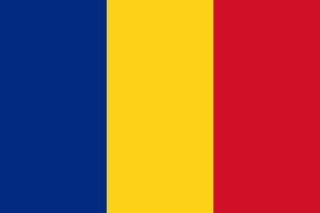
Inside Romania’s foreign policy.
Europe · UN voting record, treaty positions, and alliances — every claim primary-sourced.
In short
Romania is an EU and NATO frontline state on the Black Sea whose foreign policy is anchored in the transatlantic alliance, support for Ukraine and Moldova, and deterrence of Russia; that alignment has hardened further after repeated security incidents linked to the war next door, including the June 2026 drone…
Capital
BucharestGovernment
Unitary semi-presidential republicResearch Romania on your topic
Start a Quick answer framed for your committee — official statements, UN votes, and bloc context.
Romania's government & politics
Leadership, governance, and democratic trajectory.


Romania's UN voting record
How Romania votes at the UN General Assembly — ideological trajectory, voting partners, topic patterns, and key recent roll calls.
Ideological trajectory
Top voting partners
Topic-level voting
Source: Erik Voeten, “United Nations General Assembly Voting Data”, Harvard Dataverse (CC0). Aggregated by Model Diplomat. Last refresh tracked in profile freshness.
Romania's foreign policy
Bilateral posture, key relationships, and live diplomatic statements.
Foreign Policy
Romania’s foreign policy is anchored in a three-part doctrine: hard alignment with NATO and the United States for survival, deep embedding in the European Union for economic modernization and regulatory influence, and active support for Moldova and Ukraine as a forward defense of its own Black Sea security environment Romanian Ministry of Foreign Affairs NATO - Relations with Romania European Commission - Romania. In constitutional terms, Romania is a semi-presidential republic, but foreign and security policy is shaped primarily by the president, the Supreme Council of National Defence, the government, and the foreign ministry, with NATO and EU obligations sharply narrowing the room for strategic freelancing Constitution of Romania Presidency of Romania - CSAT. The current line from Bucharest is explicit: NATO, EU membership, and the transatlantic partnership are treated as non-negotiable pillars rather than options among equals AGERPRES.
Its interests pyramid is unusually clear. Survival sits first: Russia’s war against Ukraine, military activity in the Black Sea, and spillover incidents near Romanian territory have pushed deterrence, air defense, and allied presence to the top of the agenda Romanian Ministry of National Defence NATO - Allied Air Command. Regime and system security comes second, but in Romania that largely means preserving democratic credibility inside the EU and NATO rather than protecting a single ruling machine European Commission - Rule of Law Report: Romania. Economic interests follow through EU market access, Schengen integration, energy diversification, and Black Sea infrastructure; Romania’s economy remains tightly tied to the EU single market, which absorbs the large majority of its trade, making Brussels at least as important as any bilateral capital on commercial policy European Commission - Romania: Trade World Bank - Romania Overview. Status matters too, but mostly as a function of reliability: Bucharest seeks influence by being seen as a dependable eastern-flank ally, not as a spoiler or equidistant mediator Romanian Ministry of Foreign Affairs.
Its core bilateral relationships reflect that hierarchy. The United States is Romania’s key security partner, with the Aegis Ashore missile defense site at Deveselu, regular allied deployments, and repeated Romanian calls for a stronger U.S. and NATO role in the Black Sea region U.S. Department of State - U.S. Relations With Romania NATO - Romania and NATO. France has become a major operational partner through its role as framework nation for NATO’s multinational battlegroup in Romania, while Poland is a natural eastern-flank counterpart on Russia policy and support for Ukraine French Ministry for Europe and Foreign Affairs NATO - Multinational Battlegroup Romania. Moldova holds a special place that goes beyond neighborhood policy: Romania is Moldova’s main political sponsor inside the EU, a major energy and infrastructure partner, and a consistent advocate of Chisinau’s European path Romanian Ministry of Foreign Affairs - Republic of Moldova European Council - EU relations with Moldova. Relations with Russia are adversarial and framed through deterrence, sanctions, and condemnation of aggression against Ukraine rather than managed coexistence Romanian Ministry of Foreign Affairs UN General Assembly ES-11 records.
In multilateral forums, Romania is a classic pro-Western aligner. It has been in the United Nations since 1955, is an EU member since 2007, and joined NATO in 2004, and those memberships structure most of its diplomacy United Nations Digital Library - Romania European Union NATO - Member countries. At the UN General Assembly, Romania has consistently voted with the EU and wider Western coalition on resolutions condemning Russia’s invasion of Ukraine, including the 2 March 2022 emergency special session resolution demanding Russia’s withdrawal UN General Assembly Resolution ES-11/1 UN Digital Library Voting Data. The useful nuance is that Romania’s multilateral behavior is more hawkish than that of some Western European partners on eastern security, but more disciplined than Poland or the Baltic states when intra-EU bargaining requires consensus language; Bucharest usually pushes firmness from inside the common line rather than breaking it publicly European Council on Foreign Relations - EU Coalition Explorer Romanian Ministry of Foreign Affairs.
Romania’s most important divergence from parts of its own bloc is not on Russia, where it is strongly orthodox, but on issue prioritization inside the EU. Bucharest is broadly loyal to EU common positions, yet it places Black Sea security, Moldova, and practical border-management concerns above the more expansive strategic agendas favored by some western member states, and it has often treated enlargement toward Moldova and Ukraine as a security imperative rather than a technocratic accession file European


Romania's treaties & memberships
UN multilateral treaty positions and IGO memberships.
International Organizations
Society & economy
Macro-economic snapshot and demographic context.
GDP (nominal)
$382.6B
#42/250GDP per capita
$20,080
#71/250HDI
0.821
#54/250GDP (nominal USD)
GDP per capita (USD)


In the news
Coverage from Romania’s authoritative outlets and headline events from the last 30 days.
Explore Romania in depth
Frequently asked questions about Romania
Quick answers to the most common questions about Romania.
What type of government does Romania have?
Romania is governed as a unitary semi-presidential republic, with its capital at Bucharest.
Who is the head of state of Romania?
Nicușor Dan is the head of state of Romania, in office since 2025-05-26.
Who leads the government of Romania?
Ilie Bolojan serves as the head of government of Romania, since 2025-06-23.
What is the population of Romania?
Romania has a population of approximately 19.1 million people, making it the 67th most populous country.
What is the economy of Romania like?
Romania has a nominal GDP of about $383 billion, or roughly $20,080 per capita.
What languages are spoken in Romania?
The official language of Romania is Romanian.
When did Romania join the United Nations?
Romania has been a member of the United Nations since 1955.
Who are Romania's closest allies?
Romania's key allies include United States, United Kingdom, France, Moldova, and Poland.
More about Romania
Romania is an EU and NATO frontline state on the Black Sea whose foreign policy is anchored in the transatlantic alliance, support for Ukraine and Moldova, and deterrence of Russia; that alignment has hardened further after repeated security incidents linked to the war next door, including the June 2026 drone incidents near Galați and on Romanian territory reported by Romanian and international media AGERPRES, Reuters. Romania is a unitary semi-presidential republic, with executive power split between a directly elected president and a government led by a prime minister responsible to parliament, under the Constitution of Romania Constitution of Romania. Current leadership is headed by President Nicușor Dan and Prime Minister Ilie Bolojan, while Foreign Minister Oana Țoiu has publicly framed NATO, the EU, and the transatlantic partnership as essential pillars of state policy AGERPRES, Presidency of Romania, Government of Romania.
The government’s center of gravity is pro-Western and institutional rather than revisionist. In practice, Romania’s foreign and security policy is set by a tight triangle of the presidency, the prime minister’s office, and the foreign and defense ministries, with NATO and EU commitments sharply constraining room for strategic ambiguity Constitution of Romania, Ministry of Foreign Affairs of Romania. The ruling alignment after the latest political reshuffle is built around mainstream pro-European forces rather than anti-system parties, and its external message is unusually consistent by regional standards: Romania treats U.S. security guarantees, NATO forward defense, and EU integration not as parallel tracks but as one package Government of Romania, Ministry of Foreign Affairs of Romania. That gives Bucharest more predictability than some neighbors, but it also means domestic political competition rarely produces a foreign-policy alternative, only disputes over competence and pace.
Economically, Romania is now a mid-sized EU market with a diversified base in industry, automotive manufacturing, services, agriculture, and energy, rather than a single-commodity economy World Bank, OECD. The country profile provided here puts nominal GDP at about $382.6 billion and population at about 19.1 million, which fits its position as one of the larger economies in Eastern Europe by output and market size Country Context Provided by User [blocked]. EU membership remains the central engine of growth through trade, regulation, and investment, while accession to the Schengen area’s air and sea regime in 2024 strengthened Romania’s case that it is moving from peripheral member to core logistics and transport corridor on the Union’s eastern flank European Commission, World Bank. Its economic vulnerability is not lack of strategic relevance but the harder problem of converting geopolitical relevance into infrastructure, productivity, and fiscal discipline.
Three issues define Romania’s current trajectory. The first is hard security on the Black Sea and along the Ukrainian border. Romania hosts key NATO infrastructure, backs allied reinforcement, and has become more important as a transit and rear-area state for Ukraine, which pushes survival-tier security concerns above almost every other foreign-policy file NATO, Ministry of Foreign Affairs of Romania. The second is Moldova. Bucharest treats Moldova’s stability, European integration, and resistance to Russian pressure as both a national interest and a regime-security issue for the wider regional order, making support for Chișinău one of the clearest constants in Romanian diplomacy Ministry of Foreign Affairs of Romania, European Council. The third is state capacity: Romania has more diplomatic and strategic weight than in the past, but corruption concerns, uneven administration, and infrastructure bottlenecks still limit how quickly it can use EU funds and translate strategy into delivery European Commission Rule of Law Report, OECD.
Romania’s place in the world today is clearer than its domestic politics. It is no longer trying to balance between power centers; it has chosen its camp and is investing in credibility inside it Ministry of Foreign Affairs of Romania, NATO. The main question is not orientation but execution: whether Bucharest can turn frontline status, Black Sea geography, and EU-NATO membership into lasting economic and institutional gains before security shocks and domestic fragmentation absorb the state’s bandwidth. For MUN delegates, the key read is straightforward: Romania will usually argue for stronger NATO deterrence, sustained support for Ukraine and Moldova, tighter EU coordination, and a rules-based line toward Russia, while resisting any settlement logic that normalizes coercion on its immediate border AGERPRES, AGERPRES, Ministry of Foreign Affairs of Romania.