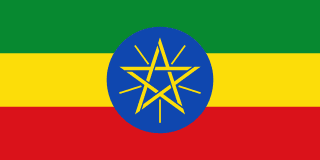
Ethiopia.
Federal Democratic Republic of Ethiopia
In short
Ethiopia matters because it is the Horn of Africa’s demographic heavyweight, the African Union’s host state, and a government still trying to convert wartime consolidation into regional influence and economic recovery under Prime Minister Abiy Ahmed and the Prosperity Party [African Union](https://au. int/en/headquarters), [Encyclopaedia Britannica](https://www.
Capital
Addis Ababa
Government
Federal parliamentary …
Ethiopia's government & politics
Leadership, governance, and democratic trajectory.


Ethiopia's UN voting record
How Ethiopia votes at the UN General Assembly — ideological trajectory, voting partners, topic patterns, and key recent roll calls.
Ideological trajectory
Top voting partners
Topic-level voting
Source: Erik Voeten, “United Nations General Assembly Voting Data”, Harvard Dataverse (CC0). Aggregated by Model Diplomat. Last refresh tracked in profile freshness.
Ethiopia's foreign policy
Bilateral posture, key relationships, and live diplomatic statements.
Foreign Policy
Ethiopia’s foreign policy is regime-led, security-first, and increasingly transactional. Prime Minister Abiy Ahmed remains the decisive foreign-policy actor as head of government, while President Taye Atske Selassie holds the largely ceremonial head-of-state post under Ethiopia’s federal parliamentary system [Encyclopaedia Britannica](https://www.britannica.com/place/Ethiopia/Government-and-society) [Office of the President of Ethiopia](https://pmo.gov.et/) [African Union](https://au.int/en/newsevents/20241007/ethiopias-taye-atske-selassie-elected-president). Addis Ababa presents its external posture through the language of sovereignty, non-interference, regional integration, and development diplomacy, themes repeated by the Ministry of Foreign Affairs and in official messaging around the Grand Ethiopian Renaissance Dam, Red Sea access, and Horn security [Ministry of Foreign Affairs of Ethiopia](https://mfa.gov.et/) [Ethiopian News Agency](https://www.ena.et/). In practice, the interests pyramid is clear: survival and territorial integrity come first, regime security second, economic access third, and status as an African diplomatic hub fourth [International Crisis Group](https://www.crisisgroup.org/africa/horn-africa/ethiopia) [Chatham House](https://www.chathamhouse.org/regions/africa/horn-africa/ethiopia).
That hierarchy explains Ethiopia’s hardest foreign-policy positions. The GERD is a survival-tier issue because Addis Ababa treats hydropower and control over development policy as non-negotiable sovereign rights; it has consistently rejected any agreement that would give Egypt or Sudan an effective veto over filling and operation [Ethiopian Ministry of Foreign Affairs](https://mfa.gov.et/) [International Crisis Group](https://www.crisisgroup.org/africa/horn-africa/b158-nile-dam-dispute-cornered-between-cairo-addis-ababa-and-khartoum). Sea access has moved in the same direction. Ethiopia lost its coastline in 1993 and has since depended heavily on Djibouti for maritime trade, a structural vulnerability the government now frames as an economic and strategic problem requiring diversified port access [World Bank](https://www.worldbank.org/en/country/ethiopia/overview) [International Crisis Group](https://www.crisisgroup.org/africa/horn-africa/ethiopia/eritrea-and-ethiopia-peace-making). That helps explain its assertive diplomacy toward Somaliland and its constant balancing with Somalia, Djibouti, Eritrea, and Gulf states, even when official rhetoric stresses regional cooperation [Reuters](https://www.reuters.com/world/africa/) [IGAD](https://igad.int/).
Its bilateral map is therefore dense but unstable. Djibouti is indispensable because most Ethiopian trade still moves through the Port of Djibouti, making the relationship economically asymmetric but strategically unavoidable [World Bank](https://www.worldbank.org/en/country/ethiopia/overview) [Port de Djibouti](https://portdedjibouti.com/). Kenya is a relatively reliable security and economic partner through cross-border infrastructure, trade, and shared concern over instability in Somalia [Kenya Ministry of Foreign and Diaspora Affairs](https://www.mfa.go.ke/) [Ethiopian Ministry of Foreign Affairs](https://mfa.gov.et/). China is Ethiopia’s most consequential development partner and creditor, with deep involvement in transport, industrial parks, and telecommunications infrastructure, while Russia and India matter more as political hedges and diversified defense or economic relationships than as singular anchors [World Bank](https://documents.worldbank.org/en/publication/documents-reports/documentdetail/099121123091514866/p1791480ad4bb30bd0ab4e084dbb2ee6024) [BRICS](https://www.brics2024.gov.za/) [Reuters](https://www.reuters.com/world/africa/). Egypt remains Ethiopia’s main strategic rival because of the Nile dispute, and relations with Sudan have swung between tactical coordination and confrontation over both al-Fashaga and the GERD [International Crisis Group](https://www.crisisgroup.org/africa/horn-africa/b158-nile-dam-dispute-cornered-between-cairo-addis-ababa-and-khartoum) [Reuters](https://www.reuters.com/world/africa/).
Multilaterally, Ethiopia overperforms its material weight because Addis Ababa hosts the African Union and positions itself as a capital of African diplomacy. It is active in the African Union, IGAD, the UN, the G77, and, since 2024, BRICS, using these forums to defend policy space for developing states, resist external pressure on internal conflicts, and expand economic partnerships beyond Western donors [African Union](https://au.int/en) [United Nations Digital Library](https://digitallibrary.un.org/) [BRICS](https://infobrics.org/). At the UN, Ethiopia’s voting pattern generally aligns with the Global South on decolonization, development finance, sanctions skepticism, and Palestinian statehood, and it often emphasizes sovereignty and non-interference in line with broader African and G77 positions [United Nations Digital Library](https://digitallibrary.un.org/) [Group of 77](https://www.g77.org/). The break that matters is that Ethiopia’s actual behavior is often less bloc-disciplined than its rhetoric: when regime security is at stake, Addis Ababa privileges insulation from scrutiny over solidarity language, pressing back against external investigations or conditionality tied to internal conflict even when some African partners take more accommodating positions [UN Human Rights Council](https://www.ohchr.org/en/hr-bodies/hrc/home) [International Crisis Group](https://www.crisisgroup.org/africa/horn-africa/ethiopia).
That divergence is the key to reading Ethiopia correctly. It speaks the language of pan-Africanism and regional integration, but its external conduct is driven less by ideological alignment than by a search for autonomy under pressure. Ethiopia wants Chinese finance, BRICS status, AU prestige, Western market access, Gulf investment, and security leverage in the Horn at the same time, and it will shift tone across venues to preserve that room for maneuver [African Union](https://au.int/en) [World Bank](https://www.worldbank.org/en/country/ethiopia/overview) [BRICS](https://www.brics2024.gov.za/) [Reuters](https://www.reuters.com/world/africa/). For MUN delegates, the practical read is simple: Ethiopia is usually persuadable on development, infrastructure, peacekeeping, and African institutional authority, but far less flexible on the Nile, external involvement in domestic conflicts, and any proposal


Ethiopia's treaties & memberships
UN multilateral treaty positions and IGO memberships.
International Organizations
Society & economy
Macro-economic snapshot and demographic context.
GDP (nominal)
$149.7B
#60/250GDP per capita
$1,133.883
#184/250Currency
—
HDI
0.49
#176/250GDP (nominal USD)
GDP per capita (USD)
Top trading partners


In the news
Stories surfacing across Ethiopia’s authoritative outlets, plus headline events and the diplomatic calendar.
Headlines
Washington's Ethiopia Reset Risks Rewarding Impunity
Summary: The article argues that the new U.S.–Ethiopia structured dialogue should not be seen as a routine diplomatic reset. It follows eight years marked by a fragile democratic opening, armed conflict, mass displacement, and repression. Officially, the dialogue emphasizes trade, investment, defense, security cooperation, and regional stability, but the authors describe Ethiopia as leveraging external powers to sustain the regime, creating a permissive arena for rivals, cred
The Hormuz Shock, Day 100: Energy Disruption
The Strait of Hormuz faces a 93% drop in ship transits, causing global oil prices to soar and affecting 146 countries.
China Exported 68 GW of Solar in March
China's solar exports hit a record 68 GW in March, as countries rush to adopt renewables amid the Hormuz crisis.
Explore Ethiopia in depth
Frequently asked questions about Ethiopia
Quick answers to the most common questions about Ethiopia.
What type of government does Ethiopia have?
Ethiopia is governed as a federal parliamentary republic, with its capital at Addis Ababa.
Who is the head of state of Ethiopia?
Taye Atske Selassie is the head of state of Ethiopia, in office since 2024-10-07.
Who leads the government of Ethiopia?
Abiy Ahmed serves as the head of government of Ethiopia, since 2018-04-01.
What is the population of Ethiopia?
Ethiopia has a population of approximately 132.1 million people, making it the 10th most populous country.
What is the economy of Ethiopia like?
Ethiopia has a nominal GDP of about $150 billion, or roughly $1,134 per capita.
What languages are spoken in Ethiopia?
The official language of Ethiopia is Amharic.
When did Ethiopia join the United Nations?
Ethiopia has been a member of the United Nations since 1945.
Who are Ethiopia's closest allies?
Ethiopia's key allies include Djibouti, Kenya, China, India, and Russia.