

Diplomat Briefing
Trump and Pezeshkian Sign US-Iran MoU
·5 developments
For the complete documentation index, see llms.txt.Skip to main content
Four months of war, an energy shock that rattled every economy on earth, and the denouement is a 14-point memo signed at Versailles — with the nuclear question still open, Israel still bombing Lebanon, and sixty days to avoid doing it all again.
Trump signed the 14-point Memorandum of Understanding at a post-G7 dinner hosted by Macron at the Palace of Versailles on Wednesday night; Iranian President Masoud Pezeshkian signed simultaneously in Tehran. The agreement — brokered by Pakistan and Qatar — declares an "immediate and permanent" end to military operations on all fronts including Lebanon, commits Iran to never acquiring a nuclear weapon, unlocks a $300bn reconstruction fund (with US regional partners, not Washington, footing the bill), and fully reopens the Strait of Hormuz. But the nuclear programme itself — the war's stated casus belli — remains entirely unresolved, deferred into a 60-day negotiating window starting today. Brent crude fell 2.3% on the news; some 500 vessels remain queued in the Gulf waiting for mine clearance and safety protocols that neither side has yet detailed. Implementation talks open tomorrow at Buergenstock, Switzerland.
BBC News |
Al Jazeera |
CFR Analysis
Senators Bill Cassidy ("the worst foreign policy blunder in decades"), Mike Pence, Nikki Haley, and Ted Cruz all broke with Trump over the MoU within hours of signing. Cruz's objection is the most politically useful for Trump to manage: Cruz defends the deal's anti-nuclear language but demands the reconstruction fund be killed. Democrats are equally withering — Sen. Jeanne Shaheen told the BBC it "accomplished none" of Trump's stated war aims — meaning the deal has united opposition across both parties in a Congress that will need to ratify any final sanctions rollback. Al Jazeera
The G7 communiqué explicitly links tightened sanctions on Russia's oil and gas sector (including shadow fleet measures) to the Hormuz reopening, calling this "the right moment" to escalate pressure on Moscow. It's a neat piece of conditionality — but European allies privately doubt Trump will sustain the pressure on Russia, fearing his Middle East envoy Steve Witkoff and Jared Kushner will cut Putin a soft deal now that Iran is off the front page. Ukraine opened formal EU accession talks on June 15, providing a parallel insurance policy, but NATO unity faces a harder test at the Ankara summit in early July. Al Jazeera |
CFR
Ukrainian drones hit the Moscow oil refinery for the second time this week — with Russia simultaneously launching ballistic missiles at Kyiv. Russia's MoD claimed to intercept 555 Ukrainian drones overnight. Zelenskyy returned from G7 with commitments for air defence missiles plus production licences (including a Patriot co-production request), and Trump told reporters he would "do whatever I can" to end the war. The battlefield tempo is Ukraine's main lever: Kyiv's drone campaign on Russian energy deepens Moscow's domestic fuel crisis precisely as Europe prepares new sanctions. Al Jazeera
The MoU declares a ceasefire "on all fronts including Lebanon," but Israel has not stopped striking Hezbollah targets. Trump publicly told Netanyahu at the G7 he needs "a softer touch" — "you don't have to knock down a building every time someone walks into it that's from Hezbollah." Israel has stated it will maintain its military presence in southern Lebanon indefinitely. Lebanon is now the most likely spoiler: Iran has warned it will monitor US compliance "without leniency," and continued IDF strikes give Tehran grounds to walk away. Senior officials and analysts expect Israeli withdrawal to take months, if it happens at all. BBC News |
CFR
14 million barrels/day — Estimated daily oil shortfall caused by the Hormuz closure, per the IEA. That figure is the measure of economic pain the MoU is trying to reverse — and why markets moved despite the deal's gaping holes. Al Jazeera
A Russian Warship Fired Warning Shots at a British Yacht in the English Channel
On Tuesday, the Russian frigate Admiral Grigorovich — transiting the Channel under Royal Navy escort — fired warning shots near a UK-flagged civilian yacht south of the Isle of Wight. The incident came days after Britain seized a Russian shadow-fleet tanker in the Channel for sanctions busting. Prime Minister Starmer called it "reckless" but "isolated." That framing is doing a lot of work: what's actually happening is Moscow testing the limits of European territorial waters at exactly the moment Europe is tightening Russia sanctions and debating force posture into Ankara. The MoD is "investigating." The Admiral Grigorovich is not. Al Jazeera |
BBC
Diplomat Briefing — Daily political intelligence.
Read more:
Today's stories
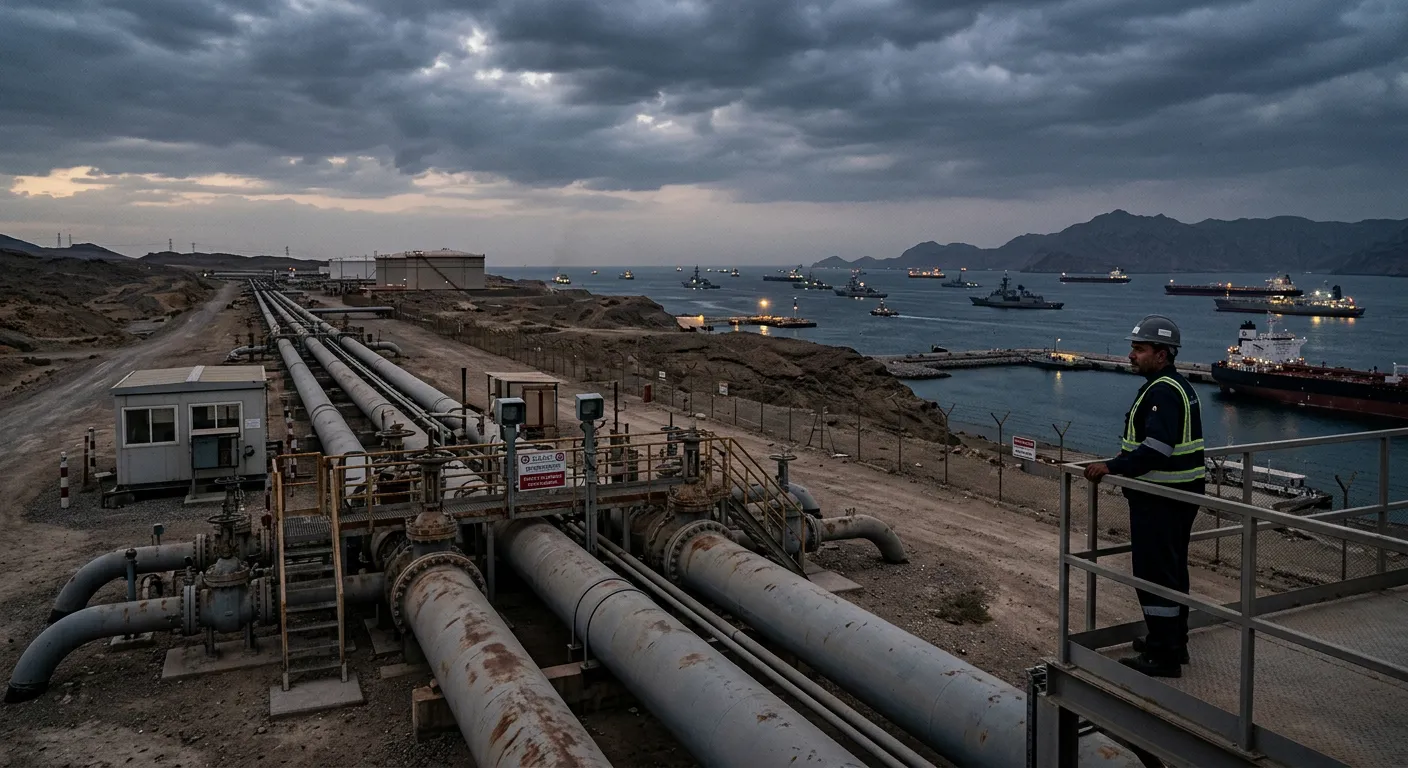
Pipelines can't fill the gap left by the blocked Strait of Hormuz.

GIFT City is evolving into a key financial hub as law firms establish offices.
Summary: - Elections: The Antigua and Barbuda Labour Party (ABLP), led by Prime Minister Gaston Browne, won a commanding victory, securing 15 of 17 seats ahead of the constitutional deadline. Opposition leader Jamale Pringle of the UPP remained in the race but did not win seats in this preliminary count (ABEC results). - Domestic priorities: Browne highlighted plans to advance education, create jobs, and expand business opportunities while ensuring inclusivity, aiming to bo