

Diplomat Briefing
US–Iran MoU Signed, Testing Begins in Geneva
·6 developments
For the complete documentation index, see llms.txt.Skip to main content
A 110-day war ends on paper. Israel's far-right is already testing whether the ink will dry — and Netanyahu is letting them.
The United States and Iran digitally signed a memorandum of understanding on Monday, ending 109 days of active war and committing both sides to a 60-day negotiating window. Pakistan's Prime Minister Shehbaz Sharif — whose government mediated alongside Qatar — announced the deal Sunday; Trump followed with "Let the oil flow!" on Truth Social — no link to the post is provided in the source pack, so the quote is unverified inline. A formal ceremony is set for Geneva on Friday, June 19 — though the White House has not released a confirmed schedule, after which technical talks begin on the two issues that have blocked every prior agreement: Iran's stockpile of more than 440 kg of highly enriched uranium and the scope of sanctions relief, which Iranian media is reporting could eventually reach a $300 billion investment fund, though U.S. officials have denied any upfront cash transfer. JD Vance framed the American position simply: no nuclear weapon, Hormuz stays open, and Iran gets "real benefits" only if it complies. The deal's immediate commercial signal is unambiguous — Brent crude fell roughly 11 percent over two days to $78.22, its lowest since the day the war started — but energy analysts warn the Strait itself won't fully reopen for weeks given mine-clearance requirements and a backlog of roughly 500 vessels — the sourcing for both figures should link to a primary maritime authority or US Navy statement, not only to Al Jazeera. The hardest clause remains unresolved: Iran insists Lebanon is "part and parcel" of the agreement, while Israel's Defence Minister Israel Katz has said his military will operate there "regardless."
BBC News |
CSIS State of Play |
Al Jazeera
The G7 summit in Evian-les-Bains concluded Wednesday with a communiqué that delivered more than expected on two fronts. Leaders pledged expanded air defence deliveries to Ukraine — including manufacturing licenses Zelenskyy has sought for over a year to produce his own interceptors domestically — and Trump told reporters he would "do whatever I can" to push Russia toward a settlement, a notable rhetorical shift from a president who had been openly skeptical of Ukraine commitments. The sharper news is buried in the sanctions language: G7 leaders explicitly cited the Hormuz deal as the trigger for tightening sanctions on Russian oil and gas, arguing that reopening the strait removes the global energy-market case for treating Moscow gently. If that sequencing holds, the Iran deal hands the West a political opening to squeeze Putin's war economy that didn't exist two weeks ago.
At the G7, Trump told reporters Netanyahu "has to be more responsible with respect to Lebanon" and that Israel had been fighting Hezbollah "too long and too many people are being killed." He said he "didn't like" an Israeli strike on Beirut that occurred roughly two hours before the electronic signing of the MoU. Far-right National Security Minister Itamar Ben Gvir responded on X that "Trump's agreement does not bind us," and Netanyahu has flatly refused to withdraw Israeli forces from the roughly 5 percent of Lebanese territory Israel currently occupies, calling it a condition Israel won't accept. The Cato Institute's Doug Bandow put the exposure plainly: if Trump cannot restrain Israeli strikes in Lebanon, Iran faces domestic pressure to respond and the MoU collapses before Geneva. No inline link to Bandow's analysis is provided — source needed. A poll by Israeli public broadcaster Kan found 55 percent of Israelis oppose the US–Iran deal, with only 18 percent in support — context that constrains Netanyahu's room to comply even if he wanted to.
With global attention fixed on the Iran deal, Finance Minister Bezalel Smotrich announced Monday that Israel's Higher Planning Council had transferred planning and construction authority over the Ibrahimi Mosque in Hebron — a site split under the 1997 Hebron Agreement signed by Netanyahu and Yasser Arafat — to Israeli military control. Smotrich declared the Hebron Agreement "cancelled," though Israel's Foreign Ministry immediately contradicted him, saying only specific heritage-site provisions had changed. The Palestinian Authority called it a violation of international law and demanded US intervention. The structural play is clear: Smotrich is using the Iran-deal news cycle to advance West Bank annexation steps that would generate far more pushback on a quieter news day — and the Trump administration's silence is the permission slip. Al Jazeera's Nour Odeh reported from Ramallah that these moves serve a dual purpose for Netanyahu's coalition — advancing settler priorities while deflecting domestic anger over the rift with Washington. The Trump administration reiterated opposition to formal annexation but has not moved to halt accelerated settlement construction.
Brent crude has shed roughly 11 percent across Monday and Tuesday, sitting at $78.22 as of Wednesday morning — still about 7 percent above pre-war levels, down from a wartime peak near $120. Markets are, in the words of Singapore-based Vanda Insights founder Vandana Hari, "front-running the prospective reopening of the Strait and pricing in the best-case scenario." The physical reality is more constrained: sea mines remain in the waterway, over 500 vessels are queued to transit, production facilities need restart time, and war-risk insurance premiums for Hormuz transits won't normalise overnight. A full return to pre-war shipping patterns is 30 to 45 days away at minimum, according to retired US Navy Rear Admiral Mark Montgomery — meaning US fuel prices, which have been a drag on consumer inflation running at 4.2 percent, won't fall at the pump before mid-July at the earliest.
Al Jazeera — Oil Markets |
BBC News
~$70 billion — Estimated cost of the US–Iran war to date, per Foreign Policy, against 13 American service members killed and consumer inflation at 4.2 percent. The figure gives congressional Democrats the arithmetic they need for Iran Nuclear Agreement Review Act hearings that are now likely. Foreign Policy
Armenia's Pro-West Election Win Is Reshaping the South Caucasus — and Moscow Knows It
PM Nikol Pashinyan's Civil Contract party won 49.8 percent in the June 7 parliamentary election, defeating a pro-Russian opposition that ran on preserving ties to Moscow — despite Russia deploying a sustained economic pressure campaign in the weeks before the vote, including bans on Armenian flowers, mineral water, brandy, and agricultural exports. Putin had explicitly warned Yerevan that "the crisis in Ukraine began with efforts to move toward EU accession." The win matters beyond Yerevan: Pashinyan's reelection, combined with his US-brokered Armenia-Azerbaijan peace process and a law formally launching EU accession talks, represents the clearest post-Soviet defection from Russia's orbit since the 2014 Maidan. Armenia has no EU candidate status yet and remains in the Russia-led Eurasian Economic Union — but the direction of travel is now electorally ratified. Pro-Russian opposition parties have already filed for annulment with the election commission, citing voting irregularities — the same playbook Moscow ran in Georgia in 2024 and Moldova in 2025. Pashinyan's margin was wide enough that it won't work. That's the real headline.
Diplomat Briefing — Daily political intelligence.
Read more:
Today's stories
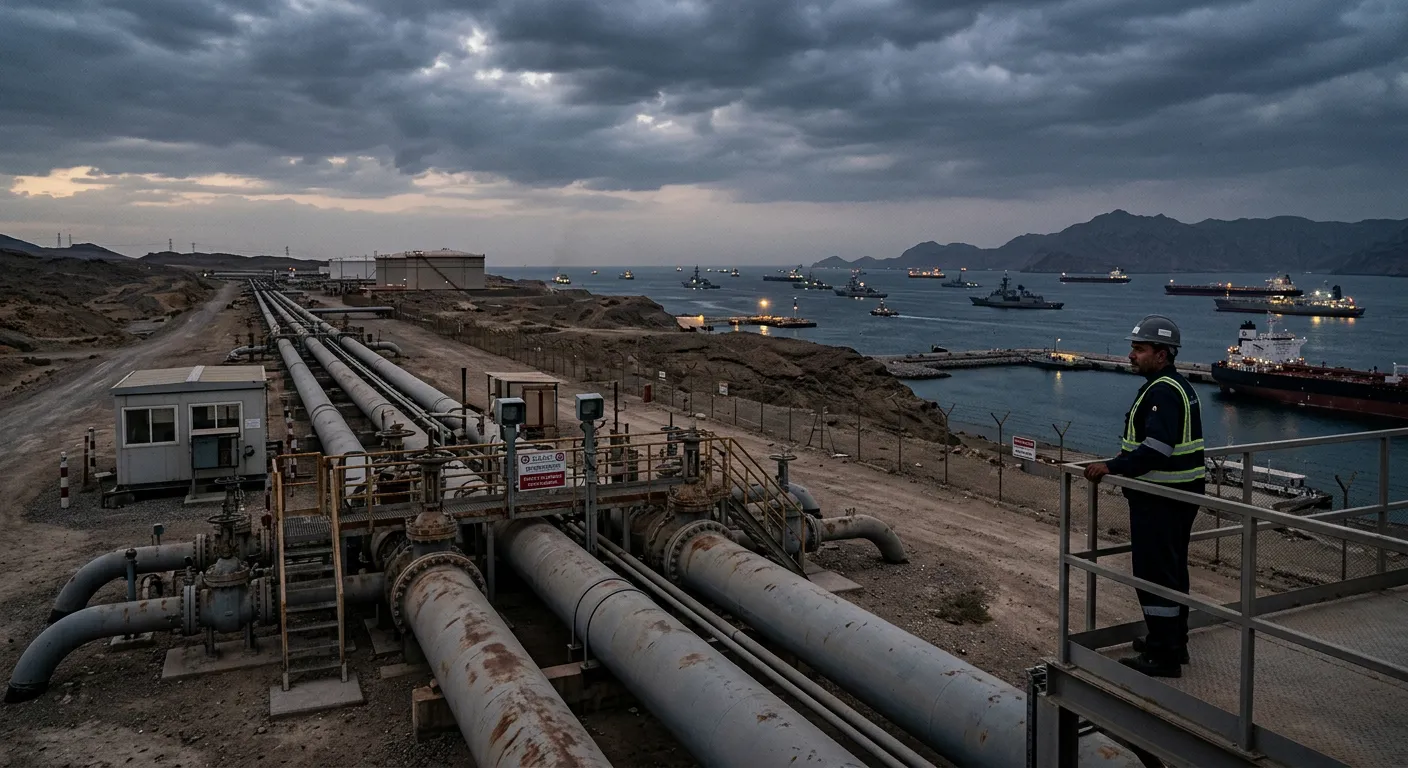
Pipelines can't fill the gap left by the blocked Strait of Hormuz.

GIFT City is evolving into a key financial hub as law firms establish offices.
Summary: - Elections: The Antigua and Barbuda Labour Party (ABLP), led by Prime Minister Gaston Browne, won a commanding victory, securing 15 of 17 seats ahead of the constitutional deadline. Opposition leader Jamale Pringle of the UPP remained in the race but did not win seats in this preliminary count (ABEC results). - Domestic priorities: Browne highlighted plans to advance education, create jobs, and expand business opportunities while ensuring inclusivity, aiming to bo