

Diplomat Briefing
Iran Holds the Hormuz Card — and Washington Knows It — Global Politics
·6 developments
For the complete documentation index, see llms.txt.Skip to main content
The world's most consequential waterway is being contested by diplomacy, blockade, and legal claims simultaneously — and every other crisis on today's map connects back to it.
Day 84 of the US–Iran war finds both sides exchanging draft texts through Pakistani intermediaries, with Secretary of State Marco Rubio conceding there has been "a little bit of movement" — careful not to oversell it. Pakistan's army chief Field Marshal Asim Munir arrived in Tehran Thursday for his second visit in under a week, carrying Washington's latest response to Iran's revised 14-point peace plan. That plan is the tell: it leads with Iranian control of the Strait of Hormuz — not the nuclear file — forcing Washington onto the defensive on Tehran's strongest ground. Analysts note that ballistic missiles and Hezbollah links, both once US red lines, have quietly dropped off the negotiating agenda entirely. Trump oscillated publicly between threatening "very drastic" action if Iran won't surrender its uranium stockpiles and admitting he held off a planned strike Monday at the personal request of Qatar, Saudi Arabia, and the UAE. The UAE's presidential adviser Anwar Gargash put the odds of a Hormuz deal at "50-50." Iran, for its part, created a new "Persian Gulf Strait Authority" this week — publishing a map asserting military oversight over more than 22,000 sq km, extending into the territorial waters of Oman and the UAE — a negotiating-table fait accompli dressed up in bureaucratic language. CENTCOM has redirected 94 commercial ships and disabled four vessels since the naval blockade began April 13. The cost is real: Iran has destroyed more than two dozen US MQ-9 Reaper drones, roughly 20% of the Pentagon's pre-war inventory, at an estimated $1 billion in losses. Iran's leverage is the strait. Washington wants the nuclear file back at the center. Those two things cannot both be true in the same deal.
Al Jazeera — Iran war day 84 |
BBC News — Iran steps up claim to control Strait of Hormuz |
Al Jazeera — US-Iran diplomacy picks up
Benjamin Netanyahu convened his security cabinet this week for a second session on resuming the Iran war — and reportedly ended a phone call with Trump with his "hair on fire." Trump told reporters afterward that Netanyahu "will do whatever I want him to do." The April 8 ceasefire, brokered by Pakistan with minimal Israeli involvement, has become a domestic liability for Netanyahu: an Israel Democracy Institute poll from early May found a majority of Israelis believe ending the war prematurely harms their security. With Israeli elections scheduled for August, Netanyahu needs a strategic victory he cannot independently manufacture — Israel cannot re-enter the conflict without US authorization, and that authorization is not coming while Trump sees a deal within reach. For Israel, the Iran war is both unfinished and unwinnable on its own terms.
Al Jazeera — Israel pushes for war amid US ceasefire
Russia and Belarus conducted their first-ever presidential-level joint nuclear forces drill Tuesday through Thursday, with Putin and Lukashenko directly participating via videoconference in a live exercise that included the launch of a Yars intercontinental ballistic missile from Plesetsk, a submarine-launched Sineva ICBM, and a Kinzhal hypersonic strike from a MiG-31. This was not a routine quarterly military exercise — those happen without presidential attendance. Putin framed the drills as a "reliable guarantor of sovereignty" while Ukraine's Security Service announced enhanced security measures along the northern border with Belarus. The timing is load-bearing: the drills came two days after Putin's Beijing summit with Xi Jinping, where both leaders signed a 47-page joint declaration on building a "multipolar world," agreed on the route for the long-delayed Power of Siberia 2 pipeline carrying 50 billion cubic metres of gas annually to China, and reported bilateral trade growth of 20% in the first four months of 2026. NATO foreign ministers, meeting in Helsingborg, Sweden on Thursday and Friday, were simultaneously being briefed on both the nuclear exercises and Ukraine aid sustainability.
Al Jazeera — Putin and Lukashenko monitor joint nuclear exercises |
Al Jazeera — Multipolar world: what Xi and Putin announced
The core problem at NATO's Helsingborg foreign ministers meeting is one of political economy: Secretary General Mark Rutte has concluded that the only argument that reliably moves Trump is a commercial one. His pitch ahead of the July Ankara summit centers on channeling European defense spending into joint ventures and contracts with American defense firms — buy US weapons to keep the US in NATO. Rutte told reporters that support for Ukraine "is not evenly distributed," singling out Sweden, Germany, Canada, Denmark, and Norway as carrying others' weight. Germany's new Foreign Minister Johann Wadephul arrived pledging Berlin would accept "leadership responsibility" and reach the 5% GDP defense target. The harder problem: allies are split over whether NATO should play any role in reopening the Strait of Hormuz, and Rubio, arriving Friday, renewed criticism of European allies for not supporting the US war on Iran. The US has also announced it is reducing troop brigades in Europe from four to three — back to 2021 levels — with 4,000 troops bound for Poland delayed, not canceled.
Politico EU — Rutte's new plan to keep Trump in NATO |
DW — Germany ready for NATO leadership role
An Ankara appeals court on Thursday declared the 2023 CHP party congress that elected Özgür Özel as leader null and void, provisionally restoring Kemal Kılıçdaroğlu — the 77-year-old former opposition candidate who posed little threat to Erdoğan — to the party chairmanship. The Istanbul BIST 100 index fell more than 6% on the news, triggering a circuit breaker. Özel, who had led the CHP to neck-and-neck polling with Erdoğan's AKP and whose party became the face of massive street protests following the March 2025 imprisonment of Istanbul mayor Ekrem İmamoğlu, vowed to fight: "I am not promising a path to power through a rose garden." The ruling invalidated not only the 2023 congress but all subsequent party decisions, including a second leadership vote in April 2025 held specifically to insulate Özel from this legal challenge. Analysts and opposition parties across Turkey's political spectrum called the decision a "political coup." The next presidential election is in 2028; the timing of this ruling, stripping the opposition's most capable leadership at full stride, does not appear accidental.
DW — Turkish court ousts opposition leader in boost to Erdogan
Days after leaving Xi Jinping's Beijing summit without publicly raising Taiwan, Trump has twice suggested he may call President William Lai Ching-te — which would be the first direct US–Taiwan leader contact since Washington switched recognition to Beijing in 1979. Taiwan's foreign ministry said Lai would be "happy" to speak with him. Beijing said it "firmly opposes" such contact. The political geometry is complex: Trump is simultaneously signaling a possible call to Taipei while pausing a $14 billion arms sale to Taiwan — the navy's acting secretary confirmed the pause is driven by munitions demands from the Iran war, a move Republican Senator Mitch McConnell called "distressing." Analysts say the call suggestion functions as a bargaining chip: Trump may be telling Xi that warming to Taipei is the cost of Beijing not cooperating on Iran. Taiwan Defence Minister Wellington Koo said Taipei remains "cautiously optimistic" on the arms purchase — the same studied ambiguity Washington is projecting about everything right now.
Al Jazeera — Trump says he'll speak to Taiwan's leader
141 — UN member states voting to support the ICJ climate ruling. The UN General Assembly passed a resolution Wednesday endorsing the International Court of Justice's July 2025 advisory opinion that states have a binding legal obligation to prevent worsening climate change. Eight countries voted no: Belarus, Iran, Israel, Liberia, Russia, Saudi Arabia, the United States, and Yemen. The US had sent diplomatic cables ahead of the vote urging member states to reject the resolution. The 141-8 margin signals broad international buy-in to climate obligations as hard law — the real test is enforcement mechanisms, none of which exist yet. Al Jazeera — UN adopts resolution supporting ICJ climate ruling
The India-Africa Forum Summit Was Just Canceled Over Ebola — and It Tells You More Than the Headline
India's Ministry of External Affairs and the African Union jointly postponed the India-Africa Forum Summit, scheduled for next week in New Delhi, citing the "evolving health situation in parts of Africa." The proximate cause: the DRC's 17th Ebola outbreak has reached South Kivu province — territory controlled by Rwanda-backed M23 rebels — with 600 suspected cases, 139 deaths, and confirmed spread to neighboring Uganda. The WHO has no effective access to M23-held territory, which means the outbreak boundary is effectively ungoverned. But the geopolitical signal is the missed story: India has been aggressively courting African partners as a counterweight to Chinese infrastructure influence, and this postponement, however justified, stalls momentum in a relationship New Delhi has been building for a decade. It arrives precisely when Secretary Rubio is flying to India in what CFR describes as full "repair mode" — an acknowledgment that the US–India relationship is rudderless. Every major power is competing for Africa's strategic alignment right now; any vacuum created by postponement will not stay empty.
Al Jazeera — India-Africa summit postponed as Ebola spreads to M23-held DR Congo area |
Council on Foreign Relations — Marco Rubio Goes to India in Repair Mode
Diplomat Briefing — Daily political intelligence.
Read more:
Today's stories
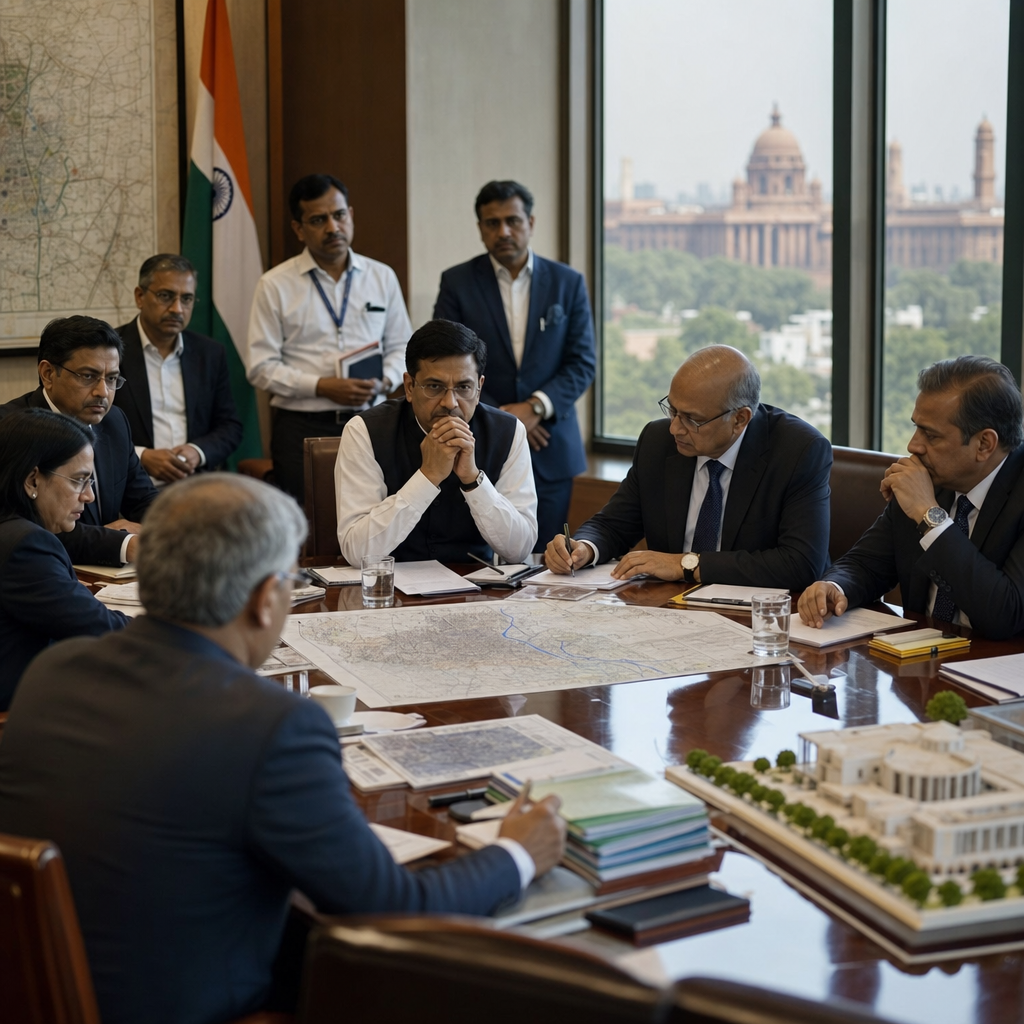
The Centre's proposal for a Delhi-focused urban affairs department aims to streamline governance.
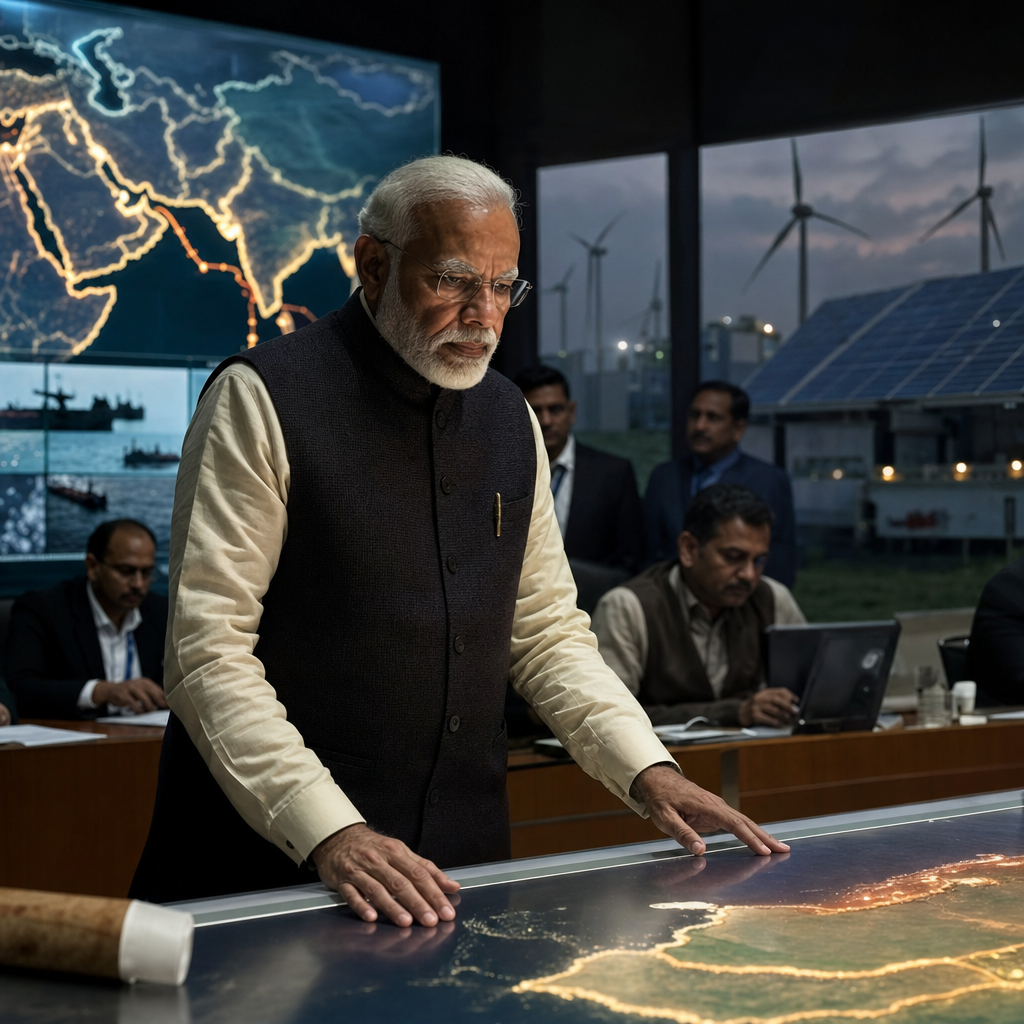
Modi's government pivots to alternative energy amid West Asia tensions.

Centre's proposal to split MoHUA indicates a tighter grip on Delhi's governance.