

Diplomat Briefing
Iran Reviews US Proposal as Trump Threatens Bombing — Global Politics,
·5 developments
For the complete documentation index, see llms.txt.Skip to main content
Every major diplomatic channel — Washington, Beijing, Islamabad, Berlin, Kyiv — is moving simultaneously, and they're all tangled in the same two wars.
Iran's foreign ministry confirmed Wednesday it is reviewing a 14-point US memorandum of understanding, routed through Pakistan, that would suspend nuclear enrichment, lift sanctions, and reopen the Strait of Hormuz — but Tehran is framing the discussion as being about ending the war, not the nuclear issue, which it wants deferred. Axios and Reuters separately reported the two sides were "closing in" on a one-page framework; Iran's parliament called it a "wish list." Trump oscillated within the same 24-hour window from declaring the war "over quickly" to warning that "the bombing starts, and it will be, sadly, at a much higher level and intensity than it was before," if Tehran doesn't comply. Meanwhile, his own cease-ship-escort operation, Project Freedom — launched Monday and killed Tuesday after only two US-flagged vessels transited — collapsed partly because ship owners and insurers refused to move, and partly because Iran's response, including missile strikes on UAE oil facilities and IRGC attacks on commercial vessels, threatened to unravel the April 8 ceasefire entirely. The US blockade of Iranian ports, in force since April 13 and now having turned around 52 vessels, remains Washington's primary economic lever. On Wednesday, a US Navy fighter jet disabled the Iranian-flagged tanker M/T Hasna in the Gulf of Oman by shooting out its rudder after it attempted to breach the blockade. Iran's Revolutionary Guard said "safe and sustainable transit" could resume — without specifying terms. The structural problem remains: Iran wants the war over before discussing nuclear matters; Washington insists nuclear concessions come first. A 48-hour window for Tehran's response to the US memorandum, per earlier US media reporting, expires imminently.
Iranian Foreign Minister Abbas Araghchi made his first trip to Beijing since the war began Feb. 28, meeting Wang Yi on Wednesday as China publicly called for the Strait of Hormuz to be reopened "as soon as possible" and declared a lasting ceasefire "an urgent priority." The visit is a direct pre-summit signal: Trump travels to Beijing on May 14–15, the first US presidential visit to China in nearly a decade, and Beijing is calibrating its leverage carefully. China imported 1.38 million barrels per day of Iranian crude in 2025 — roughly 12% of its total oil imports — making the closed strait a direct economic wound. Beijing has condemned the US naval blockade as "irresponsible and dangerous" while simultaneously pressing Tehran to negotiate, a dual posture that gives Xi maximum room to present himself to Trump as the indispensable intermediary. Rubio publicly called on Beijing to press Iran to release its grip on the strait; Beijing responded by ordering Chinese firms not to comply with US sanctions on Iranian oil buyers.
Al Jazeera |
BBC News |
The Washington Post
Pentagon Secretary Pete Hegseth ordered the withdrawal of approximately 5,000 troops from Germany — 14% of the 36,436 US service members stationed there — to be completed within six to twelve months. The trigger was German Chancellor Friedrich Merz telling students that Washington had "no strategy" on Iran and that Tehran was "humiliating" the United States at the negotiating table. Trump retaliated on Truth Social, called Merz "totally ineffective," and then escalated: asked if he'd pull troops from Italy and Spain too, Trump said "probably" — calling Italy "no help" and Spain "absolutely horrible." NATO Secretary General Mark Rutte said allies had "heard the message" and were repositioning assets, while Polish Prime Minister Donald Tusk warned that "the greatest threat to the transatlantic community is not its external enemies, but the ongoing disintegration of our alliance." Republican Senators Roger Wicker and Mike Rogers — the chairs of the Senate and House Armed Services Committees — expressed they were "very concerned" by the decision, a rare pushback from within Trump's own party. Berlin noted that the planned US deployment of Tomahawk cruise missiles and SM-6 missiles to Germany, announced under Biden, is also now effectively cancelled — attributed to depleted US arsenals from the Iran and Ukraine wars.
BBC News |
BBC News |
DW |
France 24
Today is the first anniversary of India's Operation Sindoor — the May 7–10, 2025 strikes on nine terror infrastructure targets in Pakistan and Pakistan-occupied Kashmir, launched in retaliation for the Pahalgam attack that killed 26 Indian civilians. Pakistan's military marked the occasion with a pointed warning: any "hostile design" against Pakistan would be met with "greater strength, precision and resolve" than what India witnessed last year. Indian President Droupadi Murmu and Prime Minister Narendra Modi both issued statements calling Sindoor a "defining testament to India's unwavering resolve," with Modi saying the country remains "steadfast in its resolve to defeat terrorism and destroy its enabling ecosystem." The anniversary lands as Pakistan is simultaneously serving as the primary mediator between the US and Iran — a diplomatic role that has elevated Islamabad's regional standing considerably since the ceasefire, and gives it added incentive to manage any domestic pressure to escalate with India. The underlying India-Pakistan tensions — suspended Indus Waters Treaty, closed land border crossing, downgraded diplomatic ties — have not been resolved.
The Washington Post |
The Hindu
Ukraine accused Russia of violating Kyiv's unilateral open-ended ceasefire, declared at midnight May 5–6, within hours of it taking effect — reporting drone strikes on Kharkiv, Zaporizhzhia, and Kryvyi Rih, killing at least one. Russia's own announcement of a ceasefire for May 8–9 to protect Victory Day parade logistics has been dismissed by Kyiv as a tactical maneuver. Putin, separately, has now called for direct talks with Ukraine on May 15 — hours after Starmer, Macron, Merz, and Tusk traveled together to Kyiv to demand a full 30-day unconditional ceasefire. The four European leaders' joint visit was a deliberate counter-signal to the 20 world leaders, including Xi Jinping, who attended Putin's Victory Day parade in Moscow on May 9. The diplomatic architecture is active but still far apart: Kyiv wants a ceasefire before talks; Moscow wants talks first. Rubio also spoke by phone with Russian Foreign Minister Lavrov this week, though the State Department offered no substantive readout.
1,500 — Ships currently bottled up behind the Strait of Hormuz. Even during Project Freedom, shipping companies and insurers refused to move the vast majority of stranded vessels, exposing the operation's limited practical impact. The Strait carries roughly one-fifth of the world's oil and LNG in normal conditions; US gas prices have now topped $4 per gallon. NPR |
BBC News
North Korea Has Quietly Deleted "Unification" from Its Constitution — for the First Time in the State's History
Revealed Wednesday at a South Korean Unification Ministry briefing, North Korea's revised constitution — adopted at a March Supreme People's Assembly session — removes every reference to "peaceful reunification," "great national unity," and ethnic unity, replacing them with a territorial clause defining the DPRK as a state bordering "the Republic of Korea to the south." A separate defence clause formally designates North Korea as a "responsible nuclear weapons state" and, for the first time, explicitly places authority over nuclear weapons use in Kim Jong Un's hands personally. Analysts note the deliberate omission of a specific inter-Korean maritime border — avoiding triggering an immediate confrontation over the Northern Limit Line, even as the ideological architecture of unification is permanently dismantled. This received almost no coverage because the Iran war and Trump–Merz confrontation consumed global attention, but Kim has now legally locked in the "two hostile states" doctrine in Pyongyang's founding document — a structural shift in the Korean Peninsula's legal and political baseline that Seoul and Washington will be managing for decades.
The Straits Times |
Korea Herald |
Japan Times
Diplomat Briefing — Daily political intelligence.
Read more:
Today's stories

India's overall crime rate fell, but cybercrime and fraud surged in 2024.

Omar Abdullah's push for statehood in J&K challenges BJP's control.

India's Operation Sindoor marks a shift to long-term military deterrence.
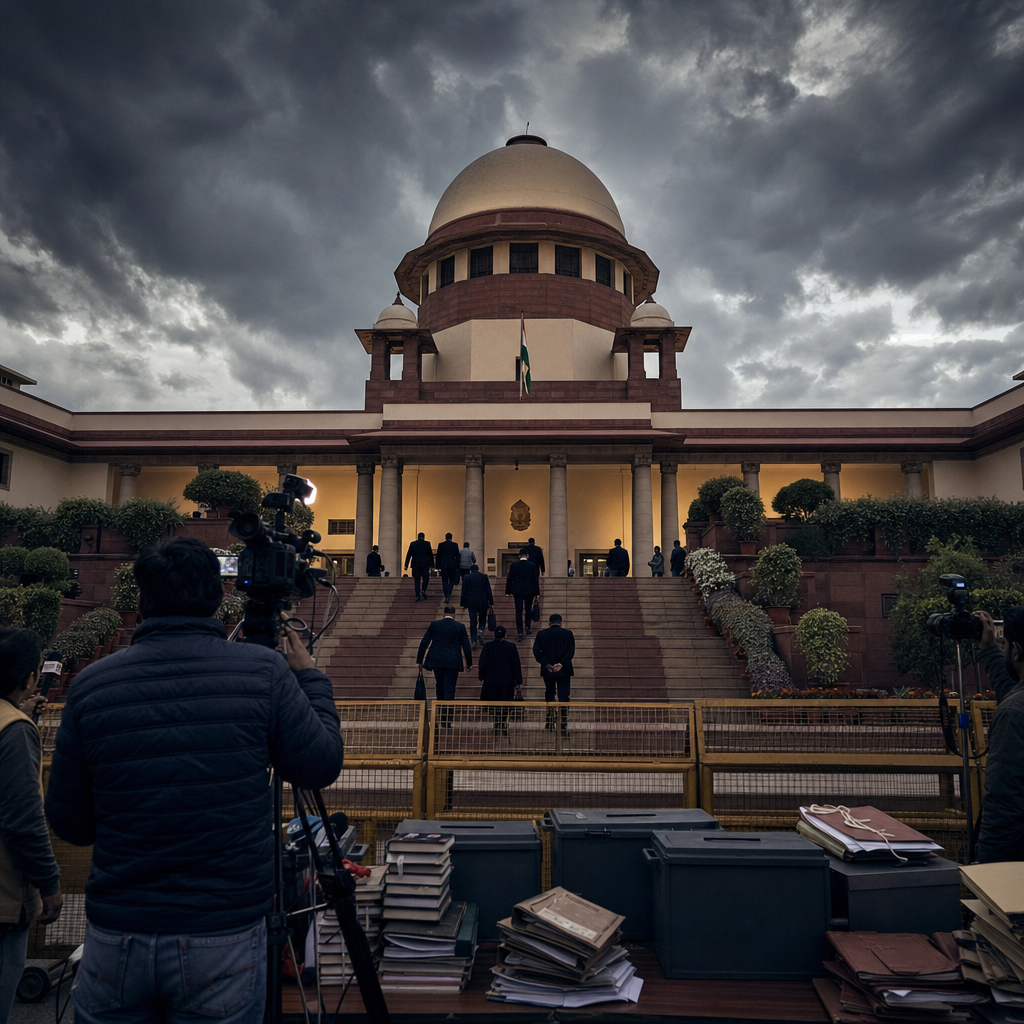
The Supreme Court is evaluating the permanence of its 2023 ruling on EC appointments.
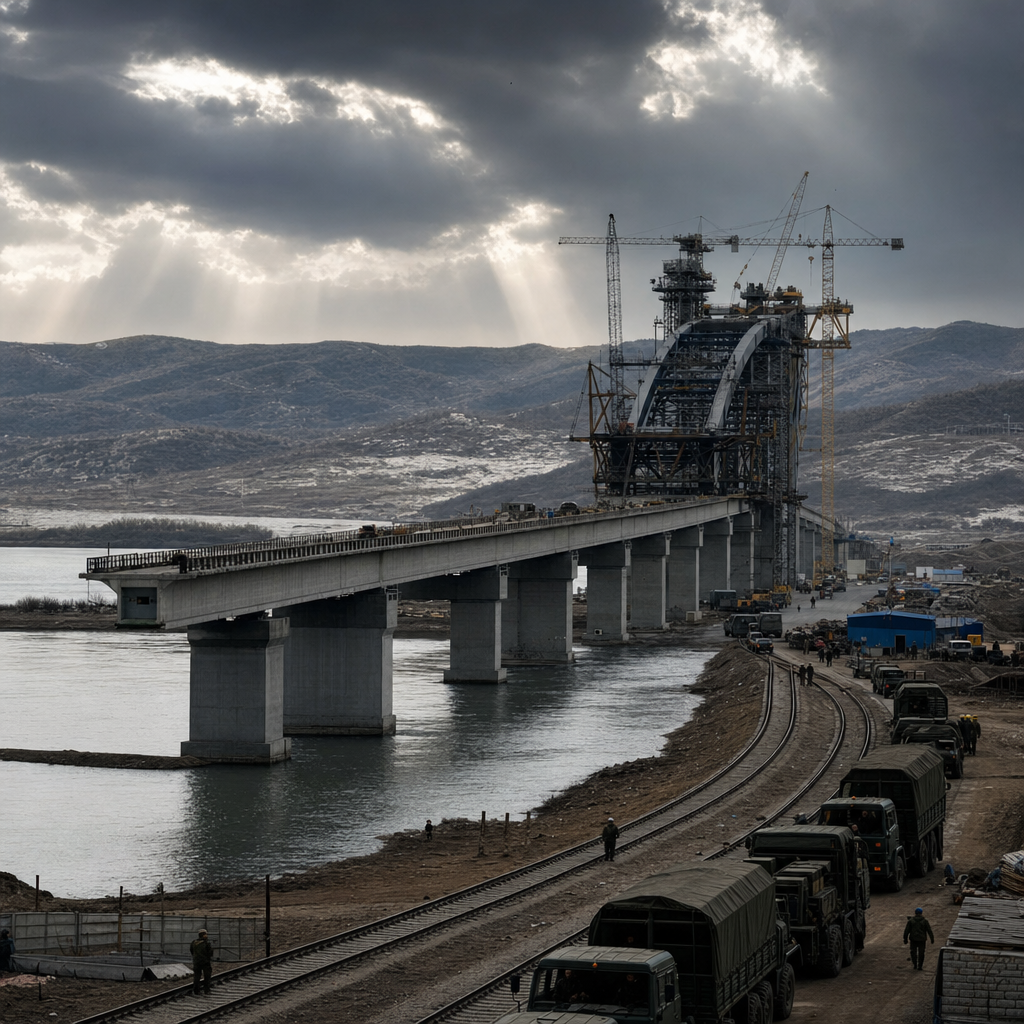
The nearly finished bridge will facilitate faster movement of goods and troops.