Zimbabwe Ends Direct Presidential Elections
Parliament votes to extend Mnangagwa's rule to 2030.
Model Diplomat4 min readafrica
Zimbabwe Scraps Presidential Elections — Mnangagwa Completes His Slow-Motion Coup
Parliament votes to end direct presidential elections and extend Mnangagwa's rule to 2030, bypassing a referendum requirement he himself once pledged to uphold.
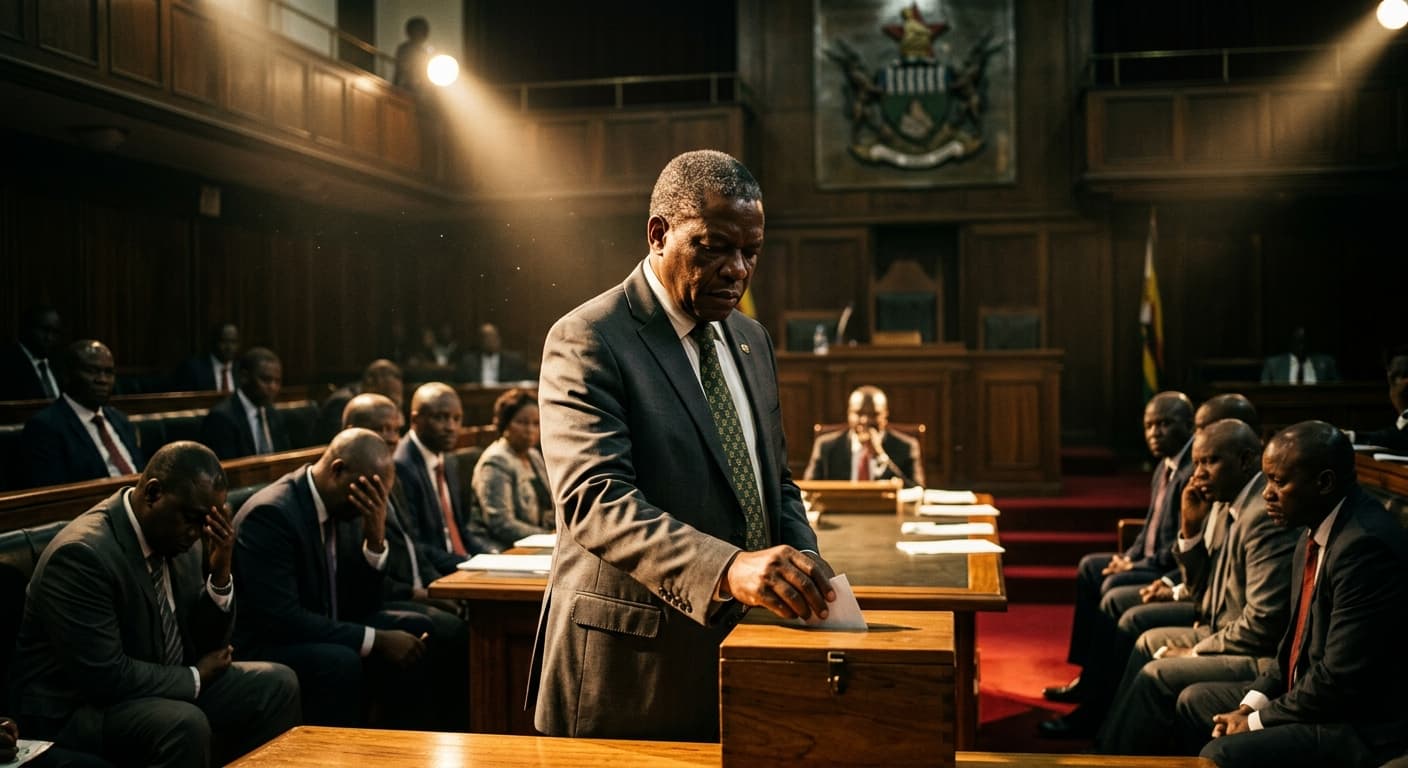
Zimbabwe's Senate approved Constitutional Amendment Bill No. 3 on June 24, clearing the final parliamentary hurdle in a legislative blitz that will keep Emmerson Mnangagwa in power until 2030. The 75–4 vote came less than a week after the National Assembly passed the same bill 216–42 — both comfortably above the two-thirds threshold — and the 83-year-old president now needs only his own signature to scrap direct presidential elections for the first time since 1990. BBC News
Al Jazeera
The bill does three things at once: extends presidential and parliamentary terms from five to seven years, delays the 2028 elections to 2030, and replaces the popular vote for president with a parliamentary ballot — a system that all but guarantees ZANU-PF control in perpetuity. Justice Minister Ziyambi Ziyambi insisted the changes represent "not an abandonment of our constitutional order but a continuation of it." Al Jazeera Opponents use a different term. Veteran politician Tendai Biti called it "a slow coup that is unfolding in Zimbabwe."
BBC News
Who holds leverage — and who just lost it
Mnangagwa's power move was never really in doubt inside parliament. ZANU-PF controls both chambers outright and, critically, more than 30 opposition CCC lawmakers crossed the floor to vote with the ruling party in the National Assembly. Al Jazeera The opposition, fragmented since the 2023 elections and hollowed out by years of repression, could not mount even a symbolic blockade.
The real centre of gravity is outside parliament — and it's the same institution that installed Mnangagwa in 2017. The military and the war veterans who backed his ouster of Robert Mugabe are now the most credible threat to his extended rule. In March 2025, war veterans aligned with Vice-President Constantino Chiwenga — Mnangagwa's 2017 co-architect and now his likeliest internal rival — threatened an "uprising" on March 31 over the president's third-term ambitions. ISS Africa That threat did not materialize. But the factional rift between Mnangagwa loyalists and Chiwenga's security-sector base remains the defining fault line within the regime.
One telling development: Blessed "Bombshell" Geza, the war veteran and ZANU-PF central committee member who launched the most scathing internal attack on Mnangagwa's succession plans, died last week — hours after a social media post urging Zimbabweans to "carry forward the noble war" to remove the president. BBC News His death removes Mnangagwa's loudest internal critic at a politically convenient moment.
The legal fig leaf and the Mugabe parallel
Zimbabwe's 2013 constitution — adopted by referendum and hailed as a break from Mugabe's imperial presidency — explicitly requires that any term-limit extension be approved by voters in a referendum, and that a sitting president cannot benefit without a second popular vote. Mnangagwa's government is bypassing both requirements. The Constitutional Court dismissed a legal challenge on technical grounds the day before the National Assembly vote. BBC News
The ZANU-PF argument is semantic: the two-term limit technically remains, they claim; the terms are simply longer. Opposition lawyer Fadzayi Mahere and others call this a legal fiction. Human Rights Watch documented in March that police and "unidentified armed men" were threatening, harassing, and beating opponents of the amendment — including during the sham public consultations that ZANU-PF claims produced 99.4% support. Al Jazeera
The pattern is unmistakable. Africa Confidential reports that the campaign has been marked by "arrests, abductions and armed militias" — the same toolkit Mugabe deployed for 37 years. The difference now is that Mnangagwa is using a parliamentary supermajority rather than raw executive decree, dressing the power grab in legislative procedure.
What to watch next
The bill now awaits Mnangagwa's signature, which is a formality. Three things will determine whether this holds:
Chiwenga's next move. The vice-president has been conspicuously silent during the parliamentary votes. If the security establishment fractures — the same dynamic that enabled the 2017 coup — Mnangagwa's 2030 horizon could collapse well before 2028.
The courts. Additional challenges are pending, including a High Court bid by activist Youngerson Matete to block enactment without a referendum. But with the Constitutional Court already dismissing cases on technical grounds, the judiciary looks more like a managed valve than an independent arbiter.
SADC's silence. The regional bloc's non-interference doctrine has historically given Harare a free hand. ISS Africa has documented this pattern across multiple disputed elections. No statement has emerged from the SADC secretariat since the Senate vote — and none is expected.
Mnangagwa campaigned as the constitutionalist who would break with Mugabeism. What he has delivered instead is its most sophisticated iteration yet: a one-party state wearing the clothes of parliamentary procedure, with the man once called "the crocodile" set to rule until he is 87.
Discover more
Global Politics
Trump's Conflicting Messages on Iran War
Trump's mixed messages on Iran reflect a strategy of audience management, benefiting Tehran amid a complex geopolitical landscape.

US Politics
SNAP Food Assistance Faces Legal Challenges
In 2026, SNAP faces stricter eligibility rules and mounting legal challenges, threatening food assistance for the millions of Americans who rely on the program.
US Politics
Congress Targets AI Chatbot Access for Terror
The House passed the Generative AI Terrorism Risk Assessment Act, focusing on AI's role in terrorism and potential surveillance implications.

Conflict & Security
Drone Warfare Killing Aid Workers at Unprec
Over 1,000 humanitarian workers killed in three years as cheap armed drones collapse legal protections. Gaza, Sudan, Ukraine, and DRC see deliberate targeting of aid convoys and hospitals with zero prosecutions.