World Bank's $875M bet on Côte d'Ivoire
A financial firewall against Sahel's drift
Model Diplomat7 min readAfrica
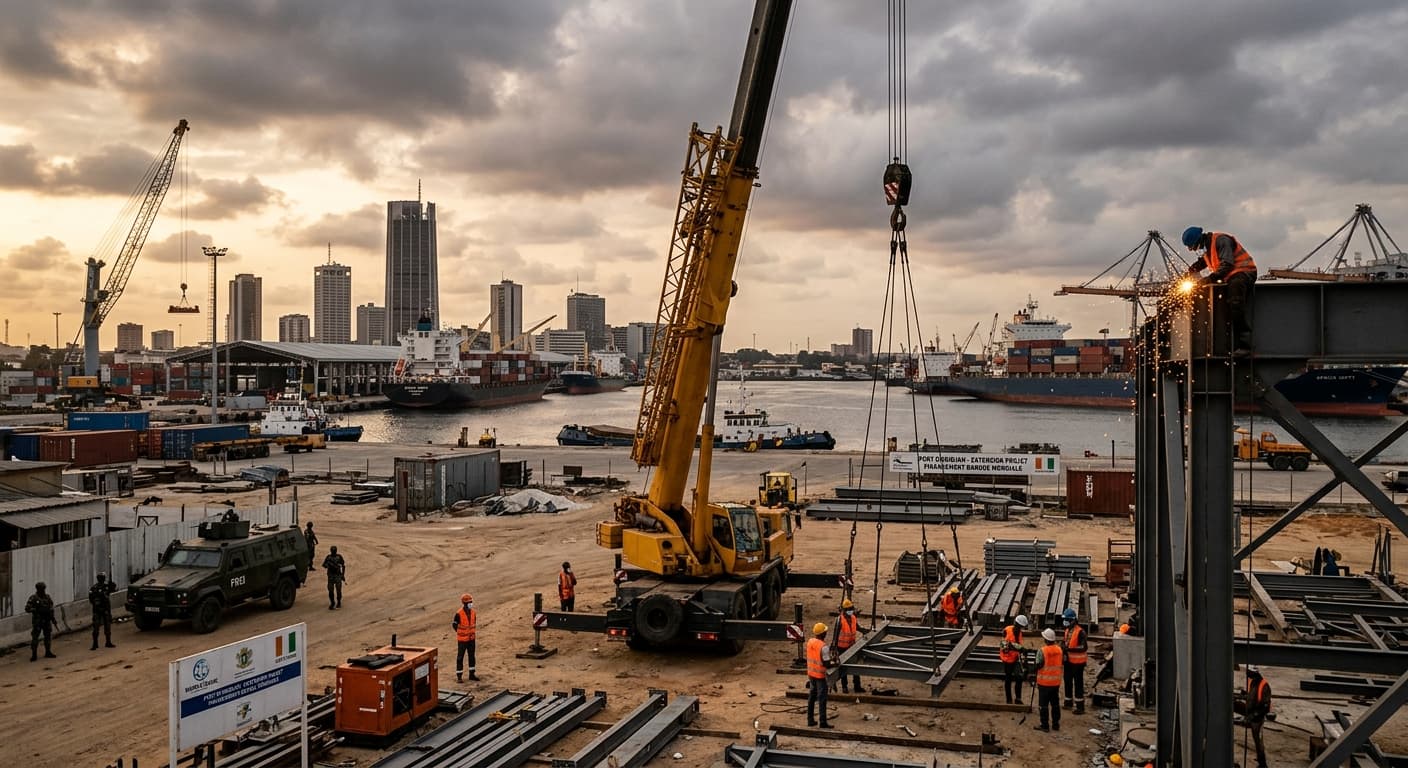
World Bank's $875M bet on Côte d'Ivoire: a coastal firewall against Sahel drift
The World Bank signed 525 billion FCFA in financing with Abidjan on July 8, 2026 — the first tranche of a $16.3 billion pledge that quietly makes Côte d'Ivoire the West's financial firewall against the Sahel's Russian turn.
The World Bank Group signed five financing agreements worth $875 million (roughly 525 billion FCFA) with the government of Côte d'Ivoire on July 8, 2026, alongside a tripartite protocol with Italy's Eni on a Gas Master Plan. The signing, reported by Abidjan.net, sits inside a much larger umbrella: an unprecedented $16.3 billion (9,773 billion FCFA) commitment to Côte d'Ivoire's 2026–2030 National Development Plan,
reported by Koaci the same evening. Read against the collapse of ECOWAS's northern flank and France's February 2025 military exit, the money is not just development finance — it is the West's biggest single-country bet on a francophone anchor state at a moment when three of its four northern neighbours have pivoted to Moscow.
What the package actually buys
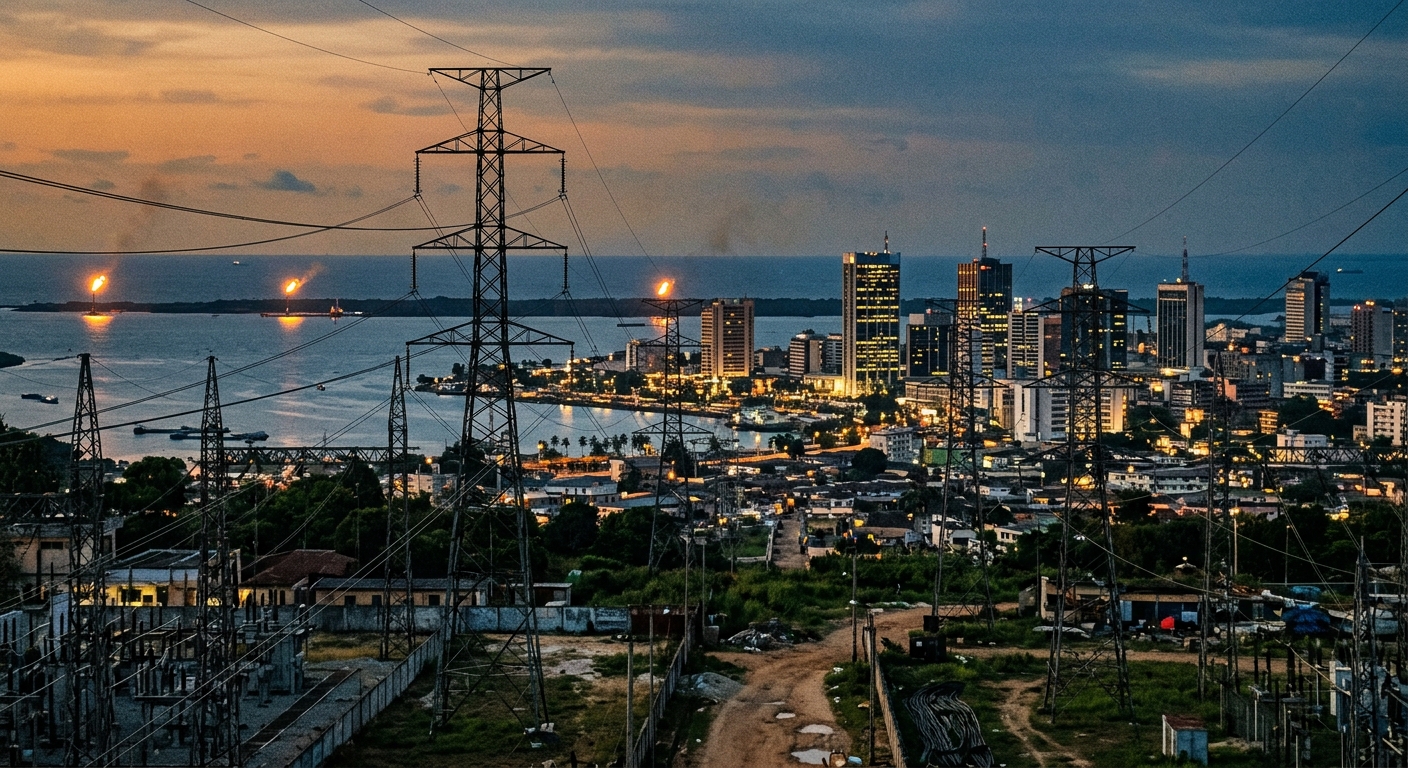
The $875 million is not concessional cash into a general account. The largest single instrument sitting behind the announcement is the Côte d'Ivoire Renewable Energy & Financial Stability Initiative (REFI, P510702), a blended IBRD loan-and-guarantee structure the Bank's board approved on June 8, 2026. According to the World Bank project appraisal document, REFI combines a $20 million IBRD loan with up to €622 million in partial loan guarantees to mobilise as much as €938 million in commercial financing.
Two components matter. First, arrears clearance: €725 million in commercial financing, 60% of it guaranteed by IBRD, will refinance the short-term debt of state utility CI-Energies and pay down what it owes to independent power producers and gas suppliers. That is a bailout dressed as a guarantee. Second, €313 million in commercial financing to build two 120 MWp solar plants each coupled with 120 MWh battery energy storage systems — Côte d'Ivoire's first utility-scale renewables-plus-storage build.
The Eni protocol is the other half of the story. It formalises the Italian major's role in structuring the country's Gas Master Plan, covering transport, processing and storage — the infrastructure that will decide whether Côte d'Ivoire's offshore gas (Eni's giant Baleine field came online in 2023, and Vaalco confirmed the Baobab restart in June 2026 per its FT-carried release) can feed regional exports rather than just Ivorian turbines.
The nut graf: development finance as geopolitical firewall
The context is what makes this money outsize. Since 2023, Mali, Burkina Faso and Niger have quit ECOWAS, formed the Alliance of Sahel States (AES) and expelled French forces. The International Crisis Group, in its July 2025 briefing on Côte d'Ivoire's high-risk poll, wrote plainly that "Sahelian states aligned with Russia might want to see Côte d'Ivoire, one of the last countries in West Africa to retain strong ties with France and the European Union, turn toward Moscow." French army units withdrew from Ivorian soil in February 2025. Russia expanded its embassy staff. Ouattara, aged 83, won a fourth term on October 25, 2025 with 89.77% of the vote on a 50.1% turnout — an outcome the Institute for Security Studies called evidence of
"entrenched democratic fragility".
That is the room the World Bank walked into on July 8. Marie-Chantal Uwanyiligira, the Bank's Operations Director, told the ceremony the project timeline had been compressed to about four months — extraordinarily fast by World Bank standards. The Council on Foreign Relations argued last year that Ouattara was betting on a "distracted at worst and transactional at best" Trump administration to look the other way. The Bank's answer, in effect, is that the transaction is worth making: stabilise the francophone anchor economy, finance its energy transition, and keep the Abidjan–Ouagadougou–Niamey corridor from becoming a one-way road to Moscow.
What makes Abidjan bankable — and what still doesn't
The macro case is real. The IMF's Sixth Review under the EFF/ECF, published July 9, 2026, confirms Côte d'Ivoire has cut its fiscal deficit back to the WAEMU 3%-of-GDP ceiling, narrowed external imbalances and — for the first time in over a decade — bent the debt-to-GDP ratio downward. Crucially, the Fund upgraded the country's risk of debt distress from moderate to low, a rating that unlocks larger IBRD non-concessional envelopes at better prices. Growth has averaged nearly 7% a year since 2012, according to Crisis Group.
The country has also become the Bank's laboratory for blended finance. In June 2025, Abidjan closed a €433 million sustainability-linked sovereign loan with Standard Chartered, backed for the first time by a stacked IBRD first-loss guarantee and a MIGA second-loss non-honouring guarantee. According to the World Bank case study, it won ECA/DFI/IFI Deal of the Year in 2026 and ties Côte d'Ivoire's borrowing cost to two KPIs: renewable energy production and deforestation prevention. The July 8 package extends that logic — private capital mobilised behind sovereign guarantees, with climate KPIs as pricing levers.
The vulnerabilities the Bank is glossing over are three. Electricity access is only 71% despite grid coverage of 94% of localities, according to REFI's appraisal — the gap is affordability, not wires. The Human Capital Index sits at 0.38, below the sub-Saharan average. And formal private-sector employment is below 15% of the workforce. The PND 2026–2030 targets a 7.2% average growth rate and 114,000 billion FCFA in investment — over 70% of it expected from the private sector, per the UN in Côte d'Ivoire. The Bank is buying down the sovereign risk premium so commercial lenders show up. If they don't, the plan is arithmetic without a builder.
Gas as the hinge — and Eni's quiet win
The most underreported piece of the July 8 signing is what "energy transition" means in Ivorian. It does not mean renewables replacing hydrocarbons. It means gas replacing liquid fuels while renewables scale in parallel. The Mission 300 initiative, which has connected 50 million Africans to power as of June 2026, explicitly includes gas-fired generation among its cost-efficient options, per World Bank President Ajay Banga's statement. Côte d'Ivoire's National Energy Compact, approved in January 2025, prioritises cheap generation and regional integration ahead of decarbonisation velocity.
Eni is the biggest quiet beneficiary. The Italian major operates the Baleine field, which delivered first oil and gas in 2023 and is being ramped through phases 2 and 3. A Gas Master Plan structured with Eni gives it privileged input into how transport and processing infrastructure gets sized — infrastructure that will monetise Baleine's gas for the next two decades. It also converts the Meloni government's Piano Mattei — Italy's Africa strategy centred on turning the country into Europe's gas gateway — from a slide deck into a signed contract. The EU Council's Sustainable Investment Facilitation Agreement mandate, for which negotiations are expected to conclude in 2026, sits behind it as the regulatory scaffold.
Regional grid integration is the second-order play. The West Africa Regional Electricity Market Programme (WA-REMP) and the Ghana–Côte d'Ivoire interconnector — both cited in the REFI appraisal — position Abidjan as a power exporter. Every megawatt Côte d'Ivoire sells north-west is a megawatt Mali or Burkina Faso does not need to sign for from a Russian-adjacent supplier.
Who benefits, who loses
The named winners: CI-Energies, whose arrears get paid down; Eni, which locks in gas-sector primacy; Standard Chartered and the yet-to-be-selected banks that will book €938 million in IBRD-guaranteed loans at competitive spreads; and the RHDP government, which converts external financial legitimacy into a domestic political argument two months into Ouattara's fourth term.
The losers are less visible. Ouattara's excluded opposition — Tidjane Thiam, Pascal Affi N'Guessan, Laurent Gbagbo — watches Western partners write a $16.3 billion cheque that stabilises the executive they have called an "electoral heist." The AES bloc, per Chatham House–adjacent analysis at NUPI, watches an anchor economy lock in with Paris, Rome and Washington. Ivorian consumers wear tariff rises (two of about 10% each in 2023 and 2024, per the REFI appraisal) that the arrears clearance now formalises as fiscal discipline.
Diplomat View
Two months after an election most credible observers rated deeply flawed, the World Bank is fielding the largest single-country pledge in francophone West Africa — and the sequencing is the story. In our view, the Bank has made a legible strategic choice: buy stability from an imperfect incumbent because the alternative — an AES-adjacent Côte d'Ivoire — is a scenario the West cannot underwrite. The bet is defensible on macroeconomics (the IMF's July 9 upgrade is not a favour), fragile on politics, and structurally dependent on Eni delivering the gas backbone by 2028.
What would revise the forecast: a Ouattara succession crisis before 2030, an AES-linked disinformation campaign that spills into pipeline sabotage across the northern corridor, or a failure of the €938 million commercial financing to price at the guaranteed spread. Any of the three flips this from firewall to sunk cost. Watch the REFI commercial tranche pricing (Q4 2026), Eni's Baleine phase-3 FID, and whether Ouattara names a plausible successor before the RHDP's 2027 congress. That is the calendar this $16.3 billion is really riding on.
Forward look — three catalysts to watch:
- Q4 2026 — REFI commercial financing market sounding and first tranche pricing. If IBRD's 60% guarantee does not compress spreads below CI-Energies' current cost of debt, the arrears-clearance logic breaks.
- Second half of 2026 — Eni Baleine phase-3 final investment decision and Vaalco's Phase 5 Baobab drilling programme start. Determines whether Ivorian gas volumes support the Master Plan's export ambitions.
- 2026–2027 — Conclusion of EU–Côte d'Ivoire Sustainable Investment Facilitation Agreement negotiations, per the
European Commission mandate. Ratification would lock in the regulatory scaffold behind the July 8 signatures.
For the wider region, this is the template to watch: Global Politics increasingly runs through blended-finance instruments that price geopolitical alignment into sovereign guarantee spreads. Côte d'Ivoire is the first place the pricing model has been openly tested in West Africa. It will not be the last.
Discover more
International Relations
Economist Impact Sustainability Week 2026
Economist Impact Sustainability Week 2026 spotlights the energy transition, AI in clean technology, and supply chain resilience as themes for global leaders.
India
Rajnath Singh's Durga Squad for 2026 Polls
Rajnath Singh's Durga Squad promised women's safety in Bengal but has since disappeared from the agenda, revealing BJP's true priorities.
India
Women’s Reservation Bill 2026
The Constitution (131st Amendment) Bill, 2026 was defeated in Lok Sabha, revealing deeper political conflicts over women's reservation and delimitation.

Conflict & Security
Drone Warfare Killing Aid Workers at Unprec
Over 1,000 humanitarian workers killed in three years as cheap armed drones collapse legal protections. Gaza, Sudan, Ukraine, and DRC see deliberate targeting of aid convoys and hospitals with zero prosecutions.