Wallis and Futuna's Unique Governance Model
Exploring the coexistence of French law and indigenous monarchies.
Model Diplomat4 min readoceania
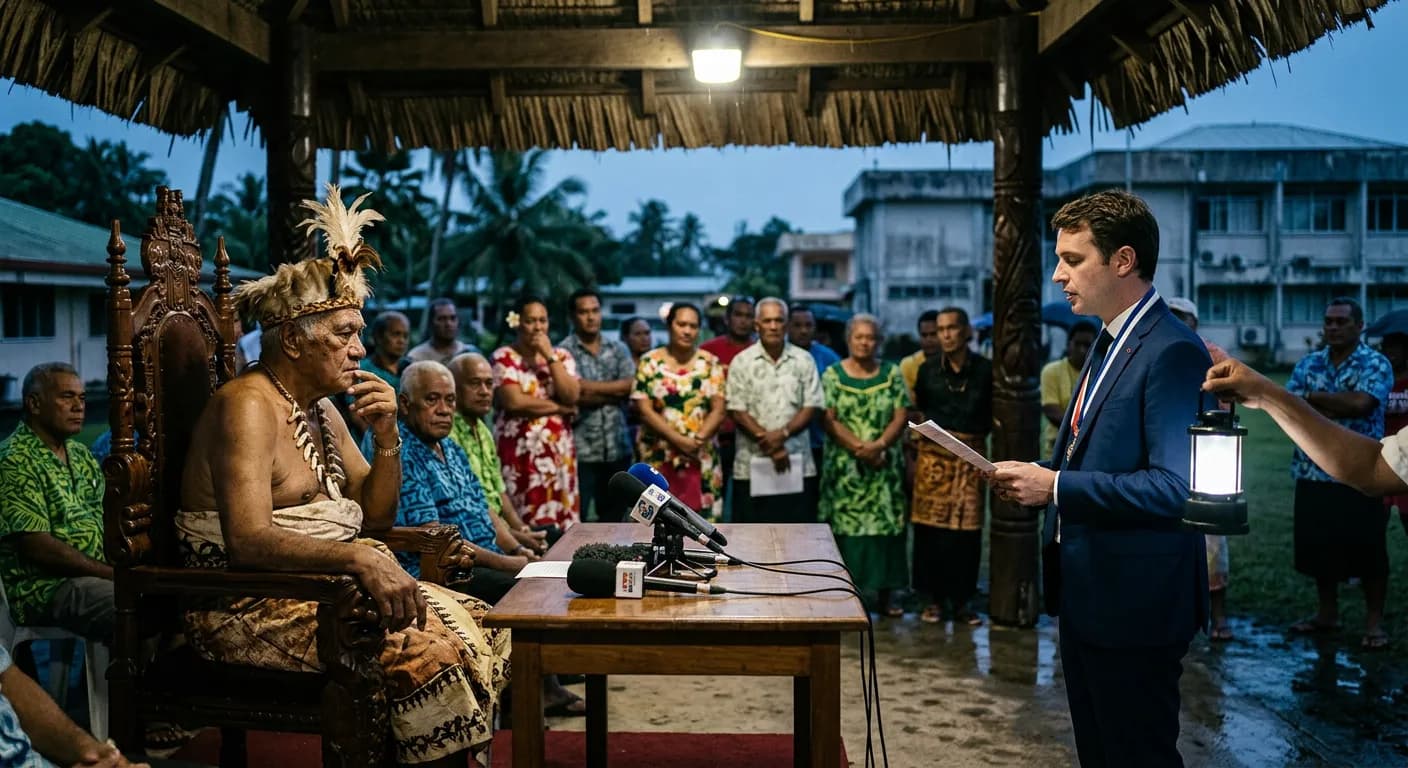
Wallis and Futuna's Three-King Governance Model — and Why It Still Works
The last territory on earth where republican France cohabits with three indigenous monarchies — and why Paris needs the arrangement to hold.
Wallis and Futuna, a French overseas collectivity of roughly 11,500 people spread across two island groups in the South Pacific, operates under one of the world's most unusual governance arrangements: French constitutional law and three traditional Polynesian kingdoms — Uvea (Wallis), Alo, and Sigave (both on Futuna) — share power in an overlapping, unwritten compact that has no precise legal equivalent in the French Republic. Executive authority flows through two parallel channels. The French president appoints an Administrator Superior (a prefect-rank official), while the Territorial Assembly — 20 members elected by party-list proportional representation — elects its own president. Sitting alongside both: three customary kings who hold seats on the Territory Council, administer customary law in non-criminal matters, and wield genuine political influence over land, social order, and local legitimacy.
The dual structure is not ceremonial window-dressing. Kings can and do exercise real power — and their succession is a live political fault line. When Wallis Island chiefs selected Tominiko Halagahu, 57, as the new Lavelua (king) of Uvea in 2016, rival royal families occupied the royal palace to block the enthronement, arguing that choosing the king was their prerogative, not the chiefs', according to the BBC. The French prefect at the time declared Paris would not interfere, though security forces were reinforced from nearby New Caledonia. That episode was no anomaly: since the death of long-serving Lavelua Tomasi Kulimoetoke in 2007 — who survived an armed rebellion by supporters when rivals tried to unseat him in 2005 — the Uvea throne has cycled through periods of vacancy, disputed coronation, and the 2014 removal of King Kapeliele Faupala by powerful families after he sacked two prime ministers. The Lavelua seat has been empty more often than filled over the past two decades.
This matters beyond the archipelago. Wallis and Futuna is one of three French Pacific territories — alongside New Caledonia and French Polynesia — that collectively give France an exclusive economic zone of roughly 6.8 million square kilometers, about one-third of the Pacific Islands' combined EEZ, as the
Center for Strategic and International Studies has documented. France's Indo-Pacific military footprint — theater headquarters in Papeete, a naval base in Nouméa, roughly 2,800 personnel — depends on political stability in all three territories. When New Caledonia erupted in May 2024 over Paris's voting-reform proposal, killing 14 people and causing an estimated €2 billion in damage, the
Al Jazeera coverage noted that a portion of New Caledonia's non-Kanak population originates from Wallis and Futuna — meaning instability in one territory can reverberate into the others.
The customary kings are both a vulnerability and a stabilizing force. They carry legitimacy that the elected Territorial Assembly and the French-appointed Administrator Superior cannot manufacture, particularly on land tenure questions — an area where the collectivity enjoys statutory autonomy from Paris and where coutume (customary law) governs. The 2015 airport blockade at Hihifo, when villagers from the chiefdom of the same name cut off air access to Wallis until authorities hired two local people, illustrated exactly this dynamic: the chiefs' spokesman invoked verbal agreements made when the land was ceded, and the chiefs themselves asked Paris to appoint a mediator, as the BBC reported at the time. French prefect Marcel Renouf accused the villagers of "taking the island hostage," but the dispute was resolved through customary channels, not police action.
The arrangement persists because neither side has a better option. France cannot impose direct rule without undermining the kings whose authority keeps the territory governable; the kings cannot meaningfully challenge French sovereignty without losing the fiscal transfers and citizenship that sustain the population. About 60% of France's total EEZ is in the Pacific, and as Channel NewsAsia observed, Paris views its territories as central to its claim to be an Indo-Pacific power offering a "third way" between US-China bipolarity.
What to Watch
The next Territorial Assembly elections are due in March 2027. But the nearer-term variable is the Uvea kingship. The Lavelua succession remains unresolved — and each vacancy weakens the customary layer that Paris relies on to manage local consent. Meanwhile, the New Caledonia autonomy deal reached in July 2025, which creates a "State of New Caledonia" with its own nationality while remaining within the French Republic, establishes a precedent that pro-autonomy figures in Wallis and Futuna will be watching closely. The question is not whether the dual system holds — it has held since 1961 — but whether Paris can keep it stable while New Caledonia's transformation reshapes expectations across France's Pacific territories.
Discover more
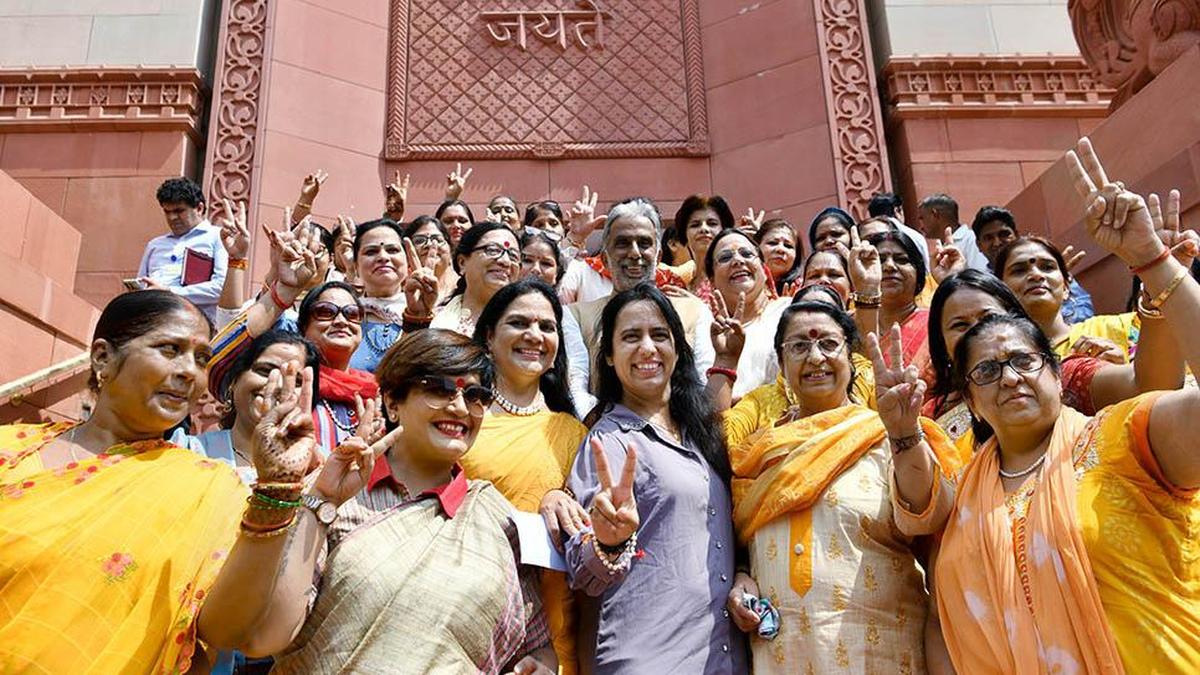
India
Women’s Reservation in India
India's 33% women's reservation law is enacted but won't take effect until after 2029 due to political setbacks and census delays.
US Politics
Congress Targets AI Chatbot Access for Terror
The House passed the Generative AI Terrorism Risk Assessment Act, focusing on AI's role in terrorism and potential surveillance implications.
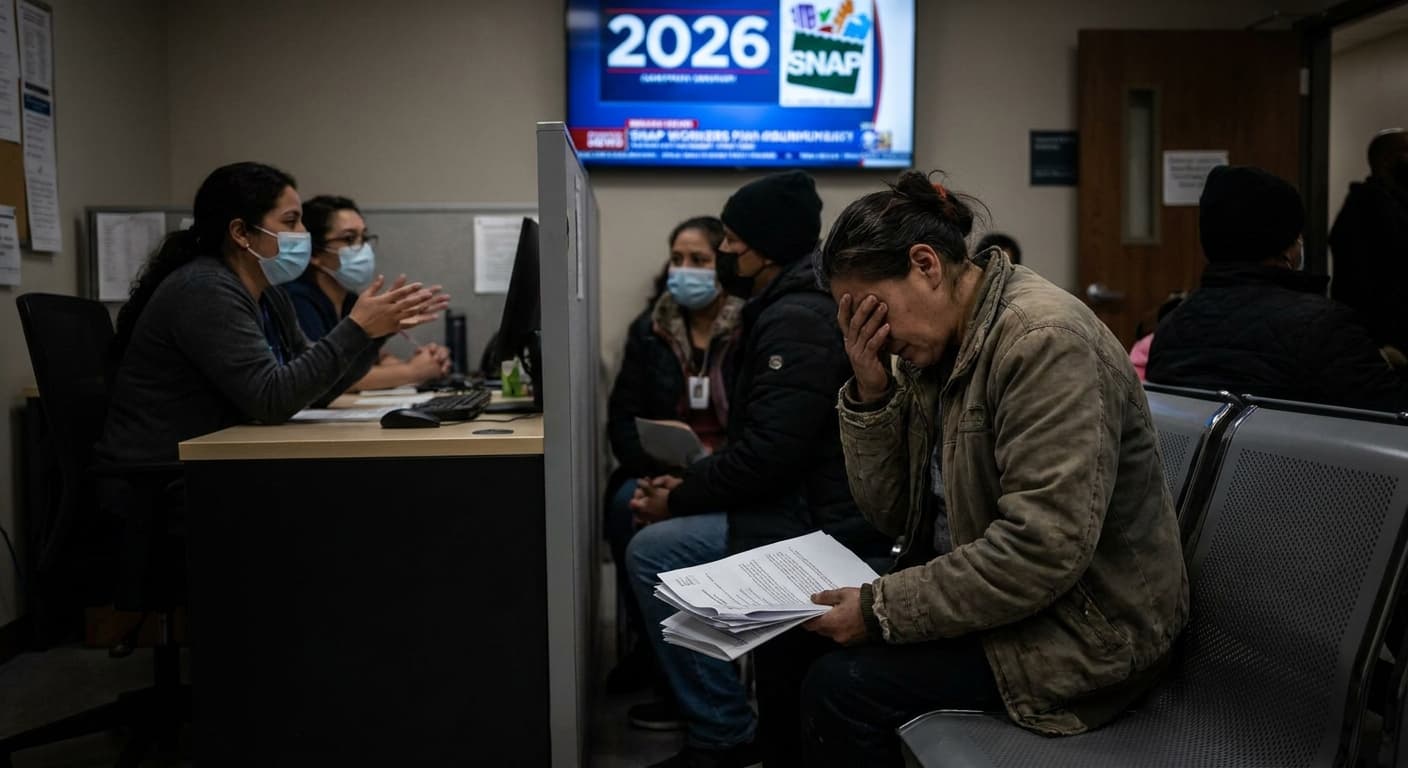
US Politics
SNAP Food Assistance Faces Legal Challenges
In 2026, SNAP faces stricter eligibility rules and mounting legal challenges, threatening food assistance for the millions of Americans who rely on the program.

Conflict & Security
Drone Warfare Killing Aid Workers at Unprec
Over 1,000 humanitarian workers killed in three years as cheap armed drones collapse legal protections. Gaza, Sudan, Ukraine, and DRC see deliberate targeting of aid convoys and hospitals with zero prosecutions.