Why India Is Betting on Kusha Defence
India's air defence system aims to enhance national security.
Model Diplomat3 min readAsia
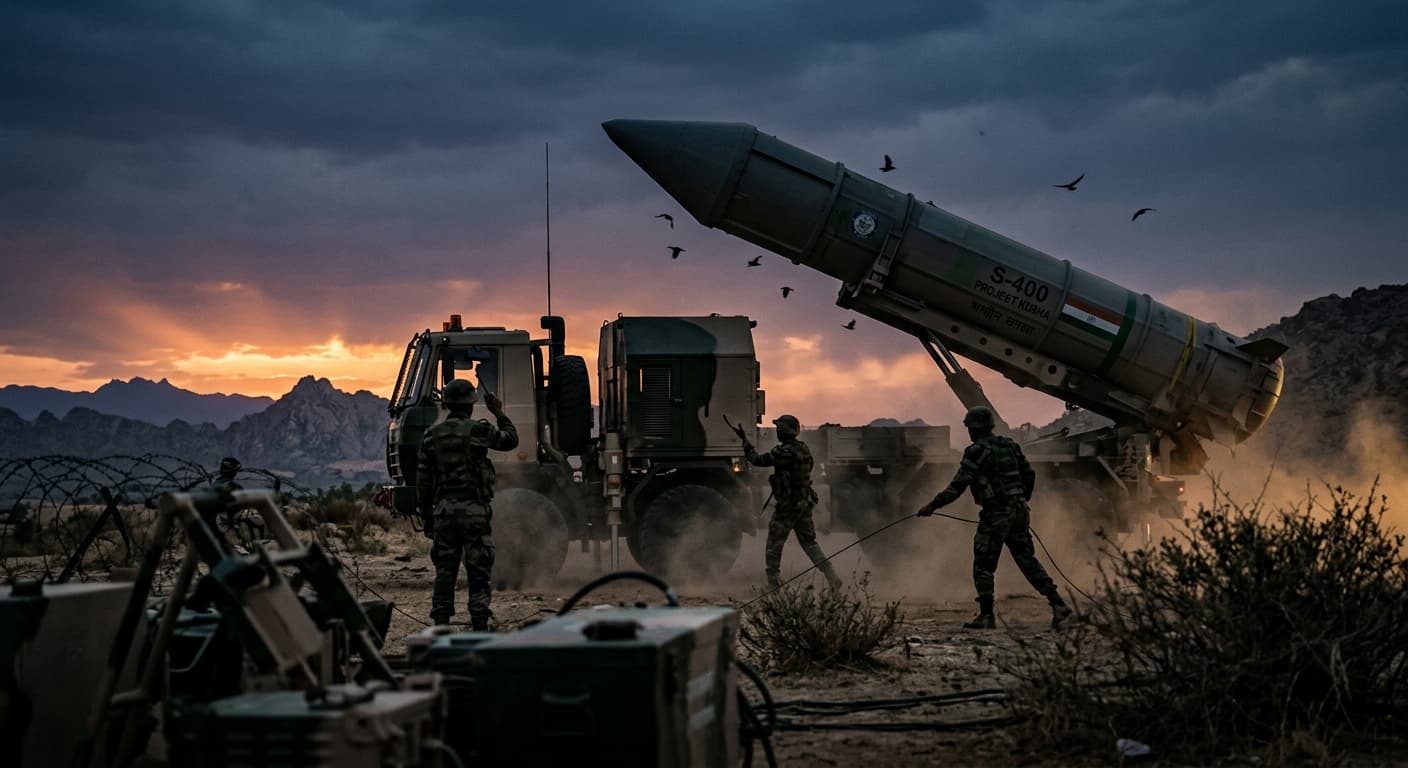
Why India Is Betting on Its Kusha Air Defence System
Following lessons from the 2025 Pakistan conflict, Defence Minister Rajnath Singh positions India's indigenous air shield as a primary deterrent.
Speaking in Hyderabad on June 12, 2026, Indian Defence Minister Rajnath Singh declared that the country's indigenous air defence system, Project Kusha, will be a "game changer" for national security, according to The Hindu. Developed by the Defence Research and Development Organisation (DRDO), this long-range system is designed to intercept enemy stealth fighters, cruise missiles, precision munitions, and drones. Singh specifically noted that the system's conceptual parameters and operational necessity were validated during Operation Sindoor,
India’s intensive military confrontation with Pakistan in May 2025. By fast-tracking this indigenous shield, New Delhi is asserting technological sovereignty to neutralize aerial threats along its dual-front borders without relying on foreign suppliers.
Assessing the May 2025 Lessons
The driving force behind India’s urgent focus on Project Kusha is the strategic fallout of Operation Sindoor. In May 2025, India launched strikes against nine sites in Pakistan and Pakistan-administered Kashmir following a deadly militant attack in Pahalgam, as reported by BBC News. While India successfully bypassed parts of Pakistan's air defence network with long-range BrahMos missile strikes, the opening phase of the
conflict exposed distinct tactical limitations. Indian military officials later admitted that the air force sustained jet losses because of initial political constraints that barred strikes against Pakistani military establishments and air defence hubs, according to
Al Jazeera. Consequently, securing local air superiority requires robust, independent ground-based defence that can deny enemy airspace dominance without risking high-value pilot assets.
Shifting the Deterrence Equation
The deployment of Project Kusha fundamentally alters the balance of leverage between the two nuclear-armed rivals. During the May 2025 escalation, Pakistan's Chinese-supplied HQ-9B surface-to-air missile system repeatedly failed to intercept Indian BrahMos missiles, exposing critical gaps in Islamabad's air defense capabilities, according to Al Jazeera. By contrast, Project Kusha—which is designed to act as a multi-layered defensive dome akin to Israel's Iron Dome or Russia's S-400—aims to deny Pakistan any viable retaliatory strike options in a future crisis. By mitigating the threat of cross-border counter-strikes on its economic and population centers, India aims to establish escalation dominance, permitting it to execute punitive operations with less fear of conventional retaliation. This directly degrades Pakistan's strategy of asymmetric deterrence, leaving Islamabad’s traditional air-strike capabilities increasingly obsolete.
What to Watch Next
The regional arms race is now accelerating toward a race for missile defence supremacy. To offset India's growing conventional air defence shield, Pakistan is actively pursuing the induction of the HQ-19 system from China, with deployment anticipated later in 2026, according to Al Jazeera. Moving forward, the critical metric of success will be whether DRDO can meet its domestic manufacturing timelines for Project Kusha or if India will remain dependent on its current S-400 regiments. Any delay in India's domestic production schedules will force New Delhi to renegotiate foreign procurements, potentially slowing its strategic edge just as Islamabad seeks to close the technology gap.
Discover more
India
Rajnath Singh's Durga Squad for 2026 Polls
Rajnath Singh's Durga Squad promised women's safety in Bengal but has since disappeared from the agenda, revealing BJP's true priorities.

India
India-South Korea $50B Trade Expansion Plan
India and South Korea target $50 billion in bilateral trade by 2030, focusing on industrial cooperation and strategic alignment amid US pressures.
India
Modi's Women’s Convention in Varanasi
Modi's Varanasi rally frames women's reservation as a national mission, targeting the 2027 Uttar Pradesh elections with a strategic narrative.

Conflict & Security
Drone Warfare Killing Aid Workers at Unprec
Over 1,000 humanitarian workers killed in three years as cheap armed drones collapse legal protections. Gaza, Sudan, Ukraine, and DRC see deliberate targeting of aid convoys and hospitals with zero prosecutions.