White House Preserves Presidential Records
Court orders preservation of presidential records amid legal dispute.
Model Diplomat7 min readUnited States
White House Preserves Presidential Records — Under Court Order
A federal judge ordered the White House to keep records that DOJ told him were exempt from a Watergate-era law. The compromise says a lot about the fight ahead.
The White House says it is preserving presidential records. The Department of Justice says it does not have to. Both statements are now true at the same time — and that unresolved contradiction, not any single filing, is the story of the biggest challenge to the Presidential Records Act since it was written in 1978. On May 20, 2026, U.S. District Judge John D. Bates ordered most White House staff to comply with the law anyway; on June 30, he left that injunction in force while pausing the rest of the case for an expedited D.C. Circuit appeal. The administration's promise to preserve is doing narrow work: keeping documents alive long enough for the Supreme Court to decide whether the president has to keep them at all.
What the Justice Department actually said
On April 1, 2026, T. Elliot Gaiser, head of the DOJ's Office of Legal Counsel, issued a 52-page memorandum for the Counsel to the President concluding that the Presidential Records Act (PRA) "unconstitutionally intrudes on the independence and autonomy of the President guaranteed by Article II" and that "the President need not further comply with its dictates." The full opinion is posted on the department's website and titled, plainly, Constitutionality of the Presidential Records Act.
The reasoning is unusually aggressive. OLC concludes that Congress lacks any enumerated or implied power to regulate presidential recordkeeping; that the spending power cannot reach a coordinate branch; and that the 1977 Supreme Court decision in Nixon v. Administrator of General Services — which upheld the PRA's predecessor 7–2 — is both "distinguishable" and "wrong." The Congressional Research Service, in a June sidebar by Todd Garvey titled Congressional Authority to Regulate Presidential Recordkeeping, notes that OLC characterized Nixon as an artifact of the "ancien regime" of mid-20th-century separation-of-powers doctrine and concluded that constitutional "infirmit[ies] pervade[] the entire statute," so the PRA "is invalid in its entirety."
That is not the usual OLC register. Christopher Fonzone, who ran the office under President Biden, called the memo "a bolt of lightning unanticipated by any Executive Branch or Supreme Court opinion or even contemporary legal scholarship," in an essay flagged by NPR. Dan Jacobson, counsel for the plaintiffs, put it more bluntly to NPR: "The executive branch is taking for itself the authority to declare the Supreme Court got it wrong and they can ignore a law based on that disagreement."
Why the White House says it is preserving records anyway
The gap between the OLC opinion and White House practice is deliberate. On April 8, the White House told The Daily Signal that President Trump "will preserve his administration's records" and maintain a "rigorous records retention program." Two weeks later, DOJ told the U.S. District Court for the District of Columbia the same thing: staff are still following the PRA's "preservation" mandates, as reported by
KESQ/CNN.
That posture — comply now, litigate later — is not generosity. It is standing-doctrine hygiene. If nothing is being destroyed today, the plaintiffs have a harder time showing irreparable harm and the courts have a thinner basis to intervene. It also lets the White House keep its constitutional argument warm for a Supreme Court that has, in the last three terms, shown appetite for revisiting old separation-of-powers precedent.
There is one conspicuous gap. Lawyers for the American Historical Association and American Oversight told the court that Trump's promised retention training does not apply to the country's two most senior officials — the president and Vice President JD Vance. That gap is what forced the injunction.
The Bates order
The consolidated case — American Historical Association v. Trump, No. 1:26-cv-01169 (D.D.C.), joined with a parallel suit by the Freedom of the Press Foundation and Citizens for Responsibility and Ethics in Washington — landed in front of Judge John D. Bates, a George W. Bush appointee. On May 20, 2026, after a May 13 consolidated hearing, Bates granted the plaintiffs a preliminary injunction requiring most White House employees to preserve presidential and vice-presidential records covered by the PRA. The docket entries are visible on CourtListener.
Bates's ruling matters less for what it compels — the White House already said it would do most of it — than for what it presumes. To grant an injunction, the judge had to find plaintiffs likely to succeed on the merits. That means a federal court has now signaled, on the record, that the OLC's constitutional theory is unlikely to prevail. The Congressional Research Service reached the same view in its overview of the PRA, noting that "no court has questioned the law's facial constitutionality" in the 48 years since enactment.
The administration appealed on June 2. On June 30, Bates issued a memorandum opinion staying district-court proceedings pending resolution of the D.C. Circuit appeal — but expressly carved the preliminary injunction and any compliance disputes out of the stay. Translation: while the appeal runs, the White House still has to preserve.
The Mar-a-Lago subtext
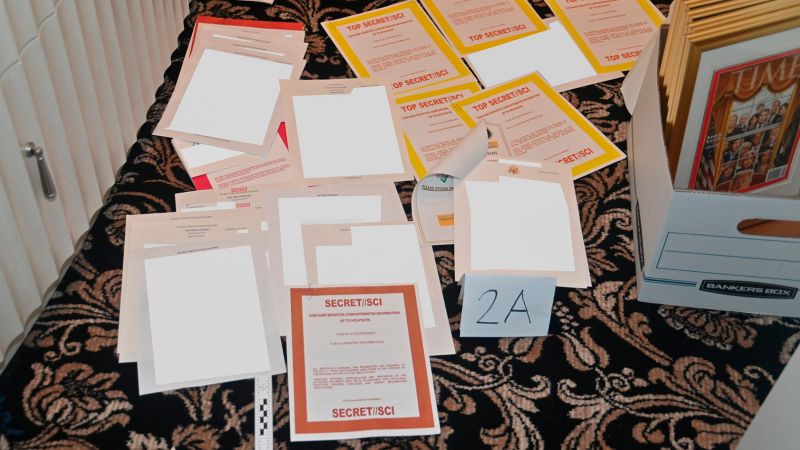
The OLC theory did not appear from nowhere. The America First Legal Foundation, run by Trump adviser Stephen Miller, published a 2023 white paper arguing that a president has unequivocal ownership over his records — released months after Trump was indicted in Florida for allegedly stockpiling classified documents at Mar-a-Lago. Timothy Naftali, the former director of the Nixon Presidential Library, told NPR that the OLC opinion is "an attempt at post facto vindication for having taken public property to Mar-a-Lago."
That is not stray context. The plaintiffs' preliminary-injunction filings include a declaration from Naftali and cite the government's own briefs in Nixon v. Administrator of General Services, 433 U.S. 425 (1977) — in which the executive branch defended, and the Supreme Court upheld, Congress's authority to take custody of a former president's records. The OLC memo distinguishes that case by arguing the Nixon-specific statute was narrower; the plaintiffs argue OLC is asking the Court to overrule Nixon in everything but name.
What Signal already told us
The White House's ability to preserve digital records in real time is not hypothetical. In March 2025, national-security adviser Michael Waltz added Atlantic editor Jeffrey Goldberg to a Signal chat in which senior officials discussed a strike on the Houthis in Yemen. That episode produced its own PRA/FRA litigation: in June 2025, U.S. District Judge James Boasberg ordered officials to preserve any remaining messages and to notify the acting archivist of the United States of records at risk of deletion, according to NPR. But Boasberg also conceded he could not resurrect messages the app had already auto-deleted.
The Signal case is the cautionary tale the current injunction is built to prevent. American Oversight told the court no defendant had attested to saving the chat "in its entirety." When the medium destroys the record automatically, an after-the-fact preservation order is a receipt for a document that no longer exists. That is why the AHA plaintiffs asked for training programs, mandatory guidance to Trump and Vance personally, and a court-supervised paper trail — not just a promise.
The historical parallel worth naming
The record-preservation regime in place today is a direct product of one man refusing to hand over his papers. When Nixon resigned in August 1974, he wanted to take his tapes to California. Congress passed the Presidential Recordings and Materials Preservation Act to stop him, then, in 1978, generalized the rule into the PRA. President Jimmy Carter, signing it, said the law "carries forward my commitment to making sure that our government is not above the law."
Nixon sued. He lost. The Supreme Court's 1977 opinion in Nixon v. Administrator of General Services held that Congress could constitutionally take control of a president's papers because "the Executive Branch remains in full control of the Presidential materials" via career archivists. Every subsequent White House — Reagan, both Bushes, Clinton, Obama, Biden, and the first Trump term — accepted that framework, even when they fought over specific records, as former Trump lawyer Justin Clark did before Judge Tanya Chutkan in the January 6 committee litigation covered by
NPR.
The OLC memo is the first time an incumbent president has said the framework itself is void.
The forward calendar
Three concrete catalysts will decide whether the current preservation order holds:
- D.C. Circuit briefing (July–August 2026). The administration's appeal of Bates's preliminary injunction is now docketed at the D.C. Circuit. Watch for a request for a stay pending appeal — if the panel grants one, preservation obligations collapse until the merits ruling.
- First Supreme Court cert petition (fall 2026). Whichever side loses at the D.C. Circuit is expected to seek review. The Court's willingness to take a facial constitutional challenge to a 48-year-old statute will signal how far the majority is willing to go on Article II.
- Congressional response. The CRS sidebar flags that Congress "has various tools" — including amending the PRA or exercising oversight over White House compliance. With the House and Senate both narrowly held, the more realistic near-term move is committee subpoenas under the PRA's "special access" provision at
44 U.S.C. § 2205, which OLC's opinion also declares unconstitutional.
Diplomat View
The White House's preservation pledge is not a retreat; it is a hedge. The administration has decoupled the legal argument (Congress cannot regulate the presidency's records) from the operational reality (staff are still saving them) precisely to keep the constitutional question alive without giving plaintiffs a smoking gun. The base-case forecast: the D.C. Circuit affirms Bates by a comfortable margin, the Supreme Court declines to strike down the PRA facially but signals sympathy for a narrower Article II carve-out — and the practical damage happens in the gaps, in Signal threads and Vance-office communications that were never captured in the first place. What would change this forecast: a D.C. Circuit stay of the Bates injunction, or a cert grant framed around Nixon v. GSA's continuing vitality. Either would suggest the majority is prepared to do to the Presidential Records Act what it has already done to Chevron. Watch the docket, not the press release.
Related: US Politics.
Discover more
US Politics
House Ethics Committee Pushes Sexual Miscond.
The House Ethics Committee has shifted responsibility for sexual harassment settlement records to the Office of Congressional Workplace Rights, complicating disclosure efforts.

Conflict & Security
Drone Warfare Killing Aid Workers at Unprec
Over 1,000 humanitarian workers killed in three years as cheap armed drones collapse legal protections. Gaza, Sudan, Ukraine, and DRC see deliberate targeting of aid convoys and hospitals with zero prosecutions.

Global
World Normalises Taliban as Afghan Women Eras
UN data shows Afghan women erased from public life as Russia recognises the Taliban, EU hosts officials in Brussels, and ICC warrants for gender persecution go unenforced.

Conflict & Security
West Africa Food Crisis: Three Shocks in 2026
Conflict, climate extremes, and the Strait of Hormuz closure drive a severe food crisis in West and Central Africa, with fertilizer prices surging 80% and millions displaced.