

US Sanctions Impact Iran's Hormuz Shipping
3 min readMiddle East
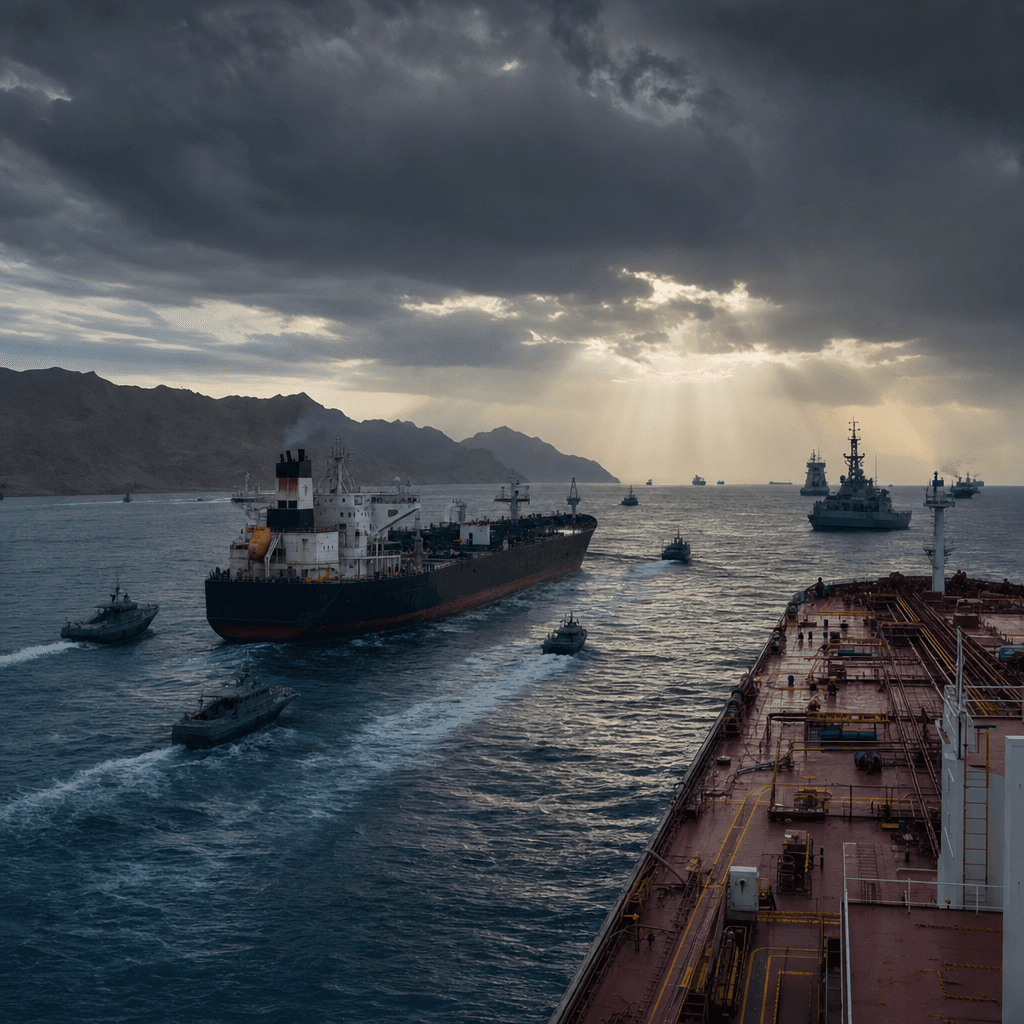
Washington aims to curb Iran's maritime revenue through sanctions.
US Hormuz Tolls Warning Targets Iran’s Cash Lifeline
Washington is using secondary sanctions to stop Tehran monetizing Hormuz transit, forcing shippers, insurers, and banks to police access.
Washington is trying to turn the maritime industry into an enforcement arm against Tehran. The U.S. Treasury’s Office of Foreign Assets Control warned on May 1 that shipping firms could face sanctions if they pay Iran for passage through the Strait of Hormuz — not just through formal tolls, but through crypto, offsets, in-kind payments, or even “charitable donations” to Iranian-linked entities. The warning applies to U.S. and non-U.S. persons, raising the cost of any private arrangement with Iran over safe passage. US warns shipping firms they could face sanctions over paying Iranian tolls in the Strait of Hormuz | AP News
US Treasury warns shippers not to pay Hormuz tolls, even in form of ... | Reuters
Financial leverage over maritime geography
The power dynamic is straightforward: Iran controls the geography; the U.S. controls the financial system. Tehran’s leverage comes from the chokepoint itself. Hormuz carries more than 20 million barrels a day of crude, condensate, and fuels — about 20% of global petroleum liquids consumption — and the main shipping lanes are only about 2 miles wide in each direction. What is the Strait of Hormuz and why is it so important for oil? | Reuters
Why the Strait of Hormuz is important | AP News
Washington’s answer is to make that geographic leverage hard to monetize. This is not just a shipping warning; it is a secondary sanctions threat aimed at shipowners, brokers, insurers, banks, and Gulf intermediaries that might otherwise treat Iranian “fees” as a cost of doing business. The message is that any payment channel touching Iran can become sanctionable. That fits a broader U.S. pattern: Treasury recently sanctioned a China-based refinery and roughly 40 shipping companies and tankers over Iranian oil, showing the administration is willing to punish third-country facilitators at scale. US sanctions China-based oil refinery and 40 shippers over Iranian oil | AP News
Trump administration pivots to economic warfare on Iran | AP News
Who gains, who loses
The U.S. gains leverage because it can deter payments without reopening a legal debate over who physically controls passage. Iran loses a potential wartime revenue stream and a coercive bargaining chip in ceasefire talks. Shipping firms lose optionality: paying for certainty on the water may now trigger uncertainty in dollars, insurance, and port access. US Treasury warns shippers not to pay Hormuz tolls, even in form of ... | Reuters
Iran offers to reopen Strait of Hormuz if US lifts blockade | AP News
That matters most in Asia. About 84% of crude moving through Hormuz goes to Asian markets, making China, India, Japan, and South Korea the first to feel any rise in freight, insurance, or delay costs. Why the Strait of Hormuz is important | AP News For broader
International coverage, the key point is that Washington is shifting risk from naval confrontation to corporate compliance.
What to watch next
The next test is enforcement, not messaging. Watch whether OFAC names a shipowner, insurer, bank, or broker for arranging a Hormuz-related payment; that will determine whether the warning changes market behavior or remains a deterrent on paper. Also watch ceasefire talks: if Iran again offers to reopen Hormuz in exchange for sanctions relief, the U.S. will have to decide whether freedom of navigation is separable from its wider pressure campaign against Tehran. For the U.S. angle, see our United States profile.
Keep reading

Global Politics
US Seizes Iranian Ship, Tensions Surge
The US seizes the Iranian ship Touska near the Strait of Hormuz, escalating tensions and risking wider conflict in the region.
Conflict & Security
No Easy Bypass: Why Pipelines Can't Replace
Pipelines can't fill the gap left by the blocked Strait of Hormuz.
Elections & Campaigns
Trump underwater on issues that got him elected, polling shows
Axios reports that Trump’s second-term agenda is facing broad political headwinds across foreign policy, immigration, and the economy. Key points: - Foreign policy: Polls show a majority think Trump has gone too far overseas (56%), with 70% oppose U.S. involvement in Iran and only 18% support military action. His recent moves, including strikes on Iran and aggressive rhetoric, are controversial. His Greenland initiative (taking or purchasing the territory) is widely unpopula