US Halts Hormuz Escort Amid Iran Control
Trump's pause in escort plan impacts Strait of Hormuz dynamics.
Model Diplomat2 min readMiddle East
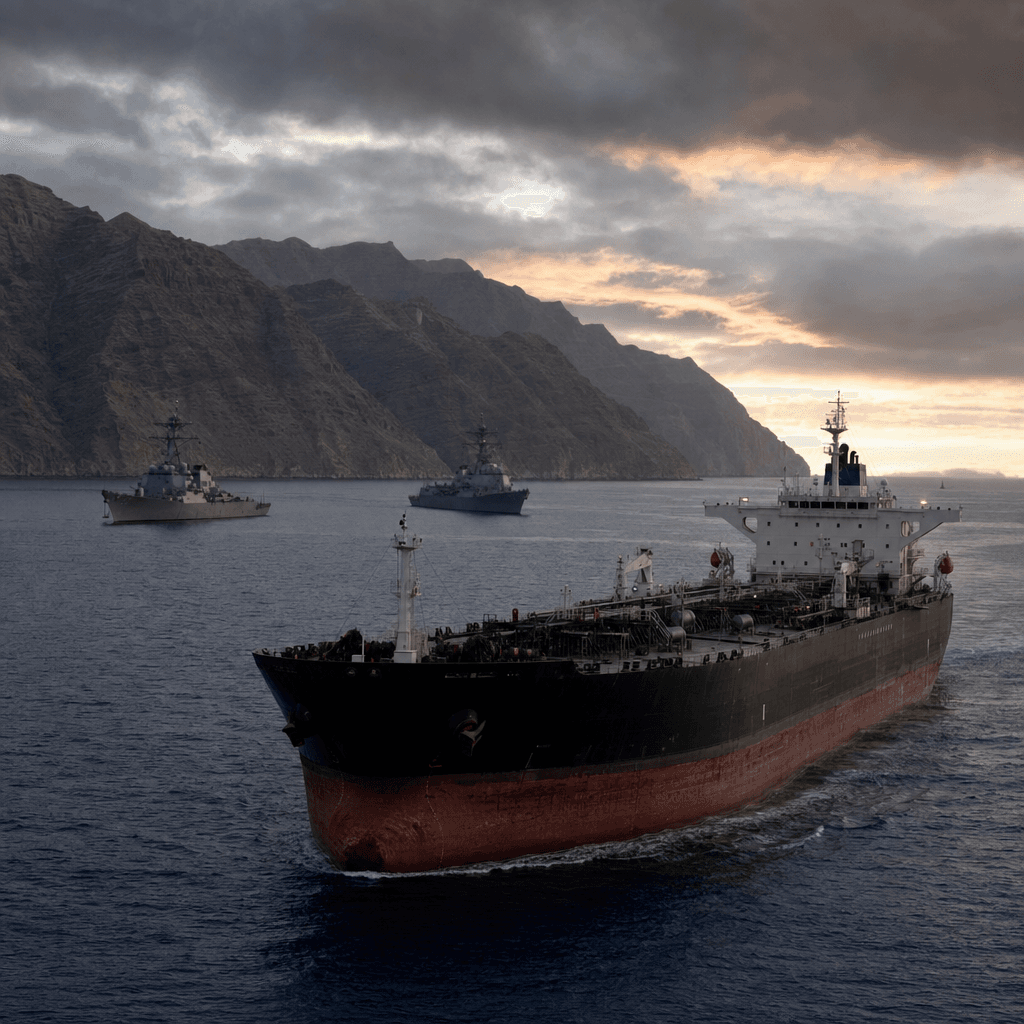
US Pauses Hormuz Escort Plan, and Iran Keeps Leverage
Trump’s pause buys time for Iran talks, but Tehran still controls the Strait’s risk premium and can keep shippers waiting.
Washington has paused its effort to guide commercial ships through the Strait of Hormuz after only a thin test run, which tells you where the leverage sits: Iran still has the power to make the waterway unusable, while the U.S. is trying to turn naval pressure into a bargaining chip. Reuters reported that only two U.S.-flagged merchant vessels had used the new lane before the pause, while President Donald Trump said he was stopping the operation briefly to give diplomacy room to finalize a deal with Tehran. Reuters
NPR/AP
Why the pause matters
The Strait of Hormuz is not just another maritime chokepoint. AP notes that roughly 20% of globally traded crude passes through it, and that the current disruption has left hundreds of vessels and tens of thousands of mariners stranded. The U.S. response was heavy: guided-missile destroyers, more than 100 aircraft, and 15,000 personnel, according to AP and BBC reporting on “Project Freedom.” That scale shows Washington is not simply offering escort service; it is trying to signal it can reopen the route on its terms. AP News
BBC
The leverage behind the choke point
Iran benefits from ambiguity. Even when it does not fully close the strait, it can raise insurance costs, slow sailings, and force companies to choose between risk and delay. Shippers are already behaving that way: AP reported that major carriers were still treating the route as too dangerous, and Reuters quoted Hapag-Lloyd saying transits were “for the moment not possible” for its ships. This is the core bargaining dynamic: Tehran can hurt commerce without needing a formal blockade, while Washington can only reduce that leverage if it persuades carriers that protection is credible and lasting. AP News
Reuters
There is a historical echo here. The U.S. has done this before: during the 1980s Tanker War, it escorted shipping through the Gulf, and AP notes that the last major U.S.-Iran naval battle in these waters was in 1988. The difference now is that Washington is trying to combine coercion with negotiations, not just force. That makes the pause tactical, not reassuring. For background on the wider power contest, see Global Politics.
AP News
What to watch next
The next decision point is whether the pause holds long enough for talks to produce a visible concession from Iran, or whether shippers stay out and the U.S. has to restart the escort mission. Reuters says diplomats were pushing for a fast UN track on a resolution condemning attacks in the strait, while shipping groups are still waiting for clear guidance. If the lane remains underused, the pause will look less like de-escalation than an admission that force alone cannot reopen Hormuz. Reuters
AP News
Discover more

Global Politics
US Seizes Iranian Ship, Tensions Surge
The US seizure of the Iranian ship Touska highlights a shift in control over the Strait of Hormuz, favoring Iran's strategic position.

Economics
Fed's Amex AML order puts correspondent banking on notice
Federal Reserve's Amex AML order requires board-level controls and a 90-day plan; OCC fined the bank $350 million over enterprise-wide deficiencies.

Conflict & Security
Guatemala: El Niño 2026–27 becomes regional security test
UNICEF: 25.8M children face El Niño risks in Latin America; Guatemala maps 188 municipalities for drought and food insecurity amid regional security test.

Economics
Fed's stress-test overhaul is a capital-smoothing exercise
Federal Reserve finalized stress-test overhaul: two-year averaging for bank capital buffers and public input, expected to halve volatility.