Urdu Press Wants Suvendu, Vijay to Deliver Change
Editorials in Urdu papers read Bengal’s BJP sweep and Vijay’s Tamil Nadu breakthrough as mandates for restraint, delivery and coalition discipline, not victory laps.
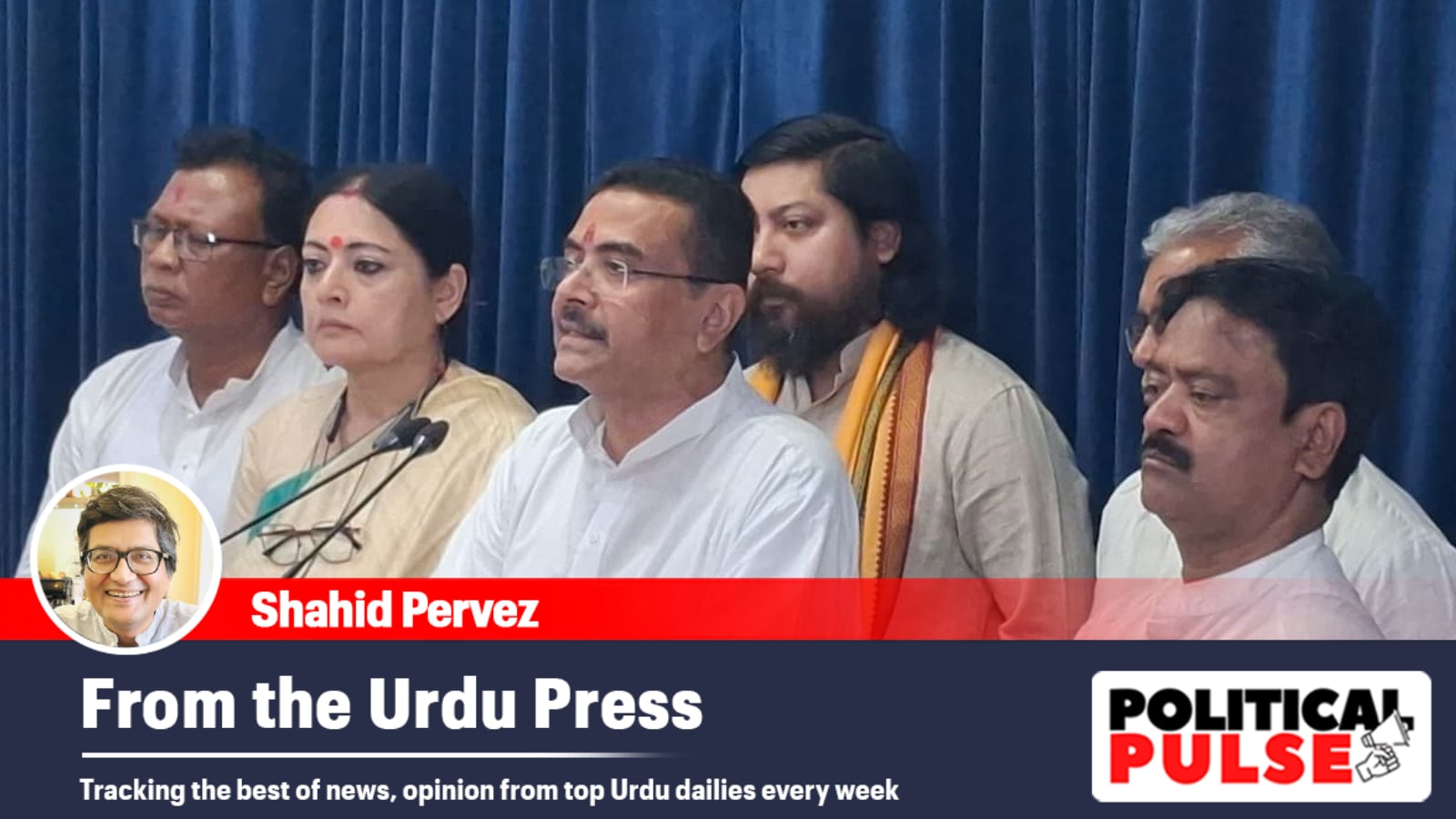
The power shift in both states is real, but the leverage is still conditional. The Indian Express’ roundup of Urdu-press editorials says Hyderabad-based Siasat wants West Bengal Chief Minister Suvendu Adhikari to heed Narendra Modi’s call for “badlav, not badla,” while also warning that post-poll violence and intimidation could quickly poison the BJP’s first term in power ( The Indian Express). For
  India, the point is simple: winning office is easier than converting a polarizing mandate into stable authority.
Bengal: victory has to look like governance
In West Bengal, the BJP’s advantage comes from control of the state machinery and the narrative of change after 15 years of Trinamool rule. The Hindu reported that the BJP won 206 seats, Mamata Banerjee lost Bhabanipur, and Suvendu Adhikari was sworn in on May 9 ( The Hindu; The Hindu). But the Urdu press is warning that the BJP cannot govern Bengal as if the campaign never ended. That matters because the new government has already moved fast to lock in control: The Hindu says its first cabinet meeting approved land transfer for BSF fencing, immediate implementation of central schemes, and alignment with the census and new criminal code (The Hindu).
That is the BJP’s playbook: use the mandate to tie Bengal closer to New Delhi and project administrative order. The risk is equally clear. If allegations of post-poll violence stick, Adhikari hands the opposition a simple counter-narrative — that “change” has become consolidation by coercion.
Tamil Nadu: Vijay’s power is broad, but not solitary
Tamil Nadu is a different kind of warning. The Urdu-press readout in The Indian Express calls C. Joseph Vijay’s rise “stunning” and frames it as the start of a new political era, but the numbers show dependence, not dominance (The Indian Express). The Hindu reported that TVK won 108 seats, then reached 120 with support from the Congress, CPI, CPI(M), VCK and IUML — just enough to form government — and that Vijay must seek a confidence vote by May 13 (The Hindu; The Hindu).
That coalition gives Vijay breadth, but it also gives allies leverage. Congress has already broken with the DMK to back TVK, which means the new chief minister must manage not just enthusiasm, but expectations from parties that helped him over the line. The bigger implication: if Vijay looks like a one-man wave without a governing structure, he will invite both the DMK and AIADMK to regroup around his weaknesses.
What to watch next
The next decision point is immediate. In Chennai, the confidence vote by May 13 will test whether Vijay’s new coalition is real or merely procedural (The Hindu). In Kolkata, the first month of BJP rule will show whether “badlav” means restraint and delivery, or a hard line that reopens communal and law-and-order fault lines. For Global Politics, the lesson is the same in both states: the mandate is only the opening move.