UP Cabinet Expansion Shows BJP’s 2027 Caste Formula
Yogi Adityanath’s new cabinet entries are less about governance than vote management: the BJP is locking in OBCs, Dalits and select upper-caste faces before 2027.
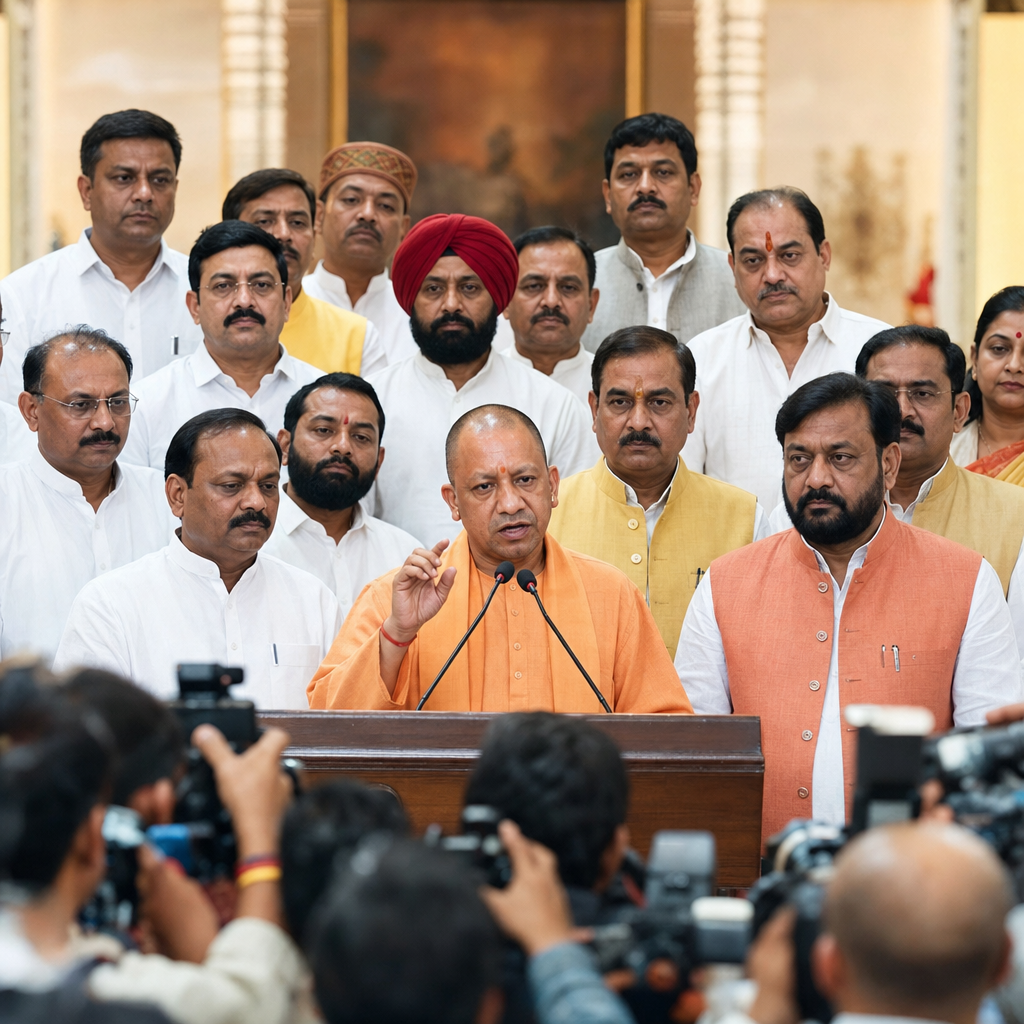
Yogi Adityanath’s cabinet expansion is a caste-balancing move dressed as routine administration. The BJP inducted six new ministers and elevated two others, with the new faces skewing toward non-Yadav OBCs, Dalits and one Brahmin defector from the Samajwadi Party, a composition that the  Indian Express says is aimed at preserving the party’s winning coalition ahead of the 2027 Uttar Pradesh election.
The arithmetic is the message
The party’s signal is simple: it still believes Uttar Pradesh is won by stitching together a broad social bloc, not by relying on any single caste segment. The new ministers include Bhupendra Chaudhary, a Jat from western UP; Manoj Kumar Pandey, a Brahmin and former SP leader; Hansraj Vishwakarma from the artisan-OBC cluster; Kailash Rajput from the Lodh community; and Dalit faces Surendra Diler and Krishna Paswan, according to the Indian Express and  The Print.
That composition matters because the BJP is trying to defend the same coalition that has carried it for a decade: non-Yadav OBCs, non-Jatav Dalits and enough upper-caste support to keep the opposition from stitching together a rival majority. The Samajwadi Party’s answer is its “PDA” pitch — Pichhda, Dalit, Alpsankhyak — and this expansion is the BJP’s effort to blunt it before it hardens into a statewide anti-incumbency platform, the Indian Express reports.
Why this is more than a reshuffle
For the BJP, the cabinet is not just an executive team; it is a set of visible incentives distributed to social groups that matter electorally. The Print says the new ministry now has 25 OBC ministers, 21 from upper castes, 12 Dalits, one Sikh and one Muslim — a reminder that the party is still trying to project breadth even as it sharpens its caste math.
The timing also matters. The last UP cabinet expansion was in March 2024, ahead of the Lok Sabha election cycle, and the current move follows renewed speculation around a reshuffle after Yogi Adityanath met Governor Anandiben Patel on May 9, according to  The Hindu. The BJP is effectively using state office to repair the social damage of its weaker 2024 parliamentary showing in Uttar Pradesh without changing its core governing formula.
For the wider backdrop, see  India.
What to watch next
The next decision point is not the oath-taking; it is portfolios. Who gets a visible, high-salience department will show which caste and regional blocs the BJP considers most important to energize on the ground. Watch western UP, where Jat politics remains sensitive, and central and eastern UP, where Lodh, Vishwakarma and Dalit outreach is being treated as a delivery problem, not just a representation problem.
Also watch the opposition response. If the SP can keep the PDA frame focused on under-representation and local grievances, the BJP’s cabinet math may look tactical rather than durable. If not, this expansion will stand as an early template for the 2027 campaign.
For more on coalition politics and electoral leverage, see Global Politics.