UN Summit Advocates People-Centred Policing
UNCOPS 2026 highlights funding crisis in peacekeeping efforts.
Model Diplomat8 min readGlobal
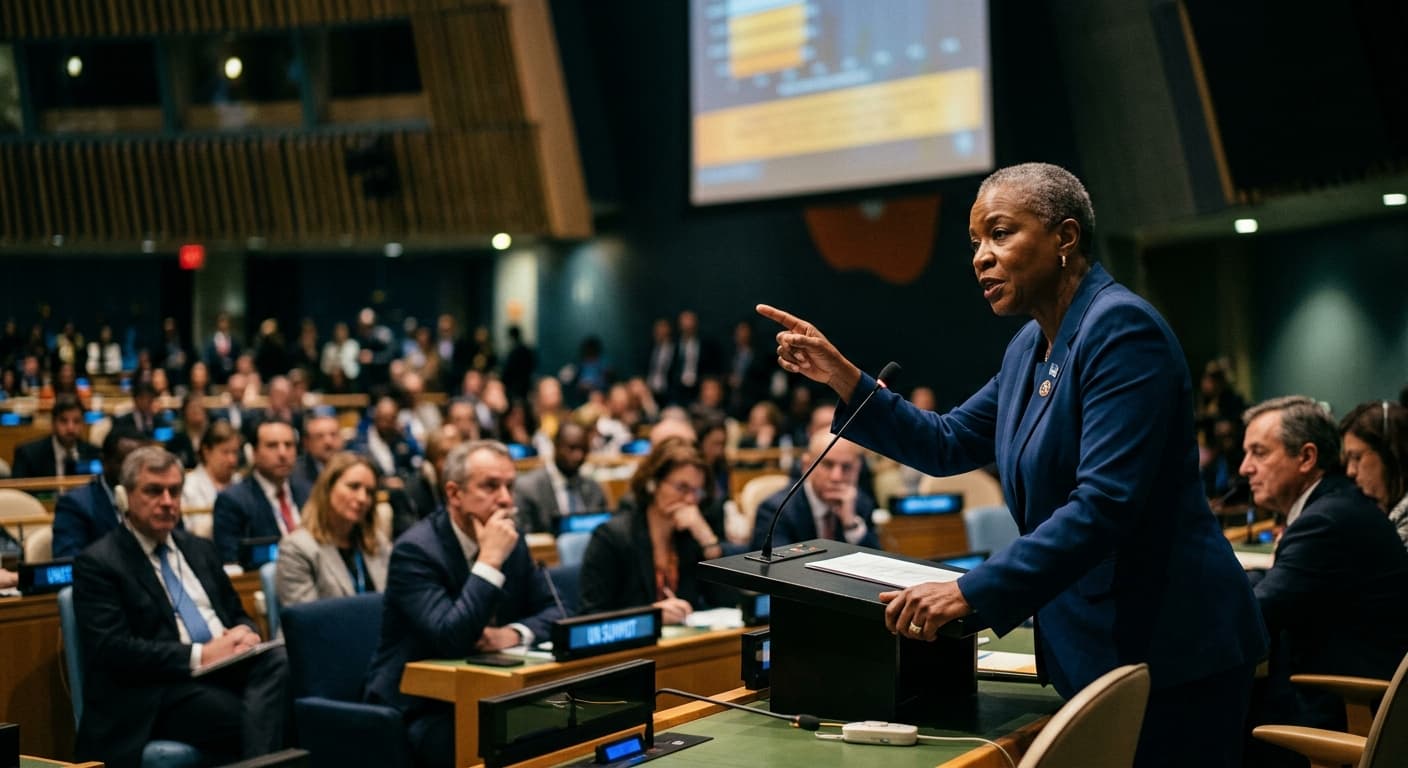
Peace Hinges on People-Centred Policing, UN Summit Told
UNCOPS 2026 opened in New York on July 7 with a stark warning: the UN's 4,626 police officers are being asked to do more community work with 25% less cash.
The fifth United Nations Chiefs of Police Summit opened at UN Headquarters on July 7, 2026, with a message aimed squarely at Washington: the future of peacekeeping is not soldiers with rifles, it is officers on foot patrols who can be trusted to take a rape complaint — and that model is running out of money. Jean-Pierre Lacroix, the UN Under-Secretary-General for Peace Operations, told delegates the organisation has "effectively had to reduce spending by around 25 per cent" across peace operations, forcing cuts to the very community engagement, elections security and gender-based-violence work that the summit is being convened to expand. The argument being made in New York is that "people-centred policing" is not soft power language; it is the cheapest tool the UN has left for preventing the next war — and it is the one being defunded first.
The pitch: safety as the entry point to peace
The framing came in a single line from UN Police Adviser Faisal Shahkar, a former Inspector General of Police in Pakistan. "For communities affected by conflict, peace is not only the silence of weapons," he told UN News. "It is also the ability to return home, send children to school, report violence, access justice, and trust the institutions meant to protect them."
That sentence is doing a lot of work. It reframes peacekeeping's core deliverable away from ceasefire monitoring — the Cold War-era mandate the blue helmets were built for — and toward the delivery of everyday order, which is what actually keeps post-conflict states from tipping back into war. Nearly 4,500 UN Police (UNPOL) officers from about 80 contributing countries are currently deployed across seven active missions, according to the UN Department of Peace Operations. That is barely a third of the 14,669-strong force the UN fielded at its 2010 peak, when stabilisation missions in the Democratic Republic of the Congo, Darfur and Haiti absorbed most of the traffic.
The shrinkage is not accidental. Missions in Côte d'Ivoire and Liberia have closed, the Multinational Security Support Mission in Haiti wound down in 2025, and the DRC mission MONUSCO is drawing down. What is left is a leaner, more police-heavy footprint — one where community engagement, not force protection, is meant to be the comparative advantage.
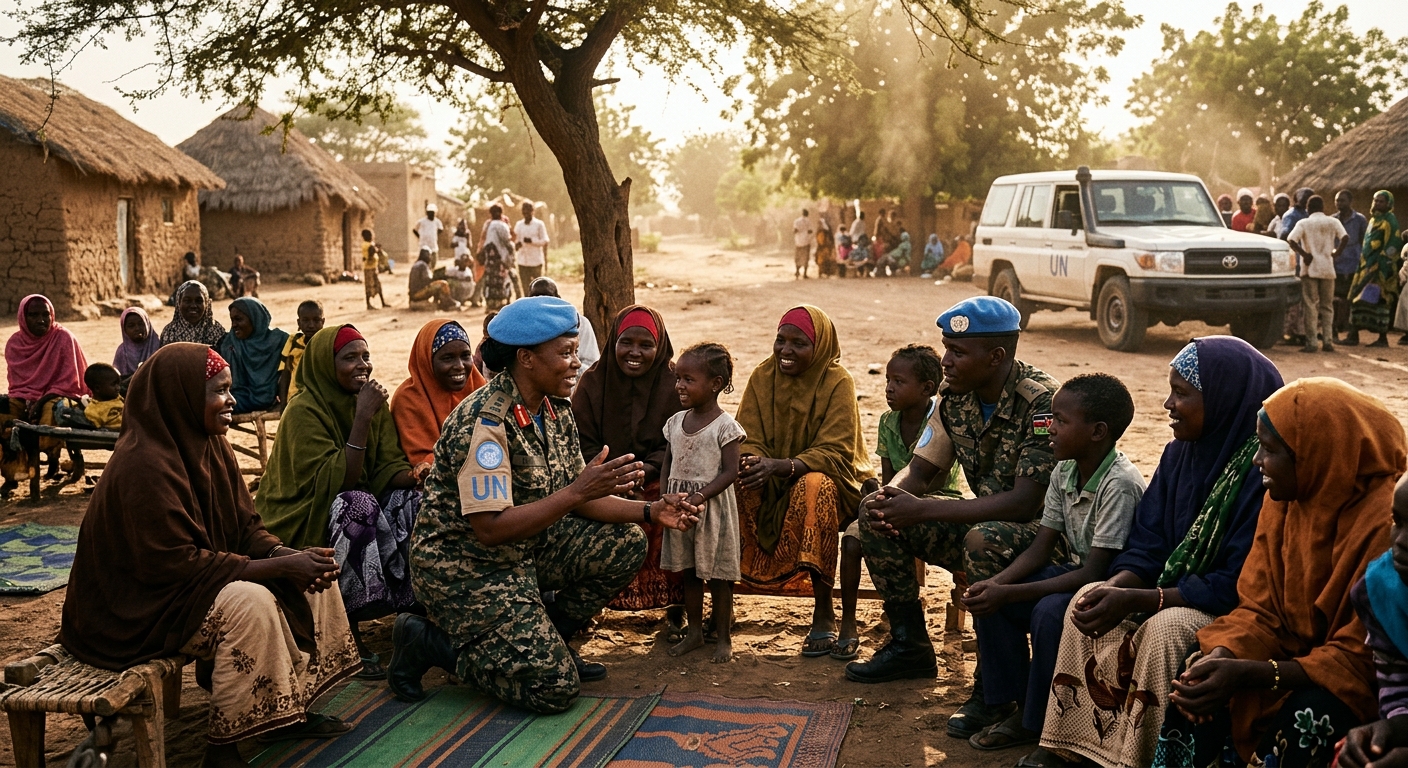
The cash crisis behind the summit
The rhetoric of "people-centred policing" collides hard with the ledger. The General Assembly approved a $5.38 billion peacekeeping budget for the 2025/26 fiscal year, down from $5.59 billion the year before, according to the United Nations. Approval is not the same as cash. In October 2025, Secretary-General António Guterres ordered all peacekeeping operations to slash expenditure by 15% and repatriate a quarter of uniformed personnel — a decision documented in a Congressional Research Service brief on
UN funding.
The primary driver is Washington. The U.S. peacekeeping assessment is 26.15%, but Congress has capped payments at 25% since 1994, and the Trump administration has held back the rest. As of October 9, 2025, U.S. unpaid assessments totalled $1.5 billion for the UN regular budget and $2.4 billion for peacekeeping, the same CRS brief notes. The Council on Foreign Relations reported that the FY2025 peacekeeping appropriation was further trimmed by nearly $158 million in a rescissions package, in analysis of the White House's UN posture.
The UN Controller's May 2026 briefing to member states was blunter still. Chandramouli Ramanathan told delegates that peacekeeping began the 2025/26 fiscal year with $2.1 billion in outstanding dues, and that by 30 April 2026, unpaid assessments stood at $3.5 billion, according to a UN briefing document. "No money, no implementation," he said. "There is not enough cash."
Lacroix put the operational cost in human terms: reduced patrols in high-risk areas, longer response times, and fewer opportunities to train the local police who are meant to take over when the UN leaves. Community policing — the model UNCOPS is pitching — is the first casualty of a cash squeeze, because it is labour-intensive, slow to show results, and does not photograph like an armoured vehicle.
The evidence base is less flattering than the summit lets on
Here is the awkward part the podium speeches will not confront. The academic evidence on community-oriented policing in fragile states is genuinely mixed — and pointing that out is not a rhetorical exercise, because donors are increasingly asking for it.
A landmark 2021 study published in Science, which ran coordinated randomised field experiments with police agencies in six Global South countries, found that community policing "does not improve citizen-police trust or cooperation and does not reduce crime." The authors, led by Graeme Blair and Fotini Christia, identified the killers: police leadership turnover, weak follow-through when citizens raise problems, and a lack of resources to actually respond. All three are conditions that describe UN missions almost by definition.
A separate randomised trial of the Liberian National Police's "Confidence Patrols" programme, published in the American Political Science Review, found the programme did increase knowledge of the law and reduce some categories of crime — notably domestic violence — but did not improve trust in the police or courts. That is a partial win, not a rout.
The more optimistic reading comes from research by Hannah Smidt on the UN mission in Côte d'Ivoire, published in the Journal of Conflict Resolution, which found that peacekeeper-facilitated intergroup dialogue meaningfully reduced communal violence across 107 departments between 2011 and 2016. The mechanism was not policing per se — it was structured communication between community leaders that peacekeepers were positioned to broker.
The synthesis is uncomfortable: community engagement works when it is embedded, sustained and adequately resourced. It fails when it is a poster on an office wall. A 25% cash cut across UN operations is precisely the wrong environment for the model UNCOPS is selling.
The Australian angle — and what it really costs
Into that vacuum steps Canberra. Australian Federal Police Commissioner Krissy Barrett used a July 8 address at UNCOPS to urge all 193 UN member states to adopt the AFP's Pacific policing model — a "leaner, more sustainable and more agile" training approach built around the AFP's decades of work with Pacific Island police services, according to reporting from Mirage News and Canberra's
Region. It is the first time an AFP commissioner has addressed the summit — a political ask dressed as a technical brief.
Read it in context. Australia currently ranks 86th among peacekeeping contributors, according to the Lowy Institute, a fact its own analysts describe as embarrassing given its middle-power self-image. Selling the AFP training model — rather than deploying more officers — is the cheapest way to convert a small footprint into diplomatic capital while the U.S. steps back and China builds its own peacekeeping profile through the top-10 contributor Egypt, Rwanda and Nepal.
The Stockholm International Peace Research Institute's May 2026 peace-operations report makes the geopolitics explicit: every single one of the top ten contributors of both military and police personnel to multilateral peace operations is now a Global South state. Uganda leads on troops; sub-Saharan African states occupy eight of the top ten police-contributing slots. That is not a temporary trend. It is the new baseline.
Who wins, who loses
The winner is the Global South police-contributing bloc. Rwanda, Senegal, Kenya, Egypt, Bangladesh, Nepal and Indonesia already provide the officers; the UNCOPS focus on community policing, gender-based violence work and electoral security elevates the professional prestige of their forces at exactly the moment Western militaries are pulling back. Their officers now dominate the field, and — as Barrett's Canberra pitch implicitly concedes — Western contributors are reduced to selling training packages.
The losers are the missions themselves. When Lacroix tells the Security Council that UN Police are "indispensable," as he did on February 5, 2026 per UN News, the subtext is that no one else will do this work — not the African Union, not regional coalitions, not private security contractors. And the evidence base says community policing needs sustained investment to work, precisely what is being cut.
The quieter loser is the human-rights framework. UNPOL's community-oriented mandate is meant to be the counterweight to the more securitised, AI-heavy policing model being marketed by Beijing and by Gulf capitals. A UNICRI concept note circulated ahead of the summit warned that public trust in law-enforcement AI depends on "transparency, oversight, and accountability" — a set of conditions increasingly hard to enforce as UN Police withdraw and better-resourced national partners fill the gap.
Diplomat View
The summit's rhetoric is right on the substance and wrong on the runway. People-centred policing is the correct model — the intergroup-dialogue evidence from Côte d'Ivoire and the partial gains from Liberia's Confidence Patrols both show that sustained community engagement can reduce specific categories of violence, particularly against women. But the model needs presence, patience and cash, and UNCOPS 2026 is being staged inside a 25% spending contraction with $3.5 billion in arrears on the books.
Our forecast: UN Police headcount will fall below 4,000 during the 2026/27 fiscal year unless U.S. arrears are partially released. The gap will be filled by AU and ad hoc regional operations that carry weaker human-rights guardrails, and by bilateral training partnerships — Australia in the Pacific, France in the Sahel, China in East Africa — that convert peacekeeping into a channel for national influence. The forecast is falsifiable: if the Fifth Committee negotiates a Peacekeeping Reserve Fund expansion beyond current cash-pooling arrangements in the September–December 2026 session, or if the U.S. Congress raises the 25% cap for FY2027, headcount stabilises. Neither looks likely today.
What to watch next
- September 2026: UN General Assembly 81st session — expect a member-state push, led by Egypt and Rwanda, to formalise UNPOL priorities in the New Agenda for Peace.
- 1 July 2027: Start of the 2026/27 peacekeeping fiscal year — the first period fully shaped by post-UNCOPS decisions and any U.S. arrears settlement.
- December 2026: UNIFIL mandate expiry in Lebanon, the test case for whether the Council can sustain any major mission over U.S. objections. A collapse there hardens the drawdown trajectory for every other mission on the books.
The Bottom Line
The bottom line: UNCOPS 2026 is not really a policing summit — it is a bid to protect the last piece of UN peacekeeping that still has bipartisan legitimacy, funded from a budget that is 25% short of what its own mandates require. If the money follows the rhetoric, community policing becomes the UN's cheapest conflict-prevention tool. If it does not, the model will be quietly rebranded and sold off to bilateral partners, and the Global South police forces already doing the work will find themselves negotiating directly with Canberra, Paris and Beijing — not New York.
Discover more
India
Rajnath Singh's Durga Squad for 2026 Polls
Rajnath Singh's Durga Squad promised women's safety in Bengal but has since disappeared from the agenda, revealing BJP's true priorities.
India
Congress Accuses Modi of Stalling Women's Law
Congress accuses Modi of stalling women's reservation law by linking it to delimitation, revealing a deeper electoral strategy.
US Politics
SNAP Food Assistance Faces Legal Challenges
In 2026, SNAP faces stricter eligibility rules and mounting legal challenges, threatening food assistance for the millions of Americans who rely on the program.

Conflict & Security
Drone Warfare Killing Aid Workers at Unprec
Over 1,000 humanitarian workers killed in three years as cheap armed drones collapse legal protections. Gaza, Sudan, Ukraine, and DRC see deliberate targeting of aid convoys and hospitals with zero prosecutions.