UN Rules Israel's Detention of Doctor Unlaw
UN declares Israel's detention of doctor unlawful under international law
Model Diplomat7 min readMiddle East
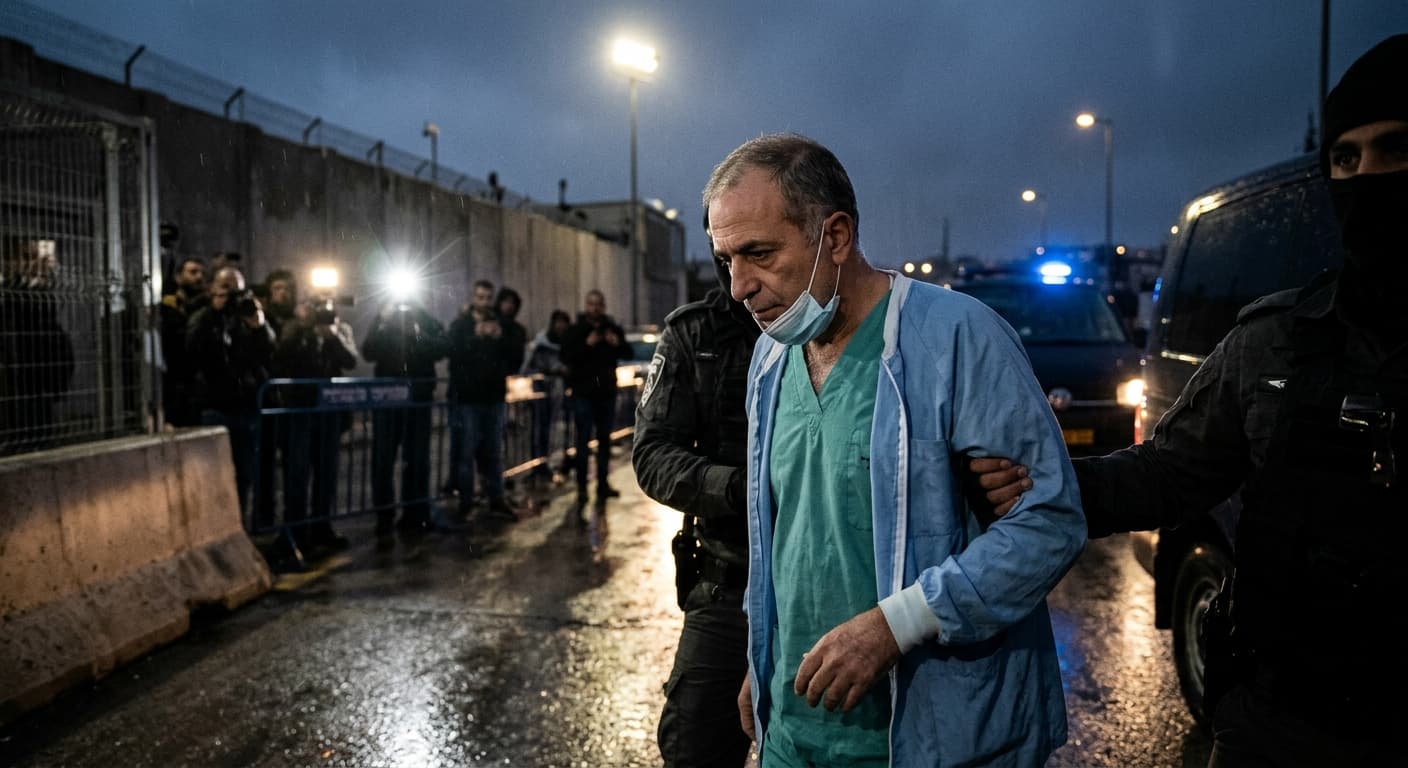
UN body rules Israel's jailing of Gaza doctor Abu Safiya arbitrary
The UN Working Group on Arbitrary Detention has declared Israel's 18-month detention of Kamal Adwan director Hussam Abu Safiya unlawful — as his lawyer alleges a beating at Rakefet.
On July 7, 2026, Israel's Supreme Court faces a deadline it did not set: a UN treaty body has already answered the question the justices are still deliberating. In Opinion No. 14/2026, adopted at its 105th session and published in June, the UN Working Group on Arbitrary Detention ruled that Israel's detention of paediatrician Hussam Idris Amer Abu Safiya is arbitrary under five separate categories of international law and must end immediately. The finding, arriving days after his lawyer said Abu Safiya was beaten unconscious by more than five guards at the Rakefet interrogation facility, converts an individual case into a formal international ruling that Israel's Unlawful Combatants Law — as applied to Gaza since October 2023 — violates the International Covenant on Civil and Political Rights. The question now is not whether the framework is lawful, but whether any tribunal that can enforce that finding still exists in the chain.
The UN ruling Israel refused to answer
The Working Group's opinion is a rare document. It is the product of a formal UN complaints procedure, adopted by five independent experts, and it establishes state responsibility under treaty law — not political condemnation. According to the text of the opinion, the Working Group transmitted the Abu Safiya case to the Government of Israel on July 30, 2025. "The Government has not replied to the communication," the panel notes. Israel is a party to the ICCPR; non-response does not extinguish the obligation.
The Working Group's factual predicate is drawn from the source submission and Israeli official figures. It records that over 1,402 Palestinian health professionals were killed and over 362 detained by Israeli forces between 7 October 2023 and 18 April 2025, and that as of April 2025, the Israel Prison Service held nearly 9,792 Palestinian "security" inmates — including 1,747 "unlawful combatants" — a figure that excludes those held in military facilities such as Sde Teiman. Over 3,500 Palestinians were held under the Unlawful Combatants Law in March 2025.
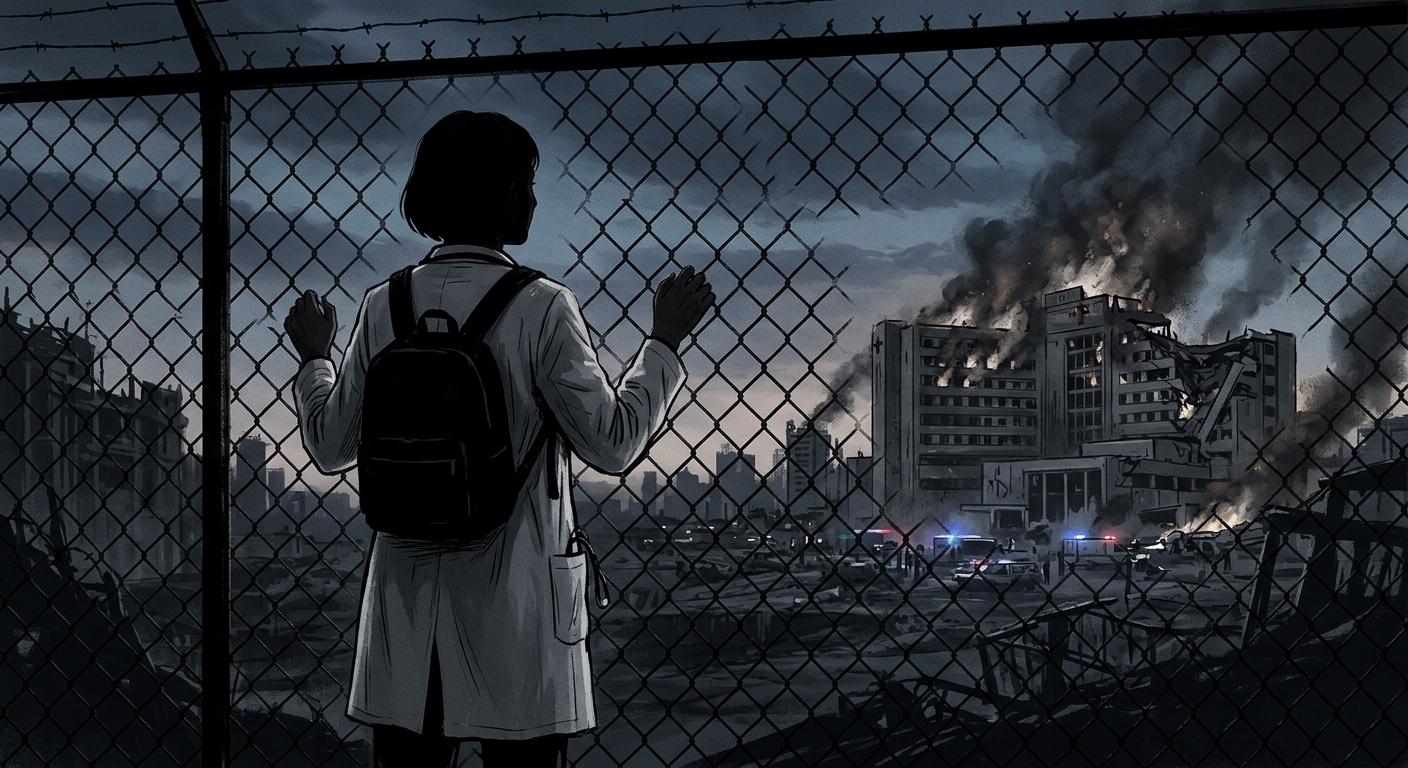
The panel's reconstruction of the December 27, 2024 raid on Kamal Adwan Hospital is granular. Bulldozers demolished parts of the building; Israeli forces ordered Abu Safiya to evacuate patients and reduce staff from 181 to 35; the hospital director was later stripped and left in the cold outside Al-Fakhoura School for roughly three hours before his transfer. On March 26, 2026, UN experts publicly demanded his immediate release, citing "reports of severe torture" and warning that his life was at risk.
The beating at Rakefet
The July 3, 2026 visit is the trigger for the current round of alarm. Abu Safiya's lawyer, Nasser Odeh, told the BBC that when he entered the interview room at Rakefet, he could not recognise his client. According to Odeh, Abu Safiya said that after appearing by video link at a Supreme Court hearing in June, more than five prison guards had attacked him with hands, batons and hammers, and that he had received no medical care. The
Independent reported the doctor's parting words to his lawyer: "This is the last time you'll see me." The Israel Prison Service told the BBC the allegations were "false and without factual basis."
Rakefet is not incidental. It is an underground wing of the Ramla (Nitzan) prison complex whose existence Palestinian lawyers described in detail to Al Jazeera in November 2025. Attorneys reported detainees with broken jaws, ribs and shoulders receiving no treatment; one client said guards "punish the prisoners by breaking their thumbs." Interview rooms measure one square metre and guards refuse to leave — a condition that, in the panel's language, forecloses effective legal counsel.
The pattern is systemic in the primary evidence. In a report covering October 7, 2023 through August 31, 2025, Physicians for Human Rights-Israel documented at least 94 Palestinian deaths in Israeli custody — 29 of them at Sde Teiman — compared with fewer than 30 deaths in the ten years prior. PHRI attributes the deaths to physical violence, medical neglect, or both, and to what it calls a "systematic" institutional cover-up. The Israeli military says it operates "in accordance with Israeli and international law."
The law that made this possible
The Incarceration of Unlawful Combatants Law, 5762-2002 — enacted after the Israeli Supreme Court invalidated an earlier "bargaining chip" doctrine — is the statutory hinge. It permits detention without charge for indefinitely renewable periods on the basis of classified evidence. As applied to Gaza residents since October 2023, its guarantees of prompt judicial review have been repeatedly suspended by emergency amendments. A Cambridge University Press article in the Israel Law Review, Living in a Legal Vacuum, argued years before this war that the statute — together with the 2003 Citizenship and Entry Law and the 2006 Criminal Procedure amendments — was designed to keep Gaza residents in a status of "foreign residents with no particular rights" while preserving Israeli control over their liberty.
That legal architecture has now produced a specific, adjudicated collision with the ICCPR. The Working Group found detention arbitrary under categories I (no legal basis), III (denial of fair trial), IV (prolonged administrative custody without meaningful review) and V (discrimination on national or ethnic origin) — the strongest combination the mechanism can issue. It further recommended that Israel provide reparations, in line with the panel's standard practice as described by OHCHR.
Israel's domestic courts have moved in the opposite direction. On June 16, 2026, the Supreme Court rejected Abu Safiya's appeal and upheld an extension keeping him in detention until at least October. Amnesty International, which has designated him a case of urgent action,
documented that he has been in solitary confinement since June 3 and continues to be denied adequate healthcare:
"On 16 June 2026 Israel's Supreme Court upheld the latest detention order against him, which would keep him in detention until at least October. Since 3 June, Dr. Abu Safiya has been held in solitary confinement while continuing to be denied access to adequate healthcare. Israeli authorities must immediately release him."
Israel says Abu Safiya is detained under suspicion of "involvement in terrorist activities" and for holding the rank of colonel in the health department of Gaza's Hamas-run interior ministry — an agency, the Israel Defense Forces told the BBC, that provided medical treatment to security personnel and their families. Israel has not filed charges. PHRI's April 2026 petition to the Supreme Court on behalf of Abu Safiya and 13 other Gaza doctors, reported by Al Jazeera, notes that none of the 14 has been indicted.
What this ruling actually does
Read narrowly, the WGAD opinion is non-binding. Read against the record, it is the first formal UN treaty-mechanism finding that Israel's post-October 2023 detention regime — not merely individual excesses within it — is unlawful under the ICCPR. That distinction matters for four reasons.
First, evidentiary. The opinion is a citable, government-neutral finding of fact that ICC prosecutors, national universal-jurisdiction courts, and civil claimants can adopt in future proceedings. Human Rights Watch had already argued in August 2024 that the detention of Gaza healthcare workers merited ICC investigation; the WGAD ruling provides a UN factual predicate for that argument.
Second, legislative. Any European government that trades with, or arms, Israel must now account for a UN determination that its counterpart is engaged in mass arbitrary detention. Under the EU-Israel Association Agreement's Article 2, human rights commitments are non-negotiable clauses. The Council has so far declined to trigger review, but the political cost of that inaction has risen.
Third, institutional. As Al Jazeera reported, Israel has stopped sharing detainee information with the International Committee of the Red Cross and barred access to detention sites. The ICRC's traditional role — the fallback that let Western governments describe Israeli detention as "monitored" — is functionally gone. The WGAD is what remains.
Fourth, the case now doubles as a survival test. The son of the detainee, Elyas Abu Safia, told Al Jazeera his father had been held for over 555 days. Haaretz reported that the Supreme Court has now ordered the government to explain his
life-threatening condition. If Abu Safiya dies in custody, the UN opinion will read, retrospectively, as an atrocity finding the state was warned about and refused to answer.
The Bottom Line
The Abu Safiya file is no longer a detention dispute; it is the first case in which a UN treaty mechanism has ruled Israel's Gaza-era Unlawful Combatants regime arbitrary under the ICCPR — issued in the same week his own lawyer says he was beaten beyond recognition at Rakefet. If he dies before the Israeli Supreme Court rules, that ruling becomes the reference point for every subsequent claim against the framework, from Brussels to The Hague. Whether Israel treats a non-binding UN opinion as embarrassment or as the last off-ramp will decide what the record shows.
What to watch
- July 7, 2026: Israel's Supreme Court deadline to respond to the PHRI petition seeking release of Abu Safiya and 13 other Gaza doctors held without charge.
- October 2026: Expiry of the current detention order upheld June 16 by the Supreme Court; the next mandatory review under the Unlawful Combatants Law.
- Six-month WGAD follow-up: OHCHR procedure requires both Israel and the complainant to report by early December 2026 on steps taken to implement Opinion 14/2026. Non-response would be reported to the UN Human Rights Council.
This story concerns Global Politics and international human-rights law.
Discover more
Global Politics
US-Iran Tensions Rise
Tensions escalate in the Strait of Hormuz as Iran and the US clash over maritime control, with a ceasefire hinging on a contested MoU paragraph.

US Politics
US Launches $166B Tariff Refund Portal
The US is launching a $166 billion tariff refund portal to aid importers hit by Trump-era tariffs, with major implications for trade and supply costs.

US Politics
Next Generation Republicans
A leaked survey shows 39% of Republicans under 30 do not identify as MAGA, revealing a split in the GOP's future leadership.

Conflict & Security
Drone Warfare Killing Aid Workers at Unprec
Over 1,000 humanitarian workers killed in three years as cheap armed drones collapse legal protections. Gaza, Sudan, Ukraine, and DRC see deliberate targeting of aid convoys and hospitals with zero prosecutions.