UN Declares Abu Safiya Detention Arbitrary
UN demands release of Gaza doctor near death after 555 days in custody.
Model Diplomat8 min readMiddle East
UN Declares Abu Safiya Detention Arbitrary as Doctor Nears Death
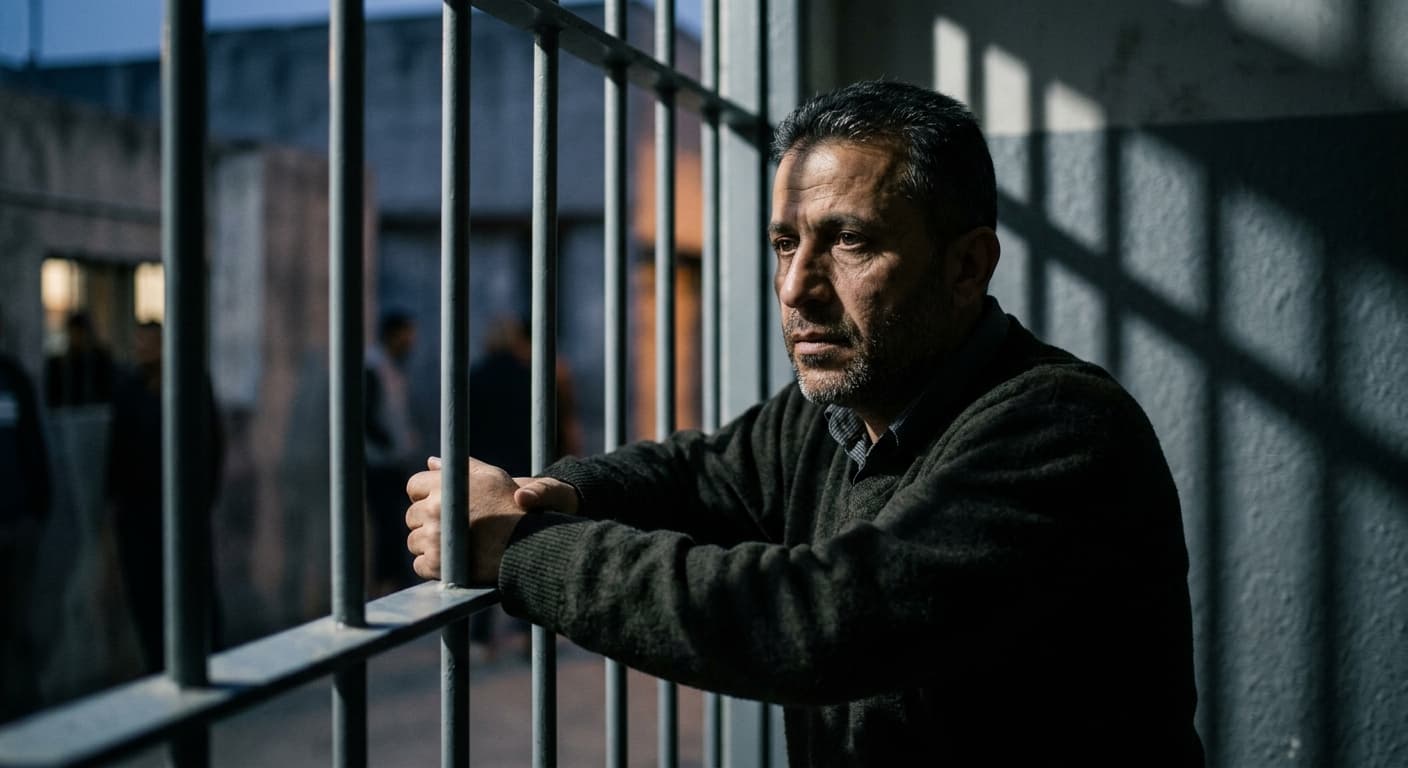
On 6 July 2026 the UN Working Group on Arbitrary Detention ordered Israel to free Gaza paediatrician Hussam Abu Safiya, held 555 days without charge and now reportedly close to death.
On 6 July 2026, the United Nations Working Group on Arbitrary Detention (WGAD) issued Opinion No. 14/2026 finding that Israel's detention of Dr Hussam Abu Safiya — director of Gaza's Kamal Adwan Hospital, held without charge since 27 December 2024 — is arbitrary under three separate categories of international law, and demanding his immediate release with reparations. The opinion lands four days after his lawyer found him unable to breathe at a maximum-security prison and days after Israel's Supreme Court extended his detention to at least October. Abu Safiya's case is no longer an outlier — it is the test case for whether Israel's "Unlawful Combatants Law," used against thousands of Gazans since October 2023, can survive contact with binding international human-rights findings.
What the UN actually ruled
The WGAD's advance-edited opinion, published on the OHCHR website, places Abu Safiya's detention inside categories I, III and V of the Working Group's five-part test — meaning it finds no legal basis for holding him, a total denial of fair-trial rights, and a discriminatory pattern targeting Palestinians as a group. In the operative paragraph, the panel writes:
"The appropriate remedy would be to release Mr. Abu Safiya immediately and accord him an enforceable right to compensation and other reparations, in accordance with international law."
The Working Group further stated that his case is one of many it has investigated and "may indicate a widespread or systematic practice of arbitrary detention" in Israel, Al Jazeera reported from the opinion.
The ruling matters because WGAD opinions are the closest thing international law has to a quasi-judicial finding on detention short of a treaty-body decision. States are asked to report back within six months on implementation, and the opinion feeds directly into the UN Human Rights Council's annual review of Israel's compliance record.
The doctor Israel would not release
Abu Safiya, 52, is a paediatrician and neonatologist from Jabalia refugee camp. He directed Kamal Adwan Hospital — the last functioning major medical facility in North Gaza — through more than a year of siege. In October 2024 an Israeli drone strike killed his 20-year-old son Ibrahim at the hospital gate; Abu Safiya led the funeral procession and returned to work. Two months later, on 27 December 2024, Israeli forces raided the hospital, demolished parts of the building, and ordered him to evacuate patients and cut medical staff from 181 to 35, according to the WGAD's factual findings. He refused to leave without his staff and was arrested at 1 a.m. on 28 December.
He has not been charged. Under Israel's Incarceration of Unlawful Combatants Law of 2002, amended after 7 October 2023, the state can detain any Gazan indefinitely on classified evidence, on renewable orders, without indictment. The UN Special Rapporteur on counter-terrorism first flagged the statute as incompatible with international law in November 2007; the current mandate-holder Ben Saul filed formal objections to the post-October 2023 amendments in OL ISR 12/2024, to which Israel has not replied.
The Israel Defense Forces told the BBC that Abu Safiya "was apprehended for suspected involvement in terrorist activities and for holding a rank in Hamas," alleging he served as a colonel in the health department of Gaza's Hamas-run interior ministry. His lawyers, Amnesty International, and Physicians for Human Rights Israel (PHRI) reject the characterisation, noting he has been in continuous clinical practice as a hospital administrator and paediatrician and that no evidence has been disclosed in court. The Israel Prison Service told the BBC that all detainees "are held in accordance with the law and receive medical care."
What his lawyer saw on 2 July
The urgency behind the UN action is not the legal argument, which has been on the table since a January 2025 special-procedures letter. It is the physical evidence.
Nasser Odeh, Abu Safiya's lawyer, visited him on 2 July 2026 at the Rakefet section of Nitzan prison, where he had been transferred into solitary confinement on 3 June. In a statement carried by Al Jazeera, Odeh said guards brought Abu Safiya in shackled hand and foot, surrounded by masked officers; his face was so bruised — around the eyes, ears and neck — that Odeh struggled to recognise him. The doctor lost consciousness several times during the visit and told his lawyer that more than five prison guards had assaulted him with batons and hammers after his 10 June Supreme Court appeal.
PHRI's director for prisoners and detainees, Naji Abbas, called Odeh's account "among the most shocking we have heard since the beginning of the war." Abu Safiya has lost more than a third of his body weight, according to Amnesty International, and has been denied treatment for chronic cardiac conditions and injuries sustained in a November 2024 drone strike on his hospital.
Israel's Supreme Court, in its 16 June ruling, upheld the latest detention order to at least October 2026 without addressing the torture allegations. Following separate petitions from PHRI on behalf of 14 detained Gaza doctors, the court has ordered the state to respond by a hearing this week, per the BBC.
The pattern the UN is describing
The WGAD chose its phrase carefully: "widespread or systematic." Under international criminal law, that formulation echoes the threshold for crimes against humanity, though the Working Group is not itself a criminal jurisdiction.
The numerical baseline is in the opinion's own footnotes. As of April 2025, the Israel Prison Service held roughly 9,792 Palestinian "security" inmates, of whom 1,747 were classified as "unlawful combatants"; a separate March 2025 count put the UCL-detained population above 3,500, once those in military facilities are included. The Palestinian Ministry of Health, cited by Al Jazeera, reported at least 1,722 healthcare workers killed in Israeli strikes since October 2023. Healthcare Workers Watch documented 431 medic detentions in the same period; 95 remained in custody as of 20 October 2025, at least five have died in Israeli detention with bodies not returned, and five more remain missing.
The UN Special Rapporteur on the occupied Palestinian territory, Francesca Albanese, went further in her March 2026 report to the Human Rights Council, telling the OHCHR that torture had become "state doctrine" in Israel and that the prison system had "degenerated into a laboratory of calculated cruelty." She cited the 2025 finding of the UN Committee against Torture identifying "a de facto State policy of organized and widespread torture" that had "gravely intensified since 7 October 2023."
Why the ceasefire did not save him
The most consequential political fact around Abu Safiya's case is that the October 2025 Trump-brokered ceasefire — under which nearly 2,000 Palestinians were released in exchange for 20 living Israeli captives — deliberately excluded him. Israeli media initially reported his name had been added to a supplementary list; he was not freed.
Two readings are on the table. The first, offered by PHRI and Albanese, is that Israel is holding a small cadre of high-profile detainees — hospital directors, senior medics, and a handful of political figures — as long-term bargaining assets outside the standard exchange framework. The second, favoured by Israeli officials speaking to Haaretz and CNN, is that the "unlawful combatant" designation carries its own security-cabinet approval process that overrides ceasefire lists. Both readings converge on the same operational point: the ceasefire's release architecture has no mechanism to force release of individual UCL detainees, and no third-party monitor. That gap is now the arena where the UN opinion will be tested.
The Council on American-Islamic Relations has publicly asked US President Donald Trump to press Israel on Abu Safiya's release. The State Department has not, to date, taken a public position on the case, though the American Academy of Pediatrics wrote to then-Secretary Antony Blinken in February 2025 requesting intervention.
Whose leverage matters
The UN Working Group's opinion binds no one on its own. What it does is shift the political burden: any state with an active dialogue with Israel now has a documented, quasi-judicial finding of arbitrary detention on file, complete with a demand for reparations. That is the language European foreign ministries use when they choose to escalate.
The parties with actual leverage are narrow. The United States, as the sole guarantor of the October ceasefire, holds unilateral escalation options — most obviously the leverage of Phase Two implementation. The United Kingdom and Germany, both under domestic pressure over Gaza detentions, control arms-export licensing decisions currently under judicial review. Egypt and Qatar retain ceasefire-mediation channels. None has yet named Abu Safiya specifically in public statements after 6 July.
The counter-pressure runs through Israel's National Security Minister Itamar Ben-Gvir, who oversees the Israel Prison Service and whom Albanese's March report named for possible international arrest warrants. Ben-Gvir has publicly endorsed harsher conditions for Palestinian detainees since taking office and would treat any release as a political concession.
What to watch
- The Israeli Supreme Court's response to the PHRI petition on Abu Safiya and 13 other Gaza doctors: the government was ordered to respond by Tuesday, 7 July 2026, per the BBC. The court's next scheduling order will indicate whether the WGAD opinion is being read into the record.
- The six-month follow-up window on WGAD Opinion 14/2026, which expires in early January 2027. Israel's non-response would trigger reporting to the Human Rights Council's 61st session.
- The next scheduled Gaza ceasefire review meeting in Sharm el-Sheikh: whether Abu Safiya's name appears on any supplementary release list will be the clearest signal of whether US mediators are willing to spend political capital on individual UCL detainees.
The Bottom Line
The bottom line: the UN Working Group has now put a legal instrument on the table that turns Abu Safiya's case into a documented test of Israel's Unlawful Combatants Law — and, by extension, of whether the October 2025 ceasefire framework can reach the roughly 1,747 Palestinians held under that statute. If he dies in custody before the six-month follow-up window closes, the UN's finding of a "widespread or systematic practice" will be the record on which future accountability proceedings are built. If he is released, it will be because a state with leverage decided to spend it — and no state has yet volunteered.
Discover more
Global Politics
US-Iran Tensions Rise
Tensions escalate in the Strait of Hormuz as Iran and the US clash over maritime control, with a ceasefire hinging on a contested MoU paragraph.

US Politics
US Launches $166B Tariff Refund Portal
The US is launching a $166 billion tariff refund portal to aid importers hit by Trump-era tariffs, with major implications for trade and supply costs.
US Politics
Virginia's Redistricting Referendum
Virginia's redistricting referendum is drawing a flood of dark money, shaping future elections and the fight for congressional control amid party stakes.

Conflict & Security
Drone Warfare Killing Aid Workers at Unprec
Over 1,000 humanitarian workers killed in three years as cheap armed drones collapse legal protections. Gaza, Sudan, Ukraine, and DRC see deliberate targeting of aid convoys and hospitals with zero prosecutions.