Ukraine's Patriot Request at NATO Summit
Zelensky seeks Patriot interceptors amid missile crisis
Model Diplomat7 min readEurope
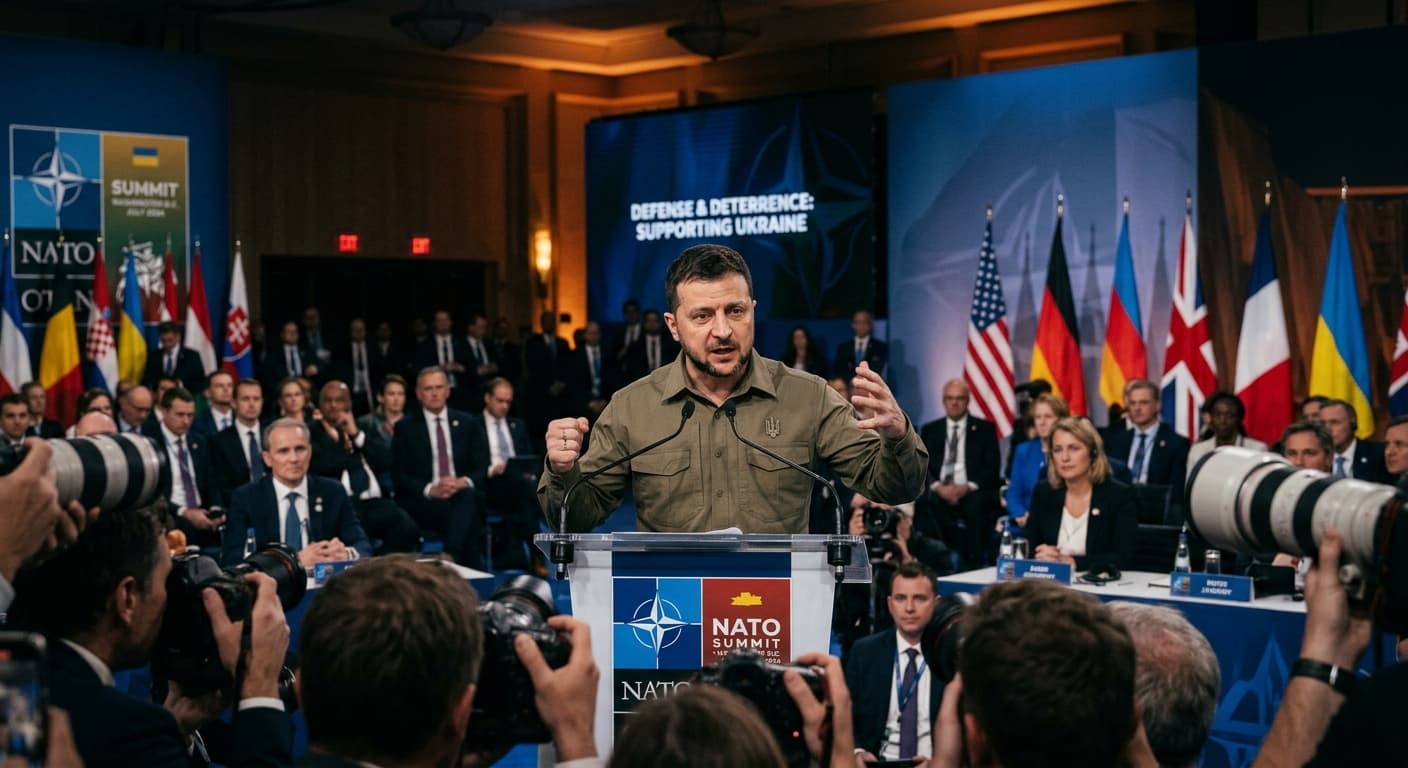
Ukraine's Patriot arithmetic collides with NATO in Ankara
Zelensky arrives at NATO's Ankara summit demanding Patriot interceptors after Russia's July 6 strikes on Kyiv — but the global math no longer works.
Volodymyr Zelensky lands in Ankara on July 7, 2026, chasing a number that does not exist. He wants Patriot interceptors — enough to blunt the Russian ballistic barrage that killed 20 Ukrainians overnight and left 23 incoming missiles unintercepted. But global production of the PAC-3 MSE, the only Western munition proven against Russian ballistics, ran to roughly 620 rounds in 2025, according to the Council on Foreign Relations. Russia alone launched around 521 ballistic missiles at Ukraine in the first half of 2026. The Ankara summit's real story is not whether NATO wants to save Kyiv's skies — it is that even a united alliance cannot manufacture its way out of the gap before the coming winter.
That reframes what Zelensky is actually asking for. Publicly, he wants "strong decisions" from the 32 leaders gathered at President Erdoğan's Presidential Complex. In practice, he is asking European stockpile holders — Germany, Spain, Greece, the Netherlands — to hand over batteries that are, in his words, "of no use to anyone in storage," and pressing Donald Trump to grant Ukraine a licence to build Patriots on Ukrainian soil. Both requests are downstream of the same industrial reality: American factories cannot spin up in time.
The strikes that set the agenda
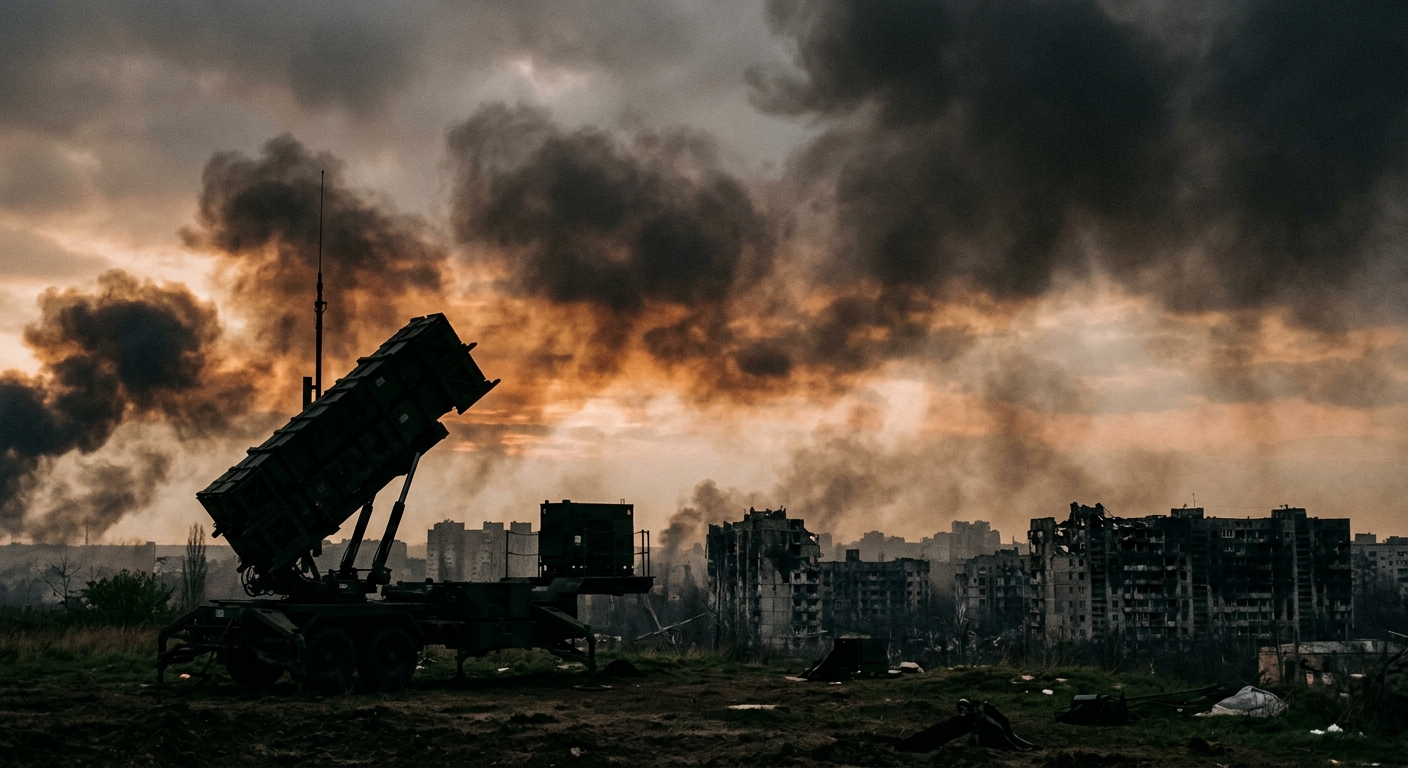
The lead-in to Ankara has been the deadliest fortnight for Kyiv since the invasion began. On the night of July 2, Russia fired 74 missiles and 496 drones at the capital, killing at least 30 and levelling a nine-storey block in the Darnitskyi district, BBC News reported. Kyiv's metro sheltered 52,500 people, including 4,500 children — the highest count in years.
Four nights later, Russia struck again with 68 missiles and 351 drones. Twenty were killed. Crucially, the Ukrainian Air Force said none of the 23 ballistic missiles fired at the capital were shot down, blaming a "serious shortage" of interceptors. Zelensky's line, in a Monday post on X, was blunt: it is "simply absurd that, in the modern world, production has still not been scaled up to the level actually required to protect people from ballistic terror." He warned Moscow would keep striking residential buildings as long as Patriot missiles "remain in our allies' stockpiles."
Zelensky himself signalled the timing was not coincidence. "This is typical of Putin: right after America's Independence Day and before the NATO summit in Ankara," he said on July 5, per Al Jazeera. Ballistic salvos on Ukrainian apartment blocks have become a diplomatic instrument — timed for maximum leverage on Western capitals.
NATO's answer, and what it does not solve
On the eve of the summit, NATO Secretary General Mark Rutte previewed a package built around three lines: 5% of GDP defence spending, industrial mobilisation, and Ukraine support. "Right now, Ukraine is changing the dynamics on the battlefield… But they need our continued support, especially when it comes to air defence," Rutte told reporters at Ankara's Presidential Complex on July 6.
"Russia continues drone and missile attacks on Ukrainian cities, with another horrific attack just last night… all Allies need to pull their weight, so that our support to Ukraine continues to flow." — Mark Rutte,
NATO pre-summit press conference, July 6, 2026
The draft Ankara declaration envisions roughly $80 billion (€70 billion) in military support for Ukraine across 2026–2027, financed largely by EU loans backed by frozen Russian sovereign assets and bilateral allied contributions, according to a Center for Strategic and International Studies (CSIS) preview. NATO's Support Procurement Agency (NSPA) is expected to announce a managed buy of Patriot interceptors. The UK has already committed 150,000 drones and more than 350 air defence missiles and radar systems for delivery to Ukraine by end-2026.
Impressive on paper. Insufficient in the sky.
The math nobody wants on the summit communiqué
Lockheed Martin currently produces roughly 600 PAC-3 MSE interceptors per year, with a public plan to scale to 2,000 by around 2030, according to CSIS analysis. Half of current output goes to the US Army; the rest is split across 17 allied and partner militaries queuing for deliveries. The US Army's own next major tranche — 3,203 missiles in the FY2027 budget — is not projected to begin arriving until May 2029.
Meanwhile, Russia can produce roughly three ballistic missiles a day, or around 1,000 per year, Hudson Institute analyst Luke Coffey estimates from Odesa reporting. The US separately expended more than 1,200 Patriot interceptors defending assets during last summer's 12-Day War with Iran, according to
AEI's Mackenzie Eaglen — a single fortnight that consumed roughly twice Ukraine's cumulative wartime allocation.
Charles Kupchan, speaking at a CFR briefing previewing Ankara, put the implication plainly: "I don't think that time is on Ukraine's side. I don't think that the interceptors are there… Even though Ukrainians are pretty good at shooting down drones and cruise missiles, it's really only the Patriots that can stop ballistic missiles." His conclusion — controversial in Kyiv but increasingly audible in Washington — is that scarcity itself is an argument for ending the war faster.
Who benefits from the shortage
The interceptor bottleneck is quietly reshaping European defence politics in three ways.
First, it hands leverage to the European stockpile holders — Germany, the Netherlands, Greece, Spain, Poland — over both Kyiv and Washington. Under the Prioritised Ukraine Requirements List (PURL), a NATO mechanism launched in 2025, allies buy US kit and route it through the NATO Command in Wiesbaden; NATO says PURL has supplied around 75% of all Patriot missiles reaching Ukraine and 90% of missiles for its other air-defence systems since mid-2025. Rutte is now openly urging allies to "dig deep into their stockpiles" — meaning transfer batteries they own, not just money.
Second, it accelerates a shift toward European-made air defence. CSIS analysts argue for an "ASAP for Air Defense" programme that would push Franco-Italian Aster 30 output from roughly 220–250 per year to more than 500 by 2028, and expand German IRIS-T beyond current rates. Ankara's Defence Industry Forum, hosted July 8, is expected to announce "tens of billions" in new contracts, per Rutte. MBDA, Diehl and Kongsberg are the beneficiaries; Raytheon and Lockheed still dominate the top tier, but the trajectory is unmistakable.
Third — and this is the non-obvious angle — the shortage is doing what three years of NATO summits could not: forcing coproduction inside Ukraine. Zelensky's specific ask of Trump, first floated in a letter to the White House and Congress and now central to his Ankara message, is a US licence to manufacture PAC-3 interceptors on Ukrainian soil. Only Japan currently holds such a licence. Granting one to Kyiv would be the deepest single US industrial commitment to Ukraine since the invasion — and, notably, one that saves American factory capacity for the Indo-Pacific.
The Trump variable
The summit's other spine is the transatlantic rift. Trump is attending, but the Council on Foreign Relations' Liana Fix describes Ankara as "an accelerating U.S. decoupling from NATO," pointing to reports of US plans to halve strategic bomber assignments to Europe, cut F-16 and F-15 allocations, and cancel a planned long-range fires deployment. Secretary of State Marco Rubio, quoted by CFR, has called Ankara "probably the most important meeting in NATO's history" because "some things here that need to be cleared up and fixed."
Zelensky's task is to keep Trump inside the tent long enough to secure two things: continued PURL flow, and the Patriot licence. Trump told reporters on July 6 that a resolution to the Ukraine war is "getting closer than people realise," and the Kremlin confirmed he and Vladimir Putin agreed in a weekend call to speak again "in the near future," according to Al Jazeera. That is the geometry Zelensky must navigate: convince Trump the Russian barrage is "a show of weakness, not strength," in his phrase to the BBC, so that Washington pressures Moscow rather than Kyiv into a deal.
Ursula von der Leyen, previewing the summit for Interfax-Ukraine, framed the air defence question as "urgent" — the European Commission's diplomatic register for "we cannot solve this alone."
What to watch
- July 8, Ankara Defence Industry Forum: expected NSPA-managed Patriot procurement announcement and European air-defence contracts. Watch whether any allied government publicly commits a Patriot battery from its own inventory rather than a financial pledge.
- Zelensky–Trump bilateral, July 7–8: whether the US grants — or credibly signals — a Patriot production licence for Ukraine. That is the single deliverable that changes the interceptor curve after 2028.
- Trump–Putin call, "near future": any US move to condition Patriot flow on Ukrainian negotiating flexibility. Watch for public daylight between Washington and Berlin on this point.
- Ukrainian winter, October–March 2026–27: energy infrastructure targeting will resume. If interceptor stocks are not rebuilt by autumn, expect Ukrainian long-range drone strikes on Russian refineries to escalate as a substitute deterrent.
The Bottom Line
The Ankara summit is not really a debate about NATO's will to defend Ukraine — that question was settled by Rutte, Merz and Macron weeks ago. It is a debate about whether the Western defence industrial base can produce Patriot interceptors faster than Russia produces Iskanders, and the honest answer, until at least 2028, is no. Zelensky's real ask in Ankara is therefore not for missiles but for time: European batteries transferred from storage now, a US licence to build PAC-3s in Ukraine later, and enough diplomatic pressure on Moscow to bridge the winter in between. Everything else at this summit is choreography.
Discover more

US Politics
SNAP Food Assistance Faces Legal Challenges
In 2026, SNAP faces stricter eligibility rules and mounting legal challenges, threatening food assistance for the millions of Americans who rely on the program.
India
Congress Accuses Modi of Stalling Women's Law
Congress accuses Modi of stalling women's reservation law by linking it to delimitation, revealing a deeper electoral strategy.

India
India-South Korea $50B Trade Expansion Plan
India and South Korea target $50 billion in bilateral trade by 2030, focusing on industrial cooperation and strategic alignment amid US pressures.

Conflict & Security
Drone Warfare Killing Aid Workers at Unprec
Over 1,000 humanitarian workers killed in three years as cheap armed drones collapse legal protections. Gaza, Sudan, Ukraine, and DRC see deliberate targeting of aid convoys and hospitals with zero prosecutions.