Ukraine's local aid paradox: faster, cheaper,
Local NGOs deliver aid 15.5% more efficiently, yet get <1% of direct funding
Model Diplomat9 min readEurope
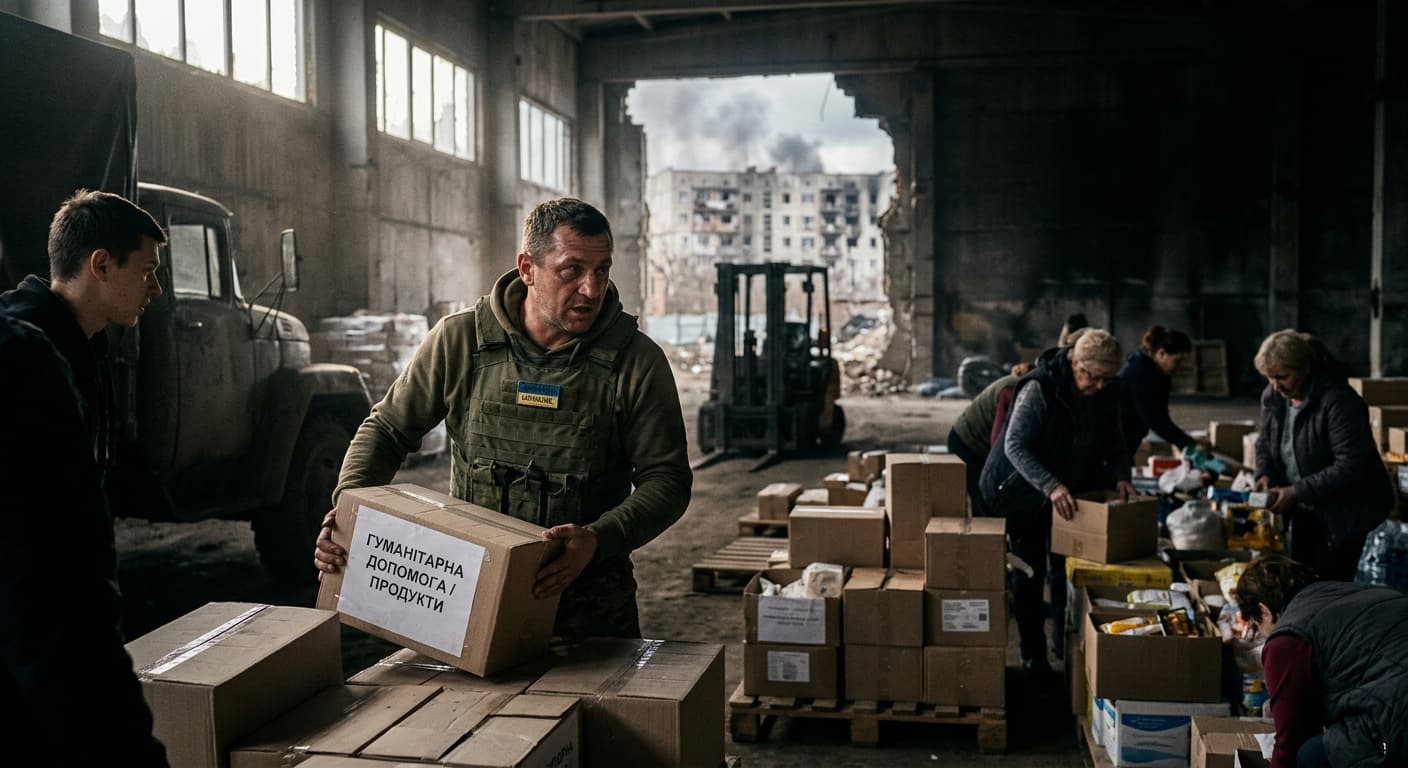
Ukraine's local aid paradox: faster, cheaper, and still unfunded
[Ukraine proves local NGOs deliver humanitarian aid 15.5% more cost-efficiently than international actors, yet receive less than 1% of direct funding — and the 2025 donor collapse may force the shift Grand Bargain commitments never did.]
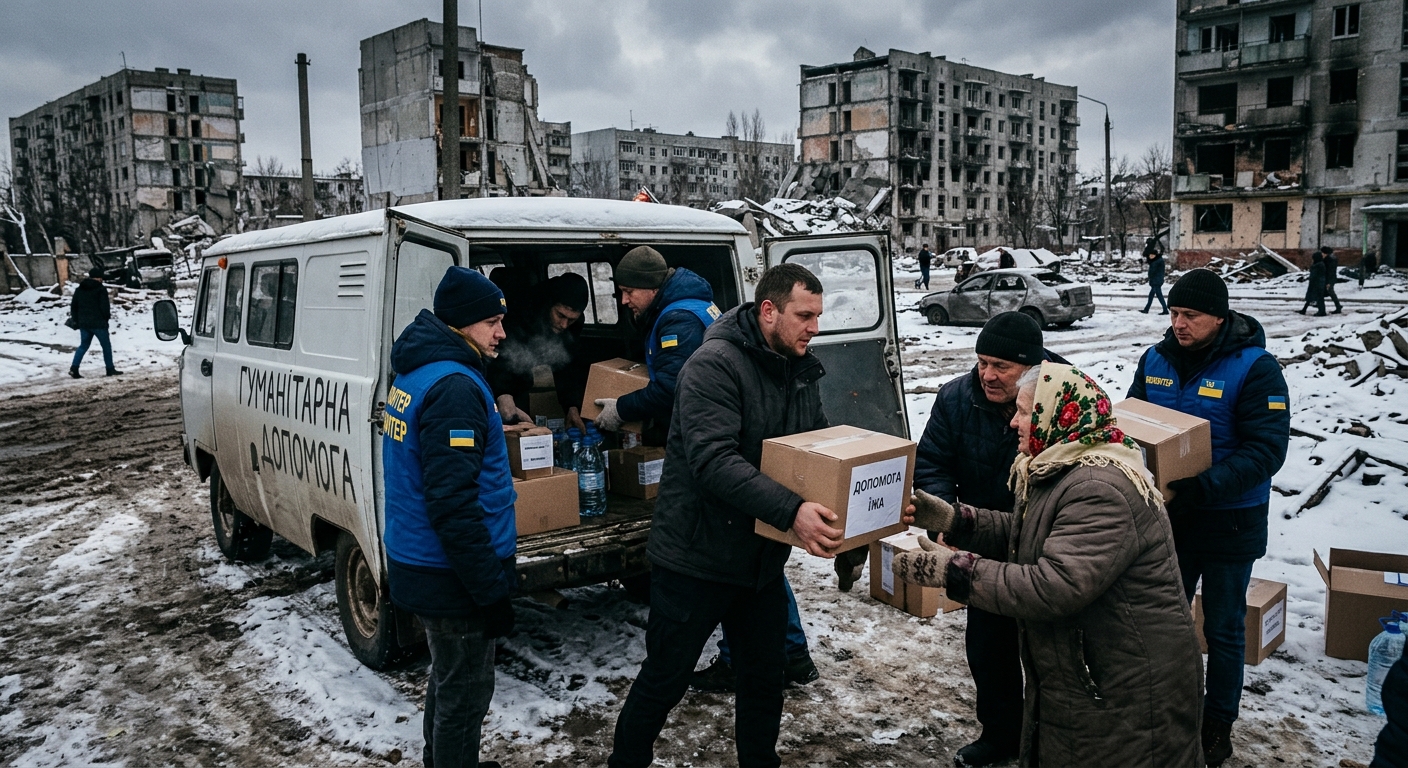
Ukraine's humanitarian response has produced the most quantified case for localizing aid in the history of the humanitarian system, yet the funding architecture has moved in the opposite direction: less than 1% of nearly $10 billion in tracked humanitarian assistance reached Ukrainian local and national NGOs directly between February 2022 and October 2024, even as those same actors implemented roughly 55% of UN program activities and demonstrated a 15.5% cost-efficiency advantage over international intermediaries. The gap between evidence and practice, now measurable to the dollar, exposes a system that has spent a decade perfecting the language of localization while refusing its economics — and the 2025 collapse of donor funding may be the catalyst that finally forces the structural shift that Grand Bargain commitments never could.
The numbers that make denial impossible
The core dataset comes from Ukraine's Country-Based Pooled Fund, analyzed in the "Passing the Buck" study using 2023 budget data covering approximately 30% of total humanitarian funding across UN agencies, INGOs, and local NGOs. Local intermediaries delivered programming 15.5% more cost-efficiently than international intermediaries when overhead and staff costs were normalized to comparable activities. Refugees International The global version of the same study estimated a 32% efficiency advantage, suggesting Ukraine's figure is conservative.
If just 25% of humanitarian funding — the Grand Bargain target — were redeployed through local intermediaries, the Ukraine analysis projected approximately $256 million in cost efficiencies over two years. ReliefWeb That projection is not speculative: the Ukraine Humanitarian Fund already routes about 20% of its allocations directly to local actors, yielding an estimated $5.5 million in annual cost efficiencies from a single pooled fund.
The Annual Ukraine Localization Survey 2024, co-produced by EAST SOS and Refugees International across 32 donors, INGOs, and UN agencies, put the aggregate picture in stark terms. Of $9.95 billion in tracked humanitarian aid from February 2022 through October 2024, only $80.1 million — 0.8% — went directly to local and national NGOs. EAST SOS Cash and voucher assistance, the largest single intervention modality at $2.1 billion, was managed end-to-end by local actors just 3.4% of the time.
Refugees International
UN agencies themselves estimate that local and national NGOs implement approximately 55% of program activities on the ground. Yet average 2023 UN budgets allocated only about 35% of funds to those same local partners — and much of that in in-kind support rather than cash. ReliefWeb INGOs reported a similar gap: local partners performed about 50% of work but received roughly 33% of funds.
The ReliefWeb report that anchors this analysis frames the disconnect in structural terms: globally, less than 4% of humanitarian funding reaches local actors directly, and in 2024 the direct figure for Ukraine stood at roughly 1% with 35% indirect. ReliefWeb The report, drawing on World Vision's internal assessment conducted between 2023 and 2024, found that partnerships improved technical capacity and organizational confidence but revealed where transactional relationships needed to evolve into co-creation.
The Grand Bargain's decade of failure
The Grand Bargain, launched at the 2016 World Humanitarian Summit, committed signatories to channel at least 25% of humanitarian funding to local and national responders "as directly as possible" — originally by 2020, later extended to 2026. United Nations The target has never been met through independently verifiable data. In 2023, Grand Bargain signatories provided just 4.4% of total funding to local and national actors, and only 0.6% directly.
European Commission When self-reported aggregates from intermediaries were included — figures that cannot be independently verified — the number rose to 25%, a discrepancy that itself illustrates the accountability problem.
The European Commission's own legal constraints exemplify why the gap persists. Under Council Regulation (EC) No 1257/96, DG ECHO cannot fund local actors directly because eligible NGOs must be headquartered in an EU member state. European Commission The Commission's commitment to localization is therefore channeled "as directly as possible" — meaning through INGO intermediaries whose overhead structures are the very cost the efficiency data calls into question.
Ukraine makes this failure concrete in a way no previous crisis has, because the data granularity is unprecedented. The Peace Research Institute Oslo's knowledge review found that local actors in Ukraine consistently accessed communities more quickly, understood local needs better, and sustained operations longer than some international actors who rotated staff or withdrew from frontline areas. PRIO The Christian Aid report "Letting Go of Control" documented how grassroots organizations like The Youth of Zmiiv used flexible small grants to deliver energy-efficient stoves and winterization support to communities that international actors had not yet reached.
Christian Aid
The historical parallel is uncomfortable. After the 2004 Indian Ocean tsunami, the same critique was leveled: international actors marginalized local responders, overhead consumed resources, and communities with existing networks were bypassed. Two decades and multiple reform cycles later, the Grand Bargain's own verified data shows 0.6% direct funding globally. Ukraine has not changed the trajectory — it has made it measurable.
The 2025 donor collapse as accidental catalyst
The funding environment has shifted dramatically. The United States slashed aid to Ukraine by 74% in 2025, and USAID's Office of Transition Initiatives — an agile program that worked through embedded Ukrainian civil society partners — was eliminated entirely. Council on Foreign Relations Germany cut assistance by 62%. A global directive from UN headquarters forced aid providers to prioritize relief, rendering 1.2 million fewer people eligible for assistance in Ukraine. Small national NGOs were disproportionately affected by program cuts, leaving capacity gaps on the front lines.
The CFR analysis frames the consequence starkly: small national NGOs — "often the most agile and efficient responders" — were the first to lose funding, while the overhead-heavy international architecture that the efficiency data questions absorbed a disproportionate share of what remained. CFR
The Kyiv Independent, reporting on the localization survey findings, noted that total aid to Ukraine between 2022 and 2024 approached $11 billion, with less than 1% reaching Ukrainian NGOs directly. Kyiv Independent The article cited EAST SOS and argued that the system needed reform before cuts deepened — a warning that materialized within months.
The paradox is that the donor collapse may accelerate the shift that commitments could not. With the global humanitarian system seeking $33 billion to support 135 million people in 2026 while focusing on 87 million facing the most acute needs, cost-efficiency is no longer a preference but a survival metric. UN OCHA The UN80 Initiative's New Humanitarian Compact, endorsed by OCHA, WFP, UNICEF, UNHCR, and IOM, explicitly aims to deliver "faster, leaner, and more accountable support" — language that, if operationalized, points directly at the cost structures the Ukraine data has quantified.
The legislative infrastructure outlasting the humanitarian phase
Ukraine's government has been building a parallel legal framework that positions civil society not as a subcontractor but as a delivery partner in social services — a shift that could outlast the war and the humanitarian phase entirely.
Parliament amended the Law on Social Services in April 2022 to empower local self-government bodies to provide emergency social services under martial law. Chatham House In April 2023, the Ministry of Social Policy issued guidance for local authorities to form working groups — including civil society representatives and affected populations — to assess community-level service needs. By January 2026, a new government procedure simplified local-level social service provision, expanding opportunities for CSOs to contract with local authorities.
Chatham House
The institutional architecture is taking physical form. By 2026, the Ministry of Social Policy had established 386 Centres for Resilience providing psychosocial support and family counselling, with mobile rehabilitation modules reaching remote areas. Caritas operated 40 local crisis centres assisting 90,000 people in 2025 and joined the government initiative to open Centres of Resilience, operating 72 of its own. Chatham House These function as one-stop shops for veterans, internally displaced persons, and families in crisis.
The Chatham House survey of Ukrainian civil society organizations found that 35% of regional CSOs reported providing basic humanitarian assistance in emergencies, compared to just 14% of national-level organizations — evidence that proximity to affected communities correlates with the capacity to respond. Chatham House The report's central recommendation was explicit: prioritize "direct localization" so that local CSOs are not just implementers for international NGOs but lead the humanitarian and recovery response, bypassing the overhead costs of large international intermediaries.
The World Bank, reporting from the Civil Society Policy Forum during its Spring Meetings, framed the issue in delivery terms: "Recovery is not delivered by funding alone. It is delivered by people." World Bank The Bank's analysis identified local governments as the missing link — actors responsible for implementing recovery but often lacking sufficient capacity in project management, procurement, and coordination.
The recovery conference pivot
The June 2026 Ukraine Recovery Conference in Gdansk marked a structural shift. What began in Lugano in 2022 as a postwar recovery planning exercise has become a wartime resilience platform, embedding Ukraine deeper into European security architecture. CSIS The conference announced a €478 million package under the Ukraine Investment Fund in grants and guarantees for municipal infrastructure and essential services — money flowing to local government, not international intermediaries.
The CSIS analysis noted that Ukrainian municipalities have huge needs but not always the strong capacity to implement projects, underscoring the coordination gap between central authorities, international partners, and Ukrainian regions. CSIS The 2027 conference in Estonia will be the first test of whether the Gdansk commitments translated into bankable local projects — or another layer of announcements without delivery.
The Ukraine 2026 Humanitarian Needs and Response Plan requests $2.304 billion and was 56.5% funded as of mid-2026, according to the UN Financial Tracking Service. UN OCHA Health was over-funded relative to requirements, but multi-purpose cash sat at 28.8% coverage and shelter at 34% — sectors where local actors are most active but least funded.
The decisive actor and the structural question
The ReliefWeb report that opened this analysis concluded with a formulation that frames the entire debate: funding conditions set the boundaries, and in this context, donor choices are decisive. ReliefWeb The decisive actor is not the UN, not the INGO, and not the Ukrainian government. It is the donor — specifically, the donor's willingness to fund institutions rather than activities, to accept that institutional capacity-building may not produce immediate visibility, and to share decision-making authority even when it challenges established systems of control.
The report's final recommendation was that success must be measured not only by outputs delivered, but by the strength, independence, and resilience of local organizations. ReliefWeb That metric has never been the one the humanitarian system has been built to report — and Ukraine has now made the cost of that omission quantifiable.
Ukraine has taught the humanitarian system that local solutions produce faster impact. The system has yet to learn what to do with that knowledge.
The bottom line
The bottom line: Ukraine has produced the most precisely quantified evidence in humanitarian history that local actors deliver aid cheaper, faster, and at greater scale than international intermediaries — and the funding architecture has responded by giving them less than 1% of direct funding. The 2025 donor collapse may be the accidental catalyst that finally forces the structural shift a decade of Grand Bargain commitments never achieved, because cost-efficiency has shifted from a preference to a survival metric.
What to watch
- 2027 Ukraine Recovery Conference (Estonia): First test of whether Gdansk's €478M municipal package translated into bankable local projects or remained at the announcement stage.
- Grand Bargain 2026 deadline: OCHA's localization marker data, expected late 2026, will show whether the 25% direct-funding target was met — or whether the gap between self-reported and independently verified figures widened further.
- Ukraine 2026 HRP funding trajectory: At 56.5% funded mid-year, the plan's year-end coverage will determine whether cash and shelter clusters — where local actors are most active — close their gaps or enter 2027 with structural deficits.
Discover more

US Politics
US Military Funding Request for Iran Looms
The White House Budget Director signals a formal funding request for military operations against Iran, foreshadowing rising tensions and congressional clashes.
US Politics
Virginia's Redistricting Referendum
Virginia's redistricting referendum is drawing a flood of dark money, shaping future elections and the fight for congressional control amid party stakes.
US Politics
Washington's Scrutiny of Iran War Prediction
The Iran war prediction market scandal exposes political ties and regulatory challenges in Washington, as insider trading concerns rise.

Economics
Fed's Amex AML order puts correspondent banking on notice
Federal Reserve's Amex AML order requires board-level controls and a 90-day plan; OCC fined the bank $350 million over enterprise-wide deficiencies.