Ukrainians Back Zelensky for War — But 67%
Poll shows desire for political change post-war
Model Diplomat4 min readeurope
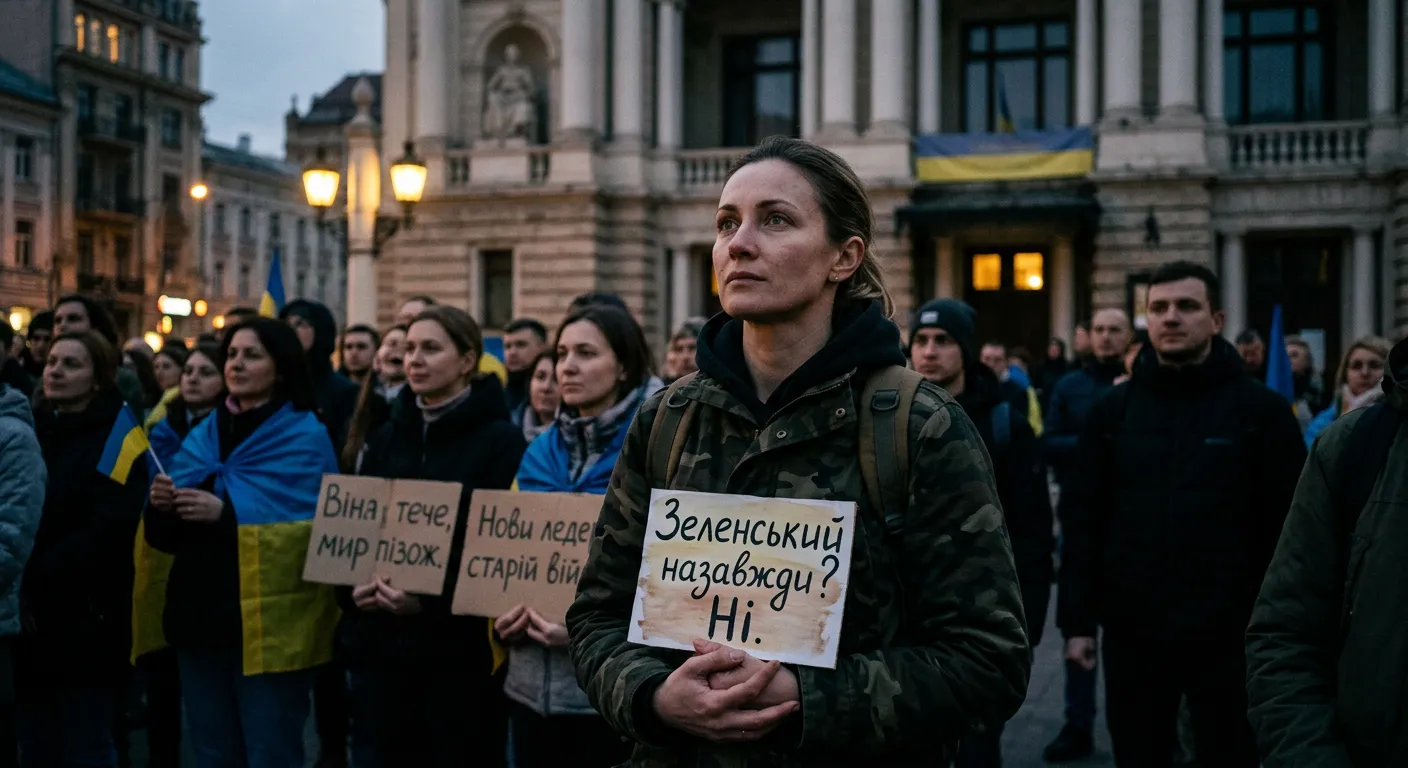
Ukrainians Back Zelensky for War — But 67% Want a New President After
KIIS polling reveals a nation planning for political renewal: 88% expect a government reset post-war, yet most oppose elections before the fighting ends.
A new poll from the Kyiv International Institute of Sociology (KIIS) confirms what Ukraine's political class has sensed for months: the country is planning a sweeping post-war political reset — and Volodymyr Zelensky is not exempt. The survey, conducted between May 7 and June 3 among 1,000 adults in government-controlled territory, found that 67% of Ukrainians expect the presidency to change hands after the war, nearly triple the 23% who said the same in 2023. Ukrainska Pravda
The numbers leave little ambiguity about public appetite for renewal. A full 88% expect at least one level of central government to be reset — up from 73% three years ago. Parliament tops the list at 83%, followed by the Cabinet of Ministers at 74%. Kyiv Post
But the finding isn't a repudiation of Zelensky during wartime. It's a distinction Ukrainians are drawing with striking clarity: unity now, change later.
The trust paradox
KIIS Executive Director Anton Hrushetskyi described the dynamic as a "distinctly wartime attitude." Ukrainians who still trust the president prioritize national cohesion while Russia's invasion continues. They avoid "uncompromising political confrontation because the priority is to withstand the war," he said. But those same voters "would like to see someone from a new generation of leaders become president" once peace arrives. Kyiv Post
The numbers bear this out. Among those who fully trust Zelensky, only 33% expect a post-war presidency reset — the majority want him to stay. But among those who "rather trust" him, support for change jumps to 68%. Among those who distrust him at all, it's near-universal. Interfax Ukraine
That middle group — the "rather trust" cohort — is where the political ground is shifting. They're not the president's opponents. They're conditionally loyal citizens who have deferred their political demands during the existential fight. The question is whether Zelensky can convert that wartime deference into post-war electoral support, and the KIIS data suggests the runway is short.
The shrinking mandate for executive power
A parallel finding sharpens the picture. The share of Ukrainians who accept presidential intervention in the work of parliament and the Cabinet — overriding the constitutional separation of powers for defense purposes — has dropped from 79% in July 2022 to 52% in May 2026. The share insisting the president must respect constitutional limits rose from 16% to 38%. Interfax Ukraine
Even among those who fully trust Zelensky, 19% now reject extra-constitutional presidential authority. The wartime blank check is being slowly withdrawn — not dramatically, but measurably.
This erosion parallels the broader shift in Zelensky's standing. His trust rating stood at 61% in a December 2025 KIIS poll, with 32% expressing distrust. That's a long way from the 84% peak in December 2022 during the rally-around-the-flag effect after Russia's full-scale invasion. Al Jazeera
No elections until the guns fall silent
The poll also reinforces a consistent finding: most Ukrainians oppose holding elections before the war ends. KIIS has tracked this across multiple surveys. An October 2025 poll found roughly 63% opposed elections even after a ceasefire with security guarantees, preferring to wait for a complete settlement. Only about 10% support going to the polls before any ceasefire or peace agreement. BBC
This places Zelensky in a bind that is partly of his own making. Martial law — renewed by parliamentary vote — suspends elections. The constitution requires 60 days after martial law lifts for parliamentary elections and 90 days for presidential. Zelensky has signaled readiness to hold elections if Western partners guarantee security, but that offer appears calibrated more for Washington's consumption than Kyiv's. BBC
What to watch
The KIIS data maps a political landscape that is stable for now but primed for rapid realignment. Three things matter next.
First, the parliamentary renewal vote in early May 2026 on martial law. If Zelensky uses that moment to signal a timeline for post-war elections — or to dig in — it will shape whether the 67% demanding a presidential reset become an active political force or remain a latent preference.
Second, the emergence of alternative figures. Hrushetskyi's reference to "a new generation of leaders" is not abstract. Former commander-in-chief Valerii Zaluzhnyi, now ambassador to the UK, polls as a potential rival. Zelensky's decision to remove him in early 2024 was widely read as neutralizing a political threat. Al Jazeera
Third, the trust erosion among conditional supporters. The 68% of "rather trust" respondents who want a post-war presidential reset represent the median Ukrainian voter. If fighting ends and reconstruction begins, their demands for renewal will be immediate — not gradual. The KIIS numbers suggest they are not waiting to be persuaded. They are waiting for the war to end.
Discover more
US Politics
SNAP Food Assistance Faces Legal Challenges
In 2026, SNAP faces stricter eligibility rules and mounting legal challenges, threatening food assistance for the millions of Americans who rely on the program.

US Politics
White House Pressures Congress for Crypto Leg
The Trump administration's push for the CLARITY Act aims to reshape crypto regulation, impacting trillions in market value and the Trump family's wealth.
US Politics
Virginia's Redistricting Referendum
Virginia's redistricting referendum is drawing a flood of dark money, shaping future elections and the fight for congressional control amid party stakes.

Conflict & Security
Drone Warfare Killing Aid Workers at Unprec
Over 1,000 humanitarian workers killed in three years as cheap armed drones collapse legal protections. Gaza, Sudan, Ukraine, and DRC see deliberate targeting of aid convoys and hospitals with zero prosecutions.