Trump’s Mine Safety Firing Tests Independent Agencies
Moshe Marvit’s suit turns a mine-safety firing into a test of Trump’s power over independent agencies, with the Supreme Court looming.
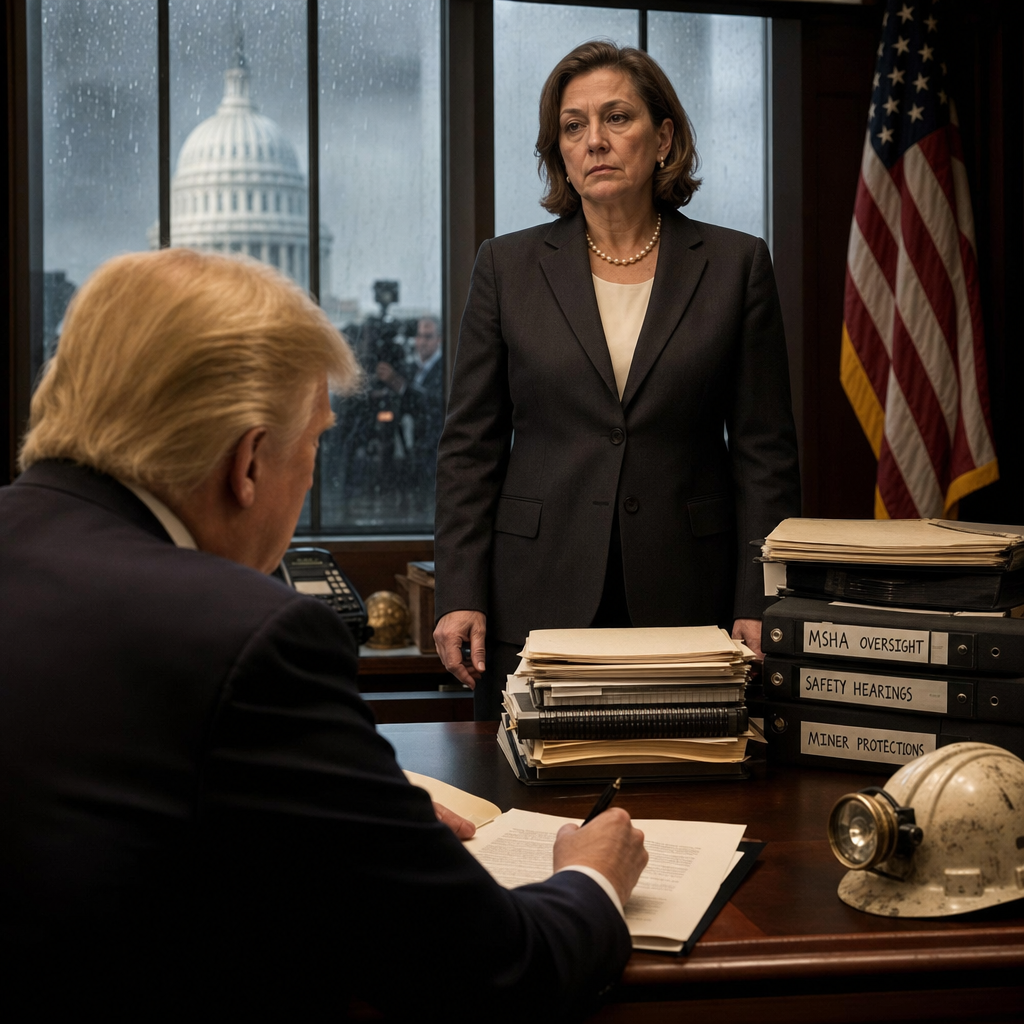
President Donald Trump’s removal of Federal Mine Safety and Health Review Commission member Moshe Marvit has opened a fresh front in the fight over presidential control of independent agencies. Marvit sued Thursday in federal court in Washington, saying the White House fired him without cause and in violation of the Mine Act and the Administrative Procedure Act, according to  The Hill and
  Bloomberg Law. He says the May 1 email terminating his post cited no reason and came from a White House aide; the suit also says his government phone access was cut off quickly after the notice, The Hill reported. Marvit wants the court to restore him to the five-member commission and let him serve through August 2028,
  E&E News by POLITICO reported.
Why this matters
The leverage point is not mine safety itself; it is whether Trump can treat “independent” agencies as fully removable political property. The Mine Act says commissioners can be removed early only for “inefficiency, neglect of duty, or malfeasance in office,” Bloomberg Law reported. Marvit’s suit says that protection is not decorative: Congress created the commission to hear appeals from mine-safety disputes, and stripping its members on command would turn an adjudicatory body into a subordinate office. That is the immediate institutional loser here, along with miners and operators who rely on a functioning appeals process;  Jackson Kelly said the commission has also closed its Pittsburgh office and lost more than a dozen staffers, which will slow the queue.
For Trump, the upside is bigger than one seat. Bloomberg Law noted the White House has already moved against leaders at other independent bodies, including the EEOC and NLRB, and is pressing a constitutional theory that removal limits violate separation of powers, Bloomberg Law reported. That makes Marvit’s case part of the broader  US Politics fight over whether agencies Congress insulated from the White House can still act independently. The administration’s benefit is precedential: if the courts accept Trump’s view here, it gets a cleaner path to rework other boards and commissions. The cost is immediate legal exposure and more litigation from fired officials who now have a template.
What to watch next
The next decision point is not the D.C. district court alone; it is the Supreme Court. Bloomberg Law said the justices are already weighing Trump’s firing of FTC member Rebecca Slaughter, with a ruling expected by early summer, and Marvit’s case will sit in that shadow, Bloomberg Law reported. Judge Royce Lamberth, a Reagan appointee, got the case in Washington, The Hill reported, so the near-term question is whether he pauses the dispute or lets it move while the higher-court removal case is pending. For now, the practical test is simple: can the White House reduce an independent commission to an arm of the president before the Supreme Court draws the line?