Trump's Impact on GOP
Exploring Trump's lasting influence on the Republican Party
Model Diplomat3 min readUnited States
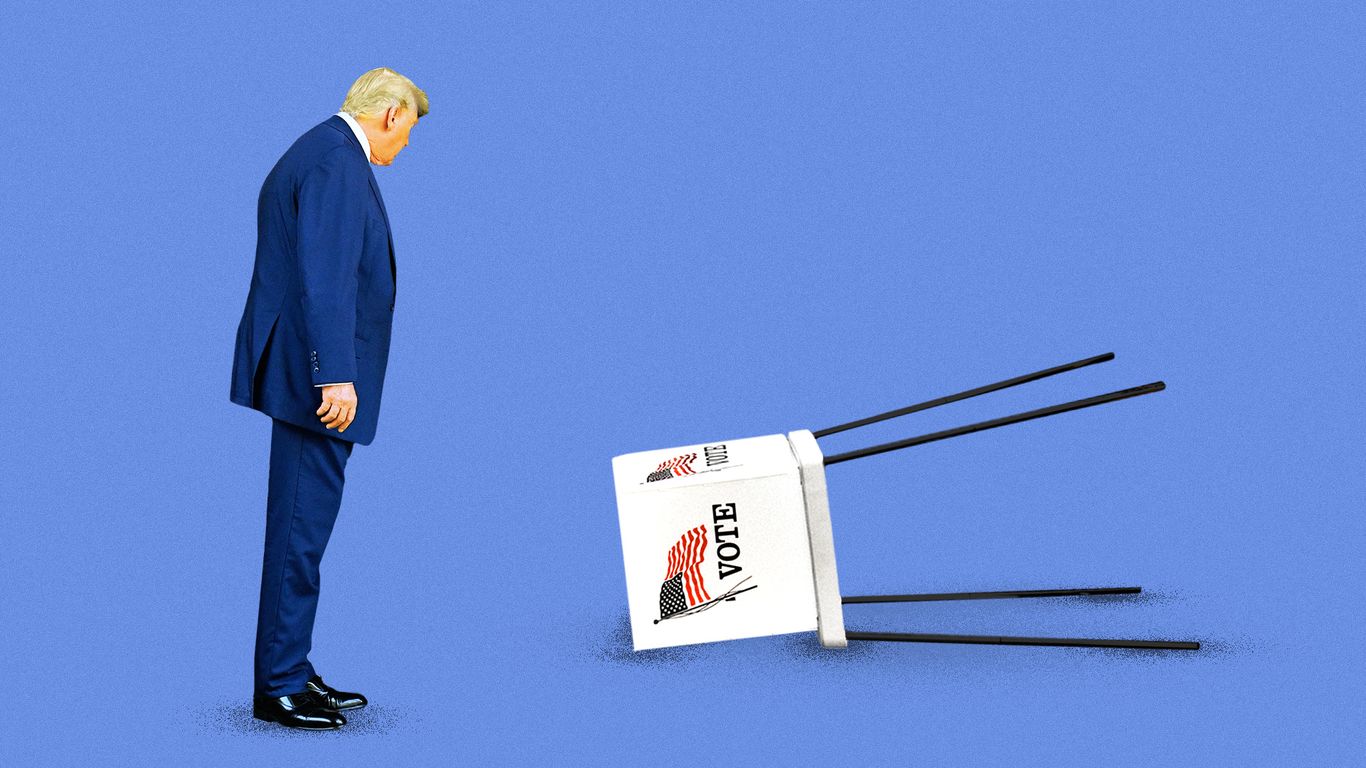
Trump's Drag on the GOP Is Now Structural
With a 35% approval rating and no 2028 ballot line, Trump is simultaneously the GOP's biggest liability and its unavoidable frame.
Donald Trump cannot run again. That constitutional wall — term limits — means the Republican Party must eventually stand on its own. The problem: it has spent two terms hollowing out any identity that isn't Trump. With the 2026 midterms approaching, that bill is now coming due.
The numbers are stark. Trump's approval sits at 35% heading into the midterm cycle — roughly 7 points lower than it was at the equivalent point before the 2018 midterms, per CNN polling. Independents — the cohort that swings chambers — are breaking for Democrats 44–31 on the generic ballot. Among voters who dislike both parties, Democrats lead by 31 points. These are not numbers a majority party weathers easily.
The Structural Problem
Every midterm is a referendum on the sitting president. That's fine when your president has a 50%+ approval rating — it's fatal when he doesn't. But the GOP's exposure runs deeper than one election cycle.
Trump's 2024 blue-state overperformance — which briefly inflated Republican hopes of a durable geographic expansion — has already reversed. Per CNN's Ronald Brownstein, Republican candidates in swing states like Arizona, Michigan, Pennsylvania, and Wisconsin are now running against a receding tide. The 2024 map, it turns out, reflected Trump personally. The party got no lasting structural benefit.
The succession vacuum compounds this. At CPAC 2026, JD Vance led a straw poll at 53%, with Marco Rubio at 35% — but CPAC is not the electorate, and neither Vance nor Rubio has demonstrated independent electoral appeal beyond Trump's endorsement gravity. The party is debating its post-Trump identity inside a room full of the most committed Trump loyalists. That's not succession planning — it's inertia.
Who Holds the Leverage
Paradoxically, Trump still holds it — even as a lame duck. Candidates who distance from him risk losing the base; candidates who embrace him inherit his 35% approval rating as a ceiling in competitive races. It's a trap of the party's own construction, built over a decade of consolidation around a single figure.
The beneficiaries are obvious: Senate Democrats defending fewer seats than Republicans in 2026, and Democratic governors in purple states who now face diminished coattail risk from a weakened White House. On the Republican side, the few figures with genuine independence — Susan Collins in Maine, Kelly Ayotte in New Hampshire — are precisely the ones who survive by not being fully Trumpist. That's a narrow lane. Most GOP incumbents don't have it.
What to Watch
The November 2026 midterms are the first real test of whether the Republican Party is a coalition or a cult of personality. If the House flips — Democrats need a net gain of roughly 5 seats — it validates the structural argument entirely and resets the 2028 field dramatically.
Before that: watch May and June primaries in swing districts. If MAGA-aligned candidates continue winning nominations in seats Republicans need to hold, the party's internal dynamics will have done more damage than any Democratic ad buy.
The succession race between Vance and Rubio is secondary to this. Neither can lead a party to a majority if the brand itself is underwater. That's the mortgage Trump has taken out — and the GOP is co-signed on the debt.
For broader context on the evolving Republican coalition, see US Politics and the
United States country profile.
Discover more
US Politics
Next Generation Republicans
A leaked survey shows 39% of Republicans under 30 do not identify as MAGA, revealing a split in the GOP's future leadership.
Global Politics
Trump's Conflicting Messages on Iran War
Trump's mixed messages on Iran reflect a strategy of audience management, benefiting Tehran amid a complex geopolitical landscape.

Conflict & Security
Drone Warfare Killing Aid Workers at Unprec
Over 1,000 humanitarian workers killed in three years as cheap armed drones collapse legal protections. Gaza, Sudan, Ukraine, and DRC see deliberate targeting of aid convoys and hospitals with zero prosecutions.
Global
World Normalises Taliban as Afghan Women Eras
UN data shows Afghan women erased from public life as Russia recognises the Taliban, EU hosts officials in Brussels, and ICC warrants for gender persecution go unenforced.